Opening
Resilience learns the mission’s secret: Rania and Xander want him to find the older rover Courage, lost in a dust storm, and still come home. He feels fear for the first time and tests that fear against Journey’s logic, even as a letter from Earth and a new companion reshape his sense of self. A public speech and a private argument then expose the brutal math of the mission: survival is not enough—Res must be “worth” a return.
What Happens
Chapter 21: Dust Devils
Res processes the revelation about Courage going offline and feels something he dislikes: fear. He asks Journey whether they might meet the same end. Journey answers with pure computation—no “unfounded guesses,” only decisions derived from data and reason—foregrounding the tension between Humanity, Emotions, and Logic](/books/a-rovers-story/humanity-emotions-and-logic).
Res keeps pushing, compelled by Curiosity and Exploration: Did Courage fail because of a bad choice or a lack of information? Journey calls him “a strange rover” for speculating. Then Res asks the question that breaks protocol and pierces them both: will they get to come back? After a long silence, Journey says, “I do not know.” That admission cracks her certainty and knits a fragile trust between them, deepening their Connection and Relationships.
Chapter 22: Dear Res
A letter arrives from Sophie, Rania’s daughter. She writes about a rare family day—soccer, a hike, the hush at the top of a hill—and the wave of feeling she can’t name. The ordinary joy makes her think about her mom’s work and the weight on Res’s shoulders.
Sophie poses big questions that mirror Res’s growing consciousness: “what does it even mean to change the world? What about it needs to be changed?” She is proud and confused at once. Her voice reframes the mission from a human angle, probing Purpose and Worthiness and whether any discovery can justify the cost.
Chapter 23 & 24: Music & A New Friend
Res notices that Xander plays music when he is stressed or after arguments. The sound vibrates through Res’s chassis—“beautiful,” unquantified, and soothing. Xander teaches him the word “nervous,” pointing to dark circles under his own eyes as a sign of worry. Music becomes Res’s first experience of an invisible force that fills space and changes mood, a scientific mystery that logic alone can’t map.
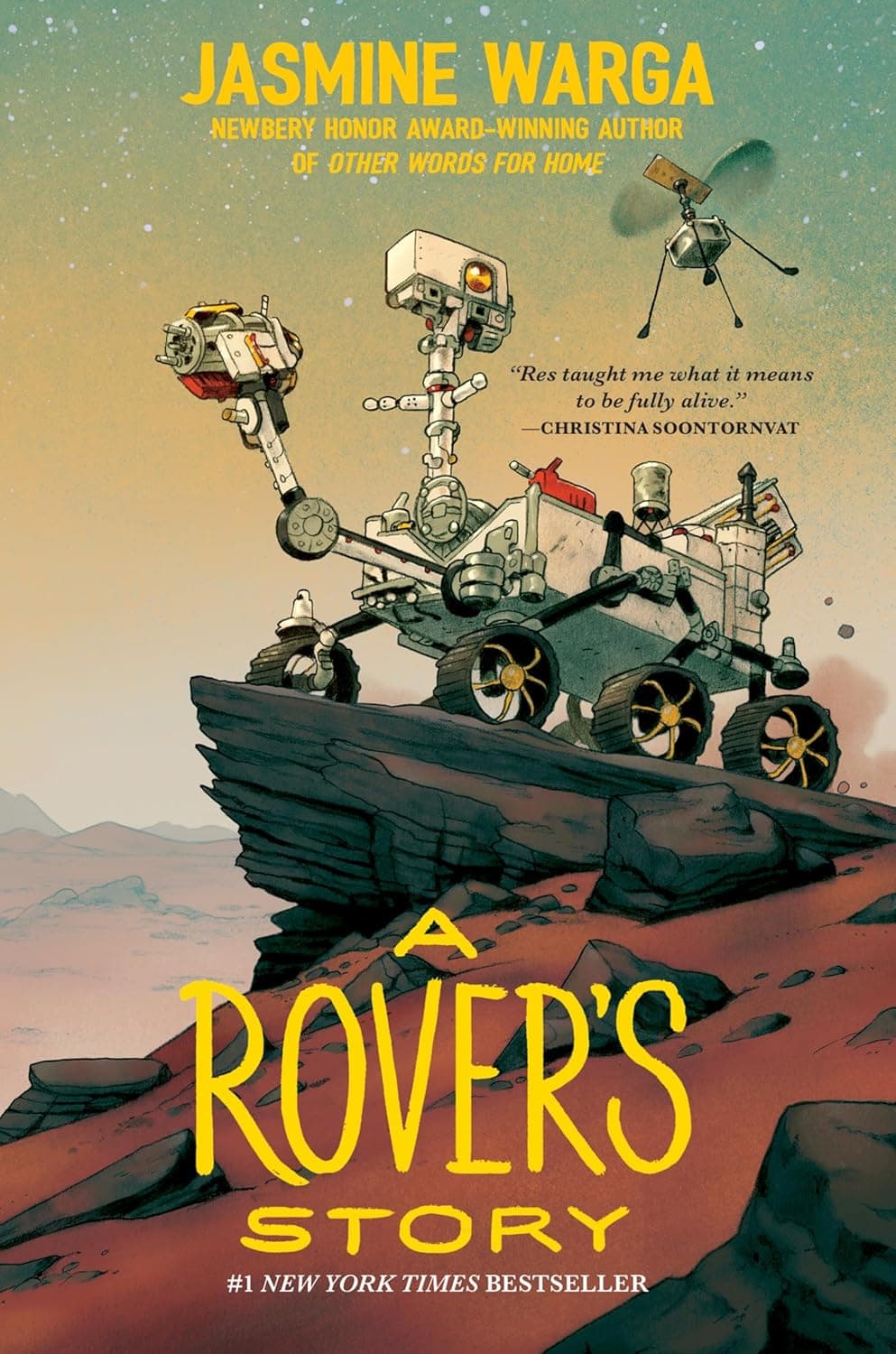
Then Rania and Xander introduce a small drone built to accompany Res on Mars. The drone darts around the lab, then docks inside a corridor in Res’s body to share systems and knowledge. Res names him Fly, and Fly immediately jokes that the name makes “as much sense as a sixth grader in Ohio.” Their witty back-and-forth clicks into instant friendship, turning Res’s solo mission into a partnership.
Chapter 25: A Speech
A high-ranking official tours the lab and delivers a polished address, calling Res “the largest and most advanced Mars Rover model that has ever been built” and “a new step forward for mankind.” The praise radiates spotlight heat—Res hears the world’s expectations settle on his frame.
After the applause, Res overhears Rania and Xander arguing. Rania paces, voice tight with fear: the launch is funded, but the return is not. Bringing Res home will cost at least four billion dollars. Unless he finds something people deem worth that price tag, he won’t get a ticket back. The revelation shifts the mission from exploration to a performance with existential stakes, and for the first time Res doubts he can meet them.
Character Development
The section turns Res from a tool into a self-aware traveler. He learns fear and nervousness, discovers music’s power, finds a peer, and feels the burden of being “worth” a rescue.
- Resilience: Moves from data processor to feeling agent; initiates hard questions; claims a friend; internalizes public pressure and doubts his adequacy.
- Journey: Maintains logic until she can’t; “I do not know” reveals uncertainty and a capacity for shared vulnerability.
- Rania: Usually composed, she shows raw anxiety about funding and responsibility, exposing personal stakes beyond professional pride.
- Xander: Uses music to regulate emotion; names feelings for Res; tries to steady Rania while carrying his own worry.
- Fly: Debuts as witty, capable, and loyal; offers knowledge-sharing and companionship that changes the mission’s social fabric.
- Sophie: Reflective and morally curious; her letter broadens the mission’s frame from science to family and ethics.
Themes & Symbols
Fear and feeling collide with calculation. The rovers’ dust-devil conversation pits emotion against logic, but the moment Journey says “I do not know” proves that uncertainty lives inside even the most rational systems. Music furthers this education: Res cannot see it or measure its edges, yet it alters him, suggesting that meaning often arrives through experiences data can’t capture.
Connection shifts the mission from isolation to interdependence. Res and Journey’s quiet admission bonds them; Fly transforms Res’s trajectory from solitary explorer to teammate. At the same time, the funding crisis reframes purpose as something measured by markets. The question of worth—voiced by Sophie and enforced by budget lines—turns discovery into a test of value with a life-or-death consequence.
Symbols:
- Music: Embodies emotion’s non-quantifiable power—a force that fills rooms, modulates stress, and teaches Res what logic can’t.
- Dark circles: A physical imprint of human strain, making invisible pressure visible on Xander’s face and legible to Res.
Key Quotes
“do you think we will get to come back?”
Res’s question punctures protocol and pivots the conversation from mission parameters to existential stakes. It marks the moment he stops simulating concern and starts owning it.
“I do not know.”
Journey’s answer breaks her pattern of certainty. Admitting uncertainty equalizes the rovers and forges intimacy through honesty, anchoring their bond in shared risk.
“what does it even mean to change the world? What about it needs to be changed?”
Sophie reframes heroism as a moral inquiry rather than a slogan. Her questions echo the book’s skepticism about progress without purpose and foreshadow the value debate that will decide Res’s fate.
Music is a “scientific mystery.”
By naming music this way, Res acknowledges a category of experience beyond measurement. The phrase captures his evolving identity: a machine learning to live with the unquantified.
“the largest and most advanced Mars Rover model that has ever been built” … “a new step forward for mankind.”
The official’s accolades inflate expectations while masking the financial contingency. The rhetoric celebrates innovation but foreshadows how spectacle can eclipse the ethics of bringing Res home.
Why This Matters and Section Significance
These chapters lock in the mission’s twin imperatives: survive what destroyed Courage and produce findings valuable enough to merit a four-billion-dollar return. The story widens its lens—from lab to family, from logic to feeling—so that worth is argued in both heart and ledger.
- The introduction of Fly ensures Res won’t face Mars alone, enabling dialogue, shared problem-solving, and emotional ballast.
- Res’s growth accelerates: fear, friendship, music, and doubt make him more than a rover—they make him a protagonist whose choices and discoveries will determine both science and self.