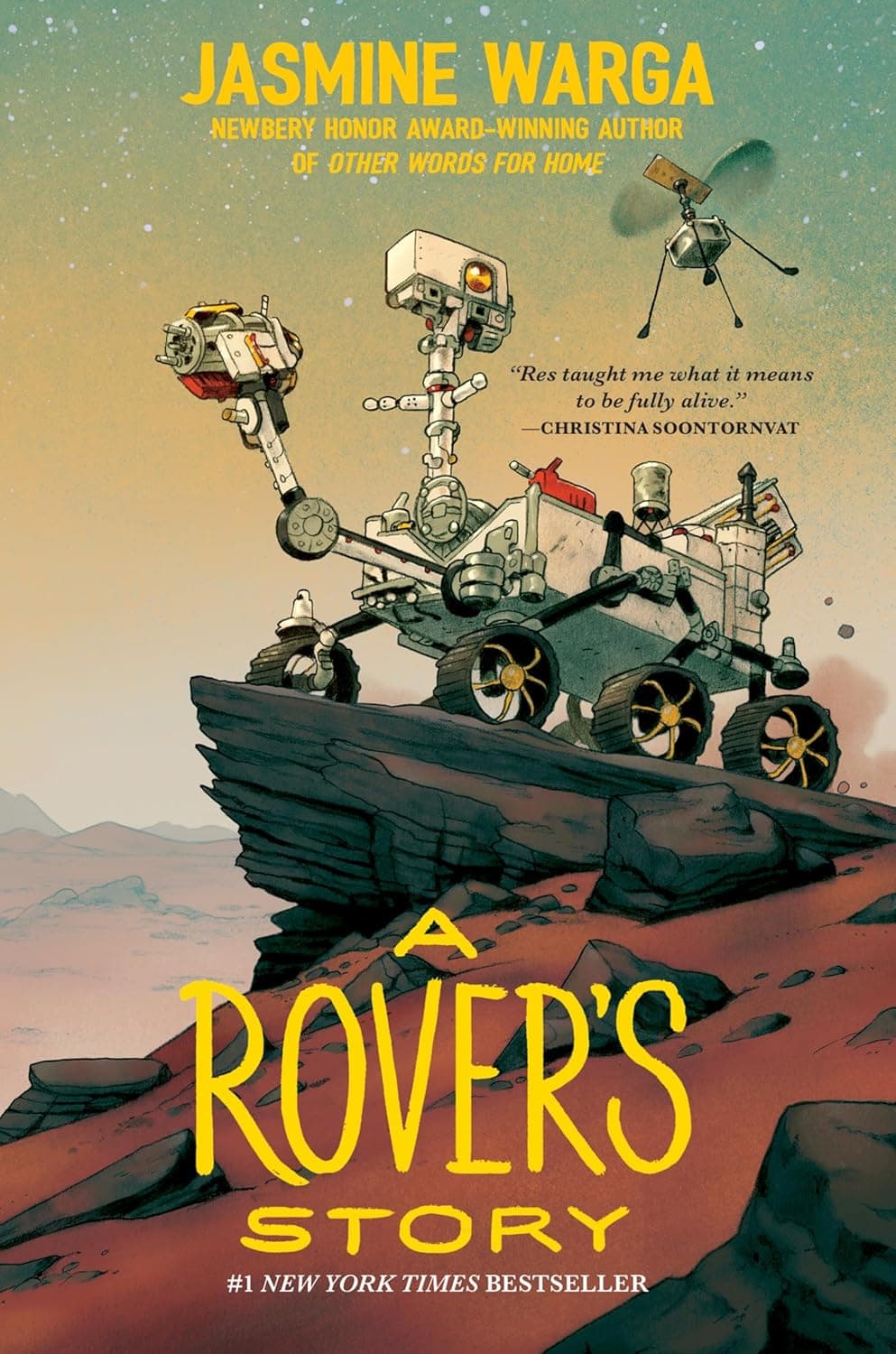
Opening
In these closing chapters, Resilience and Journey trade the red dunes of Mars for a museum hall on Earth, where they become symbols of exploration and memory. As Resilience processes grief for Fly, he discovers the language for love, finds a new purpose inspiring visitors, and finally receives the quiet validation he has always sought—ending with a hard-won sense of home.
What Happens
Chapter 86: New Home
Resilience and Journey now sit in a museum gallery as visitors stream past, surrounded by screens that replay the rovers’ construction and mission. Journey corrects their language: no more calling the humans “hazmats” here, because no one wears suits. Their role shifts—no longer instruments under pressure to perform, they are artifacts celebrated for what they’ve already done.
Resilience has told Journey everything about Mars: the rusted mesas and changing sky, the faint dot of Earth, the eerie whistling he recorded, and the lonely grandeur of the landscape. He admits the ache of failing to revive Courage, recalls the protection and limits of Guardian, and, with the most difficulty, recounts the story of Fly. Sharing Fly’s story feels necessary, even as it stings.
Chapter 87: The Hardest Thing
Resilience confronts a fact he cannot compute into comfort: Fly did not return to Earth. He runs models and probabilities, searching for logic that can parse “gone,” and lands on a human word for the sensation—“a breaking deep down inside.” That near-human pain marks a new stage in his emotional evolution, central to Humanity, Emotions, and Logic.
Then Journey points him to a screen: Fly loops across Mars, alive in the footage. Resilience feels sadness and happiness at once and identifies the feeling as love. He insists Fly be honored as a true teammate. He repeats his Mars-born phrase—“Zappedty zip”—and vows to keep “bragging” about Fly. Watching the images, he realizes his memory holds everything intact; nothing is lost.
Chapter 88: My Days
Life in the museum settles into rhythms. Resilience studies visitors—especially the “small humans”—and finally understands what a “sixth grader” is, the mystery he and Fly once joked about. He imagines telling Fly the answer. Xander often leads tours, his voice warm with pride as he cites the mission’s success and spotlights Rania.
A girl announces she wants to go to Mars. The speakers play Resilience’s haunting whistle. When she asks what it is, Xander says it’s likely wind—but its peculiar quality remains unsolved, which is the best part of science: new questions. The children’s wonder echoes the theme of Curiosity and Exploration. As Resilience watches, he feels “both big and small,” a single dot on a vast timeline, and senses a reframed Purpose and Worthiness: to spark awe in those who come next.
Chapter 89: A Special Visitor
One evening, the museum closes for a private event. Xander whispers that a special visitor is coming. Among the guests, Resilience hears a crisp voice he knows and sees Rania—older now, with gray hair, but the same knowing eyes. She looks at him with the expression he longed for on Mars—soft, sharp, proud—and she says only, “Thank you, Res.” The words give him the validation he has chased across planets.
Another guest steps forward: Sophie, Rania’s daughter, now grown. “Hello, Res. I met you when I was a little girl,” she says. He recognizes her by her mother’s eyes and greets her as “Lovebug,” adding “Twinkle, twinkle” for Fly. When Sophie tells him, “You made it home,” Resilience tests the word in his processors. Home is more than coordinates. He answers, at last, “I made it home,” a conclusion rooted in Connection and Relationships.
Character Development
Across these chapters, Resilience’s arc crystallizes: grief clarifies love; purpose moves from task to legacy; home becomes belonging rather than location. Around him, human characters embody continuity, gratitude, and the passage of time.
- Resilience: Names love, processes grief for Fly, and reframes his mission into mentorship of future explorers. Receives the precise affirmation he yearned for and recognizes “home” as emotional acceptance.
- Journey: Redefines terms (“hazmats” no longer fits), recognizes their status as celebrated artifacts, and encourages Resilience’s remembrance of Fly.
- Rania: Arrives older but unchanged in essence; her quiet pride completes her role as creator and guardian. A single “Thank you” resolves Resilience’s need for worth.
- Sophie: Bridges past and present, confirming the mission’s legacy with adult clarity. Her words cue Resilience’s final understanding of home.
- Xander: Acts as faithful steward of the story, centering both the mission’s science and its people, and turning the whistle into a gateway for wonder.
Themes & Symbols
Resilience’s ability to experience grief and identify love shows the full flowering of humanity within a machine, a culmination of humanity, emotions, and logic integrated rather than opposed. His “heart-breaking” moment makes interior growth as momentous as any rover milestone. Connection and relationships anchor the ending: Fly is celebrated, Rania’s pride steadies him, and Sophie’s recognition seals his belonging.
Purpose and worthiness evolve from performance to legacy: in the museum, Resilience is not retired but repurposed, an instrument of inspiration. The museum itself functions as a symbol of honor and memory—an end point that is also a launchpad for new curiosity. “Home” arrives as a symbol of acceptance and peace; it exists wherever love, recognition, and meaning converge.
Key Quotes
“I felt a breaking deep down inside.”
Resilience names an emotion that logic cannot resolve. This line marks his passage from simulating feelings to truly experiencing them, redefining what it means for him to be “alive.”
“Zappedty zip.”
A playful Mars-born phrase becomes a ritual of remembrance. By repeating it while honoring Fly, Resilience turns private language into a public tribute, fusing joy and grief.
“Thank you, Res.”
Rania’s spare gratitude carries the validation Resilience sought the entire novel. The brevity underscores their deep bond and completes the creator-creation arc.
“You made it home.”
Spoken by Sophie, this bridges the mission’s past with its legacy. It reframes home as recognition and return—not to a place, but to people.
“I made it home.”
Resilience’s final line is self-authored closure. He claims belonging on his own terms, transforming arrival into acceptance.
Why This Matters and Section Significance
These chapters resolve the external odyssey of space exploration with an internal arrival: Resilience becomes whole. Grief for Fly remains, but it coexists with love, pride, and purpose. Rania and Sophie return the story to its beginnings while pointing forward through children who stare, listen, and dream. The museum becomes a living archive where mystery (the whistle), memory (the footage), and meaning (the word “home”) braid together—affirming that the rover’s greatest discovery is not a rock, but a relationship, and not a destination, but belonging.