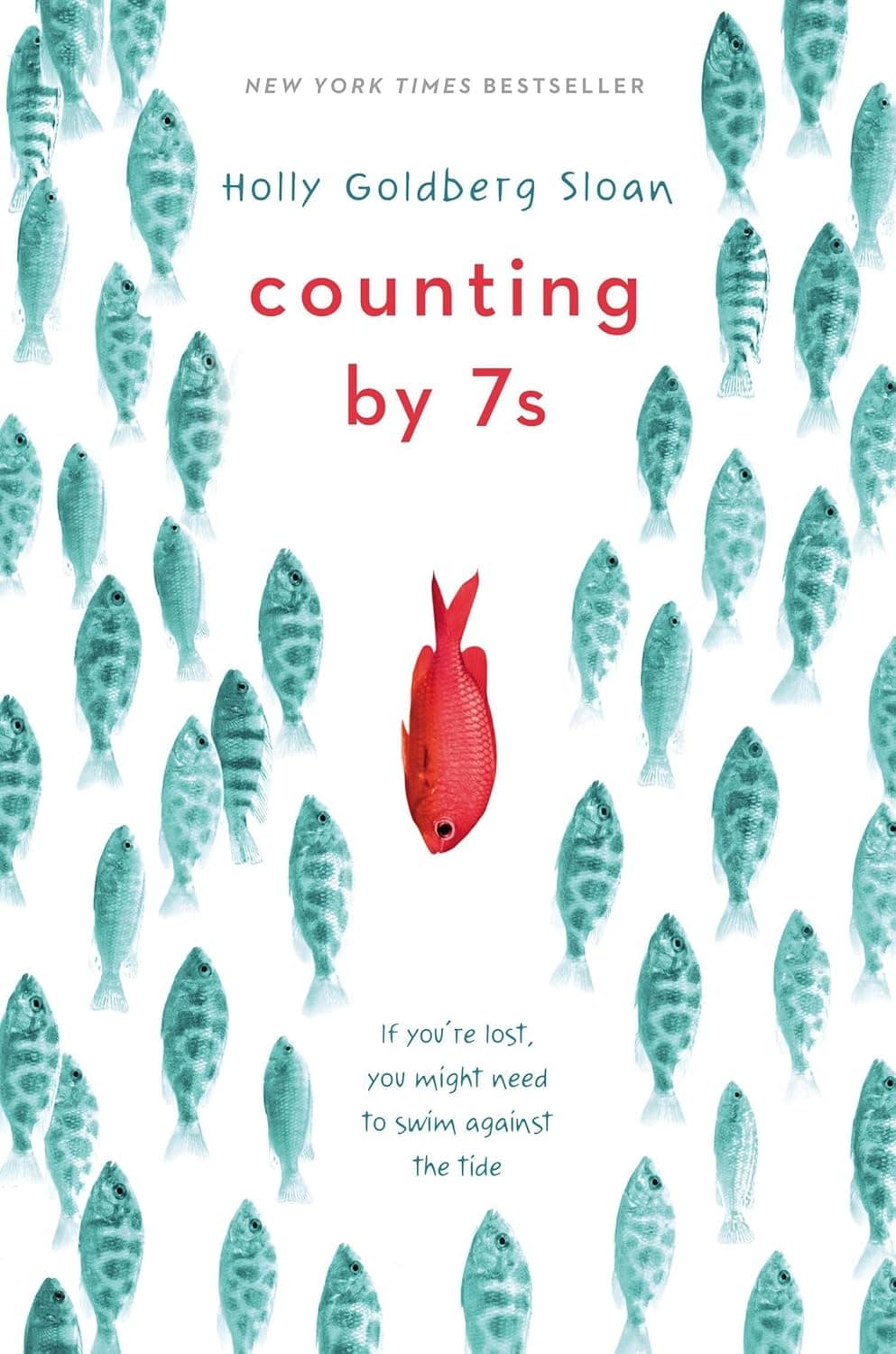
Opening
In Chapters 26–30, Willow Chance goes to ground—literally—in a library, while a mismatched circle of adults and teens scrambles to keep her from slipping through the cracks. A memorial, a lie, and a burger joint converge to forge a fragile household that begins to hold Willow’s grief without trying to fix it.
What Happens
Chapter 26: I would live here
In the hours after her parents’ deaths, Willow drifts into the Beale Memorial Library and decides it is the one place that still makes sense. “Books = comfort,” she thinks, though comfort now feels extinct. Her mind stays clinical: she searches the catalog for middle-school guides to parental loss, finds nothing, and drops a formal suggestion to publishers in the comment box.
Watching people who shelter there during the day, she feels kinship—“We are one.” Knowing security won’t let anyone sleep, she uses crypsis. In a remote upstairs corner, she slides behind a giant doughnut-shaped chair; dark clothes and patterned carpet turn her into negative space. Hidden in plain sight, she curls up and sleeps.
Chapter 27: Dell went to the front office
The perspective shifts to Dell Duke, who storms Sequoia Middle School in a panic to find Mai Nguyen. In a cramped, overheated office, Dell blurts that Willow is missing—she fainted at social services, got stitches, then disappeared from the ER bathroom. Mai listens, unimpressed and razor-sharp, correcting “falling” versus “fainting” and measuring Dell as a man out of his depth.
Dell gnaws beef jerky; Mai takes over. She deduces the likely places Willow might go, including—but not limited to—the salon, then orders Dell to sign her out so they can search together. Dell, flustered by her authority, complies.
Chapter 28: My eyes open
Willow wakes in the library to Mai’s green shoes and steady presence. Mai notes the stitches on Willow’s forehead with practical concern. Dell arrives, rapt with relief, and immediately announces a plan to return Willow to the Jamison Children’s Center. Mai vetoes him on the spot and insists they go first to Happy Jack’s Pie n’ Burger, even threatening to jump out of the moving car if he won’t drive there.
At the restaurant, Mai orchestrates a new reality. While Dell ducks into the bathroom, she orders a mountain of takeout, leaves Dell the bill, and calls her mother, Pattie Nguyen. Mai persuades Pattie to serve as Willow’s temporary guardian and devises a workaround: they will use Dell’s Gardens of Glenwood address so social services believes Willow lives with a responsible adult. Back at Jamison, Pattie signs the paperwork, and the arrangement becomes official. A makeshift household begins to form.
Chapter 29: A memorial service
At the memorial for Roberta and Jimmy Chance, Willow sits with Dell, Mai, and Pattie, unable to look at anyone or register the speeches. She fixates on a photo of her parents laughing before she was born, remembering her mother’s claim that they were happy because they knew Willow was coming.
Outside, mourners release balloons. Willow silently calculates the latex debris those balloons will rain down and cannot bring herself to object. The only person who seems to understand the pain of letting go is a toddler who sobs as his balloon is pried from his fist. Later, a newspaper article about a fund for Willow shows a donation from taxi driver Jairo Hernandez. Willow calls to thank him, and their quiet exchange feels like shelter. She moves in with the Nguyens, endures the simmering hostility of Quang-ha Nguyen, and stops counting by 7s because, in her new world, she feels she doesn’t count.
Chapter 30: It was dark nowadays
Now the adults’ perspectives: Dell sinks into a tangle of lies—concealing Willow’s genius, covering the Nguyens’ living situation, pretending to homeschool her. His sessions with Willow become long silences. Caring about her makes everything riskier; administrators are watching, and he knows he’s failing.
Pattie also feels overwhelmed. A court date looms, and she hasn’t enrolled in foster classes. Instead of confronting the system, she buys supplies for the salon and chooses a nail polish color called “well red” because she thinks Willow will like it. The gesture is small and sturdy, the kind of care Pattie can offer while she gathers the courage for the rest.
Character Development
Care and responsibility begin to move from abstract ideas to actions. Willow goes quiet and inward, while Mai steps forward as a strategist and protector; Dell and Pattie, nudged by circumstances and conscience, inch toward fuller versions of themselves.
- Willow: Retreats into a “New Me” defined by numbness and silence; still analyzes the world with precision; chooses hiding places and words carefully; stops counting by 7s.
- Mai: Claims leadership; reads adults quickly; bends rules to safeguard her friend; initiates the guardianship plan and sets the household in motion.
- Dell: Shifts from apathy to involvement; follows Mai’s lead; becomes complicit in lies he never imagined making; discovers he actually cares.
- Pattie: Reluctant but resolute; signs guardianship papers; struggles with official requirements; shows care through concrete, everyday gestures.
- Quang-ha: Bristles at the upheaval; his resentment adds friction to the new household.
- Jairo: Extends steady, unobtrusive support that reassures Willow without demanding anything of her.
Themes & Symbols
These chapters crystallize Grief, Loss, and Healing not as a sequence of rituals but as a daily state. Willow’s intellect keeps working as her emotional world freezes. Healing begins not with speeches or balloons, but with presence—Mai’s shoes in Willow’s line of sight, Pattie’s signature, Jairo’s donation and call.
At the same time, a fragile network of care forms, illustrating Found Family and Community. The Nguyen household and Dell’s inadvertent support structure become a stopgap that is also a beginning—a lived definition of family as the people who show up and keep showing up. Through these demands, the adults inch toward Growth and Renewal, while acts of Kindness and Compassion make the difference between isolation and survival.
Symbols reinforce these arcs:
- The library: order and camouflage, a sanctuary where Willow can disappear and rest.
- The balloon release: a ritual that reads as environmental harm and performative grief, underscoring Willow’s disconnection from public mourning.
- “Well red” nail polish: a small, tactile promise that Pattie intends to care for Willow in ways she understands.
Key Quotes
“Books = comfort.”
Willow’s equation captures her instinct to seek order and solace in information. After the loss, the formula no longer solves anything, but the impulse to reach for it shows who she remains beneath the shock.
“We are one.”
Watching people using the library as refuge, Willow refuses to see herself as separate. The line collapses distance between “housed” and “unhoused,” “child” and “adult,” and frames grief as a great equalizer.
“New Me.”
Willow names her dissociation instead of pretending it isn’t happening. The label is not triumph but triage—a way to mark that the old patterns no longer function.
“I would live here.”
The chapter’s title becomes a vow and a wish: in a world without her parents, a place of quiet, rules, and resources feels like the only livable space.
“I don’t count by 7s. Because in this new world I don’t count.”
Her signature habit—counting by 7s—vanishes with her sense of worth and belonging. The loss of the pattern signals a fractured identity and the work of rebuilding ahead.
Why This Matters and Section Significance
This stretch turns crisis into configuration: the scattered characters coalesce into a household, however precarious. The lie about the address raises the stakes and binds them together; the memorial exposes the gap between public mourning and private pain. By the end of Chapter 30, the story pivots from catastrophic loss to an experiment in living—an improvised family learning, under pressure, how to hold one person’s grief and, in doing so, begin to change themselves.