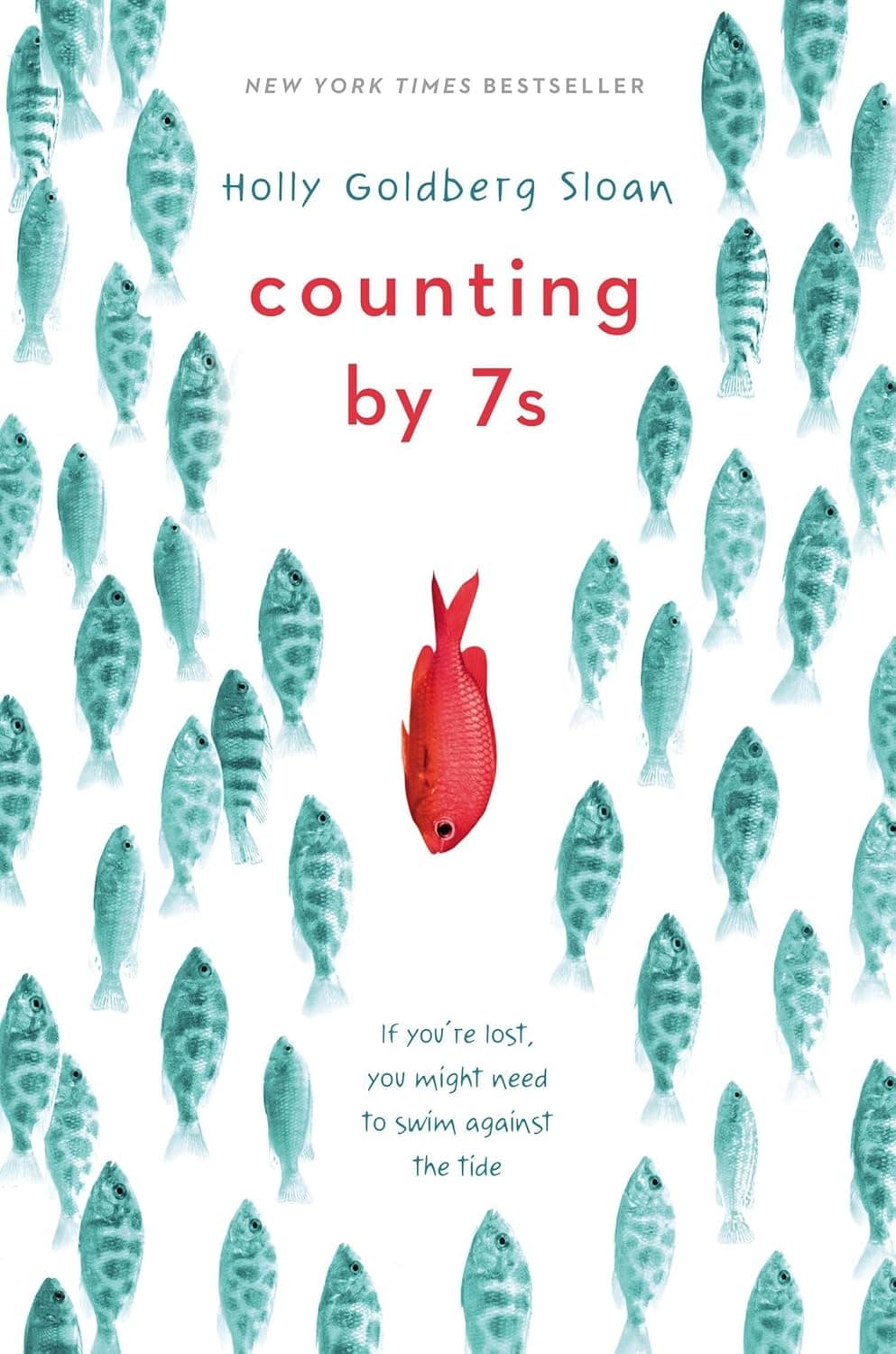
Opening
In these chapters, Willow Chance turns an impulsive idea—planting sunflowers in an ugly courtyard—into a blueprint for transformation. With pushback from Dell Duke, support from Mai Nguyen, and the unexpected enthusiasm of others, her plan snowballs into a community-wide renovation that reshapes a building and the people inside it.
What Happens
Chapter 46: I have an idea.
Willow decides the red lava rock courtyard can become a sunflower garden. She digs below the plastic liner and finds real soil—enough for roots. Dell shuts her down, warning the bank will never allow it. Mai backs Willow, and a surprisingly competitive Quang-ha Nguyen wants in so he can plant his “superior” sunflower. Willow opts for official permission and calls Jairo Hernandez, who agrees to drive her to City Hall.
Before they leave, Pattie Nguyen speaks to Jairo in Spanish, worried for Willow. Jairo says Willow changed his life. In the cab he shares he won $20,000 and is using it for college, calling Willow his “angel.” At City Hall, a clerk’s “Where are your parents?” slices open Willow’s grief; she quotes a line from William Carlos Williams about loss, startling the clerk into sending her to the right office. Over two days, Willow compiles a meticulous garden proposal—with drawings by Quang-ha—and hands it to Dell. He balks, but one word from Mai gets him to submit it.
Chapter 47: The new court date was set.
A letter sets Willow’s new court date and includes a pamphlet for an “Adoption Fair.” Pattie feels dread; the fair sounds like speed-dating for orphans, where a brilliant, unusual child could be overlooked. The system feels too blunt for Willow’s needs.
At a farmer’s market, Mai spots tubs of sunflowers and remembers Willow’s warning: their potted plants will stunt if not set in the earth. She understands the metaphor with clarity—without roots, none of them can grow. Her insight connects directly to Belonging and Human Connection and the fragile family they are building around Willow.
Chapter 48: Big news.
The bank accepts the proposal—and elevates Dell to “Building Representative.” Flush with pride, he immediately marks off the best parking spot for himself. Work begins. At Quang-ha’s urging, Willow posts a free-lava-rock ad; a chaotic crowd descends, and Dell plays traffic cop while the courtyard empties fast.
Beneath the rock, they confront hard, gray, lifeless soil. Doubt creeps in. Willow insists they need a Rototiller. Dell resists the cost and hassle—until a cranky neighbor, Otto Sayas, sneers, “Nothing in the world will grow there.” Stung and bolstered by his new title, Dell promises to prove him wrong.
Chapter 49: A Rototiller is like a jackhammer, but for dirt.
Dell grinds through hours with the Rototiller, wrecking his body but freeing the soil. Willow tests it: the pH is a perfect 7—balance restored. Quang-ha casually drops a correct fact about hydrogen ions, showing he’s more engaged than he pretends.
That night, Santa Ana winds blast the loose soil into a dust storm, coating first-floor apartments in grime. Dell, mortified, strips his “Building Rep” sign and hides. Mai pivots to solutions. She and Willow rent a power sprayer; Quang-ha mans the hose. The water not only erases the dirt but also peels off the building’s pink paint and lumpy stucco, revealing smooth gray underneath. Willow thinks about the “theory of connectedness”—how one act leads to another, and suddenly the scope of change is bigger than anyone planned.
Chapter 50: We rotate.
The cleanup becomes an all-night renovation. Their makeshift crew—now a true Found Family and Community—falls into rhythm. Jairo arrives unasked and washes every window. Quang-ha turns into the MVP on the sprayer, grinning through the physical grind. A neighbor drops off candy instead of complaining; shared laughter bursts across the courtyard, and Willow laughs with them—fully, freely.
By 3 a.m., the building looks transformed—sleek, modern, and new. The physical change mirrors what’s happening inside each of them. Willow thinks of sunflowers and of herself: she can put down temporary roots here and still be ready when she’s “replanted” after the court date. The garden has become a living metaphor for Grief, Loss, and Healing, and Willow feels steady enough for whatever comes next.
Character Development
These chapters turn a loose collection of neighbors into an interdependent team. Responsibility, pride, and care circulate—people step up, falter, and are pulled forward by the group.
- Willow: Moves from paralyzing grief to purposeful action. She designs a professional proposal, faces condescension head-on, and finds joy in shared work. She accepts the impermanence of her situation while still planting roots.
- Dell: Shifts from avoidance to stewardship. His new title pushes him into leadership, physical labor, and public accountability—even when humiliation sends him spiraling.
- Quang-ha: Drops his detached pose. He offers real knowledge, embraces the power sprayer, and becomes the project’s energetic center.
- Mai: Emerges as the pragmatic organizer. She knows how to motivate Dell, acts decisively after the dust storm, and recognizes the group’s need for roots.
- Pattie: Protects quietly but fiercely. Her fear of the “Adoption Fair” exposes what Willow is up against; her conversation with Jairo shows her vigilance.
- Jairo: Embodies the ripple effect of kindness. He invests his windfall in education and shows up to do humble, necessary work.
- The Group: Confronting disaster together cements trust; work becomes the language of care.
Themes & Symbols
The garden functions as the book’s working symbol of Growth and Renewal. It is messy, backbreaking, and repeatedly threatened by setbacks, yet the process itself teaches the characters how to endure, adapt, and rebuild. As the courtyard changes, the people change with it.
Sunflowers mirror Willow’s situation: temporary but determined, they demand real soil to reach full height. The building’s transformation—pink paint and crumbly stucco blasted off to reveal a clean, strong surface—captures what happens when façades fall away and genuine bonds form. The number 7 in the soil’s pH suggests equilibrium, a quiet omen that balance is returning to Willow’s life.
Key Quotes
“Where are your parents?”
- The clerk’s question triggers Willow’s grief and exposes institutional blind spots. It catalyzes Willow’s assertiveness, pushing her to use poetry—and logic—to move past gatekeeping.
“angel”
- Jairo’s word for Willow reframes her as a catalyst. Her small act of kindness sparked his reinvention, illustrating the story’s chain-reaction change.
“They needed to put down a real root system to achieve their potential. Don’t we all…?”
- Mai’s realization links horticulture to human need. It captures the section’s core insight: growth requires belonging and stability.
“Nothing in the world will grow there.”
- Otto’s challenge transforms Dell’s reluctance into resolve. Opposition becomes fuel, propelling the project to its next phase.
“theory of connectedness”
- Willow names the narrative engine: one decision begets another until lives and spaces are remade. The phrase ties individual choices to communal outcomes.
“We rotate.”
- The chapter title doubles as a credo. Roles shift, effort passes from person to person, and the work continues because they do it together.
Why This Matters and Section Significance
This sequence is a turning point: Willow’s idea becomes the catalyst for collective action, and crisis (the dust storm) forges solidarity. The characters learn to rely on one another, and their environment reflects their inner renovation—stripped down, strengthened, and ready for new growth.
For Willow, the arc marks a decisive step out of mourning. She channels intelligence into service, confronts systems that dismiss her, and laughs without restraint. The revitalized courtyard foreshadows the community’s future: rooted, resilient, and capable of flourishing together.