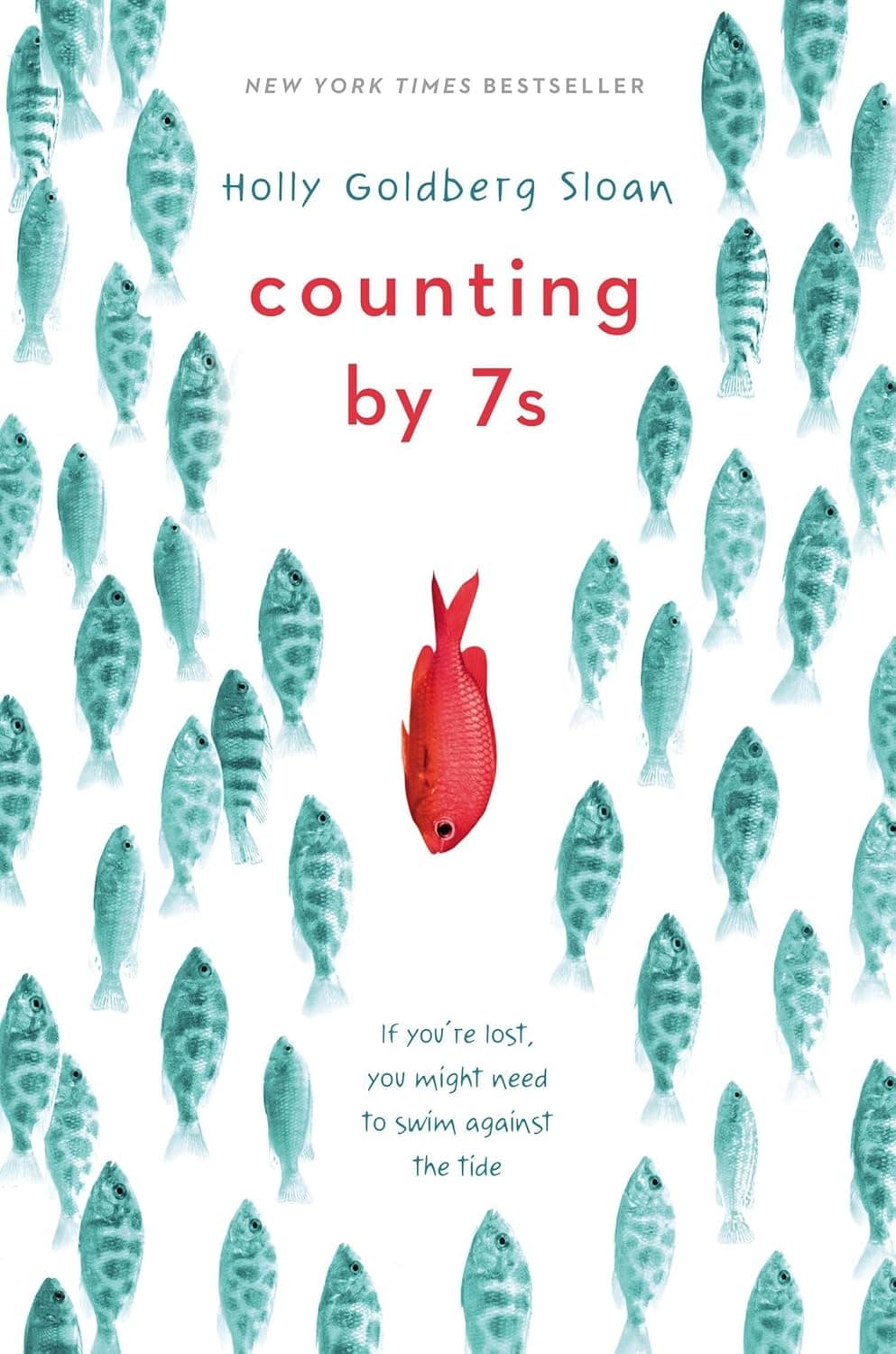
Most Important Quotes
The 7 People Who Matter
"I think that at every stage of living, there are 7 people who matter in your world. They are people who are inside you. They are people you rely on. They are people who daily change your life."
Speaker: Willow Chance | Context: Chapter 61; after the court grants Pattie and Jairo guardianship, Willow reflects in the new apartment garden on the family she’s built.
Analysis: Willow’s realization elevates “counting by 7s” from a private ritual to a philosophy of connection, turning a coping mechanism into a communal vision. The number seven becomes a structure for belonging, organizing the constellation of people whose care remakes her world and embodies Found Family and Community. Placed at the novel’s end, it reframes her loss through Grief, Loss, and Healing: the people she “keeps inside” are both memory and presence, absence and support. The cadence and repetition give the line a liturgical quality, underscoring how love, once counted, becomes a lifeline.
An Imperfect Genetic Stew
"If you could see me, you would say that I don’t fit into an easily identifiable ethnic category. I’m what’s called 'a person of color.' And my parents are not. They are two of the whitest white people in the world... I want you to know that while I don’t in any way resemble my parents, somehow we just naturally look like a family."
Speaker: Willow Chance | Context: Chapter 2; Willow introduces herself and her adoptive parents, Roberta and Jimmy Chance, establishing identity and belonging.
Analysis: Willow’s matter-of-fact self-portrait insists that family is made by affection and commitment rather than similarity, anchoring the novel’s argument for Difference and Acceptance. The paradox—“we don’t resemble each other” yet “we look like a family”—creates a resonant tension that foreshadows the unconventional kinship she will later forge. Her clinical diction (“a person of color”) blends with a warm declaration of connection, revealing a mind that unites classification and compassion. The moment anticipates her second belonging within Belonging and Human Connection, where love once again overrides surface markers.
Beginnings and Endings
"And endings are always the beginnings of something else."
Speaker: Willow Chance | Context: Chapter 16; a quiet reflection after Fosters Freeze, moments before learning of her parents’ fatal accident.
Analysis: This line offers a bittersweet thesis for the narrative, an unwitting prophecy delivered in a moment of calm before catastrophe. Its simplicity heightens the dramatic irony as the story pivots from a life that is ending to one that is about to start in unexpected form. The aphoristic rhythm distills the arc of Growth and Renewal, where grief incubates new bonds, responsibilities, and sources of meaning. As a hinge between “before” and “after,” it frames the novel as a cycle rather than a rupture.
Thematic Quotes
Found Family and Community
A Human Troop
"I was not pretending to be anyone but myself, and they still accepted me into their troop. I felt human. That was the only way I could describe it."
Speaker: Willow Chance | Context: Chapter 10; after searching for Dell Duke’s cat, Willow makes flyers with Mai and Quang-ha.
Analysis: Willow’s use of “troop”—a term drawn from animal behavior—translates social belonging into her scientific lexicon, marking a moment when intellect and emotion align. In being accepted without performance, she touches the core of belonging and recognizes, perhaps for the first time, a self beyond isolation. The language contrasts the cool observational register with a blunt, vulnerable admission: “I felt human.” By naming Mai Nguyen and Quang-ha Nguyen as part of this troop, the novel shows how unlikely alliances evolve into community.
The Unlikely Family Portrait
"We then walk across the plaza and get into Jairo’s taxi. We sit three in the front and three in the back."
Speaker: Narrator (Willow’s perspective) | Context: Chapter 60; immediately after the judge approves guardianship, everyone squeezes into Jairo’s cab to celebrate.
Analysis: The image of six people jostling into one taxi compresses their shared history into a single, almost comic tableau of closeness. Physical proximity becomes metaphor: they have learned to make room for each other, reshaping ordinary space into a vehicle for care. The implied seventh—Willow’s sense of “the people inside you”—echoes her counting motif, transforming logistics into a portrait of Found Family and Community. The scene’s cinematic clarity makes it unforgettable, a picture of belonging that resists traditional labels.
Grief, Loss, and Healing
The Need to Rewind
"No. No. No. No. No. No. No. I need to rewind. I want to go back. Will anyone go with me?"
Speaker: Willow Chance | Context: Chapter 1; Willow’s immediate inner response to the words “There’s been an accident.”
Analysis: The sevenfold “No” weaponizes her favorite number against her, turning comfort into an instrument of shock and denial. The plea to “rewind” captures the impossible logic of grief: if time can move forward, surely it can be reversed. Direct address—“Will anyone go with me?”—opens a chasm between her and the world, dramatizing isolation at the very moment she needs connection most. This utterance becomes the emotional ground zero from which her healing must begin.
The Shadow Self
"I am a shadow. I no longer dream in color. I don’t count by 7s. Because in this new world I don’t count."
Speaker: Willow Chance | Context: Chapter 29; a month after the accident, living in the Nguyens’ garage, Willow assesses her altered inner life.
Analysis: The shadow metaphor renders grief as a loss of dimensionality—she exists, but without weight, hue, or agency. Abandoning color-dreaming and counting by 7s signals a crisis of identity, as her defining habits no longer organize a world that feels senseless. The final pun on “count” is devastating, collapsing arithmetic precision into existential worth. This is the nadir of her mourning, the place from which the novel will carefully rebuild meaning.
Growth and Renewal
The Garden as a Mirror
"The garden is challenging me, as always, to see my own situation. My court hearing is next month. I’ll be ready. I’m not sure for what exactly. But maybe that’s what being ready really means."
Speaker: Willow Chance | Context: Chapter 50; as the sunflowers fade, Willow considers the garden’s next stage alongside her uncertain future.
Analysis: The garden functions as an externalized psyche—its cycles demand that she accept transition, maintenance, and replanting. Readiness without certainty marks a major shift from control to openness, a cornerstone of Growth and Renewal. The sentence rhythms mimic tentative steps, balancing resolve and doubt. By letting nature tutor her, Willow learns to trust process over prediction.
Life Goes On
"They speak to me, not in words, but in action. They tell me that life goes on."
Speaker: Willow Chance | Context: Chapter 61; Willow watches two birds alight on the honeysuckle in the completed garden.
Analysis: The birds’ mute “speech” reframes meaning as gesture and pattern, not explanation, offering solace beyond language. After chaos, nature’s continuity supplies a quiet theology of endurance: life persists, whether or not we consent. The line’s plain diction is its power, closing the novel with the gentlest articulation of survival. It seals Willow’s arc from rupture to renewal, where attention itself becomes a form of hope.
Character-Defining Quotes
Willow Chance
"Every person has lots of ingredients to make them into what is always a one-of-a-kind creation. We are all imperfect genetic stews."
Speaker: Willow Chance | Context: Chapter 2; responding to being labeled “highly gifted,” Willow pushes back against reductive categories.
Analysis: The culinary metaphor dissolves rigid labels into mixture and flux, asserting that identity is composite, evolving, and deliciously imperfect. Scientific diction (“genetic”) mingles with domestic imagery (“stew”), a signature Willow blend that humanizes analysis. The line resonates with the novel’s embrace of Difference and Acceptance, celebrating uniqueness without hierarchy. It also foreshadows the diverse “ingredients” that will simmer into her new family.
Mai Nguyen
"Don’t you raise your voice at us! He didn’t do anything wrong. If my brother wants to finish the picture, he’ll finish the picture!"
Speaker: Mai Nguyen | Context: Chapter 9; Mai confronts Dell in his office when he yells at Quang-ha.
Analysis: Mai’s fearless defense establishes her as the novel’s moral ballast—protective, decisive, and allergic to intimidation. The repetition of “finish the picture” becomes a refrain of agency, insisting that Quang-ha set his own terms. Her strength is relational, a fierce version of Kindness and Compassion that shields the vulnerable and galvanizes action. By modeling advocacy, she becomes a key architect of the group’s cohesion.
Pattie Nguyen
"What we expect rarely occurs; what we don’t expect is what happens."
Speaker: Pattie Nguyen | Context: Chapter 36; after staging Dell’s apartment for a social worker visit, Pattie offers Willow hard-won wisdom.
Analysis: Pattie’s aphorism distills a survivor’s realism—plans falter, improvisation saves. The paradox has a pragmatic grace, preparing Willow to meet upheaval not with control but with adaptability. It encapsulates the novel’s engine: accidents and chance encounters give rise to chosen bonds and new beginnings. As counsel, it’s both consoling and instructive, a compass for navigating uncertainty.
Dell Duke
"He placed all of the kids he saw into four groups of THE STRANGE. First, there were the MISFITS. Then the ODDBALLS. Next were the LONE WOLVES. And finally, the WEIRDOS."
Speaker: Narrator | Context: Chapter 5; Dell’s slapdash taxonomy for students he’s meant to help.
Analysis: Dell’s capitalized categories caricature his detachment, reducing complexity to lazy labels that absolve him of responsibility. The humor is edged with critique: classification without curiosity dehumanizes. Because his arc moves from rigid sorting to self-revision, this moment functions as a baseline against which growth can be measured. When he later reclassifies himself, the novel affirms that systems can change—especially the people who devise them.
Jairo Hernandez
"This little girl changed my life."
Speaker: Jairo Hernandez | Context: Chapter 46; Jairo explains to Pattie, in Spanish, how Willow’s blunt concern set off a chain of change.
Analysis: Jairo’s declaration captures the novel’s ripple effect, where small acts of attention ignite transformations far beyond their origin. Seeing Willow as a catalyst (even a “shaman”) reframes her difference as gift rather than anomaly. His decisions—checking a mole, returning to school, then thriving—feed back into the safety net that eventually holds Willow. The line crystallizes how compassion, once set in motion, multiplies.
Quang-ha Nguyen
"I don’t want to know how you did it. I want to believe that you’re magic."
Speaker: Quang-ha Nguyen | Context: Chapter 53; after the overnight garden makeover, Quang-ha admits wonder while sitting with Willow.
Analysis: The novel’s resident skeptic chooses wonder over explanation, revealing a gentle, hidden openness beneath the sarcasm. By preferring belief to method, he acknowledges Willow’s effect on him and on the world they share. The line marks his full inclusion in the family, replacing defensiveness with trust. It also enshrines the garden as a site where the improbable feels possible.
Memorable Lines
The Secret Life of Plants
"If plants made sounds, it would all be different. But they communicate with color and shape and size and texture. They don’t meow or bark or tweet. We think they don’t have eyes, but they see the angle of the sun and the rise of the moon."
Speaker: Willow Chance | Context: Chapter 2; Willow rhapsodizes about plants and how she reads their signals.
Analysis: Personifying plant perception, Willow collapses the distance between scientific observation and awe. The synesthetic catalog—color, shape, size, texture—turns botany into language, preparing the garden to serve as the novel’s central metaphor. By insisting that communication exceeds sound, she redefines listening as attention to pattern and change. The passage seeds the terrain for later healing, where tending becomes a way of speaking.
Opening and Closing Lines
Opening Line
"A genius shoots at something no one else can see, and hits it."
Speaker: Narrator | Context: Chapter 1; the epigraph that frames Willow’s perspective.
Analysis: The image of aiming at the invisible recasts genius as perception rather than prestige, aligning intellect with intuition and courage. It foreshadows Willow’s knack for detecting patterns—medical, emotional, ecological—that others overlook. Ironically, her truest “hit” will be relational: seeing how strangers can become kin. The line sets up the tension between insight and isolation that the novel must resolve.
Closing Line
"They tell me that life goes on."
Speaker: Willow Chance | Context: Chapter 61; the final sentence, spoken from the serenity of the finished garden.
Analysis: Spare and assured, the closing sentiment derives authority from observation, not argument. After upheaval, continuity becomes its own quiet miracle, borne by birds, blossoms, and the daily work of care. The phrase gathers the book’s threads—grief, community, the garden—into a single, steady breath. It leaves the reader with durable hope: endurance is ordinary, and that is its grace.