What This Theme Explores
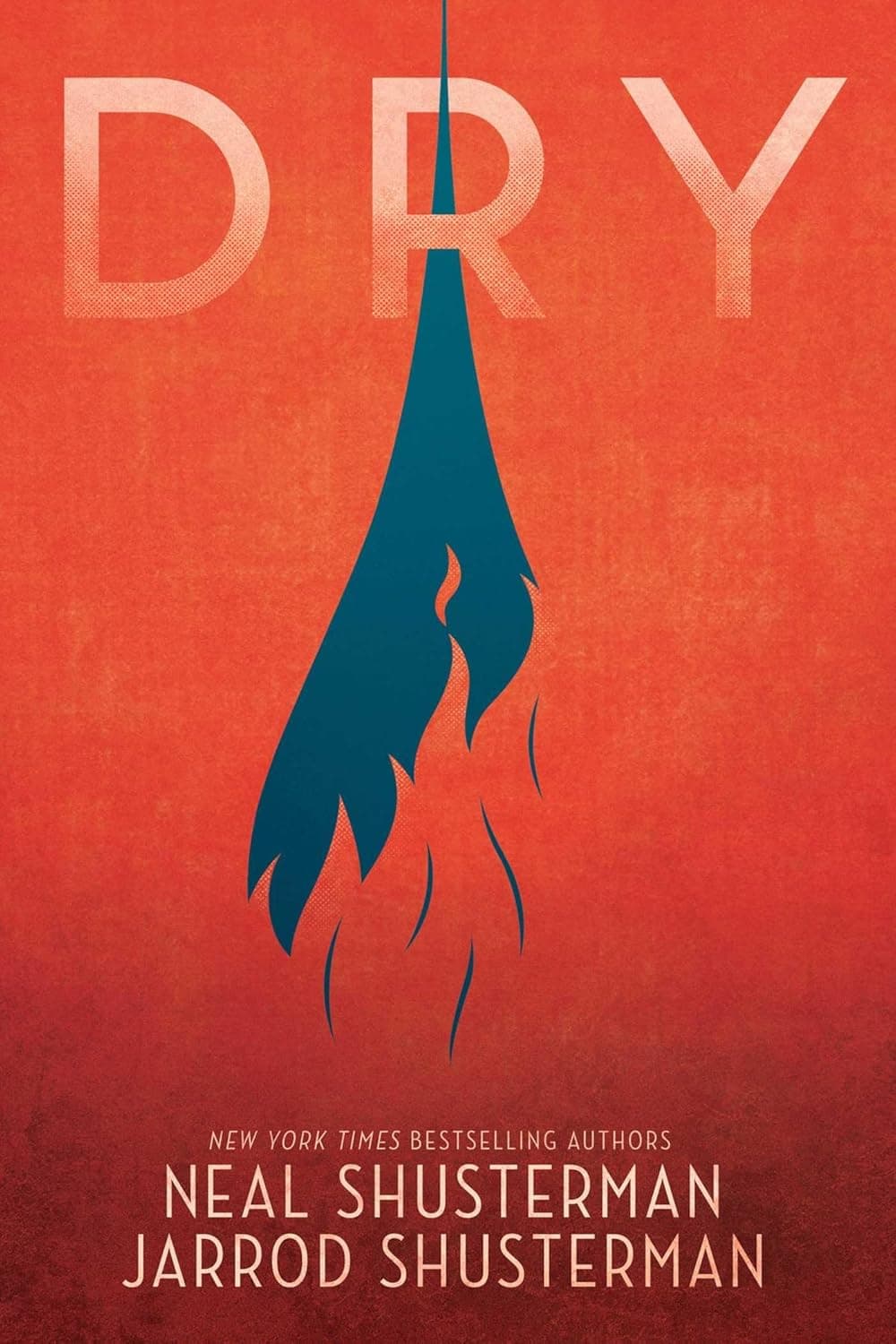
Human Nature and Morality in Dry asks what remains of conscience when comfort, law, and abundance vanish. Is morality innate or a social technology that works only when the taps run? The book insists the answer lies on a spectrum: the same crisis that exposes cruelty also catalyzes generosity and sacrifice. By staging moral tests at escalating stakes, the novel shows how quickly civility can fray—and how deliberately it can be reclaimed.
How It Develops
The novel opens by peeling back suburban politeness to reveal anxious self-interest beneath. In Chapter 1, the panic-buying at Costco becomes the first pressure point where small courtesies turn transactional and fragile. Faces still smile; hands still help; yet every gesture has a price.
As the taps remain dry, Kelton McCracken names the arc of descent—“Three Days to Animal”—and the book proceeds to test it. The confrontation between Roger Malecki and Richard McCracken exposes two stark moral logics: desperation that justifies anything to protect one’s own, and a prepper ideology that treats empathy as a liability. Kelton’s uneasy compromise—subduing Malecki with a paintball gun yet still giving him water—registers the novel’s refusal to endorse absolutes.
On the road, “The Chasm Between” makes the moral landscape literal. Moving through aqueducts and freeways, the group meets a spectrum of responses: the desolate but peaceable homeless encampment, predatory opportunists, and the freeway commune organized by Charity, which demonstrates that even in scarcity, community can be built on rules of fairness and mutual aid.
“Bug-Out” turns the scrutiny inward. The betrayal by Henry Groyne reframes savagery not as frenzy but as cold calculus: weaponizing “win-win” rhetoric to exploit trust. The group’s discovery that their supplies have been unknowingly consumed underscores another truth—the failure of perfect plans and the moral fallout when survival hinges on fallible people.
In “Hell and High Water,” moral lines snap and reform under extreme heat. Kelton kills to protect his friends, crossing a threshold he’d only theorized about before. Alyssa Morrow commits an act she experiences as monstrous to save her brother, then steels herself for a mercy killing—grimly expanding the definition of love. In the same crucible, Jacqui Costa refuses to take the last water, revealing how restraint can be an act of radical humanity.
Finally, “A New Normal” assesses the moral aftershocks. The epilogue in Chapter 56 classifies survivors—oblivious, traumatized, fulfilled, shadows—according to the choices they made when it mattered. The categories imply that crisis doesn’t create character so much as crystallize it, leaving identities that persist after the taps turn back on.
Key Examples
Even as the plot races forward, the book pauses at charged moments to ask what a person becomes under thirst.
-
Initial Selfishness at Costco: A suited man’s courteous help pivots seamlessly into theft-by-politeness, exposing how civility can be a mask for predation in a resource scramble.
“I have an even better idea,” he says. “Why don’t you take a bag of ice for yourselves, and I’ll keep the rest.” The line performs a moral sleight of hand—language of compromise justifying hoarding—illustrating the theme’s claim that etiquette can camouflage exploitation.
-
Desperation vs. Ideology: Roger Malecki, fueled by paternal fear, collides with Richard McCracken’s survivalist code that treats compassion as weakness. Kelton’s decision to incapacitate Roger yet still share water holds the center: the novel’s endorsement of action guided by empathy rather than rigid doctrine.
-
The Rise of the “Water-Zombie”: Alyssa’s assault by Dalton and his friends shows thirst stripping away shame, dignity, and restraint.
He looks at his fingers, glistening with my spittle … and he licks it off. I try to struggle free, but Dalton pushes me hard against the wall and locks eyes with me. “Do it again!” he demands. The image literalizes moral dehydration: when bodies are desperate, social prohibitions collapse, and people become driven by a single, devouring need.
-
Cooperation and Altruism: Charity’s freeway commune models a counter-current—rationing, rules, and shared labor restore trust. By staging order within chaos, the novel argues that morality can be intentionally rebuilt through structure and mutual obligation, even without state authority.
-
The Ultimate Moral Crisis: Alyssa steals an old woman’s last water to save Garrett Morrow and later prepares a mercy killing to spare him from the fire. These decisions invert conventional morality—harm becomes an expression of care—forcing readers to consider whether intent, outcome, or context carries the real ethical weight.
Character Connections
Alyssa Morrow begins as the story’s ethical touchstone, committed to fairness and neighborliness. The crisis doesn’t flip her values; it stretches them until they include acts she can barely live with. Her arc shows how love can be both the engine of mercy and the rationale for moral transgression.
Kelton McCracken starts with inherited theories—Sheep, Wolves, Herders—that flatten the complexity of people under pressure. Confronted with real stakes, he abandons rigid taxonomy for responsibility: he acts, protects, and accepts the cost. The shift from paralysis to lethal resolve marks morality as something proven in deeds, not creeds.
Jacqui Costa performs toughness as armor, reading initially as a predator of the new order. Yet when she declines to take the last water, she demonstrates an ethic of limits—a refusal to cross certain lines even when no one could stop her. The novel uses her restraint to argue that self-preservation and conscience are not mutually exclusive.
Henry Groyne embodies a chillingly modern amorality: the boardroom rationalizer of human suffering. His “win-win” vernacular recasts exploitation as reasonableness, revealing how harm can be laundered through language. He is the novel’s warning that the most dangerous savagery may be the most polite.
Richard McCracken’s rigid survivalism curdles into tragedy. By prioritizing an ideology of suspicion—“no neighbors,” only threats—he incubates the very violence that destroys what he sought to protect. His arc cautions that fear-driven morality becomes self-fulfilling and self-destructive.
Symbolic Elements
Water: Its absence dissolves the social contract, exposing how much of morality depends on shared security. Every sip becomes a referendum on who deserves to live, turning an elemental need into an ethical currency.
Guns: Weapons concentrate power and force choices into binary terms—pull the trigger or don’t. Kelton’s journey from reluctance to lethal decisiveness tracks how crisis compresses moral deliberation into split-second judgment.
The Aqueduct: This liminal corridor—“The Chasm Between”—separates old norms from emergent codes. Traveling it places characters in a moral no-man’s-land where they must invent, test, and revise their own rules.
“Water-Zombies”: The term captures a terrifying metamorphosis: people emptied of personhood by thirst. It’s a label that dehumanizes others, but it also warns how quickly anyone might be reduced to appetite when need becomes absolute.
Contemporary Relevance
Dry’s moral laboratory resonates with today’s anxieties about resource scarcity and environmental crises and the rapid breakdown of social order. The novel asks how communities can preserve dignity, fairness, and care when systems fail—and whether we can prebuild ethical infrastructure as surely as we stockpile supplies. By dramatizing both collapse and cooperation, it suggests that our future won’t be decided solely by what we have, but by the moral commitments we practice when having isn’t guaranteed.
Essential Quote
“I have an even better idea,” he says. “Why don’t you take a bag of ice for yourselves, and I’ll keep the rest.”
This line turns predation into polite suggestion, encapsulating the theme’s core insight that morality can erode behind a smiling face. The exchange foreshadows the novel’s larger argument: in crisis, language and civility can be tools of harm unless anchored to genuine ethics and shared responsibility.