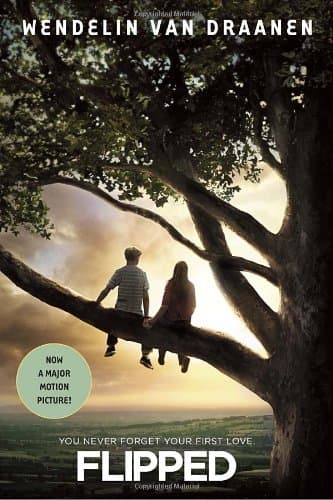
What This Theme Explores
In Flipped, the idea that the whole is greater than the sum of its parts asks how true value emerges only when pieces are seen together—in context, in relationship, and in motion. Introduced by Robert Baker through his art, the theme challenges characters (and readers) to look beyond shiny fragments—good looks, tidy lawns, isolated flaws—and perceive the living, complicated “whole.” It interrogates the difference between infatuation and understanding, and between appearances and character. Ultimately, it argues that maturity is the shift from collecting parts to perceiving essence.
How It Develops
The theme first arrives as a lesson in seeing, not loving: Juli Baker hears her father describe how disparate elements coalesce into “magic,” and she stores the idea as a truth about art. That concept moves from her head to her heart when she climbs the sycamore and experiences a view that cannot be reduced to rooftops and clouds; she feels, rather than merely understands, that wholeness is more than addition. This awakening equips her to reassess people, beginning with the boy she’s idolized by “parts”—eyes, smile, hair—and to realize that character, courage, and kindness are what make a person worth loving.
Meanwhile, Bryce Loski spends much of the story trapped in part-based thinking, seeing Juli as a series of irritations and his family as a polished façade. After a humiliating dinner exposes the ugliness beneath his father’s veneer, Bryce is nudged by his grandfather, Chet Duncan, to look for iridescence—an inner quality that appears only in the whole. As Bryce begins to see beyond surfaces, Juli simultaneously applies the lesson to him, concluding that the aggregate of his actions doesn’t add up to the person she imagined. By the end, both characters confront the same truth from opposite directions: wholeness reveals worth, and without it, the best “parts” ring hollow.
Key Examples
-
Mr. Baker’s Painting Lesson
“A painting is more than the sum of its parts,” he would tell me, and then go on to explain how the cow by itself is just a cow, and the meadow by itself is just grass and flowers, and the sun peeking through the trees is just a beam of light, but put them all together and you’ve got magic.
(Chapter 3-4 Summary)
Robert’s metaphor reframes perception as an act of synthesis: meaning lives in the relationships among elements, not in any single piece. It plants the seed for Juli’s later realizations about people and families, establishing “magic” as the felt experience of wholeness. -
Juli’s Sycamore Epiphany
It was on a day like that when my father’s notion of the whole being greater than the sum of its parts moved from my head to my heart. The view from my sycamore was more than rooftops and clouds and wind and colors combined.
It was magic.
The treetop moment converts theory into insight; the same set of visual “parts” becomes transcendent when held together by perspective. Juli’s newfound way of seeing primes her to evaluate Bryce’s character as an integrated whole rather than a collage of appealing features. -
Chet’s Advice to Bryce
“Some of us get dipped in flat, some in satin, some in gloss... But every once in a while you find someone who’s iridescent, and when you do, nothing will ever compare.”
(Chapter 7-8 Summary)
After a dinner that exposes Rick Loski as bigoted beneath his polished surface, Chet gives Bryce a vocabulary for inner radiance—qualities that only appear when you look at the person as a whole. “Iridescent” captures a depth that flat, isolated traits can’t convey. -
Juli’s Re-evaluation of Bryce
Get beyond his eyes and his smile and the sheen of his hair—look at what’s really there.
(Chapter 9-10 Summary)
Juli recognizes that her crush was an assemblage of parts, not a judgment of character. The moment marks her emotional maturity: she weighs Bryce by his actions and courage, and the sum no longer equals “magic.”
Character Connections
Juli Baker embodies the theme’s growth arc. She starts by cherry-picking Bryce’s attractive features and ends by refusing to ignore the parts of him that don’t harmonize—cowardice, passivity, and thoughtlessness. Her capacity to find “magic” in a sycamore and in her imperfect but loving household shows that wholeness can amplify value far beyond what the components suggest.
Robert Baker models integrative seeing. As an artist, he perceives context, light, and relationship; as a father, he applies that lens to his family’s hardships, understanding that love and solidarity elevate their “messy” parts into something resilient and beautiful.
Chet Duncan acts as the bridge for Bryce, translating aesthetic insight into moral vision. By naming iridescence, he teaches Bryce how to look, not just what to see, and gently exposes the gap between appearances and essence within the Loski family.
Bryce Loski’s journey is a reversal: he must unlearn surface judgments. Initially tallying Juli’s quirks, he eventually recognizes that her integrity, bravery, and loyalty cohere into a rare whole. His dawning awareness also forces him to acknowledge that a neat exterior can mask a deficit of character at home.
Rick Loski represents the anti-theme. Obsessed with discrete markers—status, lawn care, optics—he refuses to assemble the Bakers’ circumstances into a compassionate picture. His failure to synthesize parts into humanity reveals a brittle, diminished “whole.”
Symbolic Elements
The Sycamore Tree: What looks to others like a “massive and ugly” tree becomes, in Juli’s experience, a living proof that perspective fuses parts into wonder. The tree is also biographical—scarred yet strong—suggesting that time and endurance can make a whole greater than its damaged components.
Mr. Baker’s Paintings: Each canvas demonstrates how ordinary fragments—cow, meadow, light—gain meaning through composition. The artwork literalizes the novel’s claim: arrangement and relation create beauty that no single element contains.
The Bakers’ Yard: Weeds, clutter, and a run-down coop invite snap judgments, but as part of the larger story—sacrifice for a disabled uncle, a family’s priorities—the “mess” reconfigures into evidence of love. When Juli and Chet improve the yard together, their care becomes the binding agent that changes how the parts add up.
Contemporary Relevance
In a world of profiles, snippets, and highlight reels, it’s easy to mistake curated parts for the truth. Flipped argues for resisting the scroll-speed verdict: to assemble context, consider contradictions, and prize inner “iridescence” over polish. The theme encourages empathy—reading people and communities as evolving wholes whose worth can’t be captured by a snapshot or a single mistake.
Essential Quote
“A painting is more than the sum of its parts.”
This line distills the novel’s ethic of perception: meaning arises not from inventory but from integration. It challenges readers to move beyond itemized traits toward a holistic judgment, where character, context, and connection synthesize into something that feels—at last—like “magic.”