Opening
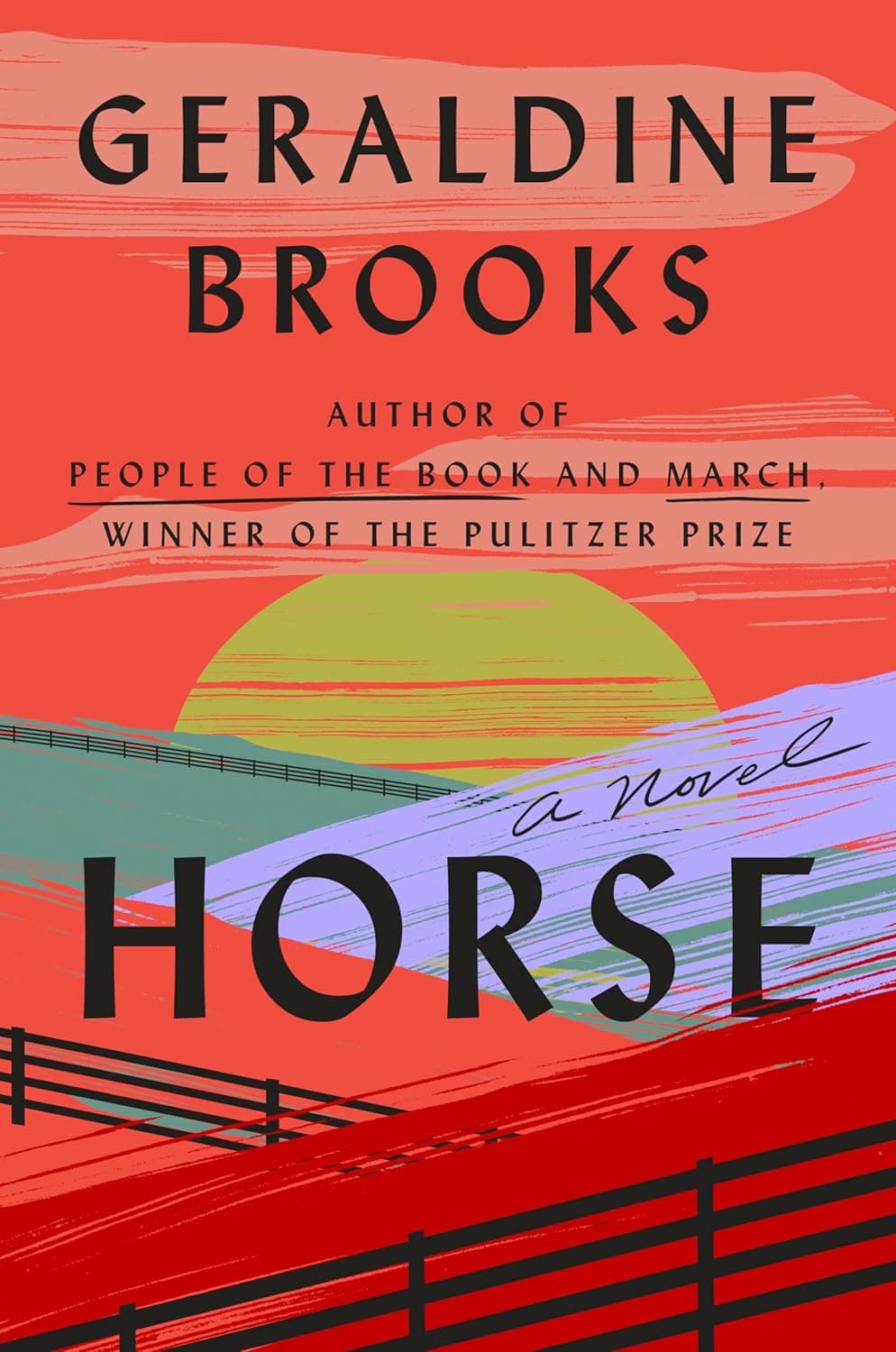
These chapters braid a wartime Kentucky horse farm, a Manhattan gallery in the age of Abstract Expressionism, and a Civil War field hospital into one story anchored by a single painting of Lexington. Through love, ambition, and survival, the painting moves across hands and centuries, carrying with it buried histories and the cost of freedom.
What Happens
Chapter 41: Alexander’s Jarret (Woodburn Stock Farm, 1861)
At Woodburn, Jarret Lewis runs the thoroughbred operation with authority, answering only to R.A. Alexander and the farm manager as Kentucky teeters on the brink of Civil War. Alexander hoists a Union Jack to advertise his British citizenship, hoping to shield the farm. Jarret notes his county’s loyalty to the Union is for the preservation of slavery, not its end, underscoring the limits of his own Freedom and Agency.
Jarret’s rise begins years earlier when Alexander finds him reading a battered Henry V by firelight and recognizes his intelligence. Jarret shifts from chores to clerical work, then to advising on breeding and sales. His bond with Lexington becomes the farm’s quiet miracle: on morning rides, Jarret’s calm hands and voice let the blind stallion move as if sighted, embodying The Human-Animal Bond. He recalls Thomas J. Scott—vigorous where Troye is refined—painting two portraits of Lexington at Woodburn and gifting one to Jarret with a promise that it may be valuable someday.
At home, Jarret lives with May, a Woodburn laundress, and her son, Robbie. He helped May say goodbye when her husband, Robert, was sold after Robbie’s birth; a year later, with no word of Robert, May moved into Jarret’s cottage. Their tenderness coexists with loss: they are not legally married, and Jarret knows May still loves Robert. The Scott painting of Lexington hangs over the mantel, a rare beauty in a life defined by bondage.
Chapter 42: Martha Jackson (MJ Gallery, 1956)
In New York, Martha Jackson steps into her expansive new gallery on East 69th Street, a triumph won against skepticism, denied bank loans, and her father’s doubts. Her brand—astute eye, unflagging hustle, a flair for buzz—lets her shape careers and markets, living the credo of Art, History, and Memory.
Her maid, Annie, arrives with a brown-paper parcel from Ohio. Expecting a sentimental family piece, Martha prepares to buy it out of kindness—until she unwraps a horse with a white blaze and four white feet that mirror her mother’s Royal Eclipse. The painting is older, nineteenth-century. Annie says the horse’s name is Lexington. Martha, fluent in bloodlines, knows at once: Lexington is the greatest stud sire in American racing, Royal Eclipse’s great-grandsire. The oil is competent if uneven, signed “Scott”—a name unfamiliar to her. Refusing to exploit Annie, Martha promises to consult a specialist. Her decision nudges the painting—and the people it has touched—back into view, activating the novel’s Hidden Histories and Erased Narratives.
Chapter 43: Thomas J. Scott (Stones River, 1863)
Scott writes from a Union camp in Tennessee to his mentor, Julien. Two years into service, he stewards a field hospital thanks to old pharmacy training. Cold, sickness, shattered trees—the war strips “winning” of meaning. Initially scorned by Parson Gunn for his ties to horse racing, Scott wins the chaplain’s trust with wit and feigned piety until Gunn reads scripture to the men and becomes Scott’s indispensable partner.
The hospital is relentless. Scott saws and dresses wounds; Gunn prays with the dying. A young amputee asks to see his severed arm to bid it “Farewell until the Resurrection,” a moment Scott cannot forget. Exhausted and haunted, he longs to trade his surgeon’s saw for his painter’s brushes and to reenter a world where making, not maiming, defines a day.
Chapter 44: Martha Jackson (125 East Seventieth Street, 1956)
Martha brings the Lexington to Paul Mellon’s Manhattan townhouse—a château on East 70th. Mellon, coolly polite, dismisses “Scott” as second-tier next to Troye or Stubbs, then falls silent before the actual canvas. Martha has gambled well: Mellon’s champions, Mill Reef and Arts and Letters, trace to Lexington. When he asks the price, she proposes a shrewd test: take it for a week, then pay what he deems fair.
Weeks pass without word. Pressed by Annie’s need and by the blank space where the painting hung in her gallery, Martha calls. Mellon’s English secretary icily reports the Mellons are in Paris. Martha pivots: she announces another buyer and says she’ll send for the painting at once. The flustered offer to phone Paris follows; Martha declines. Power returns to her side of the desk.
Chapter 45: Alexander’s Jarret (Woodburn Stock Farm, 1865)
Near war’s end, Jarret comes home to find May stricken, Robbie hiding, and a Union soldier with an arm in a sling—Robert—standing in the doorway. Supper turns into testimony: Robert was sold to Louisiana, escaped to a contraband camp, enlisted, was wounded in Tennessee, and saved his army pay to purchase May and Robbie’s freedom from Alexander. Now he has come to take them north to Ohio. The logic of Race, Slavery, and Systemic Racism lays itself bare: Jarret’s authority with horses grants him no legal claim to the family he loves.
Jarret sleeps in Lexington’s stall and, at dawn, tells May to go with “your boy’s rightful pa.” As a final act of love, he lifts the Scott painting from his wall, rolls it, and gives it to May. If she ever needs money for Robbie, sell it. With that gift, the portrait leaves Woodburn and begins the passage that will carry it to Annie’s family—and eventually to a Manhattan gallery wall.
Character Development
Jarret Lewis
- Jarret ascends to trusted leadership at Woodburn through literacy, insight, and extraordinary horsemanship.
- His emotional world—devotion to Lexington, tenderness for May and Robbie—reveals profound capacity for love.
- Faced with the return of Robert, he chooses dignity and sacrifice over resentment, confirming his moral center.
Martha Jackson
- A self-fashioned force in the art world, Martha blends market savvy with conscience.
- The painting awakens personal memory (Royal Eclipse) and professional clarity; she refuses to exploit Annie and outmaneuvers Mellon.
- Her poise under pressure shows how she manufactures leverage in a patriarchal marketplace.
Thomas J. Scott
- War reshapes Scott from vigorous sporting painter to weary hospital steward burdened by memory.
- His alliance with Parson Gunn showcases intelligence, performance, and empathy in extremis.
- His longing to paint again becomes a measure of what war has taken.
Themes & Symbols
The painting of Lexington
- As Jarret’s gift from Scott, it symbolizes love, friendship, and the human–animal partnership that elevates both man and horse. When Jarret hands it to May, it becomes an instrument of protection and care.
- In Martha’s hands, it becomes an object whose value grows as its story resurfaces, a vessel of memory that accrues meaning across time.
- Its journey—Woodburn to May’s descendants to Annie to the gallery—embodies hidden provenance and lost testimony, the very terrain of hidden histories.
Freedom and constraint
- Jarret exercises daily mastery yet cannot secure his family. Robert purchases freedom with blood and pay. Martha wrests professional agency in a male-dominated industry. Scott fights a war for liberty while trapped in a theater of suffering. Together, they map the difference between situational agency and actual freedom.
Art, history, and memory
- Scott’s letter pits making against unmaking: the painter’s brush replaced by a surgeon’s saw. The painting, moving through hands, carries the afterlife of people whose names risk erasure. As its provenance clarifies, so does the moral charge of remembering who once owned it—and why they let it go.
Key Quotes
“Farewell until the Resurrection.”
- Spoken by a young amputee who insists on seeing his severed arm, the line fuses faith with grief. It captures Scott’s chapter in a single image: bodies broken beyond repair and yet still reaching toward wholeness. The moment brands Scott with a memory that painting alone cannot cleanse.
“Here, the only canvas is the stained, wet stuff that provides our poor shelter; the only scents are of unbathed flesh, damp wool, and the occasional gust from a latrine... I would fain set down my surgeon’s saw and pick up, once again, my painter’s brushes.”
- Scott’s metaphor collapses art into war materiel, showing how far he has traveled from Lexington’s gleam to the hospital’s stench. The wish to exchange the saw for brushes measures both his exhaustion and his enduring identity as an artist.
Why This Matters and Section Significance
These chapters supply the painting’s origin, path, and purpose. Scott gifts Lexington’s portrait to Jarret; Jarret relinquishes it to safeguard May and Robbie; Annie’s family preserves it until Martha reintroduces it to the art world. That chain turns a handsome canvas into a record of love, loss, and care under duress.
By intercutting Woodburn’s fragile order, New York’s competitive art scene, and a field hospital’s brutal ledger, the section links personal sacrifice to public memory. It shows how beauty survives alongside violence and how an object like the Lexington can testify—quietly but unmistakably—to the people history tries to forget.