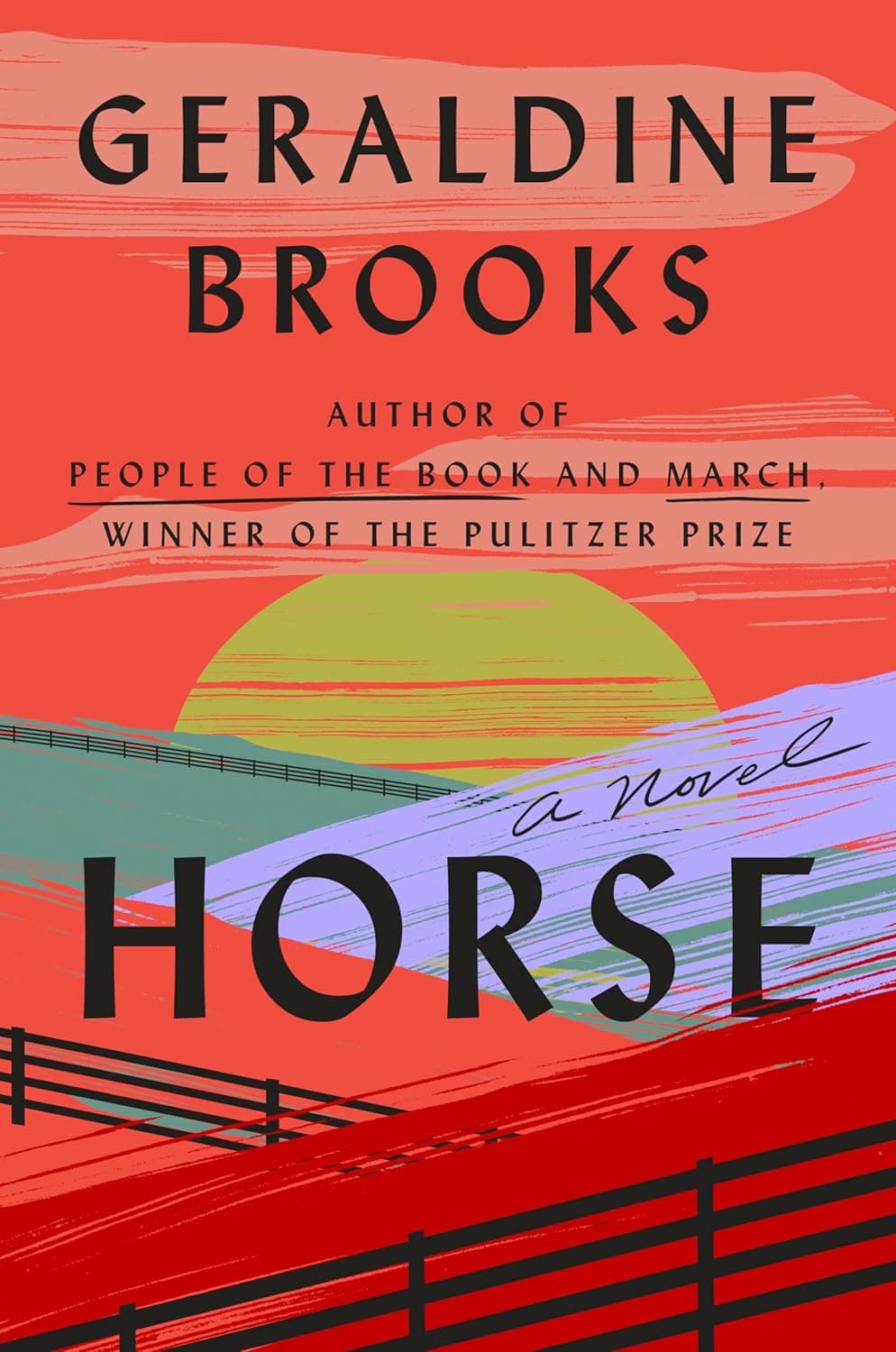
Opening
These final chapters braid Jarret’s hard‑won freedom with Jess’s raw grief after Theo’s killing, then close on acts of reclamation—of stories, bodies, and art. Across 1865, 1875, and 2019–2020, the novel threads one message: the past persists, and people resist by remembering, restoring, and refusing erasure.
What Happens
Chapter 51: Alexander’s Jarret (1865)
After killing two of Quantrill’s raiders to save Thomas J. Scott, Jarret Lewis gathers Lexington and the other stolen horses, his mind racing between fear and resolve. He abandons any thought of returning to Woodburn, aiming instead for R.A. Alexander’s Illinois farm across the river. To move through a war‑torn landscape, he needs supplies—and papers.
He doubles back to the farm where Captain Viley lies dying. The wary family listens as he claims he is protecting the horses for their master. The daughter notices the blood on his shirt; Jarret says he shot two raiders to free a Union soldier. She washes the shirt and brings paper and pen. Jarret writes Alexander an honest note, then forges two backups: one set stating the horses are bound for General Grant’s army, the other naming them a secret gift for the Confederate raider John Hunt Morgan. Armed with contingencies, he ferries the horses across the Ohio into the free state and reaches Alexander’s farm, where Napoleon Belland meets him.
A brief coda leaps forward: the war ends; Jarret passes into Canada not as a fugitive but as Alexander’s trusted agent—a free man charged with real authority.
Chapter 52: Jess (2019)
In the wake of Theo’s death, Jess lies sleepless in his bed, clinging to his scent. At the morgue, bureaucracy replaces mercy: instead of a viewing, she receives a facedown passport photo on a clipboard and confirms his identity. She then goes to the shelter to retrieve Clancy.
The attendant says the dog has been desolate. When Jess crouches, Clancy bolts into her arms, his fur dusted with a rust‑colored powder—Theo’s dried blood. He had lain on Theo’s body and would not let anyone near. Jess folds onto the floor and cradles him until both quiet. On her way to Theo’s apartment, she encounters Justine Treadwell, a young Black reporter from The Washington Post, buzzing at his building. They go upstairs together.
Chapter 53: Jess (2019)
Inside, Justine shares the police report: a rookie officer supposedly interrupts an assault on a white jogger and fires when the “suspect” raises an object believed to be a gun. Jess snaps that Theo would never assault anyone and owns no firearm. Justine confirms no weapon is recovered, then lays out the “playbook” of Race, Slavery, and Systemic Racism: the officer claims fear for his life, the jogger’s concussion erases memory, the system closes ranks.
She has already researched Theo’s life—diplomat father, mother in Nigeria denied a visa. With no powerful advocates, his case risks becoming another statistic. Justine’s aim is to humanize him with a rigorous profile that complicates any easy dismissal. She asks Jess to help; Jess agrees. The agreement lands like a finality—what Jess knows of Theo now is everything she will ever know.
Chapter 54: Jarret Lewis (1875)
A decade later, Jarret arrives in New York in polished boots and perfect tailoring for an appointment at Turf, Field and Farm. Lexington has died at twenty‑five, and editor Colonel Sanders Deweese Bruce wants Jarret’s account of the horse’s final days. Jarret describes a gentle end and his own last, careful ministrations.
When asked about his future, Jarret delivers a precise indictment of post‑Reconstruction racing: white owners and riders force Black horsemen—the very architects of the sport—out of power and into danger or menial work. He contrasts that erasure with Canada, where he first casts a legal vote while still considered property in the U.S., and where he now has a wife, Lucinda, and a son, Lucien. Then he reveals his true purpose: to buy the Thomas J. Scott painting of Lexington being led by “black Jarret.” He presents a check for a “fool’s price,” too large to refuse, and has the canvas wrapped to carry home to Canada—an act of owning his story, image, and legacy.
Chapter 55: Jess (2020)
Months on, Jess stands at LAX, shipping Clancy to Australia as she leaves the U.S. The officer who killed Theo is exonerated; the public moves on. She meets Daniel, Theo’s friend, as he clears the apartment. His grief burns as anger: he says Theo’s privileged upbringing left him vulnerable to America’s dangers for Black men, that helping a white woman proved fatal, and that Jess, as a white woman, could not fully grasp the risk.
Before leaving DC, Jess honors Theo’s wish and returns the salvaged mare‑and‑foal painting to his neighbor, explaining its value and his death. At the Smithsonian, she oversees the mounting of Lexington’s skeleton at the International Museum of the Horse in Kentucky—and sees the very painting Theo saved, Lexington, as a colt, hanging on the wall. The label reads it is given “in memory of Theodore Naade Northam,” a condition of the neighbor’s sale. A wealthy Australian collector approaches her there, commissioning her to articulate over a hundred extinct animal skeletons for an exhibition on sex, death, and the Anthropocene. Jess accepts. On the flight to Australia, she dreams of Lexington stretched full‑stride across red desert, carrying her toward a new life.
Character Development
Jarret’s arc culminates in self‑possession; Jess’s in reshaping science through art; Theo’s in a legacy that resists erasure.
- Jarret Lewis: Moves from enslaved caretaker to free agent and patron of his own narrative. His forged papers, strategic river crossing, and later purchase of his portrait show tactical intelligence and sovereign authorship of his image and legacy.
- Jess: Shifts from clinical empiricist to a maker of meaning, channeling grief into work that fuses anatomy with memory. Leaving the U.S. is both refusal and rebirth; the commission becomes a living memorial to Theo’s worldview.
- Theo: Though absent, he drives the moral center. Through memories, reporting, and the museum label, he becomes a humanized rebuttal to the “suspect” archetype and a keeper of Hidden Histories and Erased Narratives, his rescued art speaking for him.
Themes & Symbols
The novel draws a continuous line from enslavement to modern policing, showing institutions that constrain Black agency while individuals labor to preserve the truth. Jarret’s 1875 critique echoes Justine’s 2019 “playbook”: both reveal structures designed to protect white power, whether at the racetrack rail or behind the shield.
Art, in turn, becomes a counter‑archive. Jarret buys the image that once labeled him; Jess installs bones that tell stories; Theo’s “Lexington, as a colt” hangs as proof that one act of care can outlast official narratives. Freedom and agency operate on two planes: legal status and narrative control. Jarret achieves both by crossing borders and owning his portrait; Jess claims hers by choosing exile and new work; Theo’s agency is stolen, but the label “in memory of Theodore Naade Northam” insists on his personhood, not his case file.
The painting of Jarret and Lexington functions as the book’s emblem. Once a record authored by others—“black Jarret, his groom”—it becomes Jarret’s property and therefore his story. The colt painting, rescued and relabeled, extends that reclamation into the present.
Key Quotes
“black Jarret” Jarret reclaims a dehumanizing caption by purchasing the canvas itself. Owning the image converts a label into a legacy and revises the historical record from the inside.
“fool’s price” Jarret’s extravagant payment is strategic: it forces a gatekeeper to relinquish cultural property and signals the incalculable value of Black authorship over Black history.
Lexington, as a colt The title on the museum wall centers the horse’s origin story while quietly centering Theo’s care. It links conservation, curation, and compassion across centuries.
“in memory of Theodore Naade Northam” The label fixes Theo’s name in a public institution, countering the police report’s flattening of his identity. Memory becomes policy: a permanent, visible act of grief and honor.
Key Events
- Jarret’s forged papers and river crossing secure his freedom and Lexington’s safety (1865).
- Jess identifies Theo at the morgue and reclaims Clancy from the shelter (2019).
- The police narrative frames Theo as an aggressor; no weapon is found; Justine seeks to humanize him (2019).
- Jarret purchases the Thomas J. Scott portrait, rewriting ownership and authorship (1875).
- Theo’s neighbor donates the colt painting “in memory of” him; Jess mounts Lexington’s skeleton (2020).
- Jess leaves the U.S. for Australia, accepting a commission that fuses science and art (2020).
Why This Matters and Section Significance
These chapters close the loop between past and present, demonstrating how systems endure but so do acts of resistance. Jarret’s triumph requires crossing a border; generations later, Theo is killed within the system, and Jess chooses departure over complicity. The novel denies neat closure, insisting on vigilance, memory, and the radical work of storytelling.
By ending with bones and paintings—objects that outlast their makers—the book argues that justice often lives in what we preserve and how we name it. Jess’s dream of Lexington in Australia carries an American history into new terrain, committing to a future where art keeps telling the truths institutions try to forget.