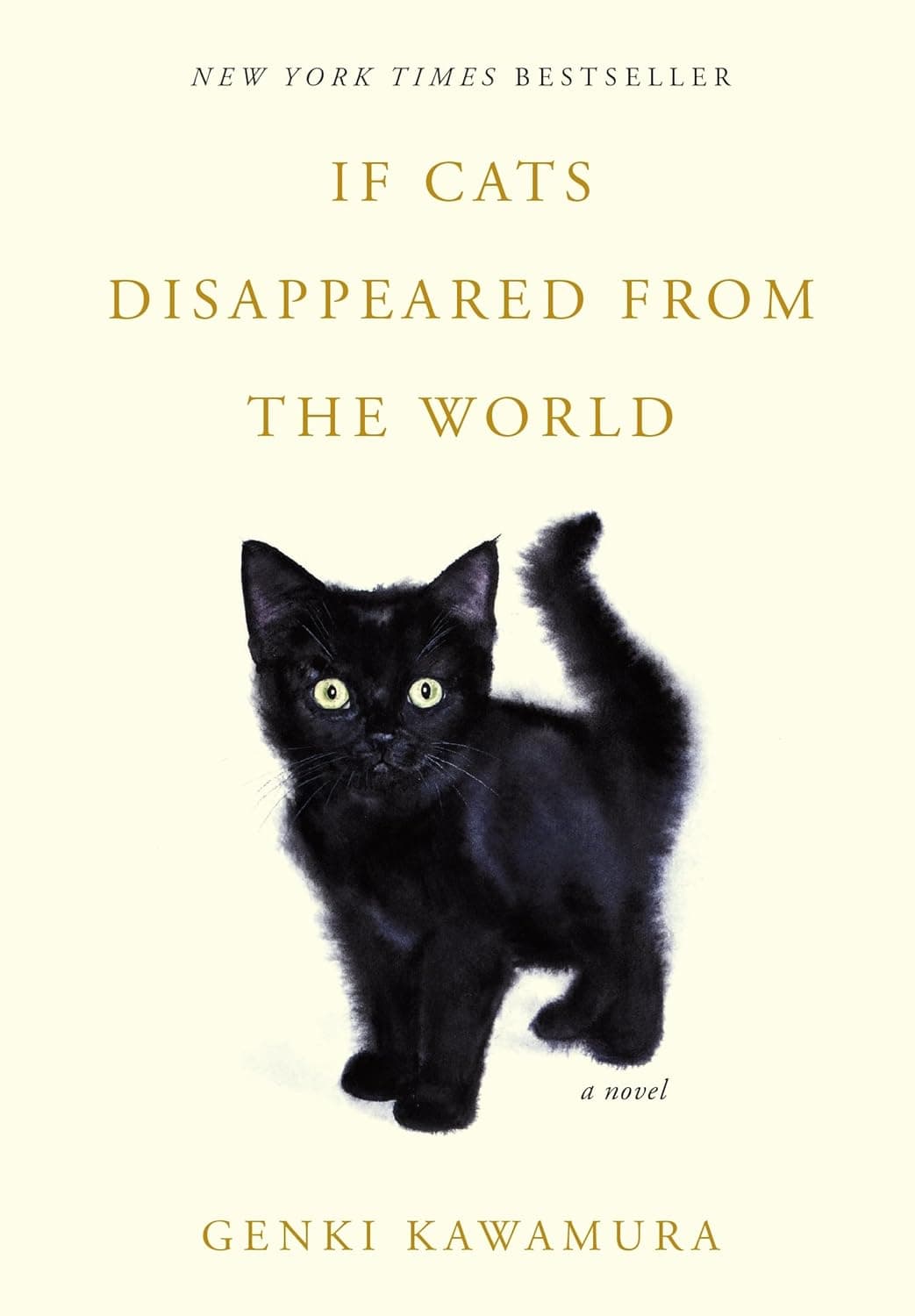
This collection of quotes from Genki Kawamura's If Cats Disappeared from the World explores the novel’s core questions about life, loss, and what gives existence its weight.
Most Important Quotes
The Law of the Universe
"In order to gain something, you have to lose something... People are always trying to get something for nothing. But that’s just theft. If you’ve gained something, it means that someone, somewhere, has lost something. Even happiness is built on someone else’s misfortune."
Speaker: The Mother (as recalled by the Narrator) | Location: Tuesday: A World Without Phones | Context: The narrator recalls his mother's personal philosophy, which she often repeated. This memory surfaces as he reflects on the deal he has made with the devil.
Analysis: Expressed as a stark, aphoristic law, this maxim becomes the novel’s moral fulcrum: every bargain in life—supernatural or otherwise—has a cost. It grounds the story’s fable-like structure and frames the theme of Loss, Memory, and Value as a zero-sum calculus that the narrator misreads at first. What begins as a justification for erasing things to survive gradually turns into an ethical revelation about what must never be traded away. Rooted in maternal wisdom, it also elevates the power of human connection and relationships to confer meaning that outlasts utility.
The Devil's True Nature
"I’m made up of all those little regrets in your life. Like, what if, whenever you reached a fork in the road of life, you’d gone the other way? What would have happened? Who would you have become? That’s what the devil is all about. I’m what you wanted to become but couldn’t. I’m both the closest and the furthest thing from who you are."
Speaker: The Devil (Aloha) | Location: Saturday: A World Without Me | Context: As the narrator prepares to part ways with the devil, he asks about his true form. Aloha explains that he is a manifestation of the narrator's own unlived life and regrets.
Analysis: This confession reframes the devil as a psychological double rather than a mere antagonist, converting the external conflict into an interior reckoning with identity. Casting Aloha as the embodiment of “what if” tightens the novel’s focus on Regret and Acceptance, with the devil’s breezy charm masking the ache of paths not taken. The paradox—“closest and furthest”—captures the tension between self-image and suppressed desire, blending irony with the doppelgänger motif. By exposing the devil as a collage of unrealized selves, the book makes acceptance of one’s actual life the story’s true act of heroism.
The Value of a Life Lived
"Yeah, but just being alive doesn’t mean all that much on its own. How you live is more important."
Speaker: The Narrator | Location: Saturday: A World Without Me | Context: The narrator tells the devil his final decision: he will not erase cats from the world, even if it means he will die tomorrow.
Analysis: This line delivers the novel’s answer to Mortality and the Meaning of Life: quality eclipses duration. After days of subtracting from the world, the narrator recognizes that love, memory, and moral choice—not longevity—give life contour. His refusal to erase cats affirms the irreplaceable bond with Cabbage and the emotional legacy of his mother, exchanging survival at any price for a principled end. The pared-down diction underscores a hard-won clarity, turning a simple sentence into the apex of his ethical growth.
Thematic Quotes
Mortality and the Meaning of Life
A Life's Purpose
"There must be something, I didn’t know what, but something on this planet that only I was meant to accomplish."
Speaker: The Narrator | Location: Monday: The Devil Makes His Appearance | Context: Immediately after receiving his terminal diagnosis, the narrator is overcome with a sense of unfinished business.
Analysis: This searching assertion reveals a conventional craving for a singular, outsized purpose—an existential anchor when death suddenly looms. The narrative will dismantle this grandiosity, showing meaning accruing instead through modest, relational acts. Structurally, the line functions as a thesis the book will invert, replacing destiny with attentiveness to the ordinary. The irony is gentle but clear: the narrator’s “something” was not a monument to achievement, but the texture of how he loved and remembered.
Life Beyond Meaning
"What do you want meaning for? Life is about desire, not meaning. Life is a beautiful, magnificent thing, even to a jellyfish."
Speaker: Charlie Chaplin (in the Narrator's dream) | Location: Wednesday: A World Without Movies | Context: The narrator dreams of Charlie Chaplin, who offers him this piece of wisdom after he questions the meaning of his life and the morality of erasing things from the world.
Analysis: By invoking Chaplin, the novel borrows the authority of a voice synonymous with humanist comedy to challenge the narrator’s hunger for tidy explanations. The jellyfish image democratizes vitality, shifting value from rational purpose to raw aliveness and appetite. This dream sequence acts as an allegorical interlude, nudging the narrator from abstraction toward embodied presence and nudging him closer to acceptance. The result is a tonal pivot: from metaphysical anxiety to an embrace of life’s unaccountable grace.
Loss, Memory, and Value
The Realization of Loss
"You only realize what the really important things are once you’ve lost them."
Speaker: The Mother (as recalled by the Narrator) | Location: Wednesday: A World Without Movies | Context: The narrator remembers his mother saying this after watching the film La Strada, where the protagonist only understands his love for a woman after she is gone.
Analysis: This maxim names the book’s method: deliberate subtraction as a way to reveal hidden significance. Phones, movies, and clocks vanish, and their absence throws long shadows across the narrator’s memories, illuminating how tools scaffold intimacy and identity. The reference to La Strada creates an intertextual mirror, aligning the narrator’s awakening with a classic narrative of belated recognition. The quote’s tragic irony—that he hears it most clearly after his mother’s death—sharpens the theme that value often arrives by negative space.
The Outsourced Self
"I had left the work of memory and even my ties to other human beings to my mobile phone. It’s pretty scary to think about what these devices have done to the human brain."
Speaker: The Narrator | Location: Tuesday: A World Without Phones | Context: After agreeing to erase phones from the world, the narrator reflects on his dependency on the device, particularly his inability to remember his ex-girlfriend's phone number without it.
Analysis: This self-indictment diagnoses a modern estrangement: technology as prosthetic memory that weakens the muscle of attention and care. The phone functions as metonymy for convenience, revealing how outsourcing memory can hollow out human connection and relationships. Paradoxically, losing the device restores a more intimate register of remembrance when the ex-girlfriend’s number resurfaces through emotion rather than data. The moment reframes loss as recovery—of agency, of presence, of felt bonds.
Human Connection and Relationships
The Emptiness of a Contact List
"Here I was standing at death’s door and I couldn’t think of a single person I cared enough about to call. I’ve connected with many people over the course of my life, but the relationships were ultimately all superficial."
Speaker: The Narrator | Location: Monday: The Devil Makes His Appearance | Context: Given the chance to make one last phone call before phones disappear, the narrator scrolls through his contacts and is struck by a profound sense of loneliness.
Analysis: This confession exposes the hollow core of the narrator’s social world: quantity without depth. The contrast between a crowded contact list and the silence at death’s edge dramatizes the difference between contact and connection. The crisis catalyzes a shift from performative to genuine intimacy, culminating in the remembered number that truly matters. Narratively, it marks the low point from which meaningful relationships will be reclaimed.
A Mother's Final Wish
"Thank you for everything you’ve done for me. And good-bye. I hope you never forget that these things are the things that make you special."
Speaker: The Mother | Location: Friday: A World Without Cats | Context: This is the closing of the letter the narrator's mother wrote to him before she died, which he receives from his ex-girlfriend.
Analysis: The letter operates as a benediction, reframing the narrator’s self-contempt through a parent’s intimate knowledge and unconditional love. By naming his “special” qualities, the mother counters the book’s earlier calculus of gains and losses with a language of gift and grace. The scene catalyzes his final choice, making sacrifice feel less like deprivation and more like fidelity to love. It crystallizes the idea that our worth is often most clearly reflected in the eyes of those who truly see us.
Character-Defining Quotes
The Narrator
"I guess it’s the same with life. We all know it has to end someday, but even so, we act as if we’re going to live forever. Like love, life is beautiful because it must come to an end."
Speaker: The Narrator | Location: Tuesday: A World Without Phones | Context: While talking with his ex-girlfriend, the narrator reflects on how people fall in love knowing it might end, and connects this to how people live their lives.
Analysis: This insight captures the narrator’s evolving poetics of impermanence: finitude as the source of beauty. The simile linking life and love transforms mortality from threat to meaning-maker, aligning emotion with philosophy. Stylistically simple, the line carries the weight of a revelation earned through grief, marking his turn from regret to acceptance. It articulates the book’s quiet thesis: endings bless what they bound.
The Devil (Aloha)
"Why not? I mean, I am the devil."
Speaker: The Devil (Aloha) | Location: Monday: The Devil Makes His Appearance | Context: The devil responds to the narrator's outrage after he capriciously decides whether the narrator lives or dies based on his newfound craving for chocolate.
Analysis: Aloha’s shrugging tautology distills his chaotic ethos: power without principle. The deadpan humor undercuts terror, using comic incongruity to reveal a cosmos that refuses tidy moral order. As the devil abdicates justification, the burden of meaning shifts squarely to the narrator’s choices. The line’s brevity and bravado make it a memorable emblem of absurdism within the book’s fable-like frame.
The Mother
"We may think we own cats, but that’s not the way it is. They simply allow us the pleasure of their company."
Speaker: The Mother (as recalled by the Narrator) | Location: Friday: A World Without Cats | Context: As the narrator grapples with the decision to erase cats, he remembers this piece of wisdom from his mother.
Analysis: This gentle correction models a relationship ethic rooted in humility and reciprocity rather than possession. By inverting ownership, the line elevates creatures like Cabbage from property to partners, sharpening the stakes of the final bargain. The phrasing’s grace—“allow us the pleasure”—becomes a miniature lesson in gratitude. It’s a signature of the mother’s influence: moral clarity delivered with tenderness.
The Ex-Girlfriend
"Whenever you called, you’d talk a lot, but then when we met up in person like this, you didn’t have much to say."
Speaker: The Ex-Girlfriend | Location: Tuesday: A World Without Phones | Context: When the narrator asks his ex-girlfriend what she remembers about him, this is one of her key, and most accurate, observations.
Analysis: Her observation slices through nostalgia, revealing the narrator’s distance-masking habits with unsparing accuracy. The contrast between phone talk and in-person silence spotlights how mediated communication can shield vulnerability. As a character, she functions as a truth-teller who refuses sentimentality, catalyzing the narrator’s self-recognition. The line helps translate abstract themes into lived behavioral patterns.
Cabbage
"You behave as if you have an understanding of my kind, when in fact you do not understand cats at all."
Speaker: Cabbage | Location: Thursday: A World Without Clocks | Context: After the devil magically grants him the ability to speak, Cabbage wastes no time in correcting the narrator's many misinterpretations of his behavior.
Analysis: Delivered in prim diction, Cabbage’s rebuke humorously topples human-centered assumptions about pets. The talking animal device, classic to fable, becomes a mirror that reflects the narrator’s projection and egocentrism. By giving voice to the overlooked, the novel enlarges the moral circle and deepens the cost of erasing cats. The moment’s wit makes its ethical sting both endearing and unforgettable.
Memorable Lines
A Matter of Perspective
"Life is a tragedy when seen in close-up, but a comedy in long shot."
Speaker: Charlie Chaplin (in the Narrator's dream) | Location: Wednesday: A World Without Movies | Context: This famous Chaplin quote appears in the narrator's dream as he struggles with the weight of his situation.
Analysis: The cinematic metaphor offers a formal lesson in framing: scale and distance recompose meaning. Close-up, the narrator’s trials read as unrelenting sorrow; wide shot, the absurdity and contingency of events invite wry compassion. This shift in vantage point becomes a coping strategy, enabling him to hold pain and humor together. It’s a line that teaches how to watch one’s life differently.
Opening and Closing Lines
Opening Lines
"If cats disappeared from the world, how would the world change? And how would my life change? And if I disappeared from the world? Well, I suppose nothing would change at all."
Location: Opening Paragraph
Analysis: The opener lays out the book’s thought experiments while revealing the narrator’s initial self-erasure. The rhetorical questions set the fable’s parameters; the final, bleak assertion exposes his nihilism. As a proleptic device, it primes the arc from insignificance to discovered value. The novel proceeds to answer these questions by testing what can vanish without betraying who we are.
Closing Lines
"I pedaled hard and then coasted downhill, gradually picking up speed as I went. Faster and faster. I was getting closer and closer until I arrived at my father’s house to deliver his letter."
Location: Sunday: Good-Bye, World
Analysis: The kinetic imagery transforms a farewell into momentum, turning passivity into purposeful motion. Choosing to deliver his will by hand, the narrator converts impending death into an act of reconciliation with his father. The downhill rush suggests release and acceptance rather than despair, reframing the ending as connection rather than extinction. The final scene thus embodies the book’s creed: we are measured by how we move toward others, even at the end.