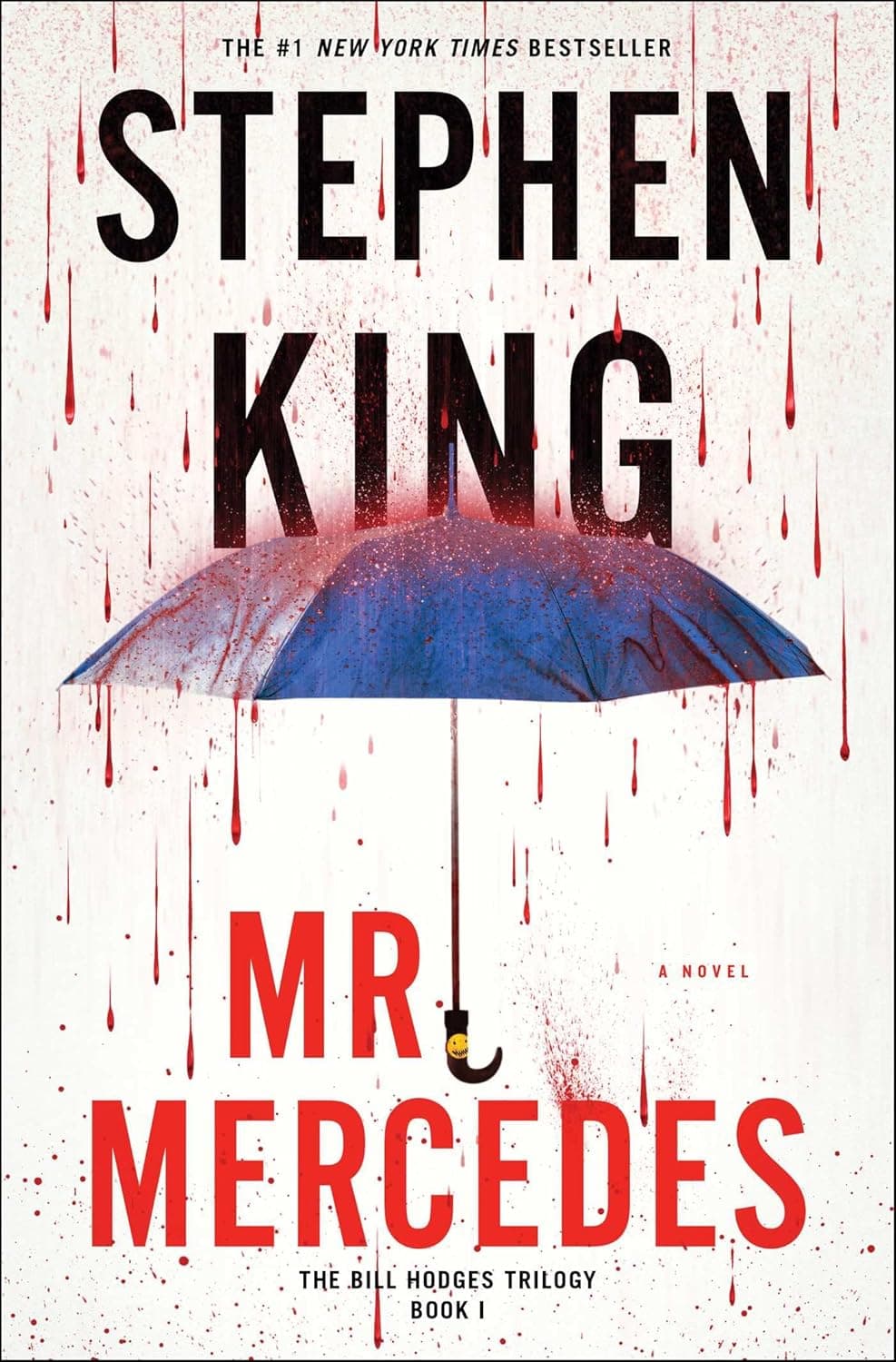
Opening
In the wake of Janey’s murder, grief collides with urgency. Hodges hides the truth from his former colleagues, assembles unlikely allies, and steels himself to hunt alone, while Brady sheds his old self and vanishes into anonymity, building toward a final, catastrophic plan. Parallel tracks—investigation and annihilation—race toward each other.
What Happens
Chapter 96: See You Soon, Mama’s Boy
Still staring at the taunt on Under Debbie’s Blue Umbrella, Brady Hartsfield understands the message: home is no longer safe. Furious his own words have been turned against him and that his attempt to kill K. William Hodges has failed, he pieces together that the dead woman must have been the “blond bitch” he saw with Hodges—wearing Hodges’s hat, for reasons he can’t quite grasp. Whoever sent “See you soon, mama’s boy” knows far too much—about Thing Two, about the car burglaries—enough to force him out.
Brady moves. He steps into his mother’s bedroom without looking at the lump beneath the sheet, pads to her bathroom, and takes her Lady Schick. In slow, deliberate strokes, he shaves his head. The new look disguises him and signals the shedding of his old lives—the tech nerd, the ice-cream man, the dutiful son. He packs the essentials and flees, convinced that this transformation is the prelude to his final strike.
Chapter 97: Interrogation Room 4
Hodges sits where suspects sit. Across from him: his old partner, Pete Huntley, and Pete’s new partner, Isabelle Jaynes. A bomb destroyed his car and killed Janelle "Janey" Patterson, sister to Olivia Trelawney; the implication is obvious—the Mercedes Killer is back. Hodges swallows his grief and gives them what looks like cooperation.
He invents a narrow, “professional curiosity” story: he reexamined Olivia’s case, looked into “stealing the peek,” visited Olivia’s mother, and—by coincidence—met Janey. He edits timelines, passes off research as his own, and omits Jerome Robinson entirely. To misdirect them, he floats a ghost from the past—the Abbascia crime family—as a plausible source of retaliation. Isabelle doesn’t buy it; Pete half-buys it but leans in to whisper that Hodges is holding out. Hodges denies everything. Committed to Vigilantism and Justice Outside the Law, he walks out determined to finish what the department could not.
Chapter 98: The Botox Queen
In the bullpen’s fluorescent wash, familiar faces blur past. In the hall, Aunt Charlotte and Uncle Henry descend not with grief, but with questions about inconvenience and, underneath, money. Their chill shocks Hodges, whose own grief threatens to break his composure.
He gives them a brisk outline of next steps and escapes to the stairwell. Alone, he finally lets the tears come—shuddering, ragged; a sleeve for a handkerchief. Then action returns: he pulls out the sunglasses case Janey bought for Holly Gibney, opens it to the number inside, and prepares to call. The case is both relic and directive—grief turning to purpose.
Chapter 99: Kisses on the Midway
Jerome dials the number and reaches Holly. The voice on the other end trembles; she cries for a cousin she barely knew but noticed for her kindness. Small details anchor her: how Hodges asked whether she’d eaten breakfast. She wants to help catch the killer—someone she assumes must be crazy.
Jerome explains that Hodges sent him, that he has the alarm and gate codes. Holly’s mind flits to the burglar alarm, to the gate, then to Jerome’s safety. Anxiety and empathy run side by side. She tells Jerome to come and asks him to pass along a message for Hodges: that she’s sad, too, and that she’s taking her Lexapro. It’s awkward, human, and decisive—Holly agrees to join the hunt.
Chapter 100: Motel 6
Brady checks into a forgettable Motel 6 near the airport using a fake credit card. He carries in two bags and something larger: an arsenal of components—the ASS PARKING cushion, the Urinesta, detonators, ball bearings, and a terrifying stockpile of homemade explosive. His head is smooth now; he feels exposed, even seductive, in his anonymity. He reframes failure as bad luck, convinces himself the worst is past, and sleeps hard.
Across town in Sugar Heights, Jerome opens the gate with the code and sees Holly peering from a window, frightened but expectant. Inside, the alarm’s warning beeps send her into panic. Jerome disarms it; Holly collapses into a chair, guilt spilling out—then blurts, “You’re black,” and blushes. The moment is awkward and honest, and it steadies them both. She leads him to Olivia Trelawney’s computer, presses him to hurry before her mother and uncle return. The machine is locked, but the password is taped to the bottom of the keyboard—careless, sad, and exactly what they need.
Character Development
These chapters flip the power dynamic: heroes step into risk and secrecy, while the villain embraces his most stripped-down self.
- K. William Hodges: Lies smoothly to the police, sealing his break from official channels in favor of private retribution. His stairwell breakdown converts despair into fuel, replacing earlier apathy with resolve.
- Brady Hartsfield: Paranoia hardens into purpose. The head shave marks a ritual transformation from worker drone and son to faceless instrument of mass harm.
- Holly Gibney: Fragile, hyper-observant, and kind, she chooses action despite anxiety. Her empathy opens a path for connection—and for crucial technical help.
- Jerome Robinson: Patient and tactful, he becomes Hodges’s bridge to Holly, handling panic and prejudice alike with gentleness and competence.
Themes & Symbols
Hodges’s deception of the police cements Vigilantism and Justice Outside the Law. The institution that once defined him can no longer move fast enough or delicately enough, so he turns to private methods, accepting the moral risk to stop a public danger. The lie to Pete tests loyalty and identity: Hodges chooses the mission over the badge.
Brady’s Motel 6 hideout embodies The Banality of Evil. The worst violence grows in bland rooms with polyester bedspreads and humming air conditioners; terror doesn’t need a lair, just privacy and purpose. Meanwhile, the plot’s engine remains Technology and Modern Crime: from “stealing the peek” as cover story to Jerome cracking Olivia’s computer, digital choices—passwords taped under keyboards—become the breadcrumbs that narrow the hunt.
Symbol: Brady’s shaved head. The act works as disguise and initiation, stripping away markers of identity so he can become, in his mind, pure intent. It represents a willful dehumanization that makes mass harm feel possible.
Loneliness hangs over everyone—Hodges’s solitary grief, Holly’s isolated wiring, Brady’s hollow interior—tying into Loneliness and Isolation. Connection—Hodges to Holly through Janey, Jerome to Holly through patience—offers the only countermove.
Key Quotes
“See you soon, mama’s boy.”
A taunt that reverses the power balance and punctures Brady’s illusion of safety. The phrase targets his deepest vulnerability—his mother—and forces him into flight and transformation.
“Stealing the peek.”
Hodges weaponizes a technical term as camouflage, using a plausible methodology to justify his interest while hiding the real contours of his off-the-books pursuit. The phrase signals how technology both aids and obscures crime.
“Tell him I’m sad, too. And that I’m taking my Lexapro.”
Holly communicates grief and clinical reality in the same breath. The line captures her honesty and vulnerability, while affirming her decision to act despite anxiety—a key step in forming the team.
“You’re black.”
Holly’s impulsive comment exposes her social awkwardness and the tense, intimate honesty of the moment. Jerome’s calm response builds trust quickly, setting the tone for their effective partnership.
Why This Matters and Section Significance
This sequence marks a decisive turn from cold-case puzzle to urgent manhunt. Hodges burns the bridge to official procedure and assembles a private team—Jerome for technical acuity, Holly for access and insight—while Brady streamlines himself for maximum harm. The cross-cutting—interrogation, grief, recruitment, preparation—tightens the coil of suspense: the investigators finally gain the tools to unmask their target just as the target perfects his deadliest plan. The outcome now hinges on speed, nerve, and the fragile alliances forged in grief.