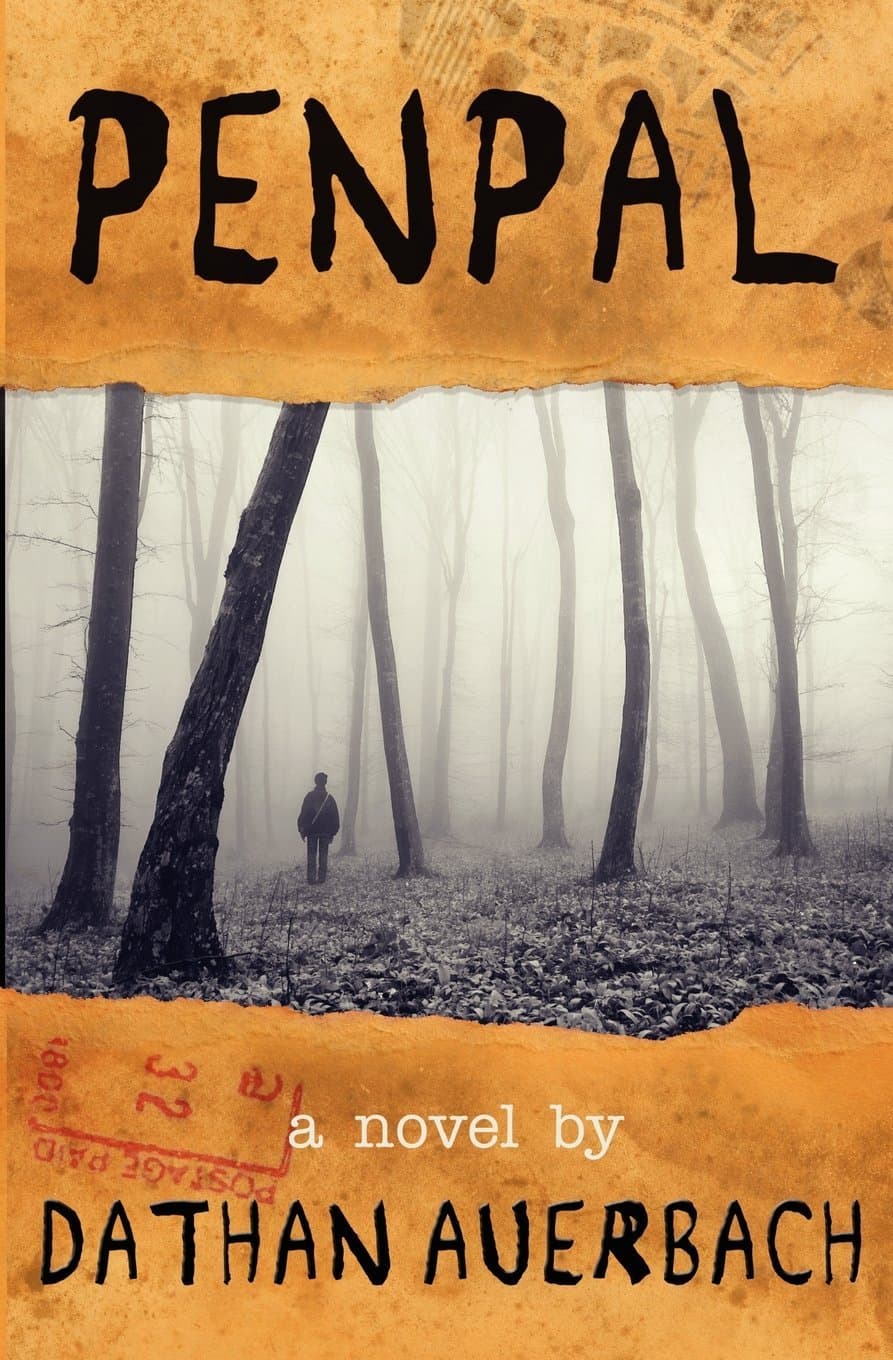
Here is a comprehensive collection of important quotes from Penpal by Dathan Auerbach.
Most Important Quotes
The Nature of Memory
"But sometimes you realize that the memories were always there – you just needed to be reminded. When this happens, it offers a previously lacked context for memories that, while never missing, were never understood. This is a special kind of gift."
Speaker: The Narrator | Location: Chapter "Memories" | Context: In the book's prologue, the narrator is philosophizing about the way memory works before he begins to tell his own story. He explains how forgotten events can resurface and re-contextualize a person's entire life story.
Analysis: This passage lays out the book’s governing premise: the mind recovers what it already holds, reframing it with painful clarity. It announces the theme of The Unreliability and Fragmentation of Memory, casting the narrative as an excavation in which the ordinary detritus of childhood is reinterpreted as evidence of horror. The “gift” of new context becomes double-edged, granting understanding while stripping away innocence. By previewing the novel’s nonlinear method, the quote primes readers to assemble meaning from scattered recollections, turning the act of reading into a shared investigation with the narrator.
The First Undeniable Clue
"This isn’t how you spell my name … I didn’t write this letter."
Speaker: The Narrator | Location: Chapter "Footsteps" | Context: After being found in the woods as a six-year-old, the narrator is shown a "running away" letter that his mother and the police believe he wrote. As he reads the note, he has a chilling realization that proves his innocence and points to a malevolent, outside force.
Analysis: A child’s simple correction becomes irrefutable proof that someone else is writing his life. This moment sharpens hazy dread into the concrete threat of Stalking and Obsession, revealing a manipulator who tries to sever the bond between mother and son. The misspelling functions as synecdoche for stolen identity: even his name—his most basic marker of self—has been appropriated. From here, the book’s eerie vignettes lock into a single sinister pattern, and the story pivots from uncertainty to pursuit.
The Balloon Project's True Nature
"I was in every photo."
Speaker: The Narrator | Location: Chapter "Balloons" | Context: Years after the kindergarten "Balloon Project," the narrator, as a child, finally lays out all the Polaroids sent by his supposed penpal. He makes the horrifying discovery that he is secretly pictured in every single photograph, revealing the project was co-opted by his stalker.
Analysis: What should be a celebration of community is exposed as an archive of surveillance, a perfect metaphor for corrupted nostalgia. The revelation intensifies the Loss of Innocence by retroactively tainting a treasured memory, showing how joy can be weaponized by a watcher who never left the frame. The line’s stark brevity mimics the shock of recognition: his life has been documented without consent, presence confirmed through absence. It also proves that The Stalker / Penpal has been physically proximate for years, turning childhood into a gallery curated by obsession.
The Horrifying Climax
"He paid me $100 so that I would bury him with my boy …"
Speaker: Josh's Father (recounted by The Narrator's Mother) | Location: Chapter "Friends" | Context: The narrator's mother is finally telling him the full story of how Josh's body was discovered. She recounts the confession of Josh's father, who realized he was paid by the stalker to fill in the very hole where the man had entombed himself with his son, Josh.
Analysis: This confession is the novel’s darkest revelation and the apex of its tragic irony: a grieving father becomes an unwitting participant in the perpetrator’s final desecration. It distills the stalker’s pathology—possession masquerading as love—into a grotesque tableau of self-burial. The line gathers the book’s central threads, from the fate of Josh to the meticulous calculation behind every intrusion. As the endpoint of the narrator’s excavation, it transforms scattered terror into unbearable coherence, the answer that makes every earlier fragment horrific in retrospect.
Thematic Quotes
Stalking and Obsession
"Your walls, man. Haha. Your walls are covered in Polaroids of yourself! There are like hundreds of them! What’d you hire someone to—"
Speaker: Josh | Location: Chapter "Boxes" | Context: During their secret night-time excursion to the narrator's abandoned childhood home, Josh enters the narrator's old bedroom and discovers that the stalker has turned it into a shrine, covering the walls with photos of the narrator.
Analysis: Josh’s joking tone collapses mid-sentence as humor runs into the brutal fact of a shrine, revealing the scope of Stalking and Obsession. The “hundreds” of Polaroids echo the earlier photos from “Balloons,” proving that the documentation never stopped—it only moved indoors. The desecration of a childhood bedroom—once a sanctuary—dramatizes how the intruder colonizes private space. The moment is a visual thesis: obsession isn’t abstract; it’s architectural, arranged floor-to-ceiling.
The Unreliability and Fragmentation of Memory
"The story that I’m about to tell you is the product of my own mental archaeology. Of course, like all great digs, how the artifacts fit together in a timeline is about as immediately clear as which things are important and which are not."
Speaker: The Narrator | Location: Chapter "Memories" | Context: In the prologue, the narrator explains his method for telling the story, framing it as an archaeological dig into his own past where he must piece together memories, conversations with his mother, and guesswork.
Analysis: By likening recollection to excavation, the narrator foregrounds interpretation over certainty, the essence of The Unreliability and Fragmentation of Memory. “Artifacts” emphasizes that memories are inert until arranged, making structure—not just content—central to meaning. The line legitimizes the book’s nonlinearity, where chronology is provisional and significance emerges in hindsight. Horror here is not only what happened, but how understanding assembles itself too late.
Friendship and Loyalty
"Josh was finishing the map – that must have been his idea for my birthday present. He had resumed the expedition on his own. That was our first great adventure, and he had decided to finish it, for me …for us."
Speaker: The Narrator | Location: Chapter "Friends" | Context: The narrator's mother describes the piece of paper found in Josh's pocket when his body was discovered. The narrator realizes it was the map they started as children, and that Josh was trying to finish their shared adventure as a gift.
Analysis: The unfinished map becomes a relic of devotion, crystallizing the theme of Friendship and Loyalty. Josh’s solitary return to their quest reframes him not as distant, but steadfast—still orienting himself by a childhood promise. The gift he intends is a repaired past, an attempt to chart a way back to joy. That this act leads him into mortal danger turns loyalty into tragedy, a compass that points straight through the dark.
Loss of Innocence
"In a quiet room, if you press your ear against a pillow, you can hear your heartbeat. As a six-year-old boy, the muffled, rhythmic beats sounded like soft footsteps on a carpeted floor, and so as a kid, almost every night – just as I was about to drift off to sleep – I would hear these footsteps, and I would be ripped back to consciousness, terrified."
Speaker: The Narrator | Location: Chapter "Footsteps" | Context: This is the opening paragraph of the first story, "Footsteps." The narrator describes a common childhood experience—misinterpreting the sound of his own heartbeat—and the innocent fear it created.
Analysis: The passage starts as a universal childhood misreading and becomes an allegory for the Loss of Innocence. The imagined “footsteps” foreshadow the real ones, collapsing the safety line between inside and outside. Sonically, the image is perfect horror craft: a lullaby rhythm reinterpreted as intrusion. The book’s cruel magic is here in miniature—what you think is harmless is exactly what you should fear.
Character-Defining Quotes
The Narrator
"But I remember."
Speaker: The Narrator | Location: Chapter "Memories" | Context: At the end of his philosophical introduction about the nature of memory and forgetting, the narrator makes this simple, declarative statement, signaling the true beginning of his story.
Analysis: Three words declare a mission and a burden: refusal to accept the mercy of forgetting. After musing on memory’s gaps, this pivot asserts agency—he will choose pain if it brings truth. It defines him as a witness to his own life, committed to reconstructing what the child could not name. The sentence sets the book’s tone: clear, spare, and resolute, a candle held up to a collapsed tunnel.
Josh
"You left."
Speaker: Josh | Location: Chapter "Friends" | Context: At the narrator's twelfth birthday party, years after their friendship has faded, the narrator confronts Josh about the distance between them. Josh offers this simple, painful explanation for why their relationship changed.
Analysis: The line’s bluntness is its power: beneath the supernatural dread lies an ordinary wound—abandonment. From Josh’s perspective, safety measures looked like desertion, and a once-shared trauma became his to carry alone. The accusation reframes their estrangement as grief rather than indifference, deepening his characterization beyond “friend lost to fear.” It also foreshadows his final act with the map, proving that the past he names still governs him.
The Narrator's Mother
“Because I never put any fucking blankets or bowls under the house for Boxes. You think you were the only one to find them there? Don’t you tell me that I lied to you about there being someone in that house, goddamn you.”
Speaker: The Narrator's Mother | Location: Chapter "Boxes" | Context: As an adult, the narrator confronts his mother about why she lied about new owners living in their old house. She responds with this furious, terrified outburst, revealing she knew the stalker had been living under their home.
Analysis: Her eruption yokes love to terror, revealing years of vigilance carried in silence. The profanity is not gratuitous; it’s the diction of someone who has spent too long holding a door shut. This moment reframes her as both protector and survivor, someone who fled not out of paranoia but informed fear. By confirming a presence “under the house,” she collapses metaphor into geography—the danger was literally foundational.
The Stalker / Penpal
"hello"
Speaker: The Stalker / Penpal | Location: Chapter "Maps" | Context: While the narrator and Josh are on their makeshift raft exploring the tributary at dusk, they hear rustling in the woods. After jokingly calling out "hello" themselves, they hear this single, whispered word in response from the darkness.
Analysis: A single word, deflated into a breath, is the novel’s purest chill. It confirms proximity, collapses watcher into participant, and turns play into pursuit. The mimicry twists a benign greeting into taunt, signaling a predator who understands that terror thrives on understatement. After this, the fear is no longer conceptual; it speaks back.
Veronica
“Hhh … he … p … pi … picture. M … my pictu … he took it.”
Speaker: Veronica | Location: Chapter "Screens" | Context: Lying broken in the hospital after the hit-and-run, Veronica uses her last moments of consciousness to try and explain to the narrator what happened.
Analysis: Her fragmented speech mirrors her failing body and the fractured clues the narrative assembles. By naming the “picture,” she ties her fate to the stalker’s photographic compulsion, proving the pattern never ended. The utterance also recasts her death from random violence to targeted ritual, integrating her tragedy into the main design. As last words, they function as both clue and epitaph—she dies testifying.
Mrs. Maggie
"That night, she told me, 'Tom’s home.'"
Speaker: The Narrator (recounting Mrs. Maggie's words) | Location: Chapter "Maps" | Context: As an adult, the narrator finally understands what Mrs. Maggie was trying to tell him on the night he and Josh explored the woods. He had misinterpreted her words due to her Alzheimer's, thinking she was warning him that his own mother was home.
Analysis: The line unlocks Mrs. Maggie’s role as a tragic mis-seer—one whose illness made her a witness no one could read. In calling the intruder “Tom,” she confuses predator with husband, folding menace into memory. The dramatic irony is acute: her joy was a warning, but only in retrospect can it be heard. Her condition doesn’t erase her significance; it renders it heartbreakingly opaque.
Memorable Lines
The Central Riddle
"How far can you go into the woods?"
Speaker: The Narrator's Mother, originally | Location: Chapter "Footsteps" | Context: The narrator recalls a riddle his mother and grandfather told him as a child. The answer is "halfway," because after that, you're coming out.
Analysis: The riddle begins as a child’s logic puzzle and evolves into the book’s existential refrain. In the forest, it becomes a talisman against panic—also a taunt about how easily direction flips into its opposite. As a metaphor for memory-work, it warns that descent must have a limit: cross the midpoint and you may not return. The line thus measures both geography and psyche, the peril of going too far in.
The Narrative Frame
"Now begin in the middle, and later learn the beginning; the end will take care of itself."
Speaker: Harlan Ellison (Epigraph) | Location: Before Chapter "Footsteps" | Context: This quote from author Harlan Ellison is used as an epigraph for the book, appearing after the "Memories" prologue and before the first narrative chapter.
Analysis: The epigraph is a blueprint for the novel’s architecture: disorient first, clarify later. It authorizes the midstream entry of “Footsteps” and the subsequent ricochet through time, aligning structure with theme. Readers become archaeologists, too, trusting that endings emerge from patient assembly. The quote also promises a grim inevitability—the end exists whether or not we are ready to see it.
Opening and Closing Lines
Opening Line
"When I was younger, I took a job at a deli that had what the owner called an 'ice cream buffet.'"
Speaker: The Narrator | Location: Chapter "Memories" | Context: This is the first sentence of the book, beginning an anecdote about a little girl overwhelmed by choice who is given a giant ice cream cone she likely won't remember.
Analysis: The gentle, mundane scene disarms, setting up the tonal whiplash that follows. As parable, it captures how small kindnesses—and small terrors—slip from memory, while their effects endure. The image of abundance fading echoes the narrator’s lost context: he, too, was given more than he could hold. It inaugurates a meditation on how we are shaped as much by what we misremember as by what we recall.
Closing Lines
"We were explorers. We were adventurers. We were friends."
Speaker: The Narrator | Location: Chapter "Friends" | Context: These are the final words of the novel. After recounting the entire horrifying story and its devastating conclusion, the narrator ends with this simple, poignant eulogy for his lost friend, Josh.
Analysis: The anaphora is elegiac, fixing identity in the past tense while honoring what remains true. After prolonged dread, the book closes on the counter-theme of Friendship and Loyalty, insisting that love is the story’s final frame, not horror. The triptych—explorers, adventurers, friends—restores their childhood mythos as a memorial. It is a small, sturdy ending: a name for what was good, held against the dark.