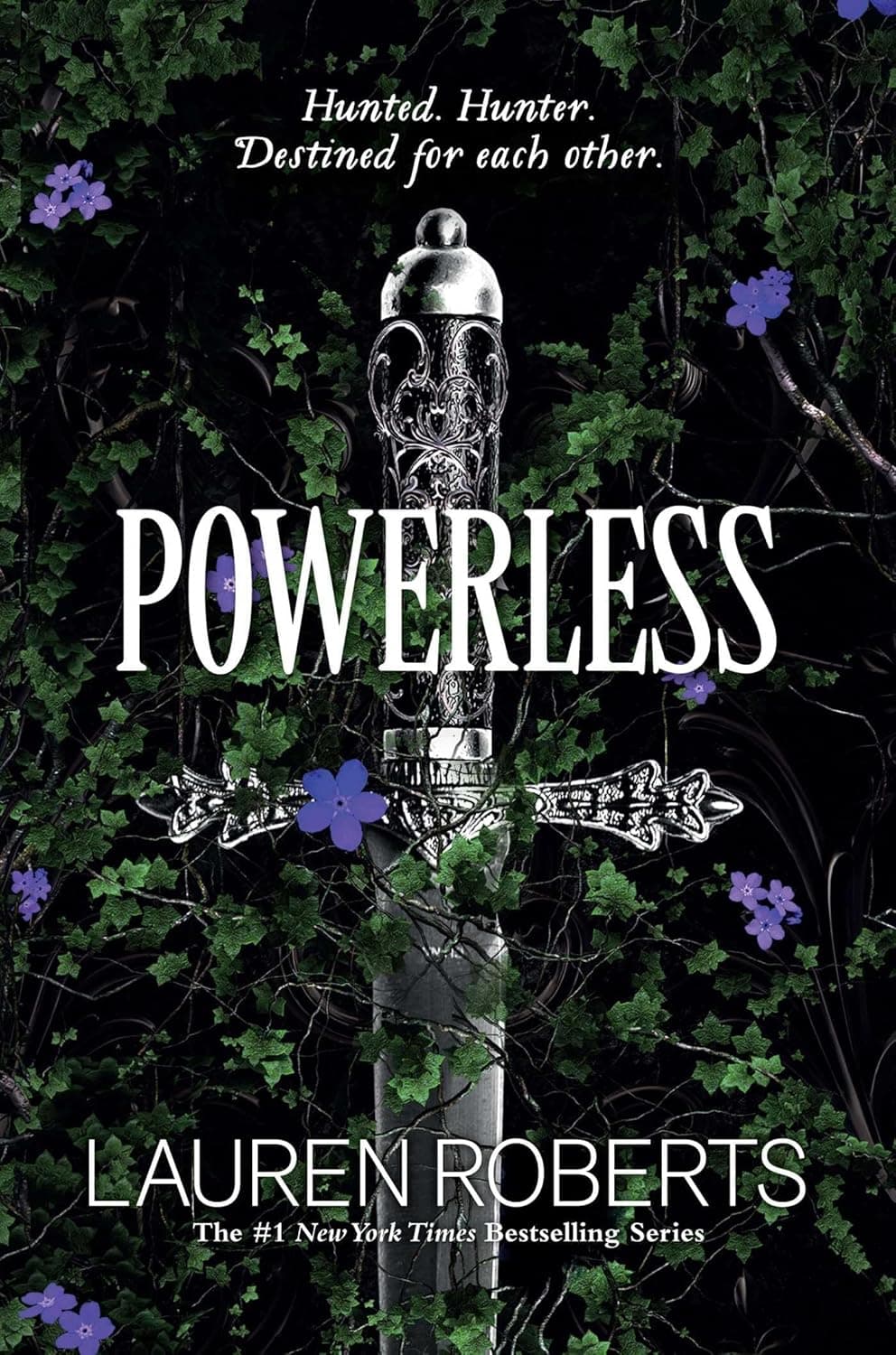
Opening
Ballroom glitter shatters into smoke and screams as the Resistance strikes, and the Trials lurch from spectacle to blood sport in the Whispers. Across these chapters, attraction ignites where duty forbids it, while power tightens its grip and masks—literal and emotional—crack under pressure.
What Happens
Chapter 21: A Dance and a Disaster
At the pre-Trials ball, Paedyn Gray chooses a silver dress to burnish her “Silver Savior” attention magnet. She dances first with Kitt Azer, whose charm can’t hide the shadow of his father, King Edric. When she presses him on the Trials’ fairness, he deflects and slips away for drinks.
After a rotation of suitors, Kai Azer cuts in. The connection hits fast—“perfectly, pieces of a puzzle snapping into place.” Their banter crackles: he calls her a “vision,” they mock the empty pomp, and she notices the boy from the Loot—whose note she once stole—serving at the edges of the room.
Explosions rip the air. A throwing knife slices Paedyn’s arm. Masked attackers storm the ballroom, and Paedyn realizes they’re not using powers—they’re Ordinaries. Kai shields her with his body, throws up a forcefield, and takes command with the composure of the kingdom’s future Enforcer. Paedyn tries to stay and help, but Kai hauls her out over his shoulder; as they go, she locks eyes with the Loot boy—an attacker who recognizes her. Finding Kitt arguing with guards, Kai snaps that the prince’s survival is the kingdom’s top priority, orders both Kitt and Paedyn to a safe room, and charges back into the chaos, wreathed in fire. The Ordinaries’ strike thrusts Revenge and Justice into the story’s center.
Chapter 22: The Resistance and a Secret Rescue
In the stifling safe room, a Healer seals Paedyn’s arm, leaving a thin scar, while Kitt paces. Under Paedyn’s pointed questions, Kitt finally names the attackers: the Resistance, Ordinaries rising against the crown, rumored to work with exiled Elites called Fatals. He repeats his father’s line—that “the Ordinaries’ sacrifice is necessary for the greater good”—and Paedyn calls it what it is. Choice, she tells him, always exists. The truth unsettles him.
The king declares the Trials will proceed without delay. As guests are released, Paedyn sets her course: survive the first Trial and find the Resistance. Instead of heading to her room, she slips into the wrecked ballroom and finds Kai slumped on rubble, bloody and exhausted, a knife buried in his shoulder blade. She yanks it free; he heals the wound himself, another scar etched into his back. Their flirting is razor-edged—care wrapped in challenges. He admits the Resistance’s motive tonight was unclear; they were too few for a coup. As he leaves for meetings, he tosses a grin and a plea cloaked as a dare: “Promise me you’ll stay alive long enough to stab me in the back?” Paedyn laughs: “That’s been my goal all along, prince.” Their dangerous magnetism pushes Forbidden Love and Romance into motion.
Chapter 23: The Whispers
Kai comes to in the Whispers, drugged, disoriented, and alone. A leather band fuses tight around his arm. A note in his pocket lays out the first Trial: six days to steal as many bands as possible; returning empty-handed is not an option. The king has engineered a hidden, lawless hunt. Kai scales a towering pine despite his fear of heights to scout for water and a path.
On the move, his thoughts drift to Paedyn—“a flame, and I’m going to get burned.” He scavenges a sword, snares a rabbit, and camps near a man-made creek. A Brawny contestant, Braxton, stalks into the firelight. They circle; then it’s fists, grit, and will. Kai dominates early, but Braxton traps him against the flames and shoves him chest-first into the fire. As Braxton reaches for the sword to cut Kai’s band, Kai heaves him into the blaze, strips his band, and orders him to go. Alone again, Kai binds his blistered burn with a torn shirt. Pain hums, but his resolve doesn’t break. The Trial’s design lays bare Power and Oppression as entertainment and control.
Chapter 24: Illusions and Injuries
Paedyn wakes in the Whispers to the same note and leather band. She crafts a makeshift bow and arrows, forages, and trudges through hunger and boredom—until a shimmering pool appears, Kitt’s corpse floating within. She sprints and leaps—and smashes onto dry ground. The vision dissolves.
Ace, a Muter, toys with her mind, pelting her with hallucinations of her starving younger self after her father’s death. Paedyn steadies. She sees through the smear of memory and fear, refusing to let it hollow her out—a turn deepening the story’s pulse of Deception and Hidden Identities. Then Ace multiplies into a dozen duplicates. She studies sweat and breath and finds the real one. Her arrow thuds into his leg, but his spear kisses too close—opening a deep gash across her stomach. She bolts into the trees, blood pouring, Ace wounded but alive behind her.
Chapter 25: On the Brink of Death
Paedyn staggers through the forest, feverish, losing blood fast. She needs water and a clean bandage now or she’ll die. The orange blink of a campfire draws her to a creek—and a voice in the dark: “You just can’t seem to stay away from me, can you, Gray?”
She forces her bow up to hide the wound, but Kai’s amusement evaporates into alarm as he reads her sway and pallor. She crumples. He catches her, the Enforcer mask gone, panic stark on his face. “Pae,” he calls her—soft, urgent—as his fingers find the gash. He slices away blood-soaked fabric, jaw tight at the damage, hands moving to save her.
As the world narrows, Paedyn hears his voice like a flare: “If you die, I’m going to kill you.” In that paradox, his duty to win slams into his need to keep her alive—the breaking point of Duty vs. Morality.
Character Development
The palace game dissolves into survival, dragging true loyalties into the open. Masks slip: bravado, propaganda, and performance give way to instinct, choice, and care under fire.
- Paedyn: Hardens from survivalist to seeker of the Resistance; improvises weapons and sees through Ace’s illusions; bleeds, asks for nothing, but accepts help when the body fails; her near-death fuses her fate to Kai’s in the Trials.
- Kai: Plays Enforcer with command and courage at the ball; alone in the Whispers, he’s strategist, hunter, and brutal fighter; his inner monologue exposes fear and desire; when Paedyn falls, his restraint cracks and tenderness takes over.
- Kitt: Paces and parrots propaganda, then hears the fracture in his own certainties; he balks at hiding yet bows to practicality; envy of Kai’s battlefield role pricks at him as moral questions sharpen.
Themes & Symbols
Masks, illusions, and personas sharpen the seam between truth and performance. The Resistance’s veiled faces, Ace’s hallucinations, and Paedyn’s “Silver Savior” dress expose identity as a weapon. Emotional disguises fracture too—Kai’s teasing veneer drops to raw fear when Paedyn collapses.
Power curdles into spectacle as the king exports violence to the Whispers, turning contestants into predators and prey. The leather bands quantify dominance; the forest becomes a stage where oppression masquerades as merit. Against that machinery, duty buckles under conscience: Kai chooses the person over the prize, while Kitt begins to question the creed he’s inherited. Threaded through is a charged, forbidden pull—glances, quips, and promises that read like vows—complicating every choice. Symbols flare: Paedyn’s silver as a crafted myth; fire as both Kai’s shield and his pain; scars as receipts of survival.
Key Quotes
“Perfectly, pieces of a puzzle snapping into place.”
Their dance clicks beyond attraction—it signals compatibility that threatens both of their loyalties. The line turns a ballroom waltz into foreshadowing for a battlefield partnership.
“The Ordinaries’ sacrifice is necessary for the greater good.”
This propaganda distills the regime’s moral calculus: the many must bleed so the few can blaze. Paedyn’s repudiation forces Kitt—and the reader—to confront the cost buried inside “greater good.”
“A flame, and I’m going to get burned.”
Kai frames desire as danger, admitting awareness and inevitability in one breath. The metaphor captures both Paedyn’s draw and the peril of wanting her inside his father’s cruel game.
“Promise me you’ll stay alive long enough to stab me in the back?” / “That’s been my goal all along, prince.”
Their banter weds flirtation to threat, defining a relationship that is equal parts seduction and survival. The exchange underlines how intimacy and rivalry coil around the same heartbeat.
“You just can’t seem to stay away from me, can you, Gray?”
Dark humor softens a lethal setting, establishing a cadence that makes their reunion feel fated rather than accidental. It’s a tether—voice before touch—that steadies both characters on the brink.
“If you die, I’m going to kill you.”
The paradox lands like a confession: his duty is secondary to her life. It’s the clearest crack in the Enforcer’s armor and a pivot toward choice over command.
Why This Matters and Section Significance
These chapters pivot the story from courtly intrigue to survival horror, exposing the monarchy’s cruelty and turning the Resistance from rumor into rupture. The Whispers strip away spectacle and force the characters to act without an audience, revealing who they are when no one is watching.
Most crucially, the Trials fuse Paedyn and Kai’s trajectories—enemies in name, partners in necessity. His point of view reframes him from rival to complicated protector, while Paedyn’s resolve shifts from getting by to getting answers. Together, they carry the story into its next phase: a contest that tests not just strength, but the courage to choose one another over the systems that forged them.