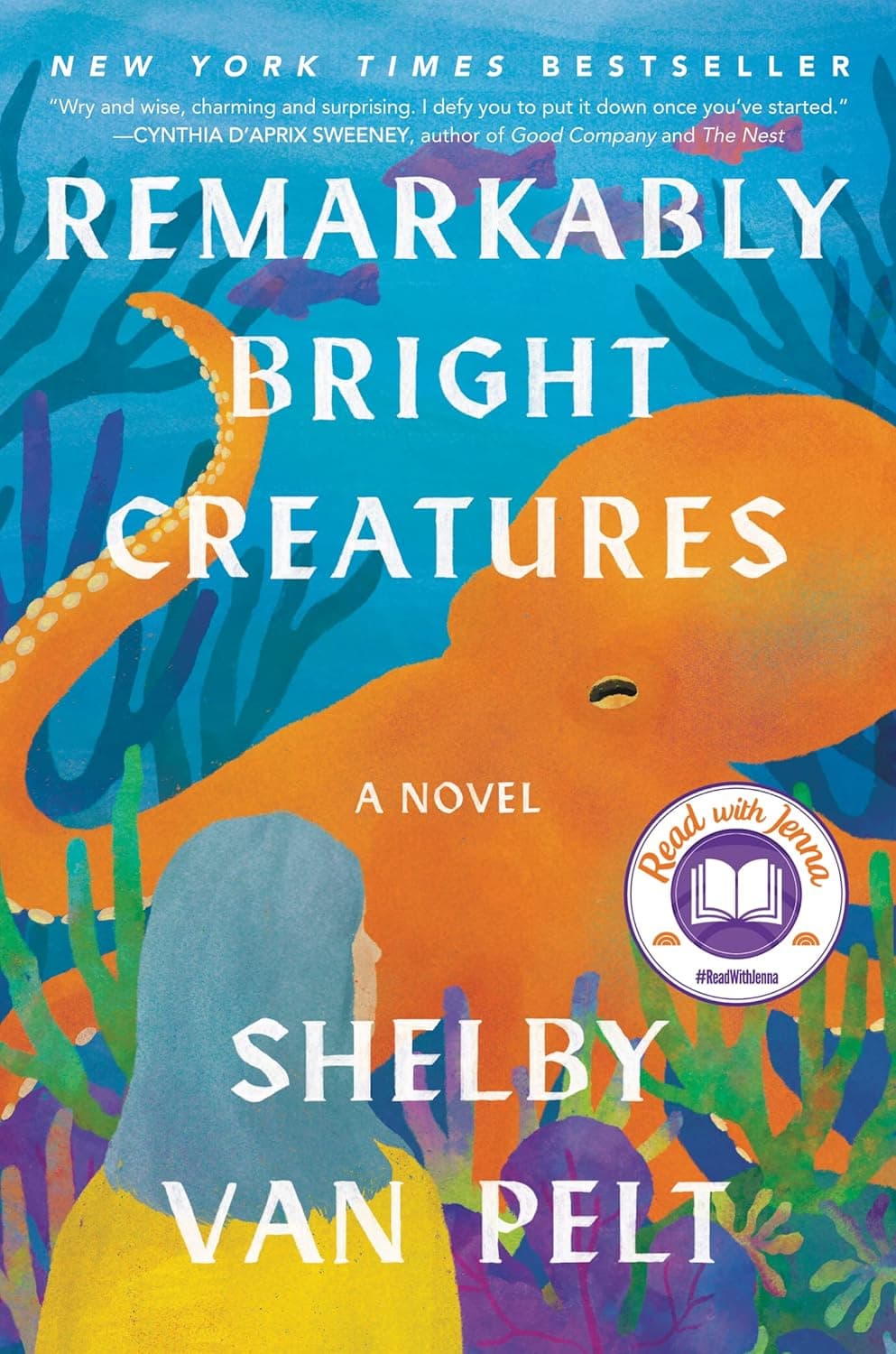
What This Theme Explores
Aging and Mortality in Remarkably Bright Creatures probes how the awareness of an endpoint reshapes daily life, priorities, and connections. The novel asks whether aging must equal diminishment, or whether it can become a season of renewed purpose. It interrogates how people resist becoming burdens, how they make peace with loss, and what legacies—of love, truth, or presence—they choose to leave behind. Most of all, it explores how facing time’s limits can wake characters to the relationships and risks that make their final chapters meaningful.
How It Develops
The theme emerges quietly through the parallel routines of Tova Sullivan and Marcellus. Tova, a seventy-year-old widow, uses ritual—mopping the aquarium floors, polishing glass, keeping house—to fend off the inertia of grief and the creeping fear of outliving usefulness. Marcellus, a captive giant Pacific octopus, frames his narration around a fixed lifespan, transforming abstract mortality into a visible countdown. Their twin awarenesses—hers implicit in aching joints and dwindling friend circles, his explicit in days remaining—set a tone of tender vigilance against time.
Midway, the story pivots from quiet endurance to confrontation. Tova’s fall and ankle injury strip away the illusion of control and force practical calculations about living alone. Her application to Charter Village is not surrender so much as a protective hedge against indignity: a controlled end rather than a chaotic one. The narrative thus reframes aging from something endured passively into something actively managed—with plans, trade-offs, and a voice.
By the end, mortality becomes a catalyst for decisive, even hopeful change. Marcellus spends his waning strength to deliver the truth about Erik Sullivan, choosing a purposeful end and, ultimately, freedom. Tova, newly aware of family she thought lost forever, abandons the antiseptic safety of retirement living for an imperfect, interdependent future. The theme resolves not with denial of death, but with a redefinition of what a good final chapter looks like: one tied to connection, truth, and risk.
Key Examples
-
Marcellus’s Countdown: From the first pages, Marcellus tallies his days, turning mortality into a clock that won’t be ignored. The countdown, clinical and calm, pressures every choice he makes and elevates small acts—watching, remembering, plotting—into urgent uses of precious time.
-
Tova’s Physicality at Work: The pop of Tova’s back and the mop she refuses to abandon fuse dignity with decline. She does the “deep cleaning” no one expects of a woman her age, insisting that usefulness can outlast youth even as her body argues otherwise.
-
The Shrinking Knit-Wits: Each empty chair at the table renders time visible in the room. Their dwindling number reveals aging as a communal experience—one that compounds private losses with shared anticipations of who will be next.
-
Tova’s Decision to Move: After the fall, Tova’s choice to sell her home and apply to Charter Village is a practical theology of aging: control what you can before control is taken from you. It exposes the tension between preserving autonomy and fearing the burden one might become.
-
Marcellus’s Final Act: As his strength fades, Marcellus spends his last reserves to guide Tova toward the truth. He reframes dying not as an erasure, but as a culmination shaped by intention—choosing purpose and, finally, the open sea over captivity.
Character Connections
Tova Sullivan embodies the paradox of aging: she is determinedly capable and quietly vulnerable. Her routines keep grief at bay, but the injury forces a reckoning with contingency—what happens when willpower meets the body’s limits. Tova’s late-life pivot—from a “managed” ending at Charter Village to the riskier openness of new family—insists that growth is still possible at the edge of life.
Marcellus offers a lucid, unsentimental perspective on mortality. Where humans flinch from the end, he names it, numbers it, and lives accordingly. His final choices give shape to a philosophy: a finite life can be large if its last acts are devoted to connection, truth-telling, and freedom.
The Knit-Wits render aging as a chorus rather than a solo. Their shrinking circle, mutual caretaking, and frank talk about health give social texture to mortality—reminding us that death rearranges communities as much as individuals. Their concern for Tova exposes cultural anxieties about seniors’ safety and independence, even as it affirms the sustaining force of friendship.
Cameron Cassmore broadens the theme beyond old age to the specter of wasted potential. At thirty, he feels time’s pressure as a moral deadline rather than a biological one. His search for belonging and purpose shows that mortality also means the death of unlived lives—pushing him toward responsibility before his story calcifies.
Symbolic Elements
Tova’s House: Built by her father and thick with memory, the house embodies lineage and loss. Selling it marks a decisive shift from curating ghosts to choosing the living, releasing a space that has preserved grief in favor of a future that might heal it.
Charter Village: With its polished promise of “Happy Endings,” the retirement community symbolizes safety engineered into sterility. Tova’s eventual rejection reframes a good ending as one anchored in messy connection rather than curated comfort.
Tova’s Ankle Injury: The boot, awkward and visible, literalizes vulnerability and slows her into confrontation with dependence. It becomes the hinge on which her plans turn—from stoic independence to intentional reimagining of how (and with whom) she’ll face the years ahead.
Contemporary Relevance
As populations age, the novel speaks directly to debates about elder care, autonomy, and the dignity of risk. It challenges stereotypes that cast seniors as burdens by portraying late-life agency, complexity, and change. By pairing an elderly woman with a sentient captive creature, the book argues for recognizing wisdom—and the capacity for reinvention—in lives we might overlook. It ultimately invites readers to imagine endings that prize truth and interdependence over mere safety.
Essential Quote
“ My life span: four years—1,460 days. ”
This line crystallizes the book’s approach to mortality: naming the limit to reclaim power over it. By turning lifespan into a countable measure, Marcellus forces urgency into every scene—and models how clarity about the end can sharpen purpose, compassion, and choice in the time that remains.