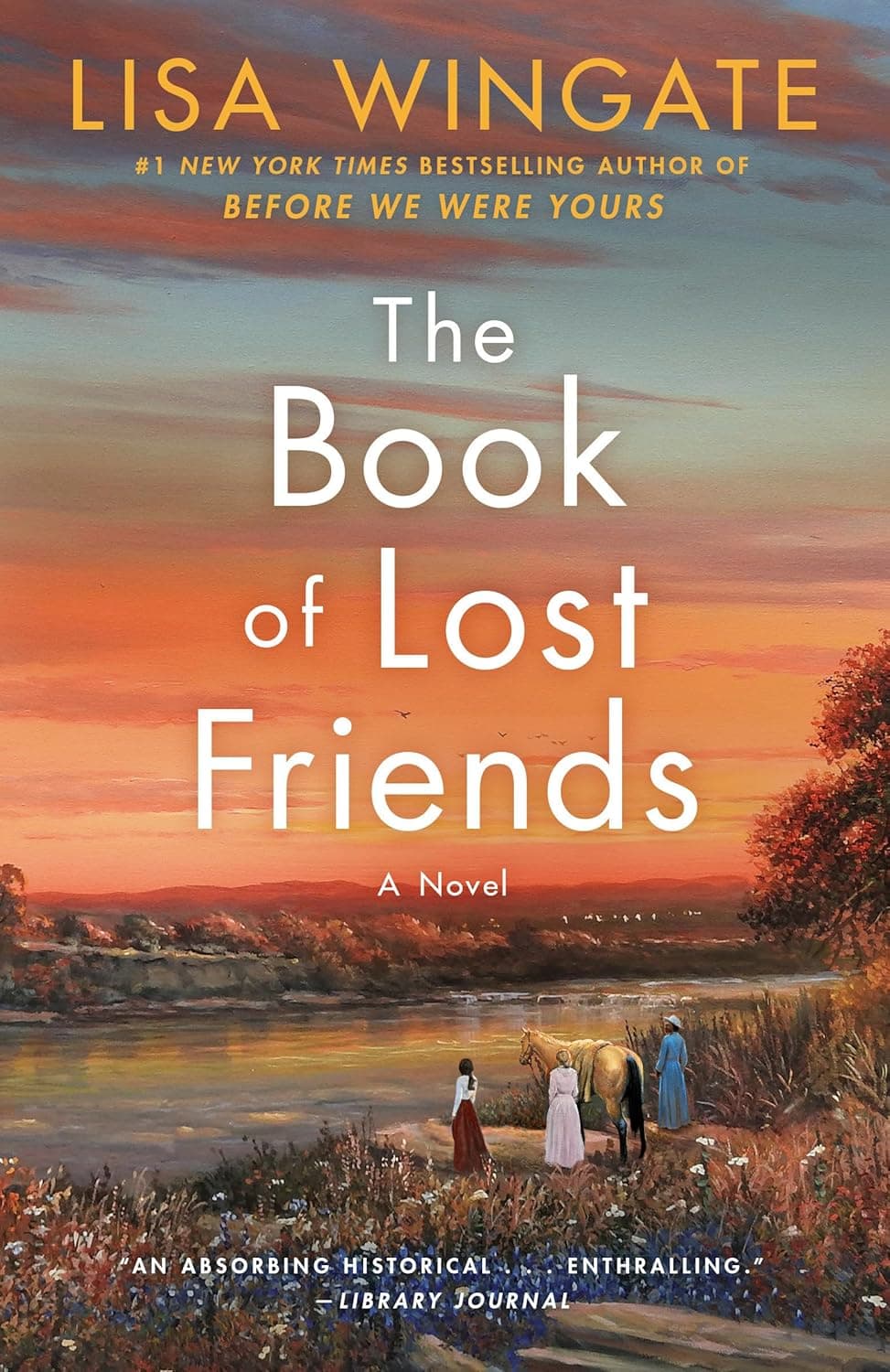
Opening
A fragile partnership forms in 1987 as Benedetta "Benny" Silva turns a struggling class into a living archive while confronting the Gossett family’s buried past. In 1875, Hannie Gossett claims agency over her fate as a dangerous journey west hardens into a mission with a name, a ledger, and a promise.
What Happens
Chapter 16: A Project is Born
In a dim parking lot, Benny asks for cooperation from Nathan Gossett, who arrives guarded and adamant that he wants no part of the Goswood Grove library. Benny lays out what she’s found: ledgers, letters, and plantation records that are far more consequential than she expected. Nathan refuses to meet at the estate, revealing his sister Robin died there, but he agrees to come to Benny’s house on Friday.
At school, Benny’s guest—Granny T from the Cluck and Oink—arrives in an 1899 costume and inhabits her grandmother’s voice, a formerly enslaved founder of the town’s Carnegie library. She recounts how the Black “Carnegie Colored Ladies New Century Club” secured a grant after the white “Ladies New Century Club” refused to integrate, building a grander library that becomes a beacon of pride and resilience. The performance embodies The Power of Stories and History, electrifying the room. Benny seizes the moment, launching a project: students will uncover and write a forgotten local history. When quiet Laura Gill mentions “Tales from the Crypt” in New Orleans, the plan morphs into a community performance of Augustine’s hidden past.
Chapter 17: The Bargain in Jefferson
In 1875, Hannie, Juneau Jane LaPlanche, and a silent Lavinia Gossett step off a steamboat into the chaos of Jefferson, Texas. On the river, Juneau Jane has been reading “Lost Friends” ads to Black crewmen starved for news of loved ones, and a growing list of names circulates among them. The town jolts Hannie with a memory: the Jefferson jail after the incident with Jeptha "Jep" Loach.
Unable to approach lawyer Washburn as two ragged boys and a catatonic girl, Juneau Jane proposes a perilous ruse—she will pass as Lavinia to inquire about her father’s affairs. Hannie warns that a “colored girl” passing as white is mortal risk, a stark collision with Injustice, Race, and Social Hierarchy. Desperation forces a bargain: Hannie helps if Juneau Jane stays until they find word of her father and can return Lavinia, while Juneau Jane teaches her to read and write and lets Hannie keep the “Lost Friends” papers.
Hannie buys a dress and supplies in the colored settlement, asking after family and a clue—the three blue beads worn by her grandmother—but finds no leads. The vitality of the Black community awakens a longing for a different life. Back on the bank, people crowd around Juneau Jane to hear the ads. Disguised in a makeshift dress, she and Hannie reach Washburn’s office only to learn he and William Gossett have gone to Fort Worth. Across the street Hannie spots Moses, the Gossett enforcer, and they bolt.
Chapter 18: An All-Night History Lesson
Benny wakes in her recliner to find Nathan still there, spent from a night of reading the Goswood documents. The evening unspools in flashback: he showed up with a cake; they sifted ledgers, journals, and letters; Benny saved the hardest for last—the family Bible listing enslaved people bought and sold. One entry from 1858 guts them: three children—Willie Tobias, his brother, and baby Athene—die in a cabin fire while their mother, Carlessa, works the fields. The recorder calls it a “cruel day,” a phrase that lingers.
Worn down by the weight of the past, Benny admits her own family’s rumored ties to Mussolini and the hypocrisy of pushing Nathan to face what she dodges. Nathan opens up about Robin—her dream of a museum honoring everyone who lived at Goswood, her fights with uncles Will and Manford, the final argument that still haunts him. Benny pitches a “Tales from the Crypt”–style event and asks to use the unmarked graveyard on his land for her students’ performances. Torn and wary, Nathan cautions her: “You have no idea what you’re stepping into.”
Chapter 19: The Road to Fort Worth
Fleeing Jefferson, Hannie, Juneau Jane, and Lavinia hitch a flatcar west, then slog off at Eagle Ford and set out on foot. Pete Rain, a Black freighter, picks them up and shares frontier dangers—Comanche raids and the Marston Men gang—turning myth into lived threat. Juneau Jane formalizes their quest, copying names from clippings into a ledger and alphabetizing them, creating the Book of Lost Friends. Pete asks them to add his sister, Amalee. Hannie dictates a “Lost Friends” letter for her own family, folds it, and tucks away the paper hope.
Fort Worth—“Hell’s Half Acre”—bristles with rough energy. After a tense brush with squatters at Battercake Flats, they head for a bathhouse so Juneau Jane can dress as Lavinia. Outside, Hannie meets Florida Jones, an elderly woman selling pralines who lost seven children to sale, one by one. Hannie promises to enter her name in the book, but chaos erupts: a bucking horse nearly tramples Lavinia. When the rider swings a whip at her, Hannie steps in; the lariat cuts her, the rider is thrown and breaks his leg, and he bellows for a rifle, vowing to kill Hannie and the “halfwit” Lavinia.
Chapter 20: Tales from the Underground
Back in 1987, Benny’s project—now “Tales from the Underground”—surges. Her students comb the Carnegie library, draft scripts, and police themselves with a Classroom Constitution and a “Negativity Rule” that requires three positives for every critique. Rivalries turn into pride as they argue over whose ancestral story is most “ace.”
Nathan arrives on the walk to the library. He and Benny now meet weekly to pore over documents, but what they are to each other remains undefined. She introduces him to the class. Lil’ Ray and LaJuna Carter spar to claim his attention until Benny invokes the Constitution and resets the room. Then she says his full name. “Gossett” drains the air. Wariness replaces buzz. History enters the room as a living presence, and Nathan looks stricken as he realizes the weight his name carries here.
Character Development
The section traces people choosing who they will be in relation to history—whether to wield it, hide from it, or be remade by it.
- Benny: Finds her voice as a teacher, turns a writing unit into a civic performance, and risks vulnerability by naming her family shame to earn Nathan’s trust.
- Nathan: Moves from avoidance to engagement, admits grief and guilt over Robin, and edges toward stewardship of Goswood by facing the archive and the town.
- Hannie: Shifts from survival to strategy, bargains for literacy and companionship, and claims the “Lost Friends” papers as her lifeline.
- Juneau Jane: Converts desperation into design, crafting the Book of Lost Friends and accepting dependence on Hannie as a partner rather than a tool.
- Lavinia: Remains withdrawn yet catalyzes action—her identity enables Juneau Jane’s ruse and draws danger that forces Hannie’s courage.
- The Students: Transform from disengaged to invested, using research and performance to claim ancestral pride and community voice.
Themes & Symbols
Story becomes action. Through Granny T’s performance and the student project, The Power of Stories and History turns spectators into participants: a class writes itself into the town’s memory even as Nathan and Benny let the archive revise their relationship. In 1875, public reading of “Lost Friends” ads creates a mobile community of seekers, proving that telling the past is itself a form of justice-making.
Hannie’s quest underscores The Search for Family and Identity. The ledger—once a tool of property and profit—becomes the Book of Lost Friends, a record of human ties that reclaims names from erasure. Every added entry (Pete Rain’s Amalee, Florida Jones’s children, Hannie’s own family) widens the circle of belonging and turns hope into a written vow.
At every turn, Injustice, Race, and Social Hierarchy set the stakes. Juneau Jane’s perilous “passing,” the Carnegie library’s segregated origins, the explosive reaction to the name “Gossett,” and the street violence in Fort Worth all show how power polices space, speech, and memory. The work of remembrance is dangerous because it challenges who gets to define the past.
Symbols:
- The Book of Lost Friends: A ledger repurposed from commerce to communion; order imposed on grief becomes a map for reunion.
- Hannie’s Letter: A folded, portable future—hope she can hold and refuse to surrender.
- The Carnegie Library: A monument to Black civic ingenuity; proof that exclusion can be transmuted into excellence.
Key Quotes
“You have no idea what you’re stepping into.”
- Nathan’s warning captures the moral and social hazards of digging into the Gossett past. It foreshadows conflict with powerful town interests and signals that Benny’s classroom project will ripple far beyond school walls.
“Cruel day.”
- The ledger’s sparse verdict on the children’s deaths indicts an entire system that rendered catastrophe routine. Its ambiguity—cruel to whom, and why—invites readers to interrogate who writes history and what their words conceal.
“Carnegie Colored Ladies New Century Club.”
- The club’s very name encodes defiance and futurity. By seizing resources denied to them and building a library larger than the white one, these women turn structural exclusion into a platform for communal uplift.
“Hell’s Half Acre.”
- The nickname frames Fort Worth as a theater of lawlessness where brutality can erupt without warning. It heightens the tension around Hannie’s intervention and underlines how thin the protections are for Black travelers and vulnerable women.
Why This Matters and Section Significance
These chapters lock both timelines onto their central rails. In 1875, the mission becomes a book, a bargain, and a route west—clarifying goals while escalating danger, from legal ruse to street violence. In 1987, a classroom becomes a stage and a town square; students claim history as identity while Benny and Nathan test whether truth-telling can heal or only reopen wounds.
Together, the arcs show how archives, performances, and paper—ledgers, letters, scripts—remake communities. One story-line creates history; the other reclaims it. The clash over the Gossett name promises that memory will not stay politely in the past, and that the work of naming, reading, and performing history is both the novel’s engine and its moral test.