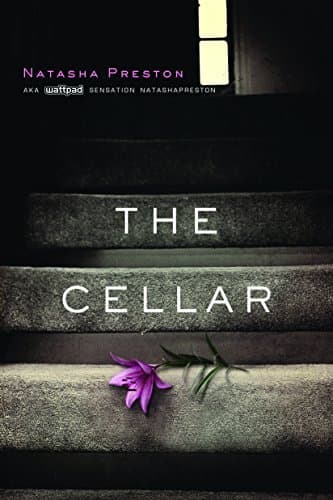
Perverted vs. Genuine Love and Family
What This Theme Explores
The novel contrasts two competing visions of family: the flawed but liberating bonds of genuine love and the controlling imitation built by a captor. Genuine connection—embodied by Summer Robinson / Lily—rests on mutual respect, consent, and the freedom to remain oneself. Perverted “love,” embodied by Clover / Colin Brown, rewrites affection as ownership and protection as surveillance, weaponizing intimacy to justify violence. The story asks how the language of care can be twisted into a cover for domination—and what it takes for authentic love to expose that lie.
How It Develops
The book first grounds readers in Summer’s ordinary, loving world, where care sometimes looks like exasperating concern but never crosses into control. In Chapter 1, Summer’s playful bickering with family and the “overprotective” worry of Lewis create a baseline: affection here allows disagreement, autonomy, and everyday friction without fear.
Once abducted, Summer’s descent into Clover’s counterfeit family starkly reframes those memories. Renamed and absorbed into a rigid household with the other “Flowers”—Rose / Shannen, Poppy / Rebecca, and Violet / Jennifer—she learns that his ideal of purity and order is enforced through ritual, surveillance, and punishment. Even “normal” moments, like a staged pizza night in Chapter 6-10 Summary, reveal a grim truth: when intimacy is coerced, domesticity becomes a performance of power.
As pressure mounts, Clover’s fantasy cannot contain the girls’ will to survive or the outside world’s refusal to forget Summer. The “family” he claims to protect becomes the one he tries to annihilate when control slips, proving his love was always about possession. The rescue and emotional reunion with Summer’s real loved ones in Chapter 31-34 Summary counters the cellar’s sterile mimicry with the messy, active, and ultimately life-giving strength of genuine bonds.
Key Examples
-
Genuine care has boundaries and choice: Early on, Lewis cautions Summer about walking alone at night, and she pushes back. Their exchange underscores that love can be protective without becoming coercive, and that disagreement does not threaten the relationship—an essential baseline the cellar will later distort.
-
The “perfect family” as delusion: Clover selects and renames girls according to his ideal of purity, turning them into interchangeable “Flowers.” By scripting roles and erasing identities, he exposes his terror of real, autonomous people—he wants the image of family without the freedom that makes it real.
-
Violence disguised as discipline: When Violet defies him, Clover’s furious insistence—“We are a family”—frames abuse as necessary correction. The language of kinship becomes a cudgel, revealing how rhetoric about unity and gratitude can be used to silence and control.
-
Sexual violence reframed as love: Clover calls rape “making love,” recasting violation as intimacy. The euphemism highlights the theme’s core horror: when consent is removed, even the tender vocabulary of love becomes a mask for domination, especially when contrasted with Summer’s consensual memories with Lewis.
Character Connections
Clover is the architect of the perverted family—a man who confuses order with love and purity with worth. His “protection” is captivity; his “discipline” is terror. When he cannot secure obedience through rituals and roles, he chooses annihilation, proving that possession—not care—drives him.
Summer carries the memory of genuine love like a lifeline. Refusing to internalize the name “Lily,” she measures every cellar ritual against her true relationships and finds them wanting. Her resilience is fueled by the knowledge that real love does not need to rename, confine, or script her to exist.
Rose shows how prolonged exposure to coercive care can blur lines between survival and belief. Coming from an abusive background, she adapts to Clover’s rules and even enforces them, revealing how deprivation of authentic affection can make a counterfeit feel safer than uncertainty—even as it perpetuates harm.
Lewis and Summer’s family embody love as action. Their relentless search, shown in Chapter 11-15 Summary, demonstrates commitment that persists without control: they wait, hope, and mobilize rather than confine or rename. Their steadfast presence shatters Clover’s closed system by insisting that real bonds reach beyond the cellar’s walls.
Symbolic Elements
The cellar is a domestic façade built over a tomb: clean surfaces and curated “comforts” mask confinement. Its underground setting literalizes how Clover buries agency to preserve appearances, creating a home that can only exist in darkness.
The flower names convert people into collectible, fragile objects—beautiful to behold, easy to arrange, and dependent on their keeper. In stripping identities, Clover ensures that what he calls “family” can never talk back, grow, or change.
Forced “family” meals parody warmth and routine. The choreography of grace, conversation, and “treats” showcases how rituals meant to build connection become theater when consent and safety are absent.
Contemporary Relevance
The novel echoes real dynamics of coercive control in abusive relationships, where partners isolate, rename behaviors, and invoke love to justify surveillance or harm. Clover’s obsession with “purity” mirrors cultural narratives that police women’s bodies and choices under moral pretexts. By contrasting counterfeit care with genuine support, the story clarifies a crucial distinction: love nurtures autonomy; possession demands erasure. It’s a timely reminder to interrogate any “protection” that requires silence or surrender.
Essential Quote
“We are a family. You need to remember that.”
This line distills the theme’s central perversion: the language of family deployed to enforce compliance. By commanding remembrance, Clover exposes that his “love” depends on submission, not mutual recognition—an ultimatum that genuine family, rooted in freedom and dignity, never requires.