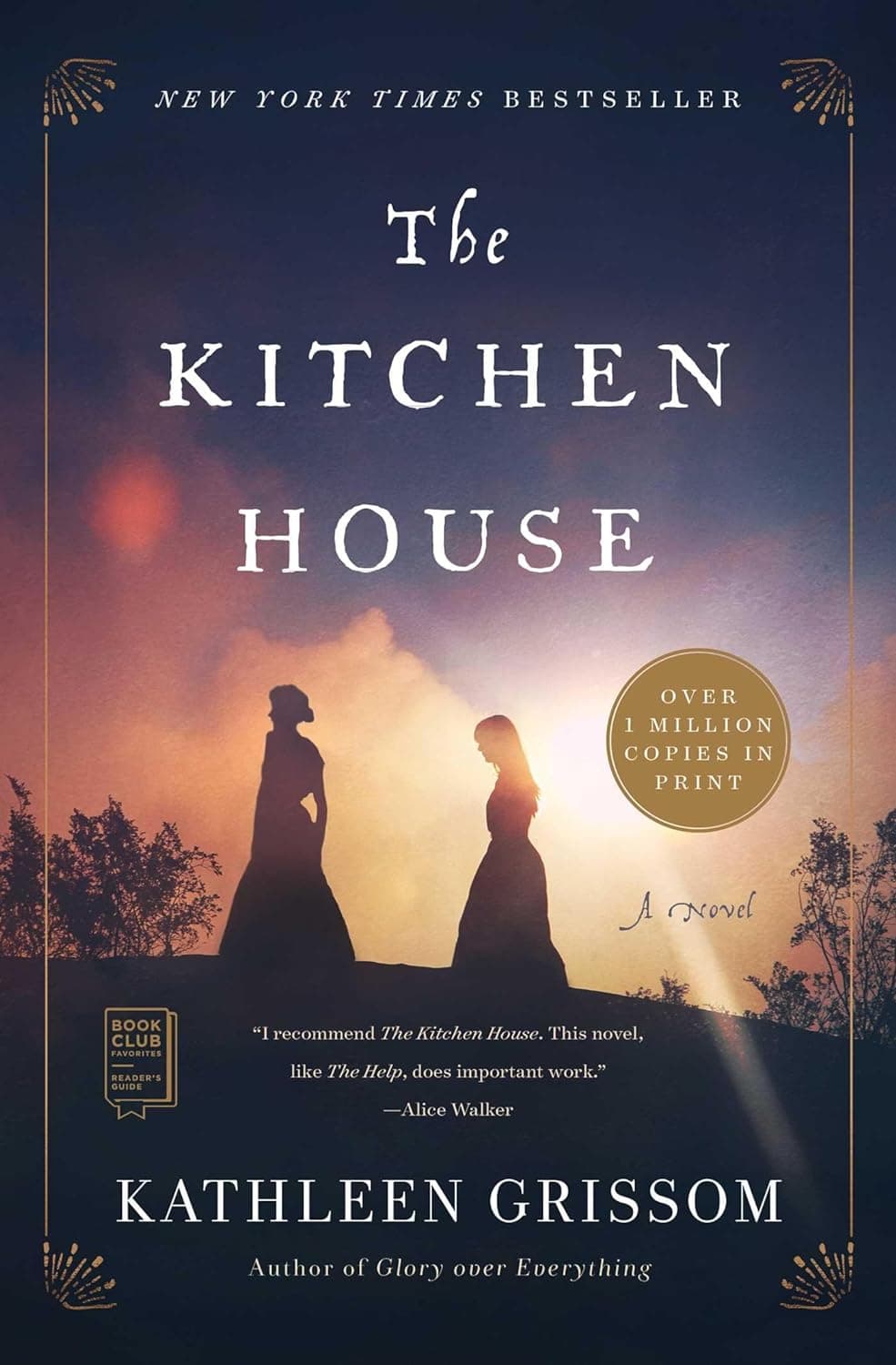
This collection of quotes from The Kitchen House explores the novel's central conflicts, character arcs, and thematic depth. The analysis connects each passage to the broader narrative of race, family, and identity on a pre–Civil War Virginia plantation.
Most Important Quotes
The Nature of Enslavement
"What you thinkin’, Fanny? You forgettin’ that you a slave? You don’t know by now, anytime the cap’n want, he can sell you? Anytime Miss Martha say she want you gone, you gone... I’m gonna tell you what happens when you say no to a white man. I watch my own daddy get shot... That night all I know to do is keep the flies away when I watch my mama die."
Speaker: Mama Mae | Context: Chapter 3; Mama Mae warns Fanny about the brutal realities of bondage after Fanny resists working in the big house.
Analysis: This unflinching speech strips away any illusion about agency under slavery, confronting the reader with the absolute power white owners wield. By invoking the murder of her parents, Mama Mae turns memory into instruction, teaching the grim calculus of survival that governs daily life. The scene anchors the novel’s Theme: Race, Slavery, and Social Hierarchy and exposes the psychological conditioning that appears as obedience but is born of terror. The harrowing image of swatting flies from her dying mother ties personal tragedy to the collective Theme: Loss, Trauma, and Grief, making the quote a thesis statement for the enslaved community’s internalized fear and resilience.
The Paradox of Freedom and Family
"This kitchen house is my home, and no matter what, I’m not leaving here for nobody. I don’t care what they say. I don’t want no free papers. They’re just a way for the cap’n to get me out of here."
Speaker: Belle | Context: Chapter 2; Belle reflects privately after Captain Pyke leaves, rejecting the “freedom” that would exile her from Tall Oaks.
Analysis: Belle’s refusal reframes liberty as loss, revealing the wrenching paradox that emancipation can sever the only secure bonds an enslaved person has. Her claim situates kinship and daily intimacy above abstract legal status, crystallizing the Theme: Family, Belonging, and Found Kinship. The line also exposes the captain’s manipulation, using “papers” as a pretext to erase his responsibility to her. By invoking Captain James Pyke, the passage spotlights the moral cowardice of a system that forces people to choose between safety and selfhood.
Defining Family Beyond Color
"Abinia,” he said, pointing toward the chickens, “you look at those birds. Some of them be brown, some of them be white and black. Do you think when they little chicks, those mamas and papas care about that?”
Speaker: Papa George | Context: Chapter 3; A grieving, rootless Lavinia asks if she can be his “girl,” and Papa George answers with a barnyard parable.
Analysis: With quiet pastoral imagery, Papa George subverts racial categories, offering a natural metaphor for kinship grounded in care rather than color. The chickens’ indifference to markings models a gentler social law that stands in defiant contrast to plantation rules. This moment becomes Lavinia’s emotional adoption into the kitchen house, granting her identity and safety where she had none. It’s a foundational turning point for Lavinia McCarten, establishing the loving counterculture that sustains her against the world’s prejudice.
Thematic Quotes
Race, Slavery, and Social Hierarchy
The Unspoken Question
"What’s that man thinking? Can’t he see she’s white?"
Speaker: Belle | Context: Chapter 1; Belle reacts when Captain Pyke deposits a white child, Lavinia, among the enslaved.
Analysis: Belle’s stunned question exposes the plantation’s rigid color code and the scandal of placing a white child in the slave quarters. The line marks Lavinia as a destabilizing presence who belongs to two worlds and is trusted by neither. This social dissonance fuels the novel’s conflicts, from domestic routines to lethal power struggles. It also foreshadows Lavinia’s identity rift, where upbringing and phenotype wage a constant war over who she is allowed to be.
The Indoctrination of Prejudice
"They’re not like us,” he said. “They’re stupid... They’re the worst kind,” he said, “the ones closest to you. They’ll kill you when you sleep."
Speaker: Marshall Pyke | Context: Chapter 13; Marshall repeats lessons drilled into him by Mr. Waters and Rankin, warning Lavinia against the people who love her.
Analysis: Marshall’s parroting of racist propaganda shows how terror and contempt are taught, not innate. The dramatic irony is sharp: his suspicion targets the kitchen house family—the only people who protect Lavinia—while the white men he trusts are her real danger. The quote illustrates the mechanisms of Theme: Power, Abuse, and Corruption: fear-mongering keeps victims isolated and pliant. It charts Marshall’s tragic arc from abused child to enforcer of the ideology that wounded him, turning his trauma outward.
Family, Belonging, and Found Kinship
A Child’s Plea for Connection
"Could I be your girl, too?"
Speaker: Lavinia McCarten | Context: Chapter 3; After helping with the chickens, Lavinia seeks formal acceptance from Papa George.
Analysis: This plea distills a child’s primal need for safety into five words, initiating Lavinia’s healing after catastrophic loss. Asking to belong is also an act of defiance against racial borders that would deny her a Black family. The moment inaugurates the kitchen house as a sanctuary where love, not lineage, confers identity and obligation. It becomes a cornerstone of the novel’s argument that chosen kin can re-make a life.
The Healing Power of a Mother’s Love
"Mama gonna take this pain from you... Back and forth she rocked, bringing to the surface the festering poison of the nightmare I had been hiding... Having found my past, I clung to this mother who now gave me my future. 'Ma!' I keened. 'Ma!'"
Speaker: Narrator (Lavinia) / Mama Mae | Context: Chapter 3; After baby Henry’s burial resurfaces shipboard memories, Mama Mae rocks Lavinia through her grief.
Analysis: The rocking becomes a ritual of reclamation, where Mama Mae’s body and voice draw out “festering poison” and transform trauma into communal mourning. The tactile, rhythmic imagery suggests a counter-medicine to violence: steady touch, witness, and naming. Lavinia’s keening “Ma!” seals an adoptive bond that redefines motherhood beyond blood. The scene embodies the novel’s belief that love can metabolize grief, even if it cannot undo it.
Power, Abuse, and Corruption
The Nature of Abuse
"You want me to take your little sister next time instead of you?"
Speaker: Mr. Waters | Context: Chapter 7; In the woods, the tutor coerces Marshall by threatening Sally.
Analysis: Waters weaponizes Marshall’s protective love, revealing how abusers control through dread as much as through force. The threat fractures Marshall’s sense of agency, binding obedience to the illusion of keeping others safe. This manipulation explains how violence reproduces itself within families and communities. The line exposes authority as predation, not guidance, clarifying the system’s rot from tutor to overseer.
The Arbitrary Cruelty of Power
"Rankin say he the overseer. That mean he the boss, and he say who marry who... That Rankin just wantin’ to be ugly."
Speaker: Mama Mae | Context: Chapter 3; She tells Uncle Jacob that Rankin has blocked Dory and Jimmy’s marriage for no reason but spite.
Analysis: The blunt phrasing captures the lawlessness at the heart of plantation “law,” where a man’s whim overrides love, community, and dignity. By calling Rankin “ugly,” Mama Mae names cruelty as a choice, not a necessity of the system. The quote shows how everyday life—marriage, home, future—is hostage to petty despotism. It positions Rankin as an avatar of structural malice, foreshadowing the pain he will deliberately inflict.
Character-Defining Moments
“My Name?”
"My name?” I managed to whisper.
Speaker: Lavinia McCarten | Context: Chapter 1; When Captain Pyke asks for questions at Tall Oaks, Lavinia admits she can’t remember her own name.
Analysis: This whisper announces Lavinia’s erasure: trauma has scrubbed even the word that anchors identity. As a narrative starting point, it makes her a palimpsest on which new loyalties, customs, and griefs will be written. The moment launches the novel’s inquiry into whether belonging is inherited or made. Her search for self begins here and will be contested across the white world of the big house and the Black world of the kitchen house.
Belle’s Contained Fury
"Against everything that’s right, I’ve got to cook for Miss Martha and my brother and sister up in the big house, and sometimes, especially when the cap’n’s home, I get to thinking how wrong this is. Then watch out! Pots go flying all over the place."
Speaker: Belle | Context: Chapter 2; In her own narration, Belle reflects on serving her white half-siblings while being denied her name.
Analysis: The flying pots metaphor turns domestic space into a battleground where suppressed rage finds expression. Belle’s clarity exposes a world built on lies—kin turned into property—and anticipates the costs of telling the truth. She emerges as neither deferent nor naïve, but strategically self-possessed within limits she did not choose. The passage also gestures toward the novel’s Theme: Secrets and Deception, which poisons every relationship in the big house.
The Matriarch’s Sight
"Belle!” she said sharply. “This chil’ not fightin’ you. She too sick. You got to get her to eat, or you gonna lose her."
Speaker: Mama Mae | Context: Chapter 1; She corrects Belle’s misreading of Lavinia’s refusal to eat.
Analysis: In a few direct sentences, Mama Mae diagnoses trauma and prescribes care, establishing her as the household’s moral and medical authority. Her voice blends tenderness and command, modeling a leadership that protects rather than punishes. The moment inaugurates the kitchen house’s ethic: look past behavior to pain. It’s an early proof of the intuitive wisdom that will save lives throughout the novel.
A Son Rewired by Hatred
"Yes, Marshall, that she is,” Miss Martha said, “but she’s your daddy’s whore, and heaven help the man who forgets that."
Speaker: Miss Martha Pyke | Context: Chapter 15; During the patroller confrontation, Miss Martha “confirms” Belle’s status while warning her son.
Analysis: Though spoken by Miss Martha, the line cements Marshall’s worldview: Belle is a scandal, an object, and an untouchable threat. The sentence fuses sex, power, and property into a doctrine he will enforce with violence. It also reveals a family built on purposeful misnaming—sister recast as mistress—to protect male reputation. The warning combusts jealousy, shame, and desire, steering Marshall toward his most destructive choices.
The Captain’s Private Truth
"Belle,” he say, his voice going soft, “I want a good life for you. You are my daughter."
Speaker: Captain James Pyke | Context: Chapter 10; During a fraught argument about Belle’s future, he admits paternity behind closed doors.
Analysis: The tenderness is real, but its privacy is damning: he will acknowledge his daughter only where it costs him nothing. His proposed solution—sending her away—betrays a love that will not risk itself against the social order he profits from. The line crystallizes the gap between sentiment and action, compassion and courage. It is the personal face of systemic cowardice, perpetuating the very secrecy that keeps Belle vulnerable.
Memorable Lines
A Child’s Perspective on Race
"I don’t want to be the white girl... You can’t make me be a white girl."
Speaker: Lavinia McCarten | Context: Chapter 19; On her ninth birthday, Lavinia cries when told she must move to the big house and cannot marry Ben.
Analysis: Lavinia’s protest inverts privilege: “white girl” names exile, not advantage. Having internalized the kitchen house as home, she experiences race as a bureaucratic force ripping her from love. The line captures the innocence that sees through social fiction to relational truth. It sharpens the tragedy of her liminal status—claimed by color, disowned by community.
Opening and Closing Lines
Opening Line
"THERE WAS A STRONG SMELL of smoke, and new fear fueled me."
Speaker: Narrator (Lavinia) | Context: Prologue; An adult Lavinia runs toward catastrophe at Tall Oaks.
Analysis: The line hurls the reader into crisis, using smell—immediate and primal—to signal disorientation and danger. Beginning in media res frames the novel as a countdown to an inevitable blaze, saturating every earlier scene with dread. The diction—“fueled,” “smell,” “fear”—echoes combustion, prefiguring fire and lynching. It’s a compact promise: this story burns.
Closing Line
"Her headstone was engraved: BELLE PYKE DAUGHTER OF JAMES PYKE"
Speaker: Narrator (Lavinia) | Context: Chapter 55; Lavinia records the inscription she commissions for Belle’s grave.
Analysis: The epitaph performs the justice life denied: public naming replaces whispered secrecy. By inscribing lineage in stone, Lavinia rewrites the record, granting Belle legitimacy and kinship beyond death. The closure binds the novel’s arcs of belonging and revelation, turning private truth into communal memory. It’s a final act of love that answers, at last, who Belle is.