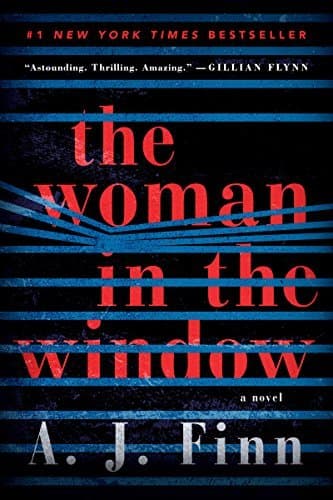
Opening
In these chapters, Anna Fox slides from solitary watcher to entangled participant. A surprise friendship cracks her isolation, a controlling neighbor raises alarms, and a doubled cocktail of pills and wine distorts what she sees—just as the story demands sharper questions about truth.
What Happens
Chapter 16: Tuesday, November 2
A home therapy session with Dr. Fielding probes the roots of Anna’s guilt: a winter trip to New England she arranged, which she believes splintered her family. She recounts calls with her estranged husband, Ed Fox, and daughter, Olivia Fox, the talk circling back to lingering Grief and Trauma she can’t release. Dr. Fielding tries to reframe her self-blame and praises her for advising another agoraphobic online, evidence she still reaches outward.
Concerned by her “blurry” mood swings, he increases her Tofranil. After he leaves, Anna opens her medication spreadsheet and confronts the truth: she often mismanages doses—skipping, doubling, mixing with alcohol—eroding any firm grasp on Perception vs. Reality. She winces and pours a drink anyway.
Chapter 17: Tuesday, November 2
Anna returns to her window post, Nikon in hand, wine at her elbow, resuming the ritual of Voyeurism and Observation. She scans the block until the lens finds the Russell house. On a love seat, Jane Russell and her son, Ethan Russell, sit shoulder to shoulder—an aching echo of what Anna has lost.
Then the frame shifts: Jane looks straight through the glass, straight into the lens. Anna drops the camera. Jane raises a hand and waves. Flooded with shame, Anna flees the room, newly conscious of the private moments she has hoarded on her hard drive. When she steadies herself and returns, the love seat is empty. The doorbell rings.
Chapter 18: Tuesday, November 2
Jane stands at the threshold—smiling, charismatic, disarming the tension with, “You must be bored as hell.” She brings a Riesling; soon they’re in Anna’s kitchen drinking, smoking, and playing chess. They discover quick symmetries: each is mother to an only child, both love sailing, and they even share a birthday—November 11. Anna gives a halting tour of the house, a bold breach of her own Isolation and Agoraphobia.
In confidence, Jane sketches the past she carries and the present marriage she calls “controlling” under Alistair Russell, shadows that hint at Deception and Secrets. She also sketches Anna—an uncanny portrait that startles and flatters. Talk turns to medication, and Anna, impulsively, takes her daily pills, forgetting she already took them that morning. She washes the double dose down with wine. Jane urges her to keep looking for beauty, even if it’s only what the window can offer.
Chapter 19: Tuesday, November 2
Giddy from real conversation, Anna walks a warm, tipsy Jane to the door. Later that night, Alistair arrives—polite, tightly coiled—asking if Anna has had any visitors. Remembering Jane’s warning, Anna lies: she’s been alone, watching movies. His eyes land on the chessboard, pieces mid-game. She improvises—her tenant, David Winters, likes to play. Suspicion simmers, but he lets it pass.
At the threshold, Anna thanks him for the candle his wife sent with Ethan, and Alistair zeroes in on the timing, oddly preoccupied with when exactly it happened. After he leaves, Anna watches the three Russells through their parlor windows, hearing her mentor’s old lesson: you can never truly know what happens inside a family. She lifts her camera, then lowers it.
Chapter 20: Wednesday, November 3
Morning slams into her: searing hangover, nausea, violent vomiting. The mix of a doubled Tofranil dose and heavy wine makes her world tilt, reinforcing how precarious her perceptions are. She is unsteady, forgetful, and now visibly ill—an unreliable witness to her own life.
She Googles her former mentor, Wesley Brilliant, and replays his dictum: “Something can’t be ‘strictly true.’ It’s either true or it isn’t. It’s either real or it’s not.” The line lodges under her skin, a test she can’t pass as her senses smear fact and fiction. It foreshadows the novel’s central riddle: what did she really see?
Character Development
Anna steps over the threshold—literally and figuratively—moving from a ghost behind glass to a person with skin in someone else’s story. Her mismanaged medication and alcohol turn her into a volatile narrator, just as loyalty to Jane entangles her in the Russells’ tensions.
- Anna Fox: Cracks her isolation with a house tour and hours-long talk, yet doubles her meds with wine; lies to cover for Jane; chooses to lower her camera, signaling a new respect for boundaries she’s long ignored.
- Jane Russell: Emerges as empathetic and magnetic, a “wild child” turned wife and mother who hints at control and conflict at home; becomes the catalyst who draws Anna back into human connection.
- Alistair Russell: Presents a courteous surface that can’t conceal his suspicion and need for control; his focus on small details (the chessboard, the candle’s timing) suggests surveillance and pressure inside the family.
- Dr. Fielding: Clinical, cautious, and reactive; increasing Tofranil underscores the seriousness of Anna’s decline while highlighting how medical management collides with her self-medication.
Themes & Symbols
Perception vs. Reality intensifies as Anna’s body becomes a distorting lens. The spreadsheet, the doubled pills, and the hangover collapse her confidence in what she notices, priming the reader to interrogate every image and recollection. Wesley’s maxim defines the stakes: truth isn’t graded; it’s binary—precisely what Anna can’t reliably access.
Voyeurism and Observation break when the observed looks back. Jane’s wave flips the power dynamic, forcing Anna out of the comfortable anonymity of the watcher. That breach births connection—and risk—as the boundaries between watching and participating blur.
Isolation and Agoraphobia loosen their grip during Jane’s visit, proof that companionship can briefly disarm fear. Yet each concession to company carries consequences: more wine, more confessions, more vulnerability.
Deception and Secrets thread through the Russells and Anna alike. Jane’s guarded revelations, Anna’s quick lie to Alistair, and Alistair’s probing questions form a web where protection and manipulation look eerily similar.
The Chessboard symbolizes strategy and the evidence of unseen moves. Friendly play between women becomes, in Alistair’s eyes, a clue—turning a game into proof of disobedience and a hint of the covert conflict at the Russells’ core.
Key Quotes
“You must be bored as hell.”
Jane reframes Anna’s spying as loneliness, not malice, dissolving hostility into companionship. The line opens a door—literally—and shifts Anna from passive voyeur to active participant.
“Something can’t be ‘strictly true.’ It’s either true or it isn’t. It’s either real or it’s not.”
Wesley’s credo becomes the novel’s measuring stick. Set against Anna’s medicated haze, it challenges both her and the reader to separate the photograph from the projection.
“You can never truly know what goes on inside a family.”
This remembered lesson underscores the opacity of the Russells’ home. It cautions against certainty just as Anna is about to wager loyalty and truth on what she thinks she sees.
Why This Matters and Section Significance
These chapters pivot the novel from interior stasis to psychological thriller. Anna gains a friend and a secret, and with them, motive and risk. Her lie binds her to Jane, while Alistair’s scrutiny signals danger.
Just as the plot accelerates, Anna’s reliability deteriorates. The doubled meds, heavy drinking, and hangover make every observation contestable. That engineered doubt is the engine of suspense: the mystery will hinge on what Anna believes she witnesses—and whether any of it is real.