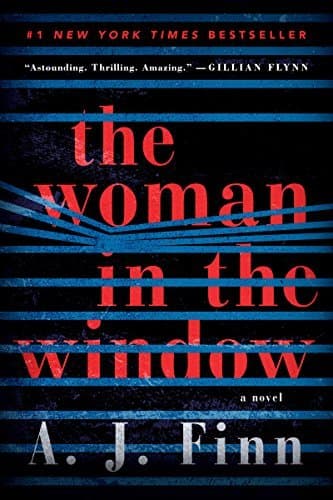
Opening
Anna’s fragile reality snaps when a stranger arrives at her door and claims to be the woman Anna watched die. Disbelieved by the police and betrayed by the only witness she trusts, Anna Fox refuses to surrender her memory. Her training as a psychologist becomes her lifeline as she pivots from passive watcher to active investigator in a neighborhood suddenly gone dark.
What Happens
Chapter 41: "I don’t believe we’ve met"
The showdown in Anna’s kitchen detonates when the detectives and Alistair Russell usher in a stranger introduced as Jane Russell. Calm and polished, the new “Jane” offers identification; Alistair insists this is his wife. Anna protests, desperate and certain—this is not the woman she met. To Detective Norelli and Detective Little, Anna sounds unhinged.
She turns to Ethan Russell, pleading for truth. Ethan looks away and says, “You’ve never met my mother.” The room tilts against Anna. The detectives close the case and warn her about false reports. After the Russells depart, Little leaves his card, softening his exit with a promise she can call. Silence returns, and Anna’s version of events collapses.
Chapter 42: "The tells of a liar"
Alone, Anna pours wine, swallows pills, and replays the scene. Her clinical eye takes over. She studies Ethan’s body language—the averted eyes, the leftward glance, the restless hands, the tightening jaw. The behaviors read as lies; the jaw reads as fear.
This distinction steadies her. Ethan isn’t betraying her; he is being controlled. The realization restores her certainty: she did witness a crime, and the Russells are burying it.
Chapter 43: "Can you come over?"
Shaken and medicated, Anna calls her physical therapist, Bina, and begs her to come. Bina hears the urgency and agrees to visit later. Anna sinks into a heavy sleep and wakes to the buzzer as night falls.
Chapter 44: "I know what I saw"
Anna lays out everything for Bina in the library. Bina presses gently: the wine, the pills, the possibility of hallucination. Anna is immovable—she knows what she saw. The police won’t accept a crime unless they first accept that the woman they met isn’t Jane.
They search online for proof. Alistair appears in articles and LinkedIn, but Jane and Ethan are absent. No social media, no photos. Bina finds Ethan’s invisibility strange; Anna explains Alistair forbids it. Across the street, the Russells draw every blind for the first time. The house goes opaque. If Anna is right, Bina warns, she is now a witness—and at risk. Anna asks Bina to stay.
Chapter 45: "Bomb-shelter dark"
Anna dreams of the woman she knew as Jane—the real one, whom she now believes is Katie—smiling, Ethan’s photo in the locket at her throat. A pane of glass slides between them. Behind it, the murder scene blooms; blood spreads across a white blouse. When the dying woman lifts her face, it has become the impostor’s. The nightmare fuses truth and lie, sealing Anna behind glass with her doubt.
Character Development
Anna reclaims authority over her own mind. Discredited by everyone else, she leans on her training and observation to rebuild certainty and commit to action.
- Anna Fox: Falls to her nadir—gaslit, dismissed, isolated—then rallies, using her clinical expertise to read fear in Ethan and recommit to the truth she witnessed.
- Ethan Russell: Revealed as a frightened participant in the deception; his denial reads as coerced rather than cruel.
- Alistair Russell: Emerges as a strategist of control—curating identities, silencing his son, and winning institutional validation.
- “Jane” (the impostor): Cool, crisp, and effective. Her presence turns the Russells’ secret into an active charade and reframes the central mystery around her identity.
Themes & Symbols
These chapters sharpen the battle between Anna’s memory and the narrative imposed on her. The impostor divides the world into two incompatible versions, and the authorities endorse the one that disqualifies Anna—weaponizing her agoraphobia, medication, and isolation.
- Perception vs. Reality drives the section: official reality overrides lived experience, forcing Anna to interrogate her senses and stake her sanity on her expertise.
- Deception and Secrets shifts from shadowy to orchestrated—an impostor, a choreographed denial, and a house sealed from view.
- Isolation and Agoraphobia become tactical disadvantages. Anna’s condition turns her home into both a refuge and a trap, rendering her witness account easy to dismiss.
Symbols deepen the stakes:
- Drawn blinds: The Russells’ home, once a “goldfish bowl” of Voyeurism and Observation, turns into a vault—pushing Anna from passive watching to active inquiry.
- The nightmare’s glass: A barrier between memory and imposed truth; the victim’s morphing face visualizes gaslighting and Anna’s terror of losing what she knows.
Key Quotes
“You’ve never met my mother.”
Ethan’s line detonates Anna’s credibility in front of the police and cements the impostor’s cover. Later, Anna’s reading of his fear reframes the moment—not as betrayal but as evidence of coercion and danger inside the Russell home.
“The averted gaze, the leftward glance, the delayed response, the fidgeting—all the tells of a liar. I knew it before he opened his mouth.
The clenched jaw, though: That’s a sign of something else.
That’s a sign of fear.”
Anna deploys her clinical lens to rebuild certainty from body language. The passage marks her pivot from confusion to diagnosis and anchors her decision to investigate despite official dismissal.
Why This Matters and Section Significance
The story’s axis tilts from what Anna saw to who she saw. By producing an impostor and securing Ethan’s denial, the Russells annihilate Anna’s standing and force her to become her own advocate. The drawn blinds and the nightmare close the window on passive surveillance; from here, Anna’s fight is not only to solve a crime but to reclaim her reality in a world determined to overwrite it.