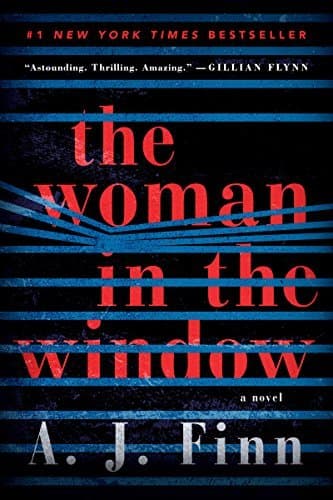
Opening
Insomnia pushes Anna Fox from spiraling doubts to a piercing realization—and straight into danger. A midnight break-in by her neighbor explodes into violence, leaving her silenced and ashamed, until a single photograph reframes everything she thinks she knows and shifts the power back to her.
What Happens
Chapter 86: A Realization and an Intrusion
Sleepless and wine-dazed, Anna replays the week as if scanning film. She fixes on the first time she met the woman she believes is Jane, scrutinizing the dialogue beat by beat. In her memory, she hears herself supply the name—“You’re the woman from across the park. You’re Jane Russell.”—and the woman never corrects her. The recognition cracks the case open: Anna isn’t misremembering so much as uncovering how her assumptions shape what she sees, a jolt that clarifies the novel’s play with Perception vs. Reality and signals a deliberate web of Deception and Secrets.
Before she can follow the new thread, the sound of breaking glass snaps her back. Another crash echoes from downstairs. Her heart races. Someone is in the house.
Chapter 87: The Box Cutter
Anna realizes her phone is downstairs—she left it there after talking to Bina—and she can’t call for help. The breach turns her home from refuge to trap, intensifying her Isolation and Agoraphobia. She forces herself out of bed, slips into her study, and rummages in a dark closet until her fingers close around a box cutter.
A man’s voice floats up from the kitchen, calm and chilling: “Mrs. Fox. Come join me in the kitchen.” She freezes, the small blade suddenly feeling both flimsy and necessary.
Chapter 88: The Confrontation
Anna descends to find Alistair Russell in her moonlit kitchen, glass shards glittering around him. He’s drunk, furious. He says he used the key she gave Ethan Russell to get in, then tosses the key and her phone onto the counter. He sneers that she’s “out of her goddamn mind” and orders her to stay away from his family.
When Anna raises the box cutter and tells him to leave, he lunges. His hand clamps her throat; he slams her against the wall. “Stay away from my son. Stay away from my wife,” he snarls, breath hot with liquor. She swings the blade, misses. The cutter clatters to the floor. On the edge of blackout, she feels his grip release. He kicks the box cutter away, murmurs “Remember this,” and—after a soft, dissonant “Please”—sweeps more bottles from the counter and storms out.
Chapter 89: The Aftermath
On Sunday morning, Anna counts five dark bruises blooming on her neck. She knows she can’t go to the police. After weeks of “harassing” the Russells—and giving their teenage son a house key—she’s certain Detective Little will dismiss her. Shame and fear silence her as surely as the hands around her throat did.
She sweeps up the broken glass, as if she can restore what’s been shattered. But the sanctuary is gone; her kitchen feels like a crime scene. She tells herself she’ll never know the truth about the woman—if the woman even existed—then lowers the blinds and seals herself back inside.
Chapter 90: The Reflection
Anna spends the day numbing out with old movies. A flood warning buzzes on her phone. Across the park, Alistair drinks in his kitchen, and her bruises throb in response.
Idly, she opens her photos. She deletes the eerie shot of herself sleeping—then sees the image beneath it: a sunset taken from her kitchen window. There, reflected in the glass, is a clear, unmistakable figure—the woman Anna knew as Jane. It’s the first concrete proof that the woman is real, and that she was inside Anna’s house.
Character Development
Anna’s arc plunges from clarity to terror to a fragile spark of empowerment. The night strips her of safety and credibility, yet the photograph confirms her sanity and reignites her will to fight.
- Anna Fox: Moves from a sharp self-audit of her own assumptions to visceral victimhood under assault. By morning, she’s defeated, muzzled by her reputation. The reflected image in her sunset photo validates her perception and restores purpose.
- Alistair Russell: Reveals himself as volatile and controlling, his polished facade masking menace. The violence shows how far he’ll go to protect secrets. His quiet “Please” complicates him as desperate, not just monstrous—without excusing the brutality.
Themes & Symbols
The chapters crystallize Perception vs. Reality. Anna’s realization that she named “Jane” herself shows how easily interpretation masquerades as fact. Later, her inability to report the assault underlines the gap between lived experience and how others will perceive it. The photograph—an unblinking, reflected image—cuts through doubt to ground the narrative in verifiable truth, flipping the balance from self-questioning to evidence.
Isolation tightens. The break-in collapses the boundary between inside and outside, weaponizing Anna’s agoraphobia and exposing the fragility of her refuge. At the same time, Deception and Secrets drive the danger: identities blur, motives hide, and threats are delivered under cover of night. Finally, Anna’s habits of Voyeurism and Observation become double-edged—her watching invites peril, yet her camera captures the proof that can set her free.
- Broken glass: A jagged emblem of violated safety and shattered control. Cleaning it is a ritual of futile repair—and a prelude to finding the one intact image that matters.
Key Quotes
“You’re the woman from across the park. You’re Jane Russell.”
Anna’s own words expose the seed of misperception. She assigns the name; the woman simply doesn’t contradict her. The line spotlights how assumption can become “truth,” fueling the novel’s instability of identity.
“Mrs. Fox. Come join me in the kitchen.”
The intruder’s false civility is chilling. Address and invitation turn her home court into his stage, signaling domination and the inversion of safety.
“Stay away from my son. Stay away from my wife.”
This threat reframes Anna’s curiosity as a violation to be punished. It reveals the scope of what he’s protecting—and the violence he’s willing to use to keep it protected.
“Remember this.”
A command as much as a warning, it brands the assault as a lesson meant to control her future choices. Its cold intimacy underscores the psychological weight of the attack.
“And reflected in the glass is the woman I knew as Jane.”
A pivot line and proof in one. The reflection literalizes the book’s mirror-play with truth, and it transforms speculation into evidence, resetting the stakes.
Why This Matters and Section Significance
These chapters mark a fulcrum in the narrative. Anna reaches a nadir—physically assaulted, socially discredited, and emotionally isolated—seemingly forced to abandon her pursuit of the truth. Then the photograph emerges, converting her intuition into tangible proof. The conflict shifts from internal doubt to external confrontation: no longer Anna vs. her psyche, but Anna vs. the Russells and the secrets they guard. The momentum turns, and with it, Anna’s role—from unreliable witness to an emboldened protagonist armed with evidence.