
Study for AP US Government with Turbo AI

Ishan Chawla
Student, Northwestern University

Brief Overview
AP Gov isn't hard the way calculus is hard where something needs to "click." It's hard because of sheer volume: Supreme Court cases, foundational documents, and a mountain of vocabulary where students are required to memorize obscure terms, with many in Latin (certiorari, stare decisis, habeas corpus, amicus curiae ... etc). The AP exam asks whether you can still tell saliency from intensity in May, niche terms you likely learned in October.
That's why our approach to AP Gov runs on one principle, which is to turn everything into something you can be tested on early and often. The reason our students can actually pull this off is that they don't build their study materials from scratch, Turbo already has the entire course pre-built.
Here's exactly how our AP Gov students excel.
Step 1: Add the AP US Government Study Guide
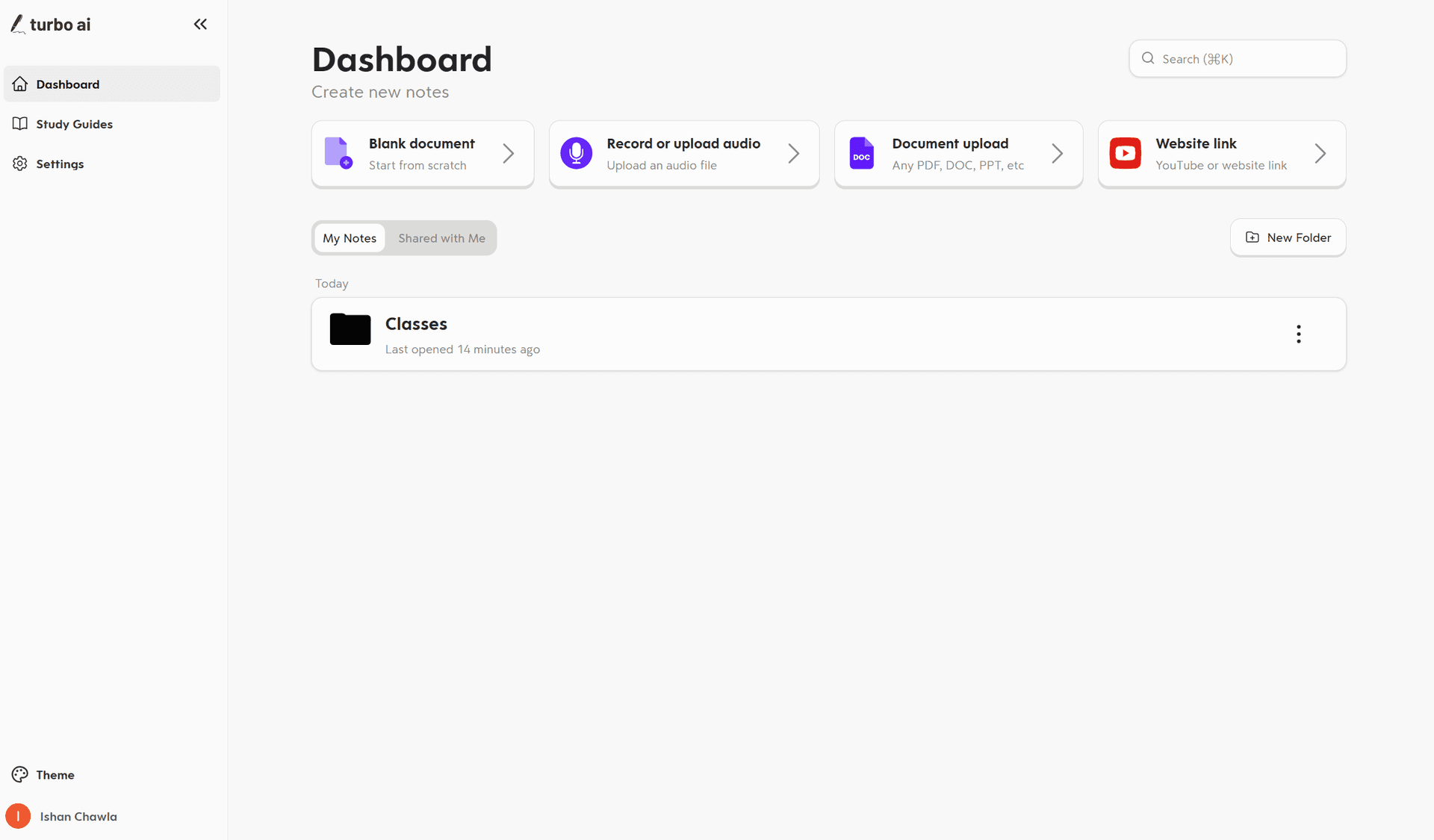
Turbo has a built-in library of study guides covering every AP class. On the dashboard, click Study Guides in the left panel and you'll see the full list.
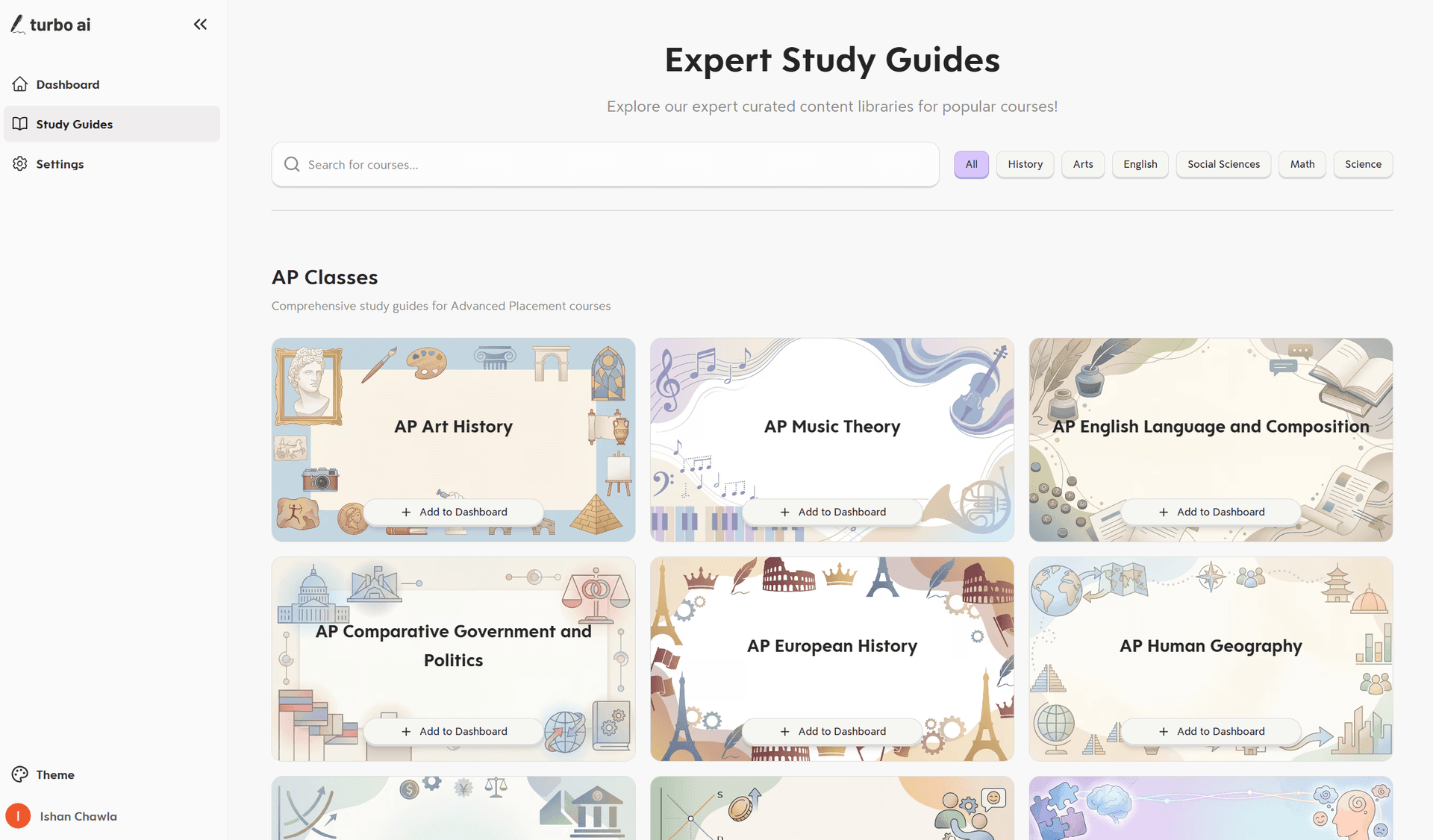
Once clicked, Turbo takes you to our study guide dashboard showing each AP class.
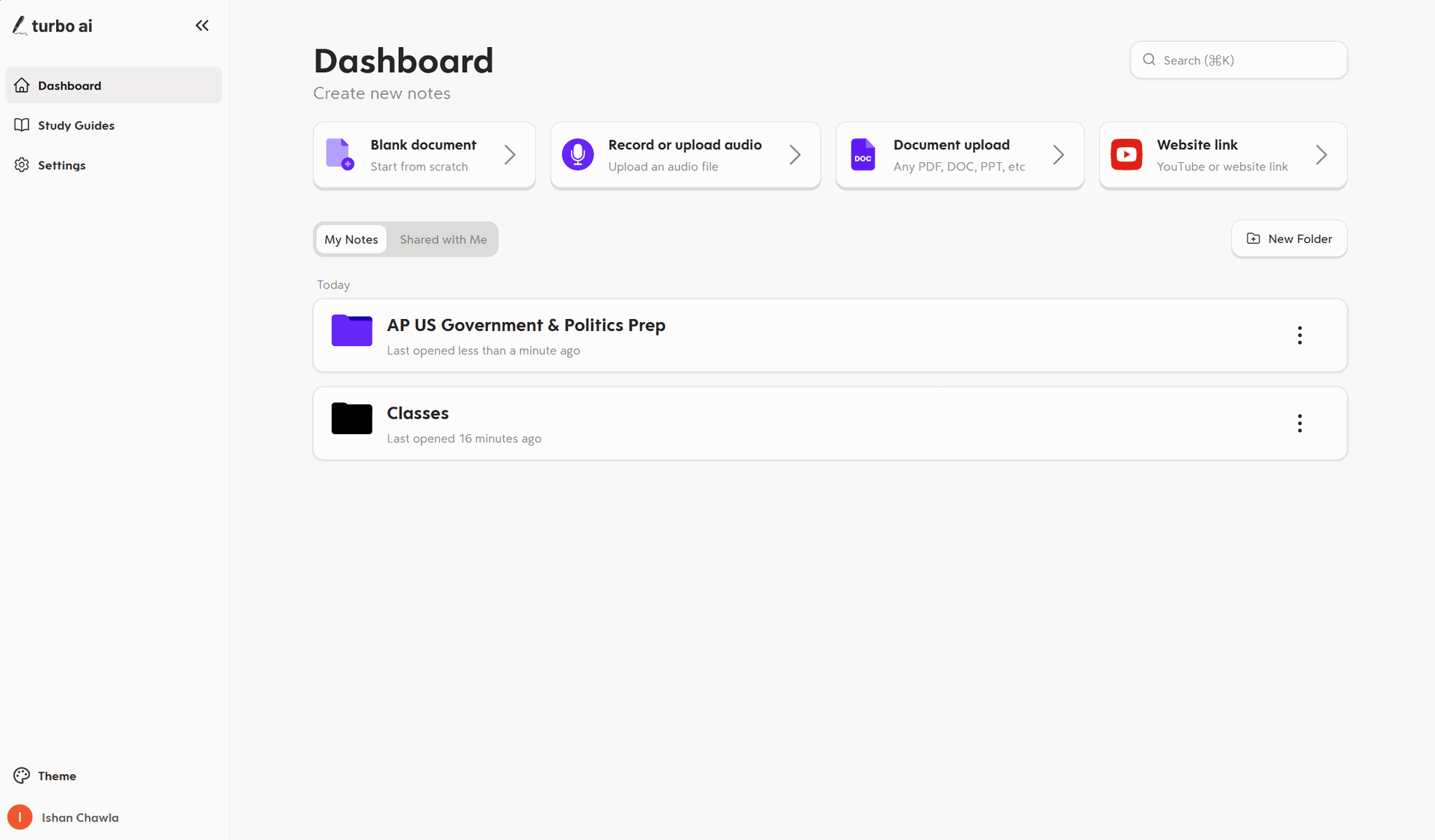
Click AP US Government & Politics and the whole guide gets added to your dashboard.
Step 2: Get Oriented
Open the guide and you'll find the course broken into units, each with its own folder of detailed notes covering that unit's topics.
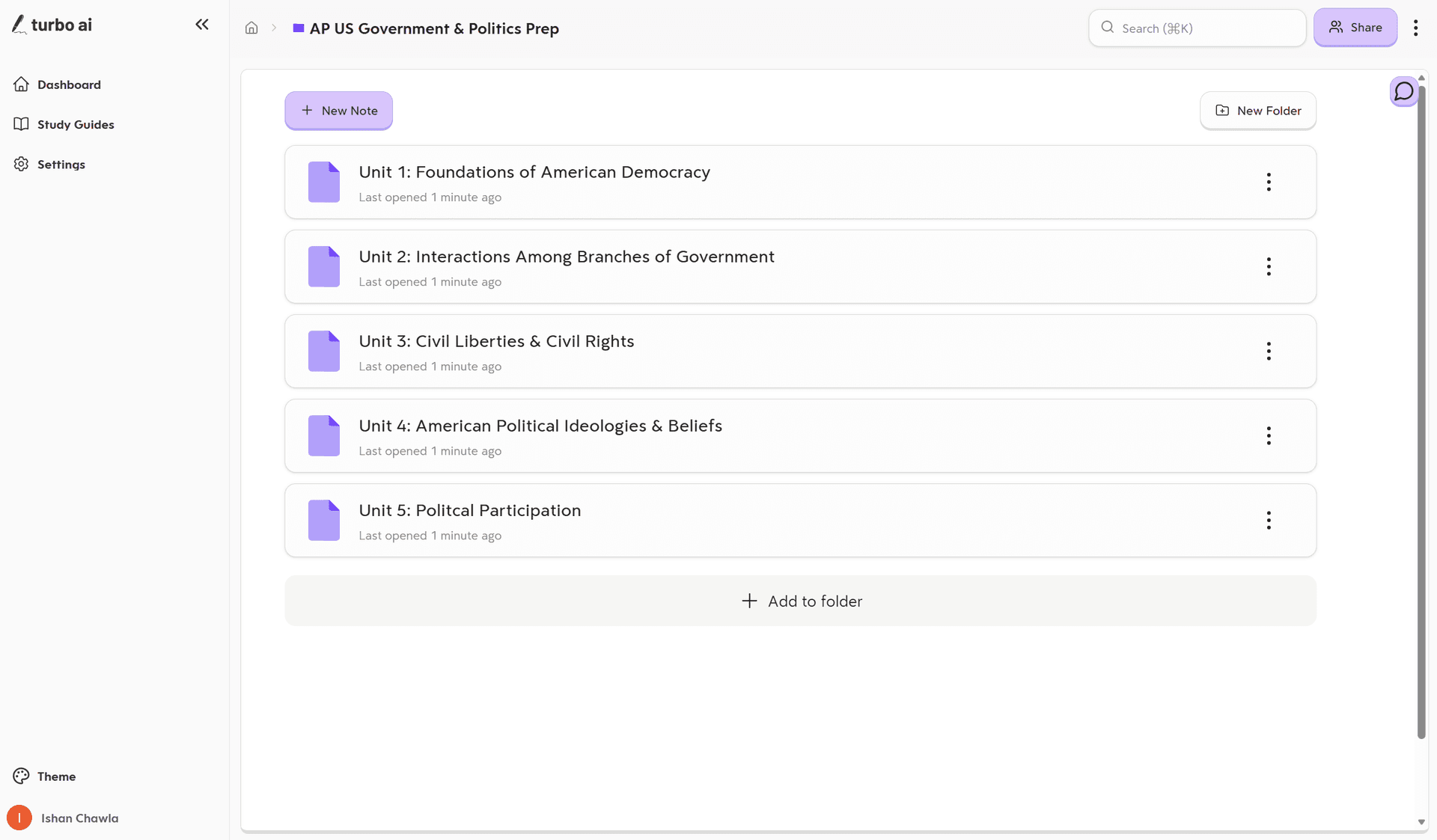
This progression of topics perfectly mirrors how the course actually flows, beginning from the foundations of American democracy through the branches of government, civil liberties and civil rights, political ideologies, and finally political participation. Thus, students can jump in wherever their class currently is. Commonly, when teachers start a new unit, students open that unit's folder the same week.
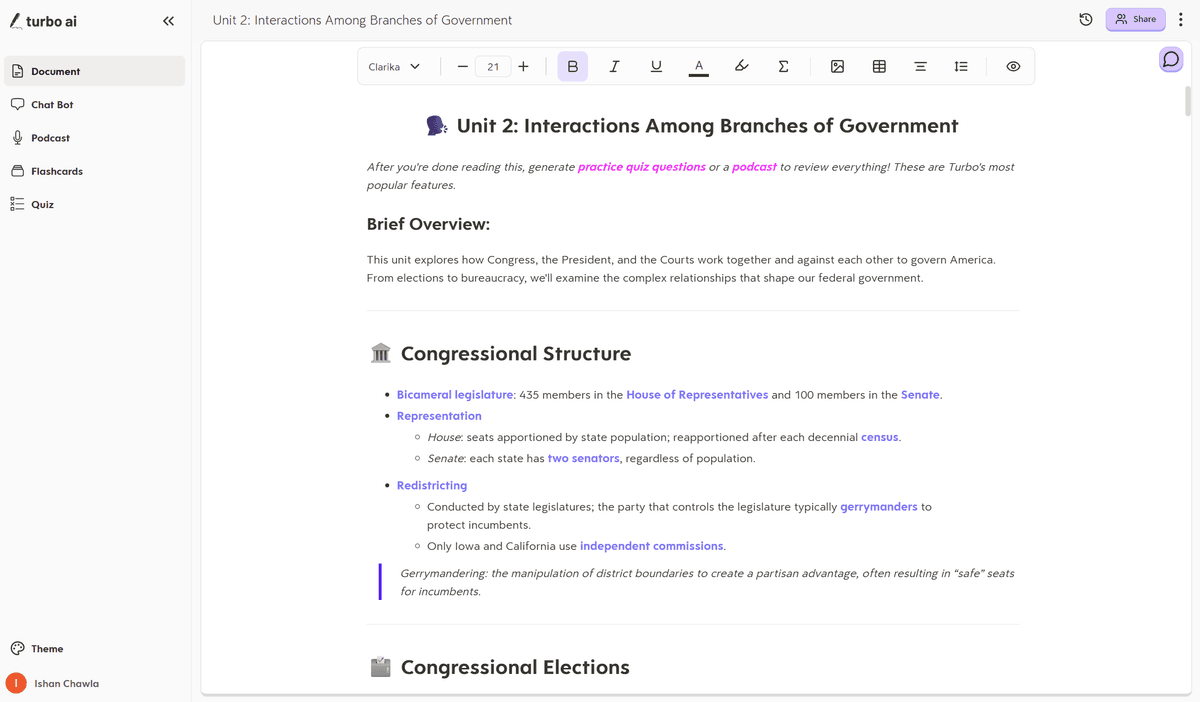
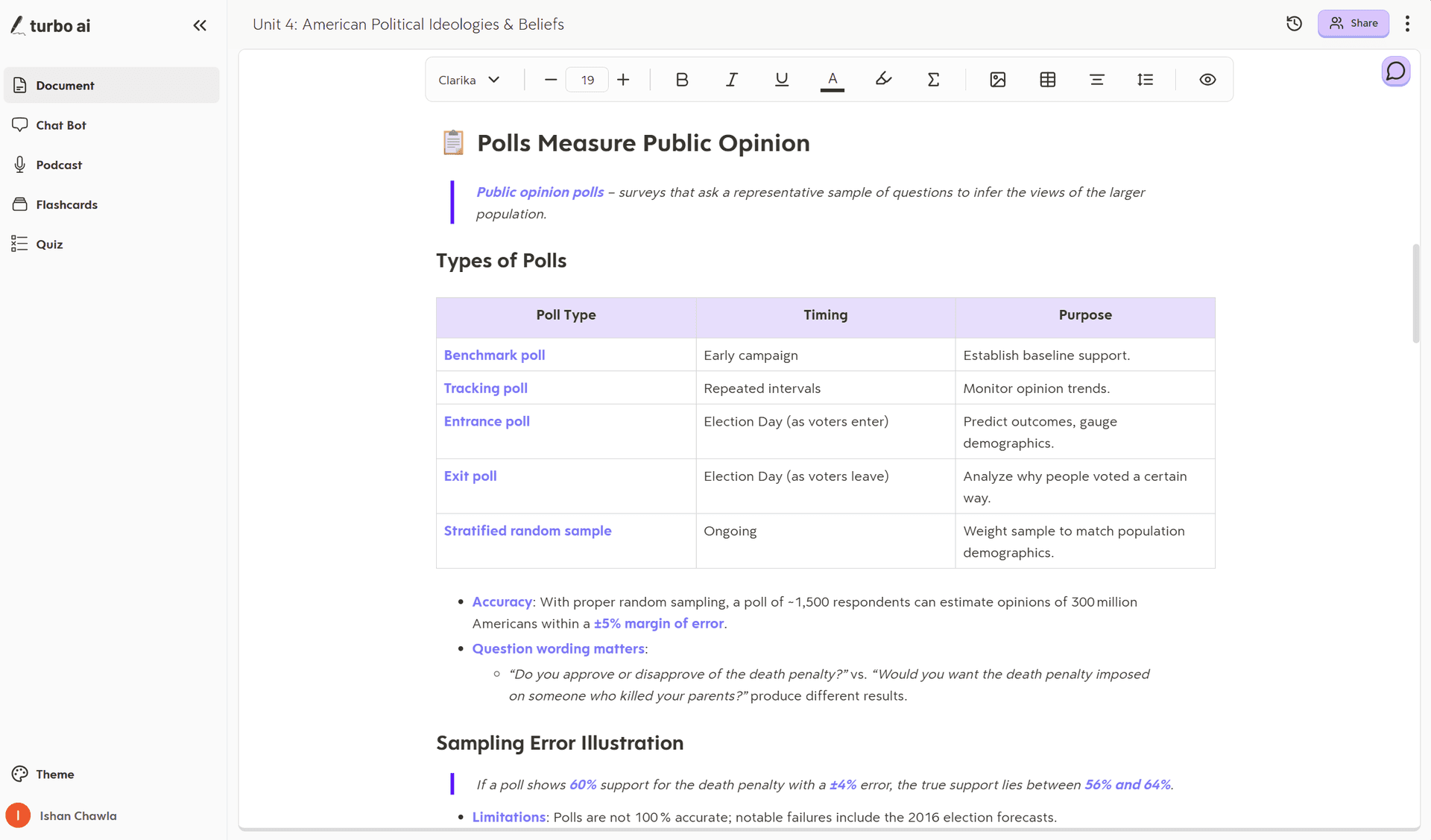
Here's what the notes themselves look like:
Unit 2: Interactions Among Branches
Unit 4: Political Ideologies & Beliefs
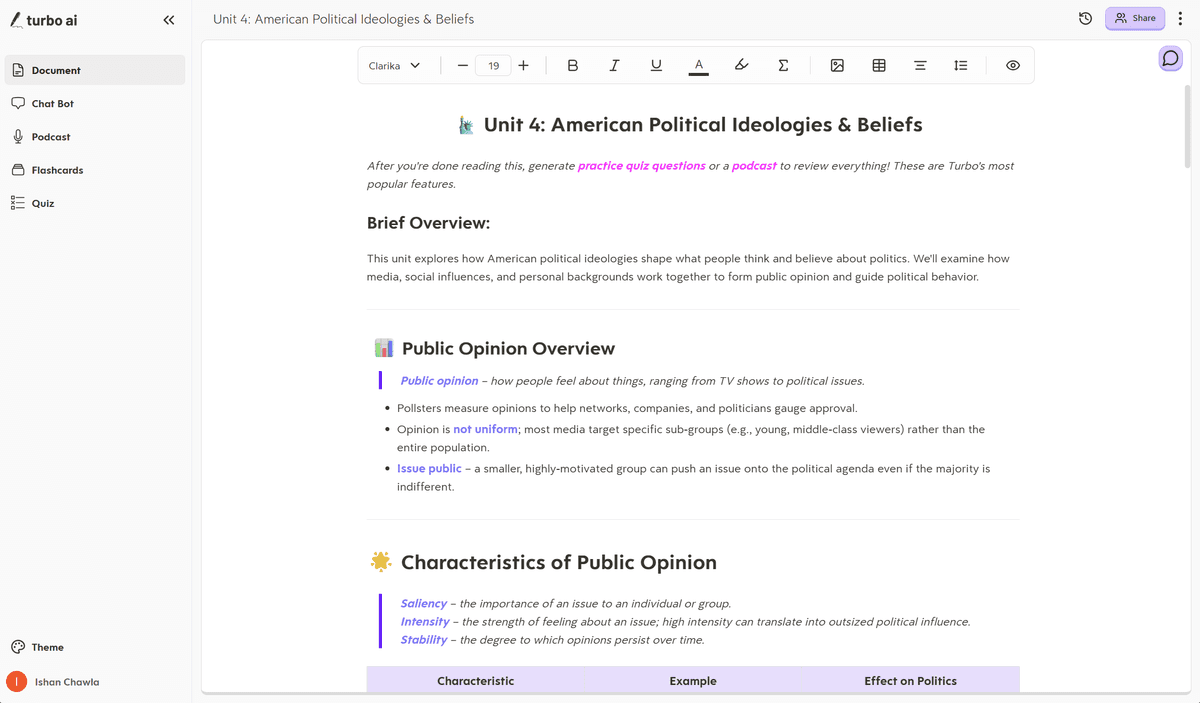
Notice the structure doing the work: key terms bolded and defined in callouts (gerrymandering, issue public), and comparison tables that target multiple-choice comparison questions.
Step 3: Make the Notes Yours via Editing
Turbo is meant to help students study, rather than passively read. So, we made the pre-built notes editable. You can add your own explanations, paste in the specific way your teacher phrases things, or drop in the exact terms from class that were assigned or confused you.
For AP Gov specifically, this is where the required Supreme Court cases and foundational documents live. As your class covers each case, add your teacher's framing and the one-line holding to the relevant unit — Marbury into the branches unit, Tinker into civil liberties. If I were taking this class, every multiple-choice question I missed would go into the unit's notes with one line about the trap I fell for (ex. "confused saliency with intensity"). By May, each unit's notes are composed of Turbo's pre-built content, my own logged mistakes, and the exact case list my teacher emphasized. Reviewing my mistakes is worth more than reviewing the material cold, and this puts both in one place.
Step 4: Rotate Through Turbo's Core Features
Every unit in the study guide can be used with Turbo's features:
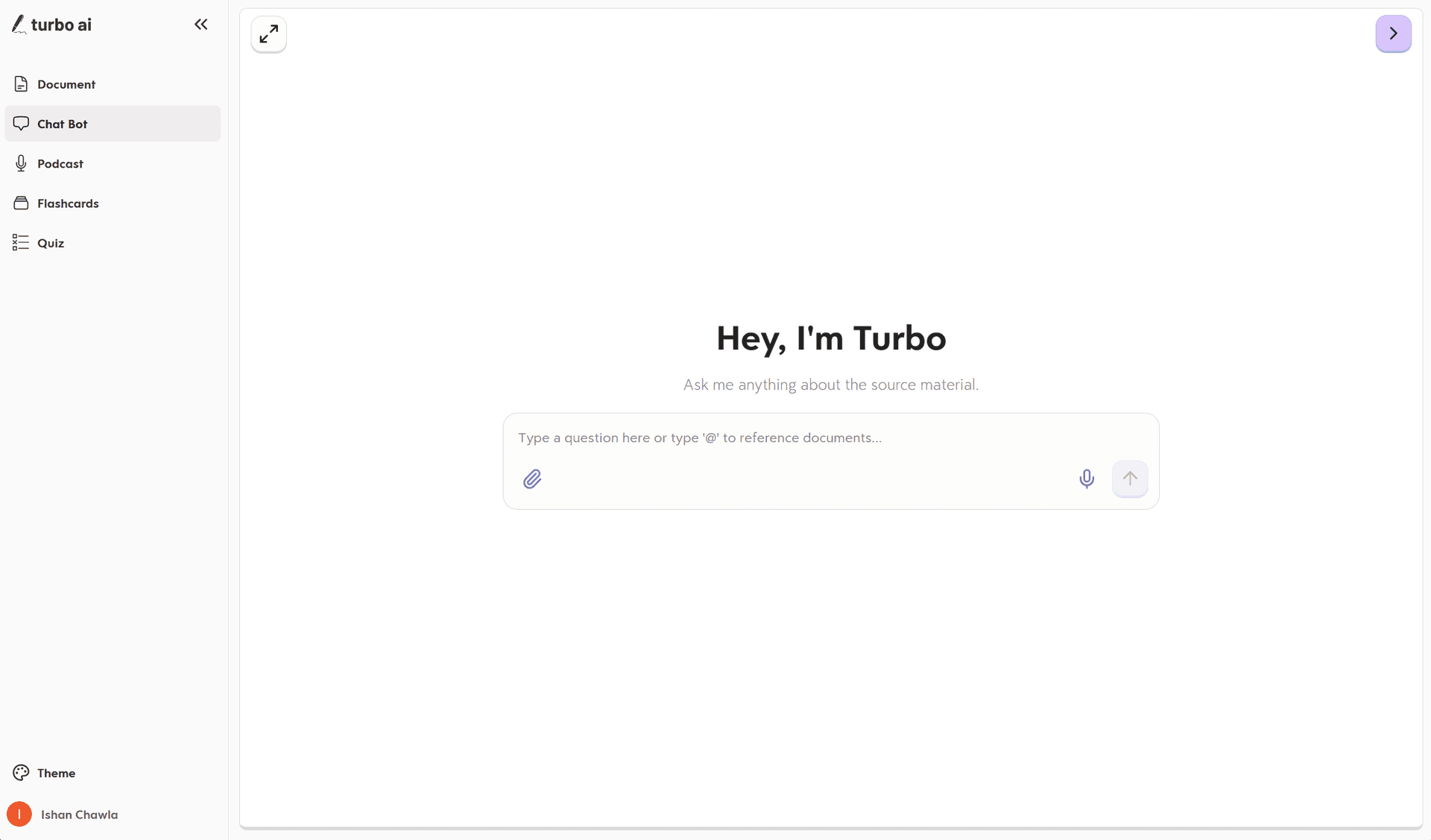
Chat. When a distinction in the notes doesn't click, students ask the chatbot right there. It answers in the context and complexity of the notes students are looking at, which beats searching forums on Google or asking a general chatbot for an answer aimed at the wrong level.
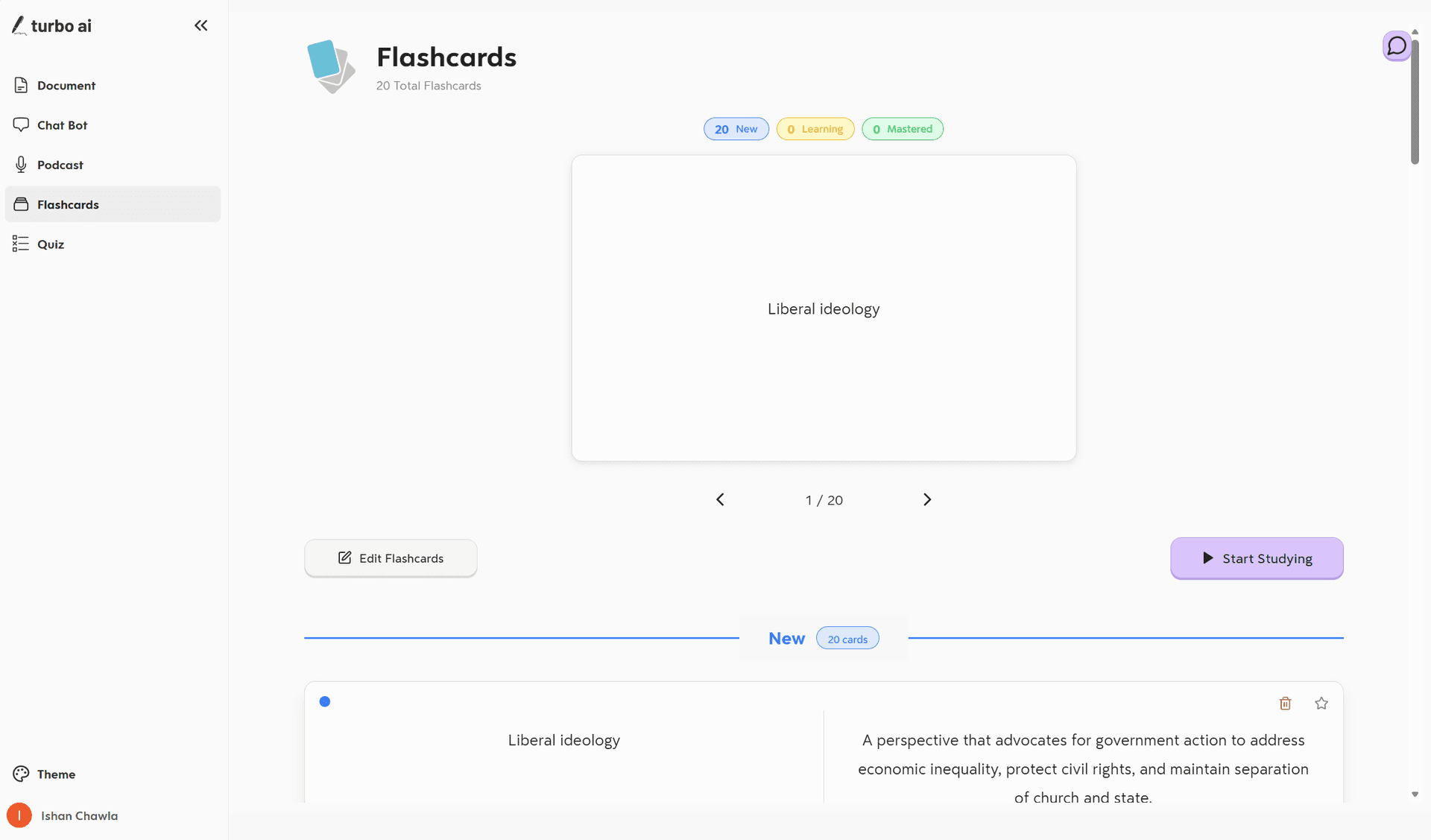
Flashcards. More than almost any other AP class, Gov is a recall game: ideologies, clauses, case holdings, poll types. Flashcards handle that layer so it never costs our students points.
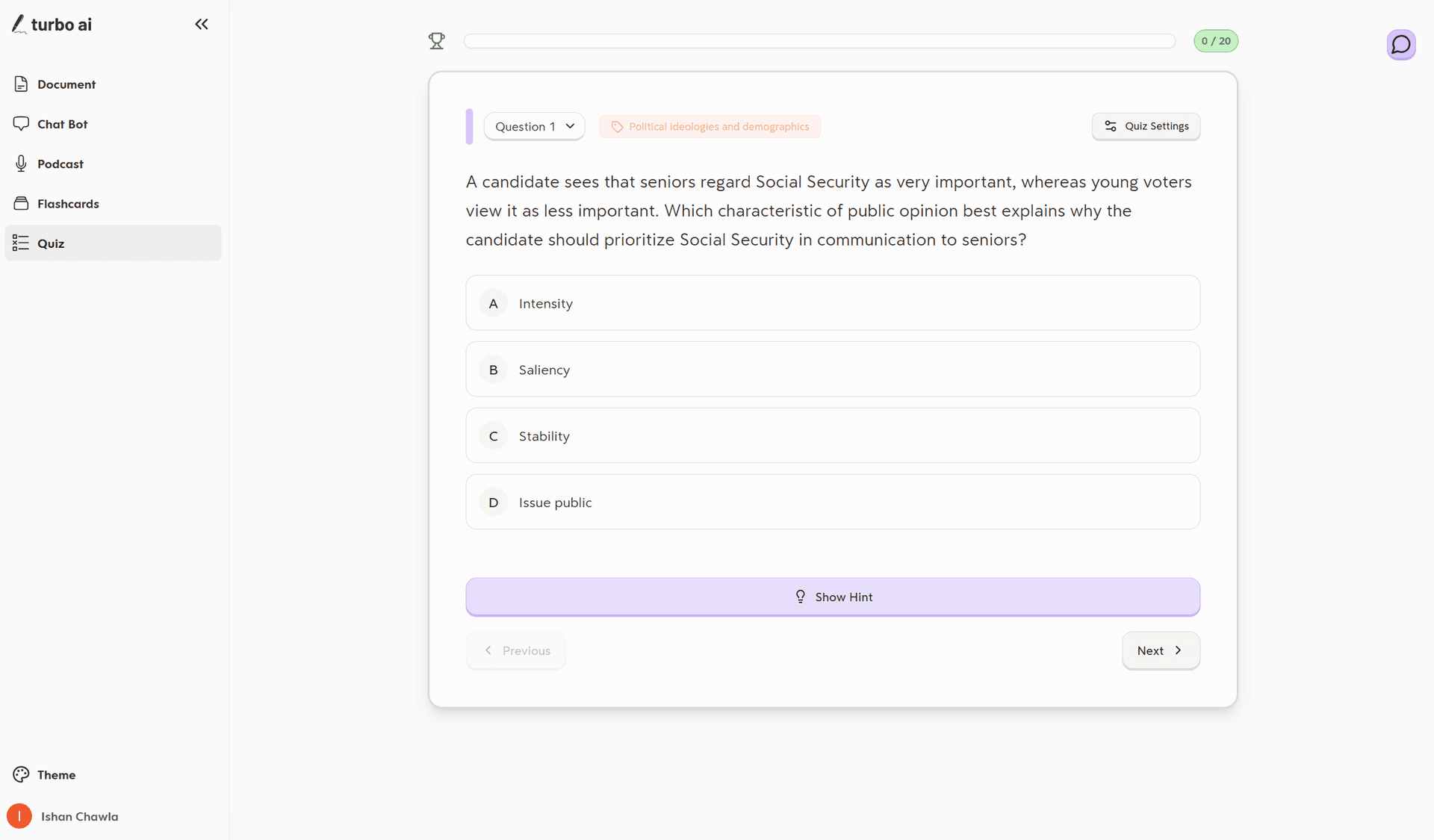
Quizzes. Every weekend students take a quiz on the current unit. A low score flags that unit for another pass before it becomes a foundation problem. And these aren't just definition-matching: the questions mirror the exam's scenario style.
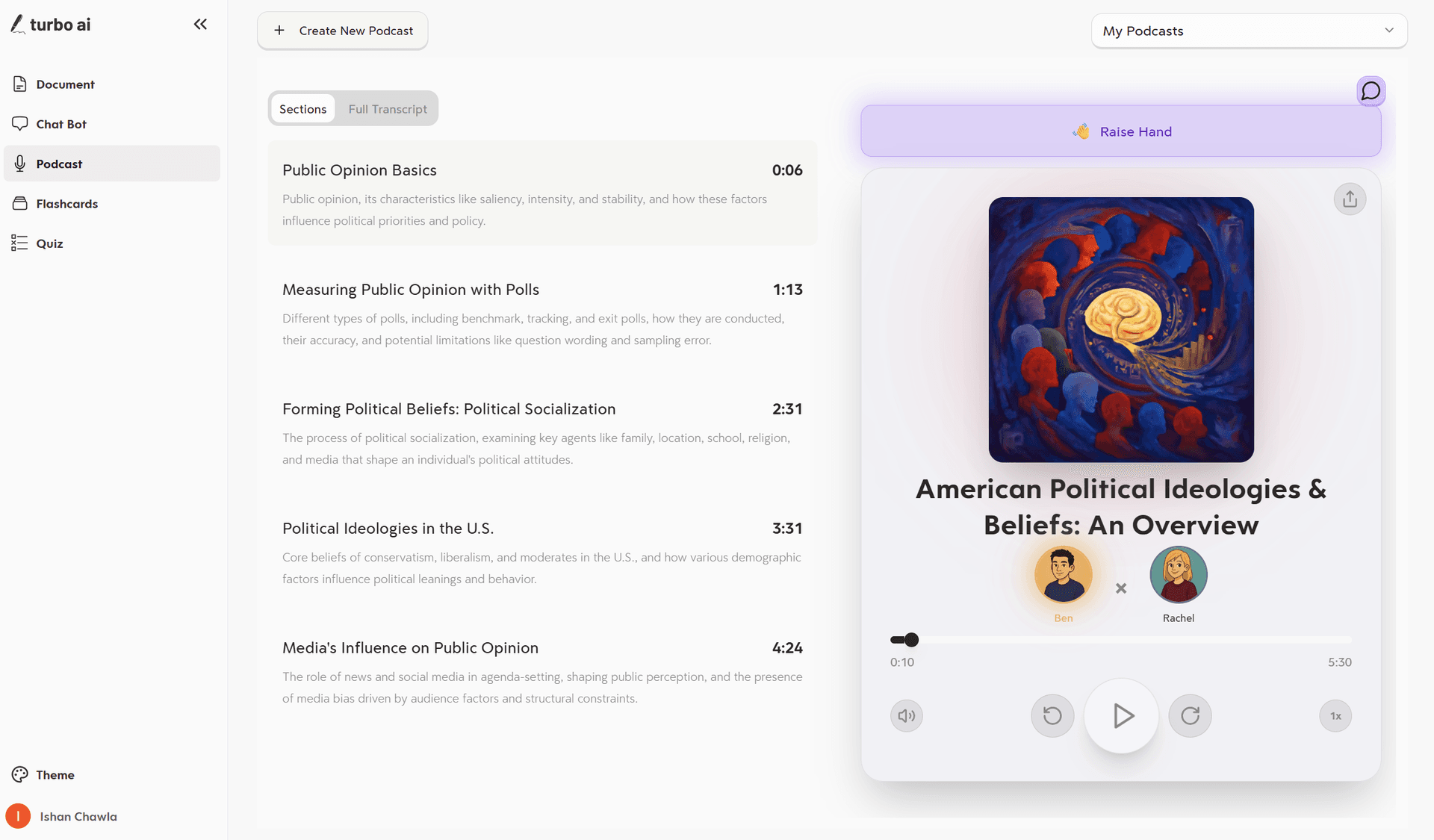
Podcast. For our busiest students, the podcast feature lets them study on the go, whether it be on bus rides, walks, or at the gym. Gov, unlike calculus, is a subject you can absorb by ear. Each unit's podcast is broken into labeled sections so you can jump straight to the topic you need.
Step 5: During the Year vs. Before the Exam
During the year, students commonly learn and review one-unit-at-a-time: read the unit notes when the teacher starts it, add cases and missed questions as they go, and quiz on the weekend.
Come spring AP tests, the same guide turns into a review bank. We recommend students re-quiz every unit once, rank them by score, and spend review weeks on the worst scoring sections. All logged mistakes and case notes get reread before another re-test, and by exam week, students know where they stand.
One honest note: Turbo doesn't replace practicing the actual free-response formats. The argument essay and SCOTUS-comparison questions have specific rubrics, and the College Board posts past FRQs for free. What Turbo replaces is the part where you figure out what to review and rebuild materials for it.
The Whole System in 30 Seconds
- Add the AP US Government study guide
- Follow along with your class, one unit folder at a time
- Edit the notes with your cases, terms, and mistakes
- Quiz weekly
- In spring, re-quiz everything and review worst-first
- Podcast on the days you'd otherwise do nothing
The reason this works isn't any single feature. It's that the expensive part of studying, building organized materials, is already done, so all your time goes into the part that raises your score: finding and fixing what you don't know.
Ishan Chawla
Student, Northwestern University