Opening
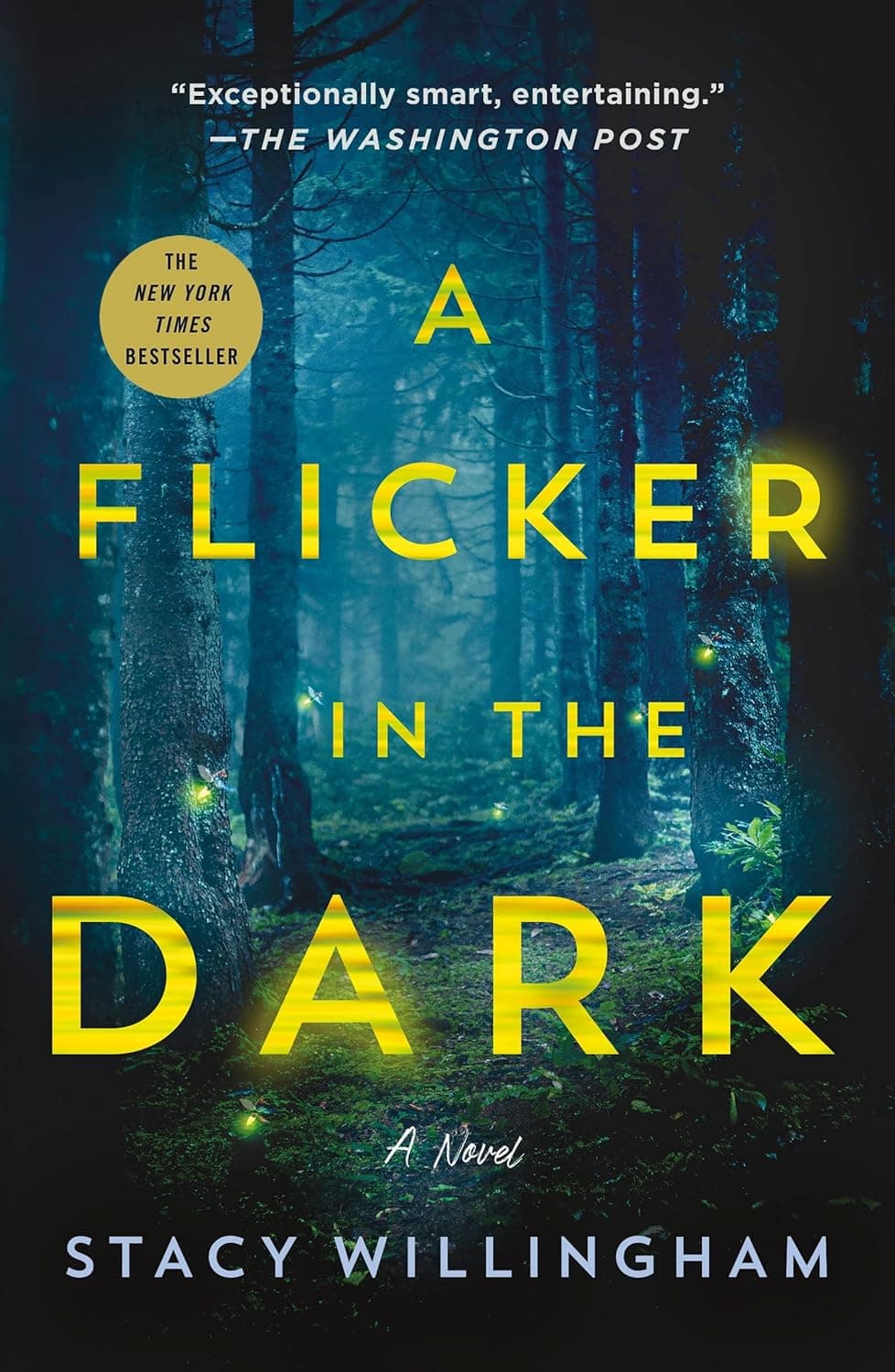
In May 2019, Chloe Davis, a psychologist in Baton Rouge, tries to keep her life orderly—fiancé, private practice, routines—while the past keeps intruding. A reporter’s call about the 20th anniversary of her father’s murders rips open old wounds, and Chloe’s carefully managed calm begins to fray as secrets, pills, and fear bleed into her present.
What Happens
Chapter 1
Chloe meets a new teenage patient, Lacey Deckler, who self-harms and seethes with anger after her father left two years ago. When Lacey calls herself “a kid without a dad,” Chloe softens the room by admitting she knows that pain because her father left when she was twelve. The confession disarms Lacey and forges trust, establishing Chloe’s gift for turning her own wounds into bridges.
As the session closes, that tiny disclosure—“something like that”—points to a much deeper rupture. The chapter lays the groundwork for The Lingering Trauma of the Past, showing how Chloe’s childhood shapes her work and the way she connects, and conceals, in the present.
Chapter 2
Afterward, Chloe wryly catalogs the clichés of her profession before rifling through a desk drawer stuffed with prescriptions—Xanax, Valium—her “personal in-office pharmacy.” She calls CVS to prescribe Prozac for Lacey and, with startling ease, refills Xanax for Daniel Briggs. The ease with which she manages controlled substances reveals a dangerous boundary blur in her coping.
A call from Aaron Jansen / Tyler Price of The New York Times detonates the truth behind her vague “my father left.” He is writing about the twentieth anniversary of the murders committed by her father, Richard Davis, who is in prison for killing six teenage girls. Chloe bristles, refuses to talk, and ends the call rattled; as she leaves the office “into the dark,” the story seeds Memory, Paranoia, and Unreliable Narration, with her pill use casting doubt on her own clarity.
Chapter 3
Driving home, Chloe narrates the quiet routines of women’s self-protection—keys gripped, checks over shoulders—and drifts back to Breaux Bridge, summer 1999. One by one, six teenage girls disappear. Twelve-year-old Chloe clings to her fifteen-year-old brother, Cooper Davis, as their parents grow watchful and the town’s fear curdles into suspicion. The terror feels ambient, in the walls, in the air.
The flashback pins the timeline of the crimes and Chloe’s formative dread, inviting the question of where monstrosity hides—across town or inside the house next door. That question presses on Chloe now as she stops at the CVS drive-through to pick up the Xanax she ordered for Daniel, folding present-day secrecy into the same fabric as 1999 and hinting at The Nature of Evil and Monstrosity and Family Secrets and Dysfunctional Loyalty.
Chapter 4
Chloe gets home and immediately swallows one of Daniel’s Xanax, feeling the rehearsed relief roll in. The porch light—always on—is off, and the house seems wrong, hollow. She steps inside; lights burst on, and a crowd shouts, “SURPRISE!” It’s an engagement party thrown by her supposedly out-of-town fiancé, Daniel.
Guests swarm. Shannon, Chloe’s old colleague, is there. A quick flashback shows how Chloe met Daniel a year earlier: he helped her carry a box—heavy with true-crime books—when she left her hospital job to start her practice. The meet-cute spark now contrasts with the hidden fact that she takes his pills. The chapter sharply frames Deception and Appearance vs. Reality: a bright celebration over a bedrock of fear and secrecy.
Chapter 5
Overwhelmed, Chloe slips to the back porch and finds Cooper. Their reunion turns combative. He insists Daniel doesn’t truly know her; who throws a surprise party for a woman “afraid of everything”? Chloe fires back, accusing him of jealousy and control. The fight crystallizes their roles—her defensive, him protective to a fault—until Daniel appears and the mood pivots.
Daniel cheerfully reveals that Cooper helped plan the party and even cooked the crawfish boil. Guilt washes over Chloe. After Daniel disappears back inside, she apologizes; the siblings reconcile in the practiced way of survivors who can’t afford to lose the only family they have left. She almost tells Cooper about the reporter but lies that a missed call is from their mother’s care facility. As Cooper leaves, he calls their old goodbye—“See ya later, alligator”—and the past snaps tight around the present.
Character Development
Chloe balances practiced empathy with corrosive secrecy, using her story to heal others while medicating herself into numbness. Daniel seems generous and attentive, yet his choices don’t align with Chloe’s needs. Cooper’s skepticism reads as abrasive but springs from fierce loyalty. Richard remains offstage yet omnipresent—the gravitational force warping everyone’s orbit.
- Chloe Davis: Uses disclosure to build trust with patients; self-medicates with controlled substances; frames herself as rational while signaling unreliability; avoids discussing her father yet acts under his shadow.
- Daniel Briggs: Performs grand gestures (surprise party, support for her new practice); his name on the Xanax bottle complicates the power dynamics between them; misses or ignores cues about Chloe’s fear.
- Cooper Davis: Protective, blunt, and suspicious of outsiders; understands Chloe’s triggers better than Daniel; participates in the party anyway, suggesting his own conflicted loyalties.
- Richard Davis: The absent center; his crimes define the town’s history and Chloe’s identity, setting the tone of dread that permeates every choice.
Themes & Symbols
The lingering trauma of the past saturates the present. The 1999 disappearances script who Chloe becomes: a psychologist fluent in pain, a woman whose routines are shaped by fear, and a sister orbiting a shared catastrophe. The reporter’s call ensures the past doesn’t stay sealed; anniversaries keep sorrow alive and narrative control out of Chloe’s hands.
Appearance vs. reality dominates the domestic sphere: a glowing engagement party masks panic; a thoughtful fiancé plans the exact wrong gesture; a safe home once housed a monster. Memory’s distortions and Chloe’s medicated haze introduce doubt about what she perceives, and about whom she can trust—including herself.
Symbolically, darkness and light do more than set mood. The porch light is Chloe’s talisman against the unknown; a dark house equals danger. The party’s instant glare exposes her in the wrong way—visibility without safety—while “stepping into the dark” signals the tide pulling her back toward what she most fears.
Key Quotes
“A kid without a dad.”
Lacey’s phrase unlocks Chloe’s guarded empathy and sets up the initial misdirection: Chloe’s father didn’t just leave. The line becomes a bridge and a boundary, pointing to grief while obscuring its cause.
“SURPRISE!”
A single shout flips the scene from menace to celebration. It encapsulates the book’s central tension—acts meant as love landing as terror—and shows how easily Chloe’s fear response overtakes joy.
She steps “into the dark.”
This refrain marks the moment Chloe’s professional composure fractures after the reporter’s call. It functions as a motif for relapse—into memory, anxiety, and the unresolved past.
“Afraid of everything.”
Cooper’s accusation isn’t cruelty but diagnosis. He recognizes Chloe’s baseline hypervigilance and uses it to critique Daniel’s tone-deafness, sharpening the sibling conflict around who truly “knows” her.
“See ya later, alligator.”
The siblings’ childhood farewell carries tenderness and dread. It’s proof of a bond forged in crisis and a reminder that they never fully leave the summer of 1999 behind.
Why This Matters and Section Significance
These chapters establish the novel’s psychological engine: a protagonist shaped by a notorious crime, trying to curate a normal life as the past resurfaces. They introduce a web of mistrust—between Chloe and her memories, Chloe and Daniel, Chloe and the outside world—and seed suspicion through small choices (a prescription, a party, a lie). The reporter’s call functions as the inciting spark that guarantees collision between then and now, positioning the narrative to test every façade Chloe uses to survive.