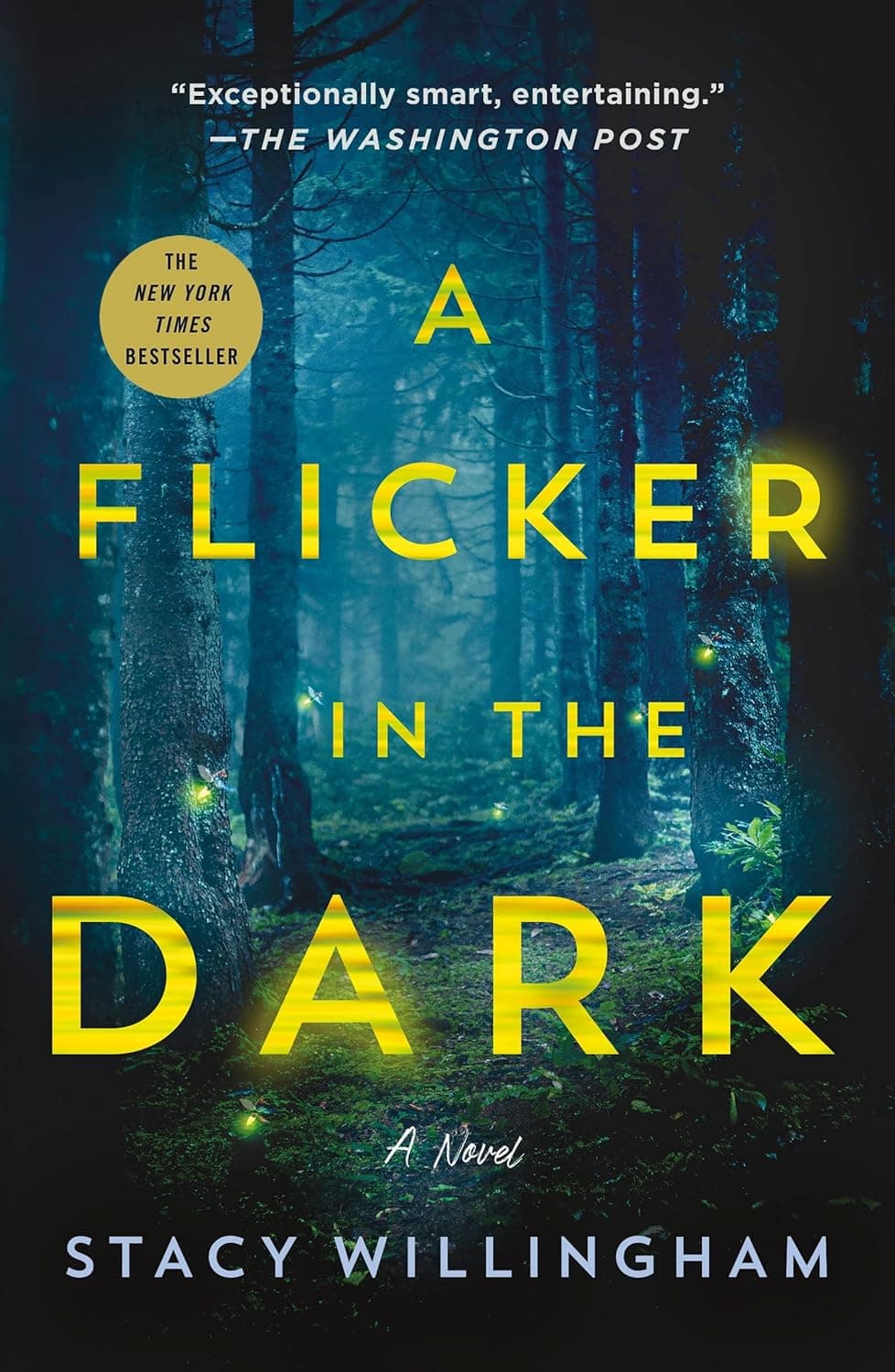
Opening
A new body surfaces, a second girl vanishes, and the past refuses to stay buried. As the investigation closes in, Chloe Davis relives the aftermath of her father’s crimes, where performance and monstrosity blend. Old phrases echo, patterns repeat, and Chloe teeters between clarity and fear as the line between memory and the present blurs.
What Happens
Chapter 11
Shaken by the search party’s discovery of Aubrey Gravino’s earring, Chloe bolts from the cemetery, convinced she’s being watched. She hides in her dark, empty office, hands trembling, and swallows an Ativan from a secret stash. A voicemail from Aaron Jansen / Tyler Price, the New York Times reporter, presses for an interview and announces he’ll contact her father in prison—news that twists her stomach.
The message cracks open a raw flashback. Chloe remembers the town turning on her family after the arrest—vandalism, stares, their house becoming a spectacle. She can’t reconcile the loving man who taught her to ride a bike with the “serial killer” in the papers, underscoring Deception and Appearance vs. Reality. Uneasy memories surface: Richard Davis staring too long at her friend Lena Rhodes, and the plea deal that traded his life for the locations of the bodies.
She relives his televised confession—tears, theatrics, and the claim that a “darkness” made him do it, “like a shadow” or “the devil himself.” Twelve-year-old Chloe sees it as performance, not remorse, cementing her understanding of The Nature of Evil and Monstrosity. She recalls him leading police into the woods behind their home, the same place she once saw him emerge with a dirt-caked shovel. Back in the present, as the Ativan steadies her, she researches the reporter’s tragedy-fueled career—until a breaking alert flashes: Aubrey Gravino’s body has been found.
Chapter 12
Chloe numbs out all weekend. On Monday, a warm text from her fiancé Daniel Briggs, away at a conference, grounds her and sends her back to their beginning. After they met by chance in a hospital lobby, she took weeks to call, conditioned by years of anonymous, controlled hookups designed to avoid attachment and danger.
On their first date, paranoia consumes her—she’s sure he Googled her—but he hasn’t. When she finally shares her past, Daniel reveals his own: his thirteen-year-old sister, Sophie, went missing in Baton Rouge the same year as the Breaux Bridge murders. The mutual wound draws them close, and he tells her he loves her.
Buoyed by that memory, Chloe walks into her office feeling almost normal—until her receptionist, Melissa, sobs over breaking news. Chloe assumes it’s Aubrey. It isn’t. A second fifteen-year-old, Lacey Deckler, is missing. The girl on the screen is Chloe’s new patient.
Chapter 13
The report slams Chloe back twenty years to the weeks when Lena disappeared and Robin McGill vanished three weeks later. Two missing girls so close together forms a pattern she recognizes in her bones—an immediate, terrifying recurrence of The Lingering Trauma of the Past.
The anchor outlines Lacey’s last known movements: her mother picked her up from school Friday, dropped her at an appointment, and expected her to walk to a friend’s house. She never arrived. “Appointment” makes Chloe’s breath stop.
It was with her. Chloe’s office is the last place Lacey is seen. Melissa quietly clears the day’s schedule as the realization crushes Chloe. Before she can compose herself, two officers appear at her door, asking to talk.
Chapter 14
Their presence detonates another flashback. Twelve-year-old Chloe sits in Sheriff Dooley’s sweltering office, the jewelry box of trophies in her lap, torn between exposing her father and staying silent. The sheriff leans on a single line that will haunt her: “Even if it could save a life?”
In the present, Detective Thomas and Officer Doyle question Chloe about Lacey. She recognizes Doyle’s gravelly voice from the cemetery—the man who took Aubrey’s earring—but lies, insisting they’ve never met. She cites confidentiality and refuses to disclose details. Then Detective Thomas repeats the exact same line from her childhood: “Even if it could save a life?” Past and present collide, deepening Memory, Paranoia, and Unreliable Narration.
Chloe says she’d share anything that suggests imminent danger, but claims their session didn’t. Eager to end the interview, she lies about having back-to-back appointments. As they leave, Doyle studies her and says she looks familiar. She denies it, determined to keep her past walled off from the current case.
Chapter 15
The office feels airless. Chloe needs someone to steady her but refuses to alarm Cooper Davis or drag Daniel deeper into the chaos. Instead, she drives to Riverside Assisted Living to see her mother, Mona, whose decade-long, minimally conscious state traces back to a suicide attempt after Richard’s sentencing—an open wound of Family Secrets and Dysfunctional Loyalty.
Chloe speaks into the silence, reading finger taps as the only response. She confesses the fear clawing at her: the new missing girls, the echoing lines, the anniversary looming like a storm front. As she readies to leave, Nurse Sheryl mentions another recent visitor: a stylish man in tortoiseshell glasses from the city.
Chloe freezes. The description matches Aaron Jansen. Rage surges. At the front desk, she demands the guest book. His name is there, scrawled on the page—a trespass into her most private, vulnerable space.
Character Development
Chloe’s coping mechanisms and fractures come into full view as present-day events trigger vivid, intrusive memories that dictate how she perceives danger, trust, and responsibility. Her connection to Daniel rests on shared loss, while her isolation deepens under the weight of repeating patterns.
- Chloe Davis: Reliance on Ativan and avoidance give way to spiraling vigilance; her refusal to share with police and small lies signal growing paranoia and control. Her history with media scrutiny fuels her fury at the reporter’s intrusion.
- Richard Davis: Through memory, he appears as a dual figure—devoted father and performative predator—who shifts blame onto a “darkness” rather than accepting guilt.
- Daniel Briggs: His sister’s disappearance explains his empathy and protectiveness; his love becomes Chloe’s anchor when the past resurfaces.
- Mona Davis: A living wound of the family’s fallout; her minimal responsiveness underscores the long-term collateral damage of Richard’s crimes.
- Cooper Davis: Offstage but central to Chloe’s sense of duty; she shields him from fresh pain even as she unravels.
Themes & Symbols
The lingering past saturates the present. The investigation’s cadence—two missing girls, media pressure, a familiar phrase from authority—recreates the rhythm of Chloe’s childhood trauma. The narrative forces her to reoccupy that space, where fear and responsibility blur.
Memory’s distortions and anxiety’s amplification threaten Chloe’s reliability. The repeated line “Even if it could save a life?” collapses time, making her both the child who could expose a killer and the therapist who might hold the last clue. Deception cuts through every layer: Richard’s public remorse masks manipulation; Chloe’s competent exterior hides self-medication and dread; official language cloaks coercion.
- Symbol: The Jewelry Box. The hidden cache of trophies is the family’s Pandora’s box—once opened, it destroys the illusion of safety and transforms private suspicion into unbearable certainty.
Key Quotes
“A darkness inside of me.”
- Richard’s explanation reframes murder as possession rather than choice, dodging accountability. The language of an external force highlights his performative self-exoneration and solidifies Chloe’s view of evil as seductive and theatrical.
“Like the devil himself.”
- Coupled with the “darkness,” this image turns confession into spectacle. Evil becomes mythic and impersonal, intensifying the theme of performance over remorse and deepening Chloe’s disgust.
“Even if it could save a life?”
- First used by Sheriff Dooley and repeated by Detective Thomas, the line functions as institutional leverage and a narrative trigger. Its recurrence fuses past and present, pressuring Chloe while eroding her sense of reality.
Why This Matters and Section Significance
These chapters pivot the novel from background trauma to immediate entanglement: Chloe isn’t just haunted—she’s the last person to see a missing girl. The echo of the old case, the reporter’s intrusion, and the police pressure bind her psychology to the investigation’s stakes, making her both witness and suspect in a pattern she recognizes too well.
By entwining present-day disappearances with Chloe’s memories, the section sets the book’s central question: is history repeating, or is Chloe’s traumatized mind mapping coincidence into conspiracy? Either way, the cost is the same—every decision she makes carries the weight of the past and the possibility of saving (or failing) another life.