Most Important Quotes
The Abyss Gazing Back
"Whoever fights monsters should see to it that, in the process, he does not become a monster. If you gaze long enough into an abyss, the abyss will gaze back into you."
Speaker: Friedrich Nietzsche (Epigraph) | Context: Appears as the epigraph at the book’s outset, framing the novel’s moral and psychological landscape.
Analysis: This philosophical warning is the novel’s thematic keystone, foreshadowing Chloe Davis’s descent into suspicion, self-doubt, and the very darkness she resists. It positions the story within a meditation on the nature of evil—not as something exotic and distant, but as a force that can be internalized by those who stare at it too long. Dramatic irony tightens the line: Chloe “fights monsters” professionally while privately confronting the abyss of her family’s past. The image of the abyss “gazing back” anticipates how her history refuses to stay buried, shaping her perceptions until she can no longer distinguish vigilance from paranoia.
The True Nature of Monsters
"No, the real monsters move in plain sight."
Speaker: Chloe Davis (Narrator) | Context: Prologue, as Chloe contrasts childish fears with the revelation of evil inside her own home.
Analysis: This thesis statement crystallizes the book’s obsession with Deception and Appearance vs. Reality. The line dismantles comforting binaries—light/dark, safe/unsafe—insisting that monstrosity wears ordinary faces. It explains Chloe’s adult hypervigilance and her mistrust of intimates like Daniel and Cooper, whose normalcy reads as a mask rather than reassurance. As foreshadowing, it primes the reader for a mystery built on misdirection, implicating the familiar over the stranger and replacing jump scares with the dread of recognition.
The Confession of Darkness
"I have a darkness inside of me. A darkness that comes out at night."
Speaker: Richard Davis | Context: Chapter 11, during his televised confession that later proves to be a performance.
Analysis: The confession functions as both thematic anchor and red herring, presenting evil as an uncontrollable force rather than a series of choices. For Chloe, it becomes the script of her life, cementing her father’s guilt and shaping her identity as a killer’s daughter. Its full significance detonates when Cooper Davis repeats the exact words in the Chapter 46-48 Summary, revealing the confession as mimicry and manipulation. The repetition exposes a family ecosystem defined by performance and dysfunctional loyalty, where confession itself becomes a mask that hides the true monster.
Thematic Quotes
The Lingering Trauma of the Past
"But memories of summer also bring memories of fear."
Speaker: Chloe Davis (Narrator) | Context: Chapter 3, reflecting on childhood summers in Louisiana and the season when the disappearances began.
Analysis: A simple sentence carries the weight of the novel’s psychology: joy and terror fused by memory into a single, inescapable season. The line embodies The Lingering Trauma of the Past, showing how trauma stains even idyllic recollections and turns nostalgia into a trigger. For Chloe, “summer” becomes a motif—heat and light that paradoxically summon dread—shaping her reactions to new cases of missing girls. The restrained diction mirrors how trauma quietly rewires perception, making fear a backdrop to every ordinary scene.
Deception and Appearance vs. Reality
"Now I look all the things that I’ve done to it since to make it appear like I have my shit together from the outside, the superficial equivalent of slathering makeup over a marbling bruise or fastening a rosary on top of a scarred wrist."
Speaker: Chloe Davis (Narrator) | Context: Chapter 4, as Chloe studies her carefully curated home.
Analysis: Vivid, bodily images—bruises, scars, talismans—translate interior panic into visible metaphor, embodying Deception and Appearance vs. Reality. The home, traditionally a sanctuary, becomes a stage set whose decor conceals psychic disarray. This performative normalcy mirrors the novel’s broader network of facades, where players like Daniel and Cooper also hide in plain sight. Chloe’s self-aware hypocrisy complicates her voice, deepening her role as an observer who both analyzes masks and depends on one.
Family Secrets and Dysfunctional Loyalty
"It’s a complicated relationship, but we’re family. We’re the only family we’ve got."
Speaker: Chloe Davis (Narrator) | Context: Chapter 5, after a tense fight with Cooper at her engagement party.
Analysis: The line distills the novel’s ethic of kinship as trap: love and obligation braided so tightly they choke discernment. It articulates Family Secrets and Dysfunctional Loyalty, the rationale by which Cooper’s boundary-crossing is excused and red flags are absorbed into the family narrative. “The only family we’ve got” reads as both fact and alibi, a mantra that keeps Chloe tethered to the very source of her harm. In retrospect, it illuminates how loyalty becomes complicity—and how Richard Davis’s ultimate sacrifice grows out of the same twisted creed.
Character-Defining Quotes
Chloe Davis
"They’re clichés, but they’re true. And it’s okay for me to say that, because I’m a cliché, too."
Speaker: Chloe Davis (Narrator) | Context: Chapter 2, as she reflects on her patients and on herself as a textbook case.
Analysis: Chloe’s wry self-diagnosis underscores the paradox of expertise and experience: she recognizes patterns in others because she is caught in them. The admission sharpens her status as an unreliable narrator, one who can name her biases yet cannot escape them. Irony does the heavy lifting—she treats trauma while living inside its script, and she critiques cliché while inhabiting it. The line makes her empathy credible and her judgment suspect, anchoring the tension that drives the mystery.
Cooper Davis
"All I’m saying is we’re different from them, Chloe. You and I are different. We’ve been through some shit."
Speaker: Cooper Davis | Context: Chapter 5, arguing at the engagement party and isolating Chloe from Daniel.
Analysis: Cooper’s refrain is a masterclass in grooming: a truth leveraged into a cage. By elevating a trauma bond into a creed, he enforces Family Secrets and Dysfunctional Loyalty and primes Chloe to distrust outsiders like Daniel. The repetition of “different” builds a rhythm of intimacy that doubles as control, turning shared history into a weapon. The line captures Cooper’s ethos—protective on the surface, predatory underneath.
Richard Davis
"Be good."
Speaker: Richard Davis | Context: Chapter 8, his final words as he is taken from the house in handcuffs.
Analysis: Initially a banal paternalism, the phrase later resolves into a desperate code addressed to Cooper, the true killer. In six plain letters, it reframes Richard not as monster but martyr, collapsing love, fear, and failure into a single imperative. The stark minimalism heightens its power: what reads as generic morality becomes a last-ditch attempt to halt violence without exposing his son. It epitomizes the novel’s tragic calculus, where protection and concealment become indistinguishable.
Memorable Lines
The Armor of Womanhood
"There are so many subtle ways we women subconsciously protect ourselves throughout the day; protect ourselves from shadows, from unseen predators. From cautionary tales and urban legends. So subtle, in fact, that we hardly even realize we’re doing them."
Speaker: Chloe Davis (Narrator) | Context: Chapter 3, driving home at dusk and cataloging habitual safety behaviors.
Analysis: The rhythmic list-making (“shadows,” “unseen predators”) builds a drumbeat of vigilance that situates Chloe’s fear within a wider social reality. It universalizes her anxiety, showing how women’s daily rituals function as quiet armor—and how those rituals blur into hypervigilance after trauma. The observation grounds the thriller’s suspense in lived experience, making its stakes feel intimate rather than sensational. The bitter irony, of course, is that Chloe’s most dangerous predator was not lurking outside but seated at her family table.
Opening and Closing Lines
Opening Line
"I thought I knew what monsters were."
Speaker: Chloe Davis (Narrator) | Context: Prologue, Chloe’s first sentence as she revisits childhood fear.
Analysis: The past-tense “thought” signals that the story will overturn assumptions about evil and monstrosity. As a hook, it promises revelation—what experience corrected this belief, and at what cost? The compact phrasing sets a confessional tone and calibrates the novel’s moral ambiguity, inviting readers to unlearn with Chloe. It frames the plot as a movement from mythic monsters to human ones, where the scariest faces are familiar.
Closing Line
"Then I open my hands and set her free."
Speaker: Chloe Davis (Narrator) | Context: Chapter 48, on her would-be wedding day in Hattiesburg, releasing a firefly reminiscent of Lena Rhodes.
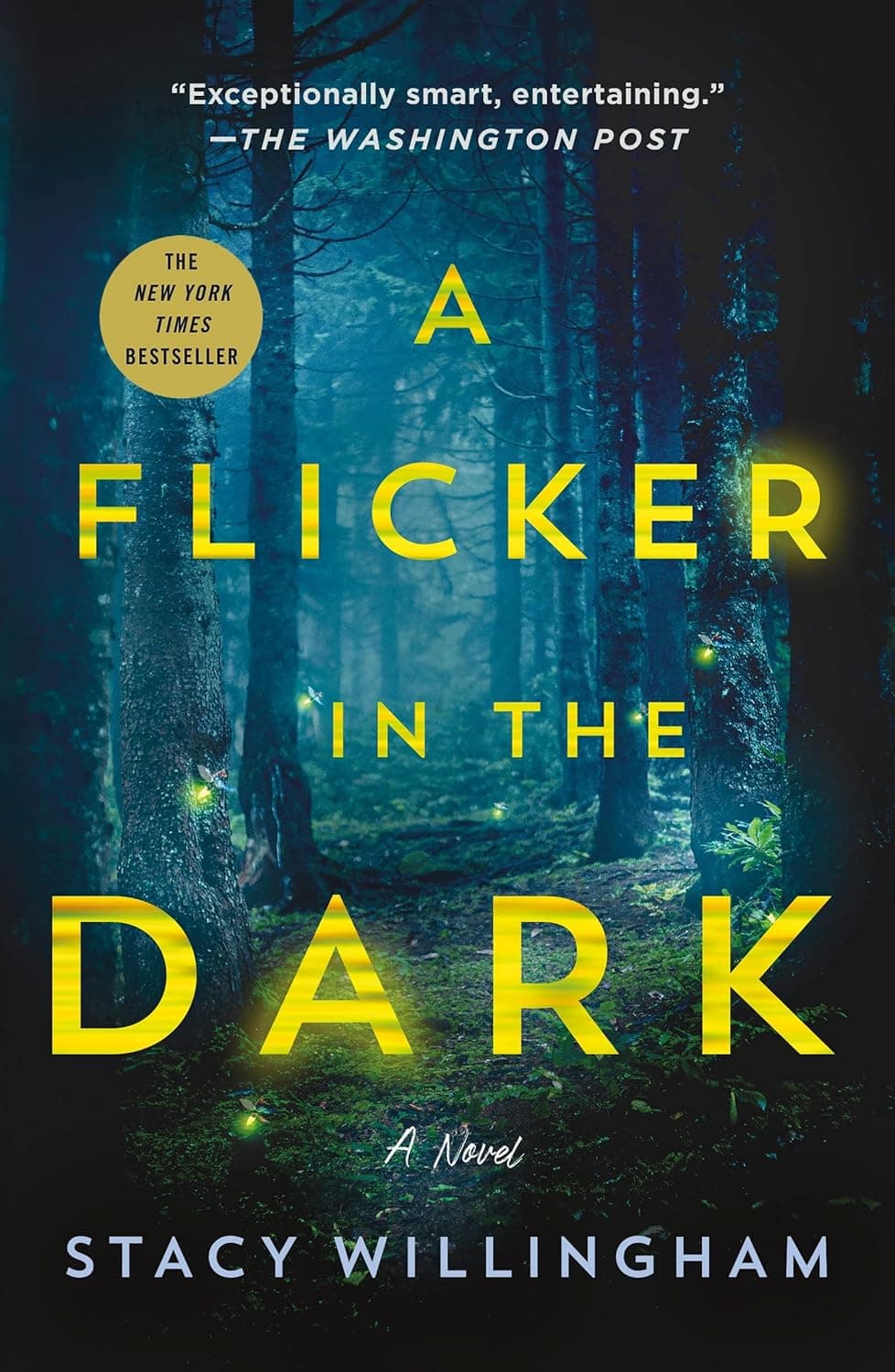
Analysis: The gesture completes the novel’s light/dark motif: a firefly cupped like a secret, then relinquished. As symbol, it gathers Chloe’s grief over Lena, her father’s sacrifice, and her brother’s betrayal into a single, tactile act of release, echoing the lingering trauma of the past. The present-tense immediacy renders healing not as epiphany but as choice, a small defiance against the abyss. Quiet and resolute, the line suggests Chloe’s first true step out of captivity and toward a life not defined by fear.