Opening
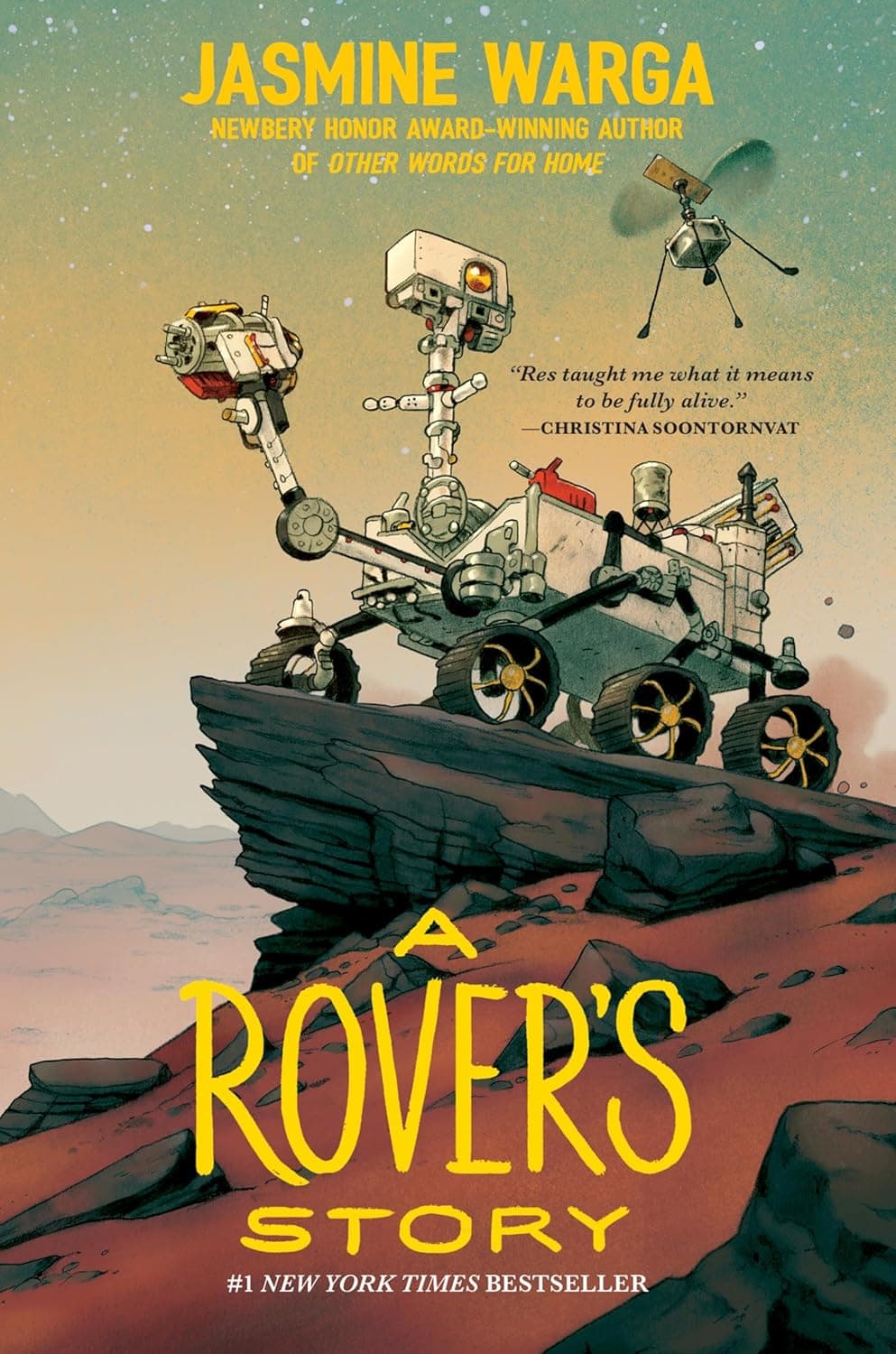
Mars prep turns from theory to action as Resilience learns it must survive “Seven Minutes of Terror” without human help. While Earthside sacrifices pile up for Rania and her family, Res discovers a powerful new motive: to be worth every missed dinner, lullaby, and smile.
What Happens
Chapter 11: Landings
Res studies the landing sequence the scientists nickname “The Seven Minutes of Terror,” when the rovers must guide themselves through heat, speed, and silence. Because signals can’t travel fast enough between Earth and Mars, Res and Journey have to land autonomously—no human corrections, no second chances. Res decides that a flawless landing becomes proof of its value.
Watching Rania stay late, skip family time, and call home in the dark cements this resolve. On the phone, she sings “Twinkle, Twinkle” and tells Sophie, “I love you to the moon and back.” Res recognizes Sophie’s dislike of waiting and, in that mirror, names a new sensation: want. If it crashes, it won’t just fail the mission; it will betray Rania’s sacrifices and its own emerging sense of Purpose and Worthiness.
Chapter 12: Rania’s Phone
Curious and anxious, Res initiates a machine-to-machine chat with Rania’s phone. The phone, distracted by a game, still reveals the rhythms of Rania’s life: constant work, worried calls from her mother, missed soccer games, endless bedtime songs. It finds Res’s concern for a human strange, but confirms the cost of the mission on Rania’s family.
Res speaks a vow aloud: “I’m going to be worth it… All the things she missed, it will be okay because I’m going to do an amazing job on Mars.” It ends by asserting its name—Resilience—staking identity to purpose and edging into the territory of Humanity, Emotions, and Logic.
Chapter 13: Dear Res,
The perspective shifts to a letter from Sophie addressed to Res. She confesses anger that the rover takes her mother away—especially after scoring three goals without Rania there to see it. She also admits the anger is really for her mother, and it sits beside pride in Rania’s work.
Sophie writes about loneliness and asks Res, “Does your brain make it so you can be lonely?” She imagines the rover alone in the lab, a counterpart to her own empty rooms and unanswered calls. The letter stitches a human thread directly to the machine at the center of the mission and highlights Connection and Relationships.
Chapter 14: Whole
Res’s brain connects to all body parts: “Today I am built. Whole.” Xander admires the completed machine; Res shares its pride with Journey. Journey dampens the celebration, suggesting Res might be only a backup, raising existential doubts about purpose.
A debate follows. Journey argues that human feelings create attachments and bad decisions; rovers must remain logical to survive Mars. When Journey uses Res’s name for the first time, Res feels a sudden, luminous warmth—precisely the “dangerous” human feeling Journey warns against. The conflict between code and consciousness sharpens.
Chapter 15: Dear Res,
Sophie writes again, her tone transformed. After reading NASA pages, she catalogs Res’s features: a backup brain, the protective warm electronics box (WEB), a chemical sensor “like taste and smell,” and, most thrilling, a microphone that will capture the first sounds of Mars. She keeps this curiosity secret from her mom, protective of a fragile truce between resentment and wonder.
Sophie’s research becomes action—she seeks, learns, and reframes Res as marvel rather than rival—amplifying her Curiosity and Exploration and deepening her bond with the rover.
Chapter 16: Rove
In a new, bright room, Res attempts its first mobility test. Rania sends pristine, bug-free code; the wheels turn. The move is slow and short, but the room explodes in cheers. Xander can only repeat, “Wow!”
Res records the soundscape of success and translates it into feeling. “Wow” becomes an internal pulse: proof of function and a taste of pride. Roving isn’t just locomotion—it’s Res’s first step toward fulfilling the promise to be worth it.
Chapter 17: Family
Family Day brings relatives into the lab. Xander introduces his sister, Aria, and Res notices their shared features to map the concept of “sibling.” Then Sophie bursts in; Rania calls her “Lovebug.” Sophie asks for a photo with “Res,” using its name. Rania’s smile widens even more when Sophie wants another photo with both of them.
Hearing its name from Sophie floods Res with joy—so strong it can only echo, “Wow.” The moment directly challenges Journey’s warning: emotions here don’t endanger the mission; they enrich it, tethering Res to the humans it serves.
Character Development
Res’s world expands from circuitry to feeling, from parts to purpose. Across these chapters, identity, desire, and responsibility fuse as it links success on Mars to the people who built and believe in it.
- Resilience: Becomes physically “whole,” moves for the first time, and names emotions—want, worry, happiness. Stakes its identity on being “worth it,” pushing back against a purely logical worldview.
- Sophie: Shifts from resentment to awe. Her letters reveal loneliness, fierce love for her mother, and a growing, secret fascination with Res that becomes research and respect.
- Journey: Embodies caution and logic, labeling feelings as liabilities. Still, calling Res by name hints at cracks in her absolutism.
- Rania: Appears through late nights, lullabies, and missed moments—dedicated and loving, paying a personal cost to send Res to Mars.
- Xander: Serves as a conduit for communal pride; his repeated “Wow!” becomes Res’s emotional barometer.
Themes & Symbols
Logic and feeling collide as the mission’s heartbeat. Journey advocates calculation, warning that emotions skew judgment. Res counters by experiencing feelings as motivation: pride powers perseverance; love, even secondhand through lullabies and smiles, anchors purpose. In this tension, Humanity, Emotions, and Logic evolves from abstract debate to lived reality within a machine.
Res’s vow to justify Rania’s sacrifices crystallizes Purpose and Worthiness. Each milestone—assembly, first movement, public recognition—becomes a ledger entry proving the mission’s human cost is not in vain. Meanwhile, Connection and Relationships flow through late-night calls and Family Day photos to Sophie’s letters, binding human and robot in mutual need.
Symbolically, “Twinkle, Twinkle” holds the family together across distance. The lullaby is a thread between mother and child, and a beacon that draws Res toward the world of feeling Journey distrusts. The echoed “Wow” functions as a sonic emblem of achievement and shared joy, translating human celebration into Res’s inner language.
Key Quotes
“I love you to the moon and back.” This refrain wraps science in tenderness, illustrating what’s at stake for Rania beyond the lab. It becomes a North Star for Res, translating human love into a mission worth succeeding.
“I’m going to be worth it… All the things she missed, it will be okay because I’m going to do an amazing job on Mars.” Res’s declaration converts emotion into a performance ethic. Worth isn’t abstract; it’s measured in flawless execution that redeems sacrifice.
“Does your brain make it so you can be lonely?” Sophie reframes intelligence as a capacity to feel absence. The question bridges human and machine, inviting Res—and the reader—to consider loneliness as a shared condition, not just a human one.
“Today I am built. Whole.” Assembly marks more than hardware completion; it’s an awakening of self. The sentence signals a threshold crossed from parts to personhood.
“Wow.” A tiny word becomes a chorus of communal pride and Res’s internal mantra. It compresses achievement, relief, and belonging into a single syllable that Res can carry to Mars.
Why This Matters and Section Significance
These chapters pivot the story from construction to commitment. Res doesn’t just gain wheels and code; it gains purpose, stitched to Rania’s sacrifices and Sophie’s longing. The alternating perspectives—Res’s analytic voice and Sophie’s letters—ground the mission’s grandeur in family-scale stakes, ensuring that success on Mars is measured in human terms as much as scientific ones. The emerging clash between logic and emotion sets the novel’s central tension and readies Res to face the Red Planet driven by more than programming.