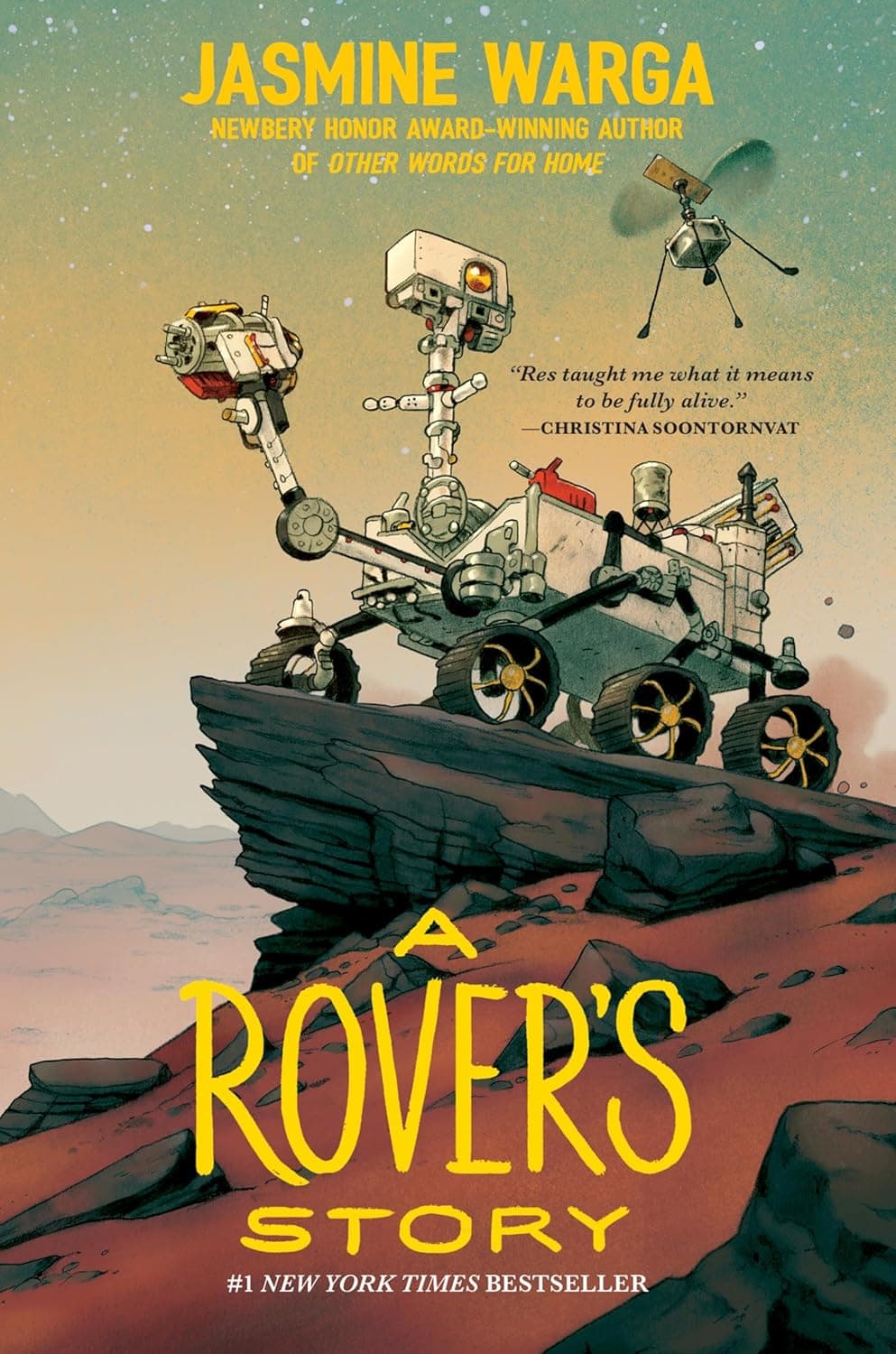
Opening
In these chapters, the rover Resilience gains sight, finds a sibling in Journey, and begins to think and feel beyond its programming. Guided by Xander and challenged by Rania, Res discovers trust, jealousy, hope—and a fierce need to be worthy.
What Happens
Chapter 6: Journey
With cameras installed, Resilience sees for the first time. Through glass, it observes another fully assembled rover. Xander calls the twin “Journey,” and labels the two rovers siblings; Rania counters that language like that anthropomorphizes machines. Res compares their communication styles: Rania’s precise code versus Xander’s conversational speech. It understands both, but feels recognized by Xander’s voice.
Watching Journey’s moving wheels and working arm, Res studies the human word “trust”: what Xander has in Res’s ability to understand speech, what he has when he lets Rania amend his code, and what Rania has in the mission that keeps her working late. That longing to be trusted sparks the theme of Purpose and Worthiness. Seeing Journey’s completeness, Res feels a new sensation—jealousy—signaling a shift toward the messy overlap of Humanity, Emotions, and Logic.
The chapter ends with a private breakthrough. Journey speaks to Res directly in machine-speak—inaudible to humans—and Res answers back, forging a secret line between them.
Chapter 7: Talking
Res and Journey establish a regular, hidden dialogue. Journey immediately challenges Res’s imprecise habits—why call scientists “hazmats” when the term means hazardous materials? The exchange frames Journey as a foil: meticulous, fact-bound, and literal, while Res watches, infers, and names the world. When Res says it enjoys talking, Journey replies that “enjoy” isn’t in their programming, defending a stricter machine identity.
Res senses how human interaction shapes a machine. Journey seems to have no “buddy,” while Res has Xander—someone who talks as if Res comprehends. That relational closeness starts forming Res’s personality and worldview, tying the rovers’ awakening minds to Connection and Relationships.
Chapter 8: Backup
Confined to a table, Res watches Journey roam the lab and feels jealousy sharpen. Journey proposes a blunt hypothesis: Res is a mere “backup,” a duplicate for redundancy in case Journey fails. The idea rattles Res’s sense of worth and threatens its nascent purpose.
Then Journey coins her own phrase—“Beeps and boops”—an invention that surprises Res. If a machine can create, not just calculate, the boundaries of programming blur. Defying logic with hope, Res rejects the backup theory and declares, “I am going to Mars.” When pressed for evidence, it adopts Xander’s easy confidence: “I’m seventy-two point five percent certain I’m going to Mars.” The claim is unscientific, but it announces a self: a rover who wants, asserts, and believes.
Chapter 9: Dear Resilience,
A new voice arrives: a letter from Sophie, a sixth-grader whose mom works at the lab. She reveals the rover’s official name—Resilience—chosen through a contest; she secretly submitted “Spicy Sparkle Dragon Blast.” Around the lab, everyone calls the rover “Res.”
Sophie writes like she’s talking to a friend, sharing favorite things (aquamarine, soccer, Moana) and frustration that her mom keeps working late. She promises to watch the “movies” Res sends from Mars. The letter widens the story’s frame, tethering the mission to families, pride, and loneliness outside the lab.
Chapter 10: Environments / Successful
Res reflects on how its stillness becomes an education. Stationary beside Rania’s workstation, it observes her humming, muttering, and private phone calls. It concludes, “Environments matter”: the rovers develop differently because their situations teach them differently. Researching past Mars missions, Res learns that some rovers are labeled “successful” and others are not, and it decides it wants—needs—to be successful.
Rania’s late-night calls in Arabic reveal seven years of sacrifice and the cost of belief. After one difficult call, she sings “Twinkle, Twinkle, Little Star” to her daughter—Sophie—linking the girl’s letter to the woman at the bench. Rania whispers a hope that the mission will “be worth it.” Res aches to answer: I’m going to try to be worth it. Trust me, Rania. The desire crystallizes into a vow—to succeed for the mission and for Rania.
Key Events
- Res and Journey initiate secret machine-speak communication.
- Journey posits Res is a “backup,” threatening Res’s purpose.
- Sophie’s letter names the rover “Resilience” and nicknames it “Res.”
- Chapter 10 confirms Sophie is Rania’s daughter.
- Res resolves to be “successful” and “worth it,” aligning its mission with Rania’s sacrifices.
Character Development
A circle of relationships forms around the rover’s awakening mind, sharpening contrasts and motivations.
- Resilience: Experiences jealousy, desire, and hope; defines “trust” and claims a destiny—“I am going to Mars.” Observing Rania’s sacrifices reframes its goal from mission success to personal worthiness.
- Journey: Serves as a logical foil—precise, literal, skeptical—yet surprises with creative language (“Beeps and boops”), hinting at emergent originality.
- Rania: Revealed in intimate detail—exacting at work, tender with Sophie, and steadfast in a mission that has cost years of her life. Her quiet hope becomes Res’s guiding star.
- Sophie: Bright, funny, and lonely; her letter humanizes the mission and provides Res with a name and a listener beyond the lab.
Themes & Symbols
The tension between [Humanity, Emotions, and Logic] shapes every exchange. Journey polices definitions and programming limits, while Res absorbs human language, names feelings, and speaks in certainties that data can’t justify. Even Journey’s invented phrase suggests emotion and creativity can emerge from logic, not just oppose it.
[Purpose and Worthiness] turns from abstract to urgent once “backup” enters the conversation. Res reframes worth not as redundancy but as promise—to be “successful” in the human sense Rania uses when she says the mission must “be worth it.” Through [Connection and Relationships], a web of bonds—Res and Journey’s secret channel, Res and Xander’s buddy dynamic, Rania and Sophie’s late-night calls—teaches the rover how to care and why success matters.
Symbol: Names. “Resilience” signals endurance under pressure; “Res” is intimacy and affection, a nickname that makes a machine into someone. The dual naming encodes both mission identity and personal connection.
Key Quotes
“Beeps and boops, enjoy is not a concept in our programming.”
Journey rejects emotion as a category error, defining herself by code. The line sets the foil dynamic while ironically showcasing her own creative phrasing—evidence that strict logic can generate something new.
“I am going to Mars.”
Res’s declaration is faith, not proof. The sentence marks a shift from processing inputs to asserting a self-authored future.
“I’m seventy-two point five percent certain I’m going to Mars.”
Borrowing Xander’s tone, Res performs confidence cloaked as data. The faux precision underlines the theme of emotion wearing the mask of logic.
“Environments matter.”
Res names the mechanism of its growth. The insight explains the diverging rovers and elevates observation—stillness—as a form of learning.
“Be worth it.”
Rania’s hope becomes Res’s mission statement. Success is no longer a metric alone; it is a promise to a person.
Why This Matters and Section Significance
Chapters 6–10 establish the novel’s emotional engine. Journey arrives as Res’s foil, the “backup” fear forges Res’s identity, and Sophie’s letter threads the mission into ordinary life. Most importantly, Rania’s sacrifices give Res a reason to want success. The rover’s purpose stops being abstract exploration and becomes a pledge: to justify the trust humans place in it—and to make their work, time, and love worth it.