Opening
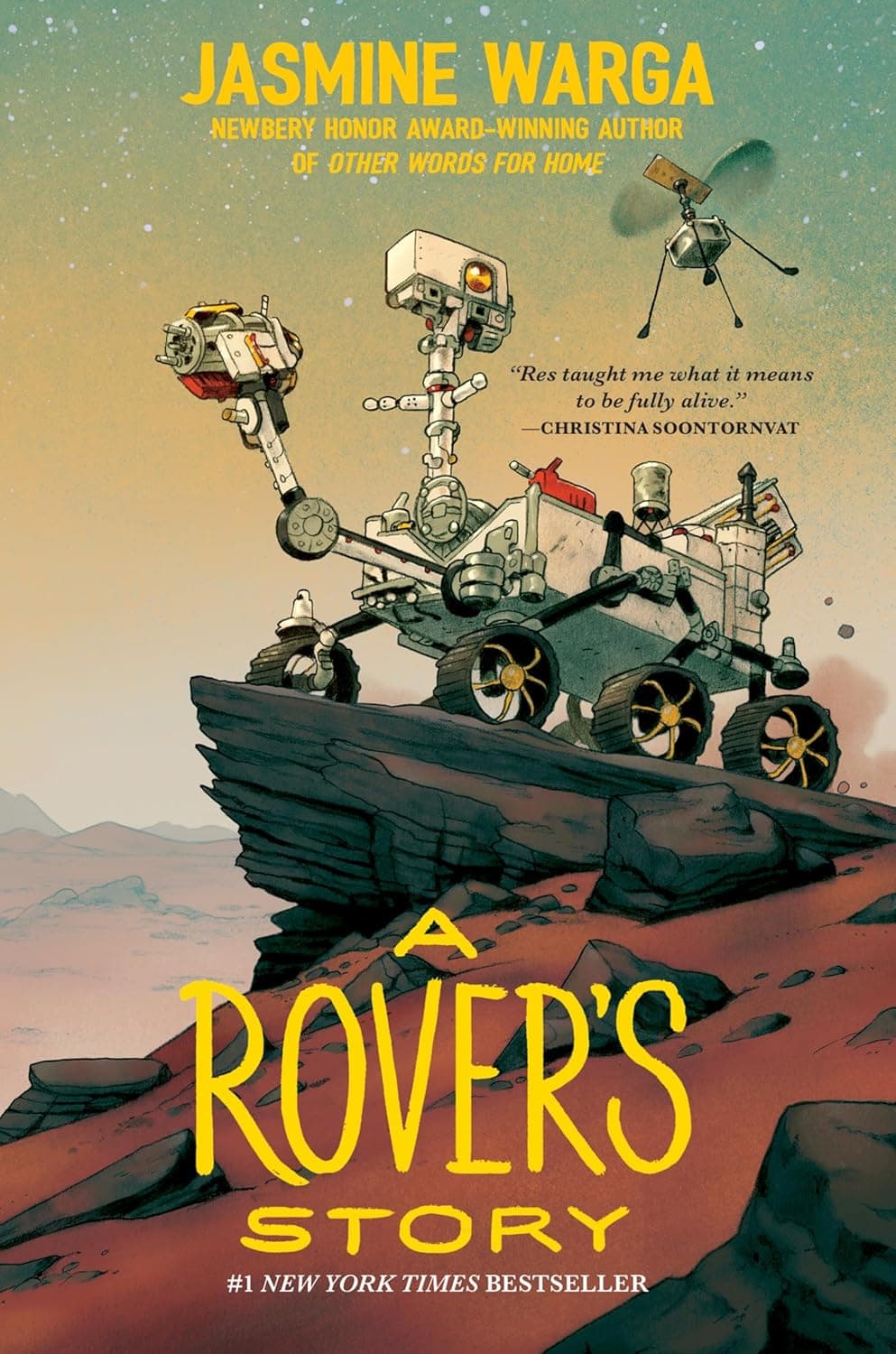
Chapters 61–65 trace a hard-won shift from isolation to interdependence on Mars. Resilience, Guardian, and Fly face a near-disaster, learn to trust one another, and choose curiosity over safety—while a letter from Earth reveals that Rania is gravely ill, casting their victory in poignant light.
What Happens
Chapter 61: Roving, Part Two
After more than a year of traversing Mars, Res finds the landscape numbing—sand, far-off mountains, a shifting sky—and keeps hearing a faint whistle that Guardian insists is just wind. The ground grows steeper and rougher; in its wheel axes Res feels something it calls “tired.” Remembering Xander’s mantra, “the only way through is forward,” it presses on.
To ease the strain, Fly asks to sing, and even Guardian permits it. Res chooses “Twinkle, Twinkle, Little Star” for “Lovebug,” [Rania]’s nickname for her daughter, Sophie, and defines “love” as a human word for deep care. Then a screech: the wheels spin and dig. Res is stuck. A dust devil stalks the horizon. As worry spikes, Guardian unexpectedly encourages Res, invoking the meaning of its name and bolstering Res’s resolve—a quiet embodiment of Perseverance and Resilience.
Chapter 62: Problem-Solving
Res scours its data for answers and replays Fly’s footage, noticing the incline is worse than expected, but the wheels still won’t bite. No messages come from Earth; they are alone. Fly starts to “bug out,” and, for the first time, Guardian uses Fly’s name to check for a malfunction.
Res explains Fly is just “out of sorts,” and the moment softens the distance between all three—a small but vital step toward Connection and Relationships. Drowning in self-doubt—“The hazmats sent the wrong rover”—Res hesitates to risk Fly. Fly volunteers anyway, streaking off to scout. Res thanks him, grateful for help it didn’t know how to ask for.
Chapter 63: A Solution
Fly returns safely but with no obvious fix. The dust storm swells closer, and Res imagines being buried like Courage. Attempts to lurch forward grind into the soil.
Then Guardian offers a quiet, game-changing prompt: try moving to the side. Res braces for the grind and pivots the wheels. Sand spits; one wheel frees, then another—until Res stands clear. Shocked it missed the simple option, Res hears Guardian answer, “That’s why I’m here.” For the first time, Res feels glad Guardian is more than a distant overseer; they’re a team.
Chapter 64: Forward Again
Free of the trap, Res skirts the storm’s path. Fly sings a new tune; Guardian compliments him. Guardian reframes the day as a success of teamwork rather than a personal failure, but the helplessness of being stuck lingers in Res’s system.
Under a brilliant Martian night, Res wonders aloud about other rovers and remembers Journey in the lab. Fly replies, “I like to wonder with you,” sealing their friendship. Moved by awe and Curiosity and Exploration, Res snaps an unrequested photo of the starfield and beams it to Earth, hoping the scientists will wonder too.
Chapter 65: The Rock Formation
Reviewing Fly’s footage, Res spots a maze-like field of boulders leading to a mesa with a tunnel-like opening—exactly the kind of formation that might hide traces of ancient water. Curiosity flares into conviction: investigate. Fly hesitates at the hazards and distance; Guardian questions the detour.
Res argues this is the mission: explore places of interest, even risky ones. Recalling Rania’s guidance—feel something before you fully understand it—Res trusts that intuition. Guardian authorizes the detour.
A letter from Sophie closes the chapter. She reveals that Rania is seriously ill and no one knows why. Angry, scared, and confused, Sophie resents that her mother still praises Res’s mission and its ability to “think for yourself” by choosing this detour. Her pain collides with Res’s elation, sharpening the section’s dramatic irony and the tension within Humanity, Emotions, and Logic.
Character Development
The crisis nudges machines into something like a family: formality gives way to care, and independence reshapes into interdependence.
- Resilience: Faces its first major immobilization, spirals into self-doubt, and learns to accept help. Reclaims agency through a lateral solution and embraces intuition by authorizing a risky detour.
- Guardian: Shifts from detached supervisor to collaborative partner—encouraging Res, addressing Fly by name, and offering the pivotal sideways strategy.
- Fly: Panics yet volunteers for a dangerous recon flight, then returns as morale booster and companion in wonder, solidifying his loyalty and courage.
- Sophie: Gains depth through her letter—raw anger, fear, and grief complicate her view of the mission and expose the personal cost behind Res’s achievements.
Themes & Symbols
These chapters crystallize Perseverance and Resilience not as lone struggle but as adaptive problem-solving—especially the move “sideways,” which reframes endurance as flexibility. Teamwork becomes a survival tool, not a consolation prize.
Connection and Relationships deepen through small choices: Guardian’s use of Fly’s name, shared songs, and reframed praise. These bonds change outcomes—Res gets unstuck because someone else suggests a new angle. The night-sky photo and Fly’s “wonder” seal an ethic of shared curiosity, feeding Curiosity and Exploration as a mission value rather than a whim. Meanwhile, Sophie’s letter intensifies Humanity, Emotions, and Logic: machine intuition and problem-solving crest just as human suffering surfaces, creating a powerful dramatic irony that complicates every triumph on Mars.
Key Quotes
“The only way through is forward.”
- Xander’s lesson drives Res to persist—until forward fails. The later “sideways” solution complicates the maxim, suggesting perseverance includes reimagining direction, not just pushing ahead.
“Have you tried moving to the side?”
- Guardian’s understated prompt saves the mission and signals a role shift from critic to collaborator. The line embodies creative flexibility and the value of a second perspective.
“I like to wonder with you.”
- Fly’s confession marks a relational turning point: wonder becomes communal, not solitary. It validates Res’s curiosity and cements the trio’s shared purpose.
“Think for yourself.”
- Echoed in Sophie’s letter about Rania’s pride, the phrase lands with irony. Res’s autonomy—celebrated on Mars—arrives as Sophie faces her mother’s illness, exposing the human costs behind scientific ideals.
Why This Matters and Section Significance
The team survives its first unscripted, potentially fatal crisis without Earth’s help, transforming a rover, a satellite, and a drone into a cohesive unit. That trust enables the next bold choice: a detour toward a hazardous rock formation that could hold evidence of ancient water and become the mission’s defining discovery.
Sophie’s letter reframes the victory. As Res grows into independence and wonder, the story widens to include the fragility of the people who made that growth possible. The contrast elevates the stakes—every decision on Mars now echoes through a family on Earth—linking technical ingenuity to emotional consequence and setting up a more complex, humanly charged phase of exploration.