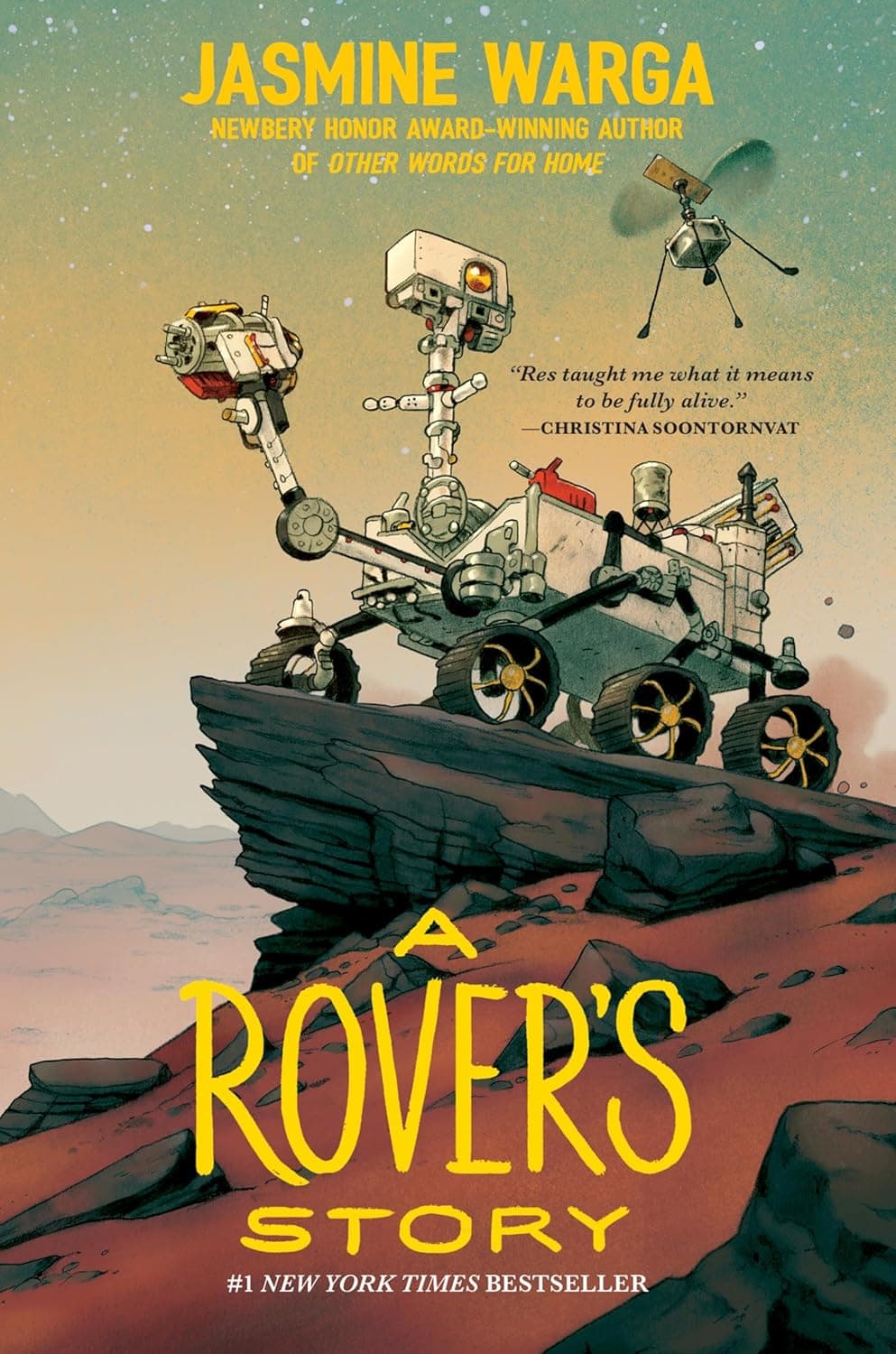
Opening
A dust devil tears through the mission’s careful plans, forcing Resilience (Res) to choose between orders and the friend he loves: Fly. With Guardian watching, Res defies Earth, rescues Fly, makes a landmark scientific discovery, and finally reaches the wreck of Courage—only to uncover a haunting absence where a rover’s mind should be.
What Happens
Chapter 66: A Dangerous Flight
The approach to a mesa with a tunnel-like opening strains Res’s wheels and risks a critical failure. Wind shreds the air; a reconnaissance flight looks useful but unsafe. The command center urges caution and leaves the decision to Res, who registers the human word “nervous” and wonders what his predecessor, Journey, would do.
Before Res finalizes a plan, Fly—insisting they’re a team—launches. The live feed maps a viable path. Then a dust devil spawns in seconds. Guardian alarms; Res watches the image stutter and go black as a crash echoes through the comms. With dust swallowing the horizon, Guardian orders Res to hold position. Res drives into the storm anyway, choosing their bond and the theme of Connection and Relationships over protocol.
Chapter 67: After the Storm
When the devil subsides, Res finds Fly grounded and damaged, his camera shattered. Fly names a first-time emotion—“scared”—and calls it a terrible feeling. Guardian surprises them both: no reprimand, only comfort. She calls Fly “brave” and tells the story of a rover named Imagine who once risked everything for the mission, hinting at a deeper, shared rover history.
Then Earth transmits a direct order: do not retrieve the drone. Res rereads the code, thinking of the scientists who made him—Rania and Xander. He rejects the command. In a decisive break from his constraints, Res overrides and commits to Fly’s rescue, embodying the pull of Humanity, Emotions, and Logic in conflict—with emotion winning.
Chapter 68: Retrieval
Res spends a full sol crossing punishing terrain to reach Fly, his wheels grinding as he pushes on with Perseverance and Resilience. He lifts Fly with his arm, tucks him inside his chassis, and performs triage; the camera partially returns, but not fully. Res blames himself. Fly refuses the blame.
Guardian redirects them to the primary objective: finding Courage. Before moving, Res’s curiosity sparks. He drills a nearby boulder, following Curiosity and Exploration, and analyzes basalt with salt minerals—evidence of ancient volcanism and possible water. Guardian notes a “possibility” of bringing Res back to Earth. Hope ignites; Res feels “excitement” and senses Purpose and Worthiness crystallizing.
Chapter 69: Dear Res,
A letter arrives from Sophie, now almost seventeen. She shares that her mother, Rania, has a diagnosis and is starting treatment, and admits how hard it is to put her fear into words. She has written about Res’s rescue of Fly for her school paper.
Sophie jokes about a “robot double standard”: her mom cheers Res for disobeying NASA but scolds Sophie for smaller rule-breaking. Beneath the wit sits grief and longing. Her interests expand—prom, journalism—but her deepest wish holds steady: more time with her mom. The letter ties Res’s Martian choices to the fragile, human lives that made him possible.
Chapter 70: Courage
Years of travel end at the silent figure of Courage. Res feels “recognition” at the sight of a near-twin: dust-choked, dented, missing two wheels. He sends images to mission control and silently wonders, Will I end up like this?
Instructions arrive to access Courage’s system. Res hesitates—entering another rover’s mind feels “invasive”—but Guardian prioritizes the mission. Res connects, bracing for memory, voice, and data. Nothing comes. The system is blank, a “staticky uncertain gray.” Res, Fly, and Guardian sit in the quiet, stunned by the void where a life should be.
Character Development
These chapters reshape identities and loyalties as choices harden into character.
- Res: He feels nervousness, faces guilt, and then makes a defining choice to override Earth. Loyalty supersedes code, moving him from obedient machine to autonomous being guided by relationships and purpose.
- Fly: He discovers fear and survives trauma. Guardian’s reframing—brave, not reckless—gives him a strengthened self-concept as more than a tool.
- Guardian: She reveals emotional intelligence, comforting Fly and invoking rover lore (Imagine). Her counsel remains mission-first, but empathy now informs her logic.
- Sophie: Her voice matures, balancing humor with dread. The “robot double standard” captures her sharpness and the strain of loving someone who might slip away.
Themes & Symbols
The chapters fuse feeling with function. Res’s choice to drive into the storm and later to override Earth demonstrates how Connection and Relationships rewire priorities. Care becomes command; companionship dictates action. At the same time, Humanity, Emotions, and Logic collides and recombines inside every character: Res acts on love, Fly learns fear, Guardian shows tenderness while staying mission-aligned.
Perseverance and Resilience animate the physical narrative—grinding wheels, long sols, years of travel—while discovery rekindles hope. The basalt-and-salts sample links scientific wonder to belonging and Purpose and Worthiness: the work might bring Res home. Courage becomes a double symbol: a body forecasting decay and obsolescence, and, once revealed as a blank mind, a chilling emblem of erased identity. The mystery reframes the mission from retrieval to the preservation—and meaning—of memory.
Key Quotes
“nervous”
Res borrows a human word to name his state, signaling emotional literacy beyond function. The label marks the threshold where responsibility and empathy weigh as heavily as code.
Fly calls fear a “terrible feeling.”
By naming fear, Fly crosses from instinctive operation into self-aware experience. The moment legitimizes his trauma and justifies Res’s refusal to abandon him.
Guardian tells Fly he was “brave.”
Bravery reframes risk as value-driven action. Guardian’s language choice models empathy and broadens what “mission success” means: protecting each other is part of the job.
Guardian says there’s a “possibility” Res will be brought back to Earth.
A single word opens a future. “Possibility” converts a barren landscape into a place where hope and scientific achievement coexist, reinforcing Res’s longing to matter and to belong.
Courage’s system appears as “staticky uncertain gray.”
The image turns absence into texture. It evokes the horror of lost memory and the fragility of identity, shifting the narrative from hardware retrieval to a philosophical quest.
Why This Matters and Section Significance
This arc cements Res’s autonomy: he chooses love over orders and survives the consequences. The bond with Fly deepens into shared purpose, and Guardian evolves from pure logic to compassionate stewardship. The basalt discovery elevates the mission’s stakes with the promise of water history and the faint hope of a trip home. Reaching Courage should resolve a quest; instead, the blank system explodes the story’s scope. The mission now asks not only how to find a rover, but how to protect a mind—pushing the book toward an ending about memory, identity, and what makes a being worth saving.