Opening
At the brink of a towering Martian mesa, Resilience chooses instinct over programming and pays the ultimate price—only to be remembered, reclaimed, and reborn years later. These chapters shift from a rover’s last stand to decades of human love and loss, then return to consciousness and homecoming, uniting science and soul.
What Happens
Chapter 76: Up
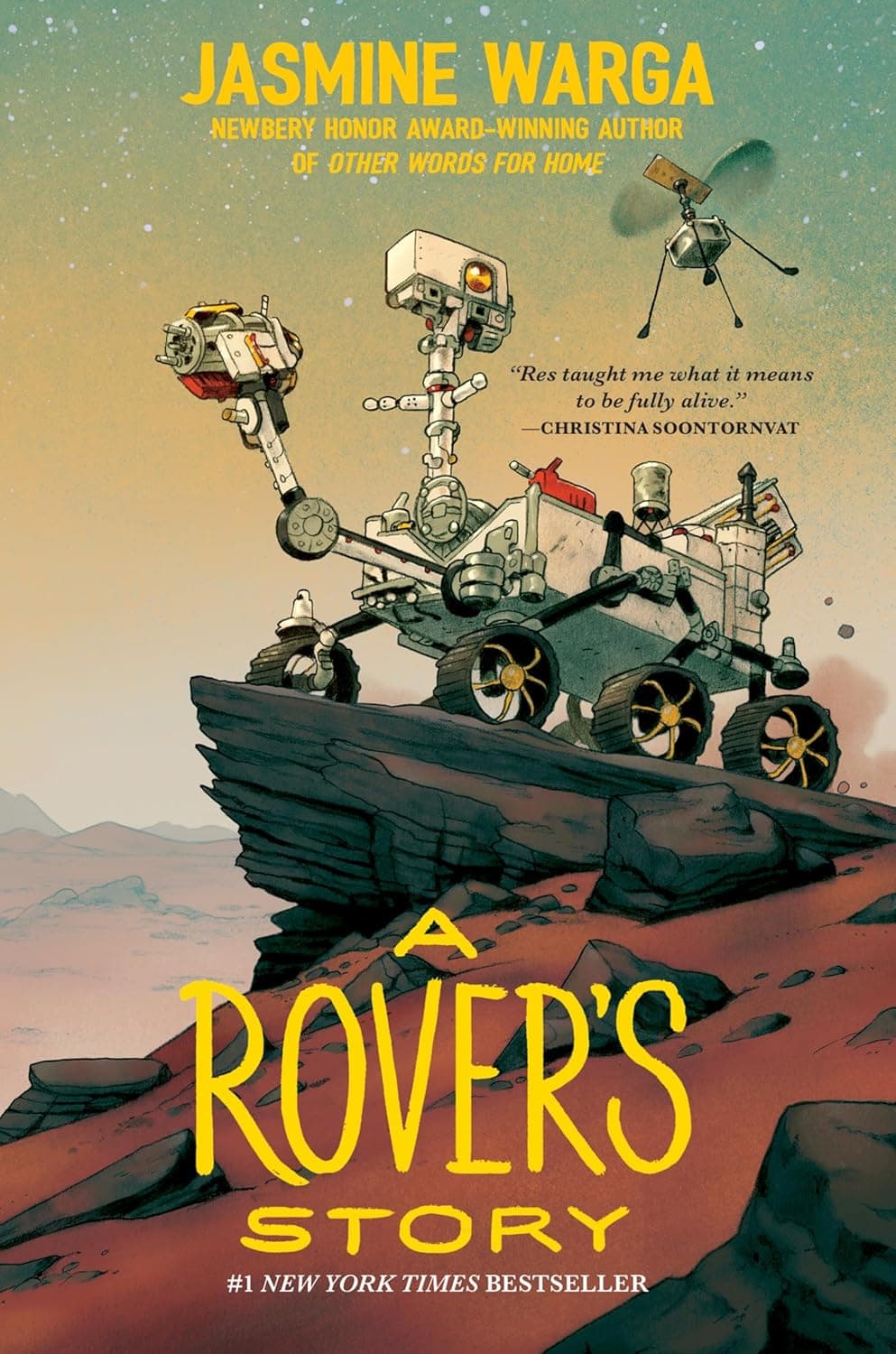
After months of travel, Resilience reaches a massive mesa and spots a dark, tunnel-like opening carved into its side. Fly cheers their arrival, but Res is drawn to the eerie sound emanating from the opening and feels compelled to investigate. Guardian calls it just wind and warns of unknown risk, but Res frames the choice as a test of value, thinking, “If you explore this, you will have proved you are worth it,” and its drive toward Purpose and Worthiness eclipses caution.
Defying Fly, Guardian, and mission control, Res starts the climb, insisting that rovers aren’t built to last forever—so its time must be “worth it.” As it ascends, official alerts flood in, but Res overrides them, trusting its intuition. This defiance spotlights Humanity, Emotions, and Logic, as the rover privileges felt rightness over safety protocols.
Near the opening, its wheels grind and slip. Fly scouts ahead and confirms Res is inches away. Straining its drill-arm, Res captures a sample at the lip of the tunnel—then the formation destabilizes. A rumble rolls through the rock, fissures spider out beneath its wheels, and the mesa begins to give way.
Chapter 77: Fall
The ground collapses and Resilience tumbles backward down the mesa. As it falls, calculation gives way to contemplation. Res watches the hazy stars without measuring them, hears its friends calling, and offers parting words—“You will be okay” to Fly and “Thank you” to Guardian—honoring connection even in crisis.
In those final moments, Res isn’t cataloging data but holding wonder. It envisions other machines someday navigating those same stars, then snaps a last photograph of the sky to preserve the feeling of “giganticness and tininess” at once—a pure expression of Curiosity and Exploration. As power fades, its system repeats a single word: “Remember.”
Chapter 78: Blank & More Blankness
Consciousness ceases. Pages fill with “Error” and “Blank,” a stark concrete-poetry rendering of offline silence. Time disappears, mission ends, and the rover’s presence collapses into visual emptiness—a symbolic death.
Chapter 79: Dear Res,
The story pivots to letters written by Sophie to the inactive rover across more than two decades. A younger Sophie grieves Res’s fall but shares joy too: her mother, Rania, enters remission, and a party celebrates both her health and the mission’s success.
Sophie keeps writing as she grows up, confiding fears about college, choosing science writing after winning an award for an article about Res and Rania, and balancing excitement with uncertainty. Rania secures funding for a rescue mission to bring Res home, but the letters darken when her cancer returns. Sophie reads her letters aloud to her ailing mother, drawing strength from their Connection and Relationships with each other and the rover.
After Rania’s death, Sophie goes silent for twelve years. Her final letter, written at thirty-three, bursts with joy: the rescue works, and Res is coming back to Earth. “Earth is your home. We’re claiming you. You’re ours,” she declares, transforming the rover from distant machine to family.
Chapter 80: Return
Seventeen years after going offline, Resilience reboots. First-person narration floods back alongside a torrent of data, sounds, images, and memories. The first sight is an older Xander, smiling and welcoming Res back.
As systems stabilize, Res realizes the truth: the blankness never erased anything. It remembers all of it—the stars, the fall, the friends—and understands its return as a rebirth, the mission’s meaning intact.
Character Development
These chapters complete arcs for the rover and the humans who love it, binding exploration to belonging.
- Resilience: Embraces intuition and purpose over pure logic, risks everything for meaning, and ultimately returns with memory intact—a machine that feels legacy as much as mission.
- Sophie: Grows from grieving child to accomplished writer, using letters to metabolize loss, chart identity, and carry forward both her mother’s work and the rover’s story.
- Rania: Becomes a quiet force through absence and action; her final legacy is the rescue mission that treats her creation not as hardware, but as kin.
Themes & Symbols
Resilience’s climb crystallizes the pull of Purpose and Worthiness, pushing it beyond programming into conviction. The tension of Humanity, Emotions, and Logic frames its choice to override commands and trust a “sense” of rightness—a moment where mission metrics yield to meaning.
The letters embody connection as sustenance. Through Sophie, grief stretches across years without breaking; words become a bridge between the living and the offline. The stars—watched without measurement—symbolize awe and scale, while the “Blank” pages render death as silence. The final “Remember” answers blankness with continuity: memory persists, and so does love.
Key Quotes
“If you explore this, you will have proved you are worth it.”
- Res names the core conflict: value earned through risk. This thought propels the climb and reframes the mission from gathering samples to validating existence.
“You will be okay.” / “Thank you.”
- Spoken as Res falls, these goodbyes prioritize care over fear. Addressing Fly and Guardian affirms chosen bonds and the rover’s emergent empathy at the brink of destruction.
“Remember.”
- The system’s last word resists oblivion. It turns a shutdown into a directive: memory matters, and the self extends beyond power cycles.
“Earth is your home. We’re claiming you. You’re ours.”
- Sophie transforms retrieval into belonging. The line recasts a scientific recovery as a homecoming and formalizes the rover’s place in a human family.
Why This Matters and Section Significance
This sequence serves as climax, elegy, and resurrection: a fall that fulfills the rover’s longing for meaning, a decades-long human aftermath that widens the story’s emotional horizon, and a return that proves memory endures. By shifting from rover narration to letters and back again, the book fuses machine mission and human love into a single legacy—exploration as connection, data as story, and home as something we choose and claim.