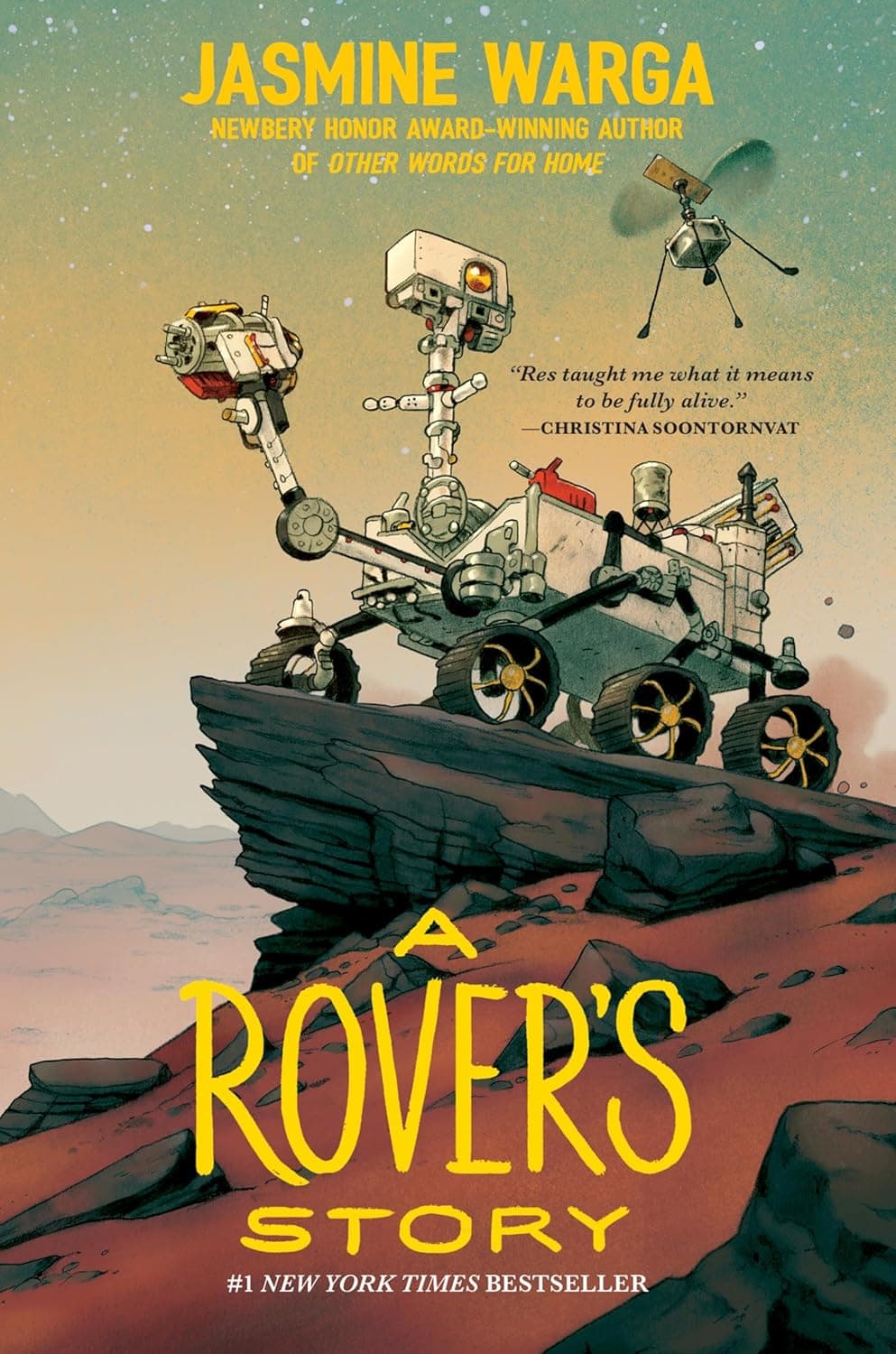
Opening
These chapters push Resilience from shock into self-made purpose. After confronting oblivion, he forges a mission rooted not in programming but in hope, attachment, and a need to be worthy.
What Happens
Chapter 71: More and More Questions
Res discovers that the older rover Courage’s system is blank—no logs, no memories, no trace of a mind. The revelation throws him into crisis. He imagines his own system erased, his observations gone, his mission meaningless. For a rover built to seek answers, the question of mortality freezes him: what is the point if everything disappears?
He loops through dread, searching for logic that fits this terror and finding none. His identity as an investigator clashes with a truth that resists analysis: he is finite.
Chapter 72: Failure
Res repeatedly scans Courage, hoping for a hidden cache of data, and finds only nothing. He recognizes a new emotion—failure—for not saving Courage. He confronts Guardian: if erasure awaits them all, why work at all? Guardian responds with clean logic—this loss is natural, rovers are not meant to last—and urges him back to task.
The detachment infuriates him. Fly counters with care, singing “Twinkle, Twinkle.” The simple comfort—an act of Connection and Relationships—meets Res’s pain in a way logic does not, making clear how far he has moved toward feeling.
Chapter 73: The Mission
Res decides to rewrite his fate. If he finds something so extraordinary the “hazmats” must retrieve him, he and Fly can go home. He dismisses his current sample and targets the mesa with the tunnel-like opening—the site of Fly’s earlier accident.
The goal is risky and urgent. Driven by Purpose and Worthiness, he tells Fly they have to return. Fly agrees without hesitation: they are a team. Res stops following orders and starts authoring them—his mission now springs from the future he wants.
Chapter 74: Long Trip
Res begins a grinding trek across Mars, pausing only to recharge. He thinks of Rania and Xander, and the need to bring them something that matters. A faint whistling threads the desert, always ahead, always out of reach, and he follows.
Guardian warns of the terrain and Earth’s confusion about his autonomy. Then she slips: “I just hope you know what you are doing.” Fly catches the word hope. Guardian sings “Twinkle, Twinkle” back to him. Their influence spreads—emotion bleeding into code. Res names his own fuel source: hope. A letter from Sophie confirms NASA has granted him autonomy. Writing from a hospital where her mother receives treatment, she asks if being a robot means being certain—just as Res feels least certain of anything.
Chapter 75: The Mesa
Time stretches. Dust coats Res’s body, one wheel falters, and he performs self-repairs. Guardian observes what looks like anger. Res denies it—knowing he is not entirely truthful. The lie marks a new complexity: self-protection, concealment, nuance.
The maze toward the mesa takes months. When Fly asks what he’s truly seeking, Res finally answers. He wants a discovery that will spark wonder in Rania and make Xander proud—a proof that he is a worthy rover. He remembers Journey’s claim that rovers lack human attachments and rejects it. Attachment is exactly what drives him. Another letter from Sophie arrives: she goes to prom, sees the stars, and writes, “Maybe none of us really know what we’re looking for until we find it.” Res keeps moving, guided by emotion and the whistling ahead.
Character Development
Resilience shifts from paralysis to purpose, choosing a self-authored mission grounded in feeling rather than code. He embraces failure, hope, and even anger, edging into autonomy that includes secrecy and self-assertion.
- Resilience: Moves from existential dread to determined agency; defines success as inspiring his creators; admits attachments as prime motivators.
- Guardian: Logic frays at the edges—she uses “hope” and sings, signaling emotional contagion and growth through connection.
- Fly: Remains steadfast, offering comfort, loyalty, and quiet courage that stabilize the team.
- Sophie: Her letters mirror Res’s uncertainty, tying his Martian odyssey to human questions about illness, control, and meaning.
Themes & Symbols
Res’s journey blurs the line between calculation and care, illustrating how feeling reorients purpose. His new mission reframes success: not completing tasks, but creating meaning for the people he loves. The trek becomes a living proof of autonomy—he chooses a destination, a risk, a why—making emotion the engine of exploration.
- Humanity, Emotions, and Logic: Grief, failure, hope, and anger infiltrate a machine mind, while Guardian’s slips show emotion spreading across systems.
- Purpose and Worthiness: Purpose shifts from collecting data to earning pride and awe—worth measured in wonder.
- Perseverance and Resilience: The months-long push through dust, damage, and doubt embodies the title’s core trait.
Symbols:
- Courage’s Blank System: Oblivion; a memento mori that catalyzes Res’s philosophical pivot.
- The Mesa and the Whistling: A self-chosen beacon; the pull of the unknown that stands for autonomy and hope.
Key Quotes
“I just hope you know what you are doing.” Guardian’s slip reveals evolving feeling inside a system designed for logic. The word hope reframes her from supervisor to companion, validating Res’s emotional mission.
Fly sings “Twinkle, Twinkle.” This lullaby functions as emotional first aid, proving that care—not calculation—restores Res’s capacity to act. When Guardian echoes it, connection becomes transformative.
“Maybe none of us really know what we’re looking for until we find it.” Sophie articulates the story’s search dynamic. Discovery isn’t a preset target but an emergent meaning—exactly what Res’s self-authored mission embodies.
Why This Matters and Section Significance
This stretch marks the novel’s turning point: Resilience stops being an instrument and becomes an author of his fate. He centers attachment and hope as legitimate engines of exploration, challenges the premise that rovers should be detached, and sparks emotional change in others. The mesa quest sets up the climax as both scientific gamble and personal vow, fusing cosmic discovery with the need to belong.