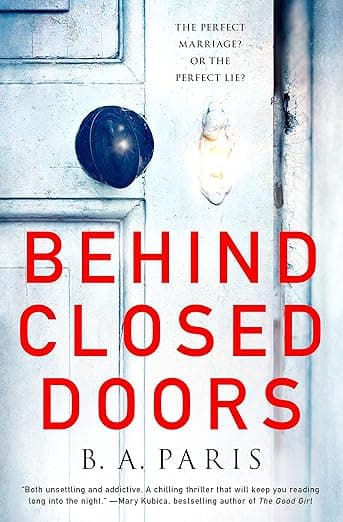
Opening
On their wedding night, Grace Angel steps into a nightmare that exposes the monstrous truth behind Jack Angel’s perfect facade. As the story toggles between past and present, Jack isolates, starves, and strategically discredits her, making her terror impossible to prove and placing Grace’s beloved sister, Millie Harrington, at the heart of the stakes.
What Happens
Chapter 6: The Honeymoon Begins (Past)
Grace’s wedding night collapses into panic when she emerges from the bath to an empty suite and no word from Jack. Fearing for Millie, she calls her mother and learns Millie is fine—then receives Jack’s chilling text: “Don’t be so hysterical, it doesn’t suit you. Something’s come up, I’ll see you in the morning.” She spends the night rationalizing, convincing herself they’ve had their first married fight.
Morning brings no apology. Jack summons her to the car park at eleven and arrives cold and impenetrable. He refuses explanations, snaps, “You have no rights at all,” and drives to the airport, skipping their planned visit to Millie in the hospital. When Grace begs him to turn back, he offers an ultimatum: take a taxi to Millie now and he’ll fly to Thailand alone—marriage over—or come with him and abandon the visit. Shattered, Grace chooses him; he takes her passport and control.
At the airport, Jack’s public charm returns. He exploits Millie’s accident to get a first-class upgrade, sharpening the divide between public persona and private cruelty and underscoring Appearance vs. Reality. On the plane, he lets her sleep through dinner despite her request to be woken, then icily calls a flight attendant when she wakes starving—early, precise moves in his campaign of Psychological Manipulation and Control.
Chapter 7: The Red Room (Present)
After lunch with neighbors Diane and Esther, Grace is marched back to her bedroom. Shutters slam down; she’s sealed inside a minimalist cell with a bed and bathroom, no books, no pens, nothing that could help her resist or escape—the house itself enacts Imprisonment and Isolation. She waits, counting days until June, when Millie is due to move in, and measures every risk against her sister’s safety.
Grace relives a failed public plea for help that Jack deftly flipped against her, proof of The Power of Perception and Credibility. Starvation terrifies her most; once, he withheld food for three days “to teach her a lesson.” He never lets a routine form—no clocks, no predictability—so she can’t anchor herself to time or hope.
That night, Grace tracks Jack’s footsteps by sound: keys, ice, whisky. He comes upstairs not with food but with news—Millie’s school has requested a meeting. His solicitude is theatrical; the menace beneath it is unmistakable. Grace shakes with dread, knowing he will weaponize whatever the school reveals. Fear as a Weapon is his most reliable tool.
Chapter 8: The Story (Past)
In a shabby Bangkok hotel, Jack drops the mask. “You should have chosen Millie,” he says, then tells Grace a “story” about a boy who worships his violent father, loathes his “weak” mother, learns to savor the sound of her screams and the “smell of her fear,” and ultimately beats her to death—framing his father for the murder. Grace understands: Jack is the boy.
He outlines the performance of his life. He selected the name Jack Angel, chose a career defending battered women for the irony, and married Grace as cover. He finds sex with her “disgusting”; the real prize is Millie, whose vulnerability promises a pure, controllable terror. Now Millie’s legal co-guardian, he can have both sisters declared unstable if needed.
Then he sets a trap to erase Grace’s credibility. He leaves the door unlocked; she runs to the lobby and accuses him of theft and worse. Jack arrives, all concern, and “finds” her passport, purse, and a planted bottle of pills in her bag. In front of staff and guests, Grace’s frantic claims—that he killed his mother, that he is imprisoning her—read as delusional. The hotel sides with him. He’s built a public record of her instability.
Chapter 9: The School (Present)
Jack and Grace drive to Millie’s school to meet the headmistress, Mrs. Goodrich, and Millie’s carer, Janice. Grace is dizzy with hunger—two days without food. They learn Millie has insomnia and anxiety; the school doctor has recommended over-the-counter sleeping pills. Jack notes the medication’s name in his phone, a small act with ominous implications.
When Mrs. Goodrich wonders if Millie’s anxiety stems from not having seen the new house, Grace smoothly reframes it as nerves about leaving friends. Thinking fast, she proposes that Janice promise to visit Millie after the move—an act of Resilience and the Will to Survive, planting an external lifeline who might notice if anything is wrong. Jack instantly endorses the idea, polishing his image as the devoted stepfather.
They take Millie to lunch at a vetted restaurant. Millie wants her favorite hotel; Grace realizes too late that place might have offered an escape route. Jack promises Millie a puppy to replace her lost dog, Molly—torture for Grace, who knows what “happened” to her own pet. When Millie and Grace go to the restroom, Jack stands guard outside, proof that surveillance is constant and complete.
Chapter 10: The Trap (Past)
For two weeks in Thailand, Jack runs a program of psychological torture. He locks Grace out on the balcony for hours each day “for a lovely tan,” stages smiling photos at restaurants and landmarks, and then reminds her, at the faintest hint of hope, how little control she has. The charm in public, the cruelty in private, destabilizes her sense of what is real.
Desperate to escape before they return to England, Grace studies the couple next door: Spanish chatter through thin walls, a man smoking on the balcony. One night, with Jack out, she bangs on their door—and Jack opens it, laughing. He rented the second room, looped recordings of Spanish dialogue, and posed on the balcony himself. It’s a trap designed to prove he’s always ahead. As punishment for two escape attempts, he cancels their first two planned weekend visits with Millie.
On the flight home, Jack drugs her. She arrives at Heathrow so sedated she needs a wheelchair and can’t speak clearly enough to seek help. He drives her to their new house—her own “perfect” design brought to life—and leads her to the basement utility room. With a smile, he hands her a bin bag and asks if she wants to see her dog, Molly. The dream home becomes a prison and a graveyard for her hopes.
Key Events
- Jack abandons Grace on their wedding night, then forces her to choose between him and visiting Millie; he seizes her passport.
- In Bangkok, Jack confesses his past, reveals Millie as his target, and frames Grace as unstable before witnesses.
- The honeymoon becomes a regime of isolation, starvation, staged outings, and calculated disorientation.
- A second escape attempt collapses into Jack’s elaborate ruse with the “Spanish couple,” proving he controls every variable.
- Drugged and voiceless, Grace lands in England and is delivered to the “perfect” house engineered as her prison.
Character Development
Grace’s arc turns from newlywed hope to steely, strategic endurance. Her love for Millie reorients every choice, shifting her from reactive panic to quiet, tactical planning designed to keep an ally in the outside world and to survive long enough to act.
- She learns to read Jack’s routines by sound, timing, and micro-gestures, building a survival skillset under siege.
- She tests small, plausible moves (e.g., securing Janice’s future visits) to plant lifelines.
- Her fear of starvation and loss of routine forces her to conserve energy and choose words with precision.
Jack’s mask falls to reveal a methodical sadist whose performances are as disciplined as his punishments.
- He weaponizes institutions—hotels, airports, schools—so bystanders validate his narrative and invalidate Grace’s.
- He withholds, times, and scripts food, sleep, and social contact to keep Grace disoriented.
- His “origin story” isn’t confession but choreography, positioning fear as his art and Millie as his ultimate canvas.
Millie’s characterization sharpens through others’ actions and her own small signals.
- Her insomnia and anxiety suggest a child attuned to danger others miss.
- Her attachments—friends at school, Janice, even the promise of a puppy—become leverage points for both Jack and Grace.
Themes & Symbols
Public charm versus private cruelty drives the novel’s engine. Jack’s seamless flips between doting husband and torturer make Appearance and reality indistinguishable to outsiders, trapping Grace inside a lie she can’t disprove. Photos, upgrades, and the “devoted stepfather” routine build a scaffolding of credibility that protects him and isolates her.
Control operates psychologically more than physically. Gaslighting, hunger, sleep deprivation, and orchestrated humiliation erode Grace’s confidence and external support. The house—a dream Grace once sketched—becomes the ultimate symbol: love’s blueprint stolen and rebuilt as a bespoke prison. Even the balcony “tan” is a weaponized image, proof of “paradise” that disguises captivity.
Key Quotes
“Don’t be so hysterical, it doesn’t suit you. Something’s come up, I’ll see you in the morning.”
Jack’s first text reframes Grace’s legitimate fear as irrationality and sets the tone for gaslighting. The chilly formality—“something’s come up”—signals how little her needs matter in his calculus.
“You have no rights at all.”
This declaration makes the private rules explicit: love won’t mediate power here. Jack names the governance of the marriage as absolute dominion, not partnership.
“You should have chosen Millie.”
By taunting Grace with the impossible choice he engineered, Jack reasserts control and introduces Millie as the leverage point—and the true target—of his sadism.
“The smell of her fear.”
The sensory detail from Jack’s “story” transforms fear into his aesthetic object. It reveals that his goal isn’t pain for its own sake but the creation and savoring of terror.
The passport “found,” the pills “discovered.”
These staged “finds” flip evidence into theater. In public spaces, props plus performance manufacture credibility, ensuring that truth can’t compete with narrative.
Why This Matters and Section Significance
Chapters 6–10 pull the mask off the novel’s central relationship and align the timelines: we now understand how the smiling couple in public is built on confinement and coercion at home. Jack’s monologue clarifies motive and method; the school visit clarifies the stakes. By destroying Grace’s credibility and scripting every public encounter, Jack turns a physical escape into a far harder mission: securing belief. From here on, Grace’s survival—and Millie’s safety—depends on planting witnesses, preserving strength, and waiting for the single unguarded moment Jack believes will never come.