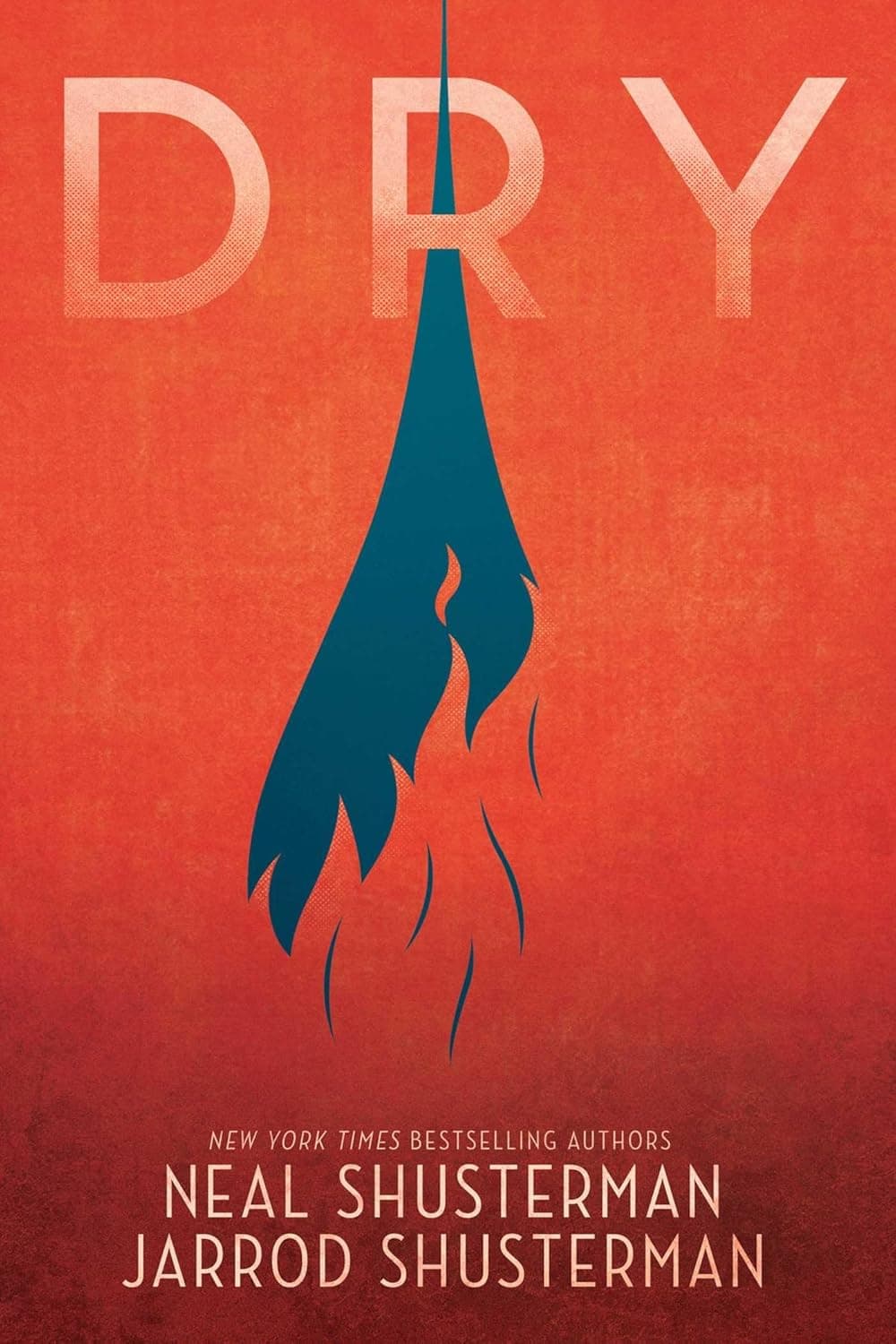
This collection gathers essential quotes from Dry by Jarrod and Neal Shusterman, each paired with focused analysis that connects language, character, and theme to the novel’s larger arc.
Most Important Quotes
The Insidious Crisis
"There’s no radar image for a water crisis. No storm surges, no debris fields – the Tap-Out is as silent as cancer. There’s nothing to see, and so the news is treating it like a sidebar."
Speaker: Alyssa Morrow | Context: Chapter 1, as national coverage sidelines the Tap-Out for a more telegenic hurricane.
Analysis: The line frames the Resource Scarcity and Environmental Crisis as a catastrophe that evades spectacle—its danger lies in creeping invisibility rather than cinematic destruction. The simile “silent as cancer” repositions disaster from the external to the internal, emphasizing decay and denial. By tying the crisis to optics, the passage interrogates Preparedness vs. Denial, indicting media and institutional inertia that fail to mobilize without images of impact. It foreshadows why relief will lag fatally behind, forcing ordinary people like Alyssa into survivalist improvisation.
The End of Neighborliness
"When it comes down to survival you don’t have neighbors!"
Speaker: Richard McCracken | Context: Chapter 7, when Richard refuses to share water with desperate neighbors and clashes with his wife.
Analysis: Richard’s declaration distills the ethic of isolation that accelerates the The Breakdown of Social Order. By rejecting the social fiction of neighborliness, he codifies an “us versus them” ethos that turns community into threat. The blunt, aphoristic phrasing reads like a survivalist creed, and its absolutism becomes tragic irony when his paranoia culminates in Brady’s death—mistaking kin for enemy, as recounted in Chapter 16-20 Summary. The quote becomes a hinge: the moment courtesy yields to barricades, and fear redefines family.
The Point of No Return
"He looks at his fingers, glistening with my spittle … and he licks it off."
Speaker: Narrator (Alyssa’s perspective) | Context: Chapter 9, at Laguna Beach, when Alyssa confronts Dalton, who demands her water.
Analysis: The image is transgressive and unforgettable, collapsing disgust and need into a single reflex. By reducing human contact to bodily fluid and compulsion, the moment exposes how scarcity strips away social inhibitions and propriety, sharpening the novel’s meditation on Human Nature and Morality. It functions as Alyssa’s awakening: the Tap-Out is no longer an inconvenience but a regime where dignity is a luxury. The scene’s grotesque intimacy marks a narrative threshold—after this, everyone understands the stakes.
The Monster Within
"Sometimes it’s the monsters who survive. And now I am the monster."
Speaker: Alyssa Morrow | Context: Chapter 48, after she slaps an elderly woman to steal the last cup of water to save Garrett.
Analysis: Alyssa’s confession captures the cost of protecting Family and Loyalty in a world that punishes hesitation. The paradox—that monstrosity is what survival may require—recasts heroism as moral injury. It threads directly into the novel’s exploration of Survival and Scarcity, insisting the real antagonist is the self we might become under pressure. Crucially, her self-reproach separates her from opportunists: awareness turns a selfish act into tragedy, not triumph.
Thematic Quotes
Survival and Scarcity
The Veneer of Politeness
"There’s a sort of primal hostility all around us, hidden by a veneer of suburban politeness. But even that politeness is stretching thin."
Speaker: Alyssa Morrow | Context: Chapter 1, at Costco on the Tap-Out’s first day.
Analysis: The metaphor of a “veneer” suggests civility is cosmetic—thin, glossy, and easy to crack. Alyssa senses currents of aggression already surging beneath the surface, foreshadowing the rapid [Breakdown of Society]. By naming the hostility “primal,” the line anticipates regression to older survival scripts once resources vanish. The observation reframes normalcy as performance: when supply falters, the performance collapses.
The New Currency
"Free-market economy. Supply and demand. And right now there’s a whole lot more demand than supply."
Speaker: Gas station clerk/looter | Context: Chapter 8, as he price-gouges Alyssa for peanuts in a seized convenience store.
Analysis: Invoking Econ 101 to justify exploitation is grimly ironic, turning “supply and demand” into a moral alibi. The clerk’s rhetoric shows how quickly legality yields to opportunism when enforcement and social trust evaporate—an emblem of the [Breakdown of Social Order]. In this scarcity regime, goods become leverage and people become markets to be squeezed, not neighbors to be helped. The scene crystallizes the novel’s critique of predatory pragmatism in crisis.
The Breakdown of Society
The Failure of Authority
"As far as authority is concerned, calm people quietly dying is a lot easier to deal with than angry people fighting for their lives."
Speaker: Garrett Morrow | Context: Chapter 7, after a news broadcast urges residents to “remain calm.”
Analysis: Garrett’s line slices through euphemism to expose crowd-control logic: order over outcomes. It suggests that platitudes can be policy, and that minimizing panic may mask institutional paralysis rather than competence. As a thematic corollary to Preparedness vs. Denial, it predicts official failure and signals that salvation will be self-organized. The bleak insight’s power comes from its source—a child seeing what adults won’t say out loud.
The New Social Contract
"You share nothing, or you share everything. There’s no in between."
Speaker: Richard McCracken | Context: Chapter 15, at a tense family dinner defending his zero-share policy.
Analysis: Richard asserts a ruthless binary that refuses nuance, turning charity into a fatal slippery slope. The absolutism echoes the novel’s Civility vs. Savagery debate, suggesting cooperation is untenable once need becomes public. The claim functions as both credo and curse: it protects the household while incubating violence and mistrust. Alyssa’s later choices grimly echo this logic, though with remorse rather than pride.
Human Nature and Morality
The Three Types of Humans
"My dad always told me that there are three types of humans on this planet. First there’s the Sheep... Next you’ve got your Wolves... And lastly, you have people like us. The McCrackens. The Herders of the world."
Speaker: Kelton McCracken | Context: Chapter 2, explaining his family’s survivalist taxonomy.
Analysis: The “Sheep/Wolves/Herders” schema is a seductive metaphor because it simplifies chaos into roles that flatter the speaker. It anchors Kelton’s early identity and ties directly to Preparedness vs. Denial—preparers as enlightened custodians, others as prey or burden. Over the novel, events invert the hierarchy, exposing how easily “Herders” drift toward predation and how so-called “Sheep,” like Alyssa, harbor resolve and ingenuity. The quote is memorable because it invites readers to pick a role—and then dismantles the choice.
The Strength to Save Each Other
"I realize that this is the true core of human nature: When we’ve lost the strength to save ourselves, we somehow find the strength to save each other."
Speaker: Alyssa Morrow | Context: Chapter 54, while dragging a collapsed Kelton away from a wildfire.
Analysis: This counter-thesis arrives after pages of theft, betrayal, and violence, offering a hard-won, humane corrective. Alyssa reframes strength as relational rather than individual, recoding survival as mutual aid. The line tempers the book’s darkest moments with earned hope, suggesting altruism can outlast scarcity. It also prepares the emotional ground for the ending, where endurance is measured in connection rather than stockpiles.
Character-Defining Quotes
Alyssa Morrow
"I will be strong, if not for me, then for Garrett. I will save him from the flames. And then I will save Kelton. And then I will save myself."
Context: Chapter 54, cornered by wildfire, as Alyssa contemplates a mercy killing to prevent a worse death.
Analysis: The triad—brother, friend, self—lays bare Alyssa’s reordered priorities: duty before survival, love before fear. The cadence, with its purposeful anaphora, reads like an oath forged in crisis. It’s the culmination of her evolution from suburban teen to reluctant guardian, defined by grim compassion rather than bravado. Even at the edge of annihilation, her choices center the minimization of others’ suffering.
Kelton McCracken
"Well, as my dad always says, ‘We’d rather be wrong than dead wrong.’"
Context: Chapter 1, as Kelton brags about his family’s water tanks and contingency plans.
Analysis: The quip condenses a whole ideology: overprepare or perish. “Dead wrong” literalizes error as fatal, justifying social awkwardness and paranoia as rational safeguards. The story later interrogates that calculus, showing how preparedness can curdle into tunnel vision with devastating costs to the McCrackens themselves. The line sticks because it sounds sensible—until the consequences arrive.
Jacqui Costa
"When this is over, it will be my absolute pleasure to never see any of you ever again. But you especially."
Context: Chapter 37, Jacqui shuts down Henry’s suggestion that they’ll all be friends after the crisis.
Analysis: Jacqui’s acid humor is armor—contempt as boundary-setting in a world that punishes softness. She frames the group as a temporary alliance, not a found family, revealing a philosophy of survival unadorned by sentiment. The specificity of “you especially” sharpens the barb and foreshadows her accurate read on Henry’s self-interest. The line defines her voice: unsentimental, incisive, and allergic to false comfort.
Henry Groyne
"In life, one should always have an exit strategy for any given situation."
Context: Chapter 33, after the ÁguaViva lie unravels and Henry plans to cut and run.
Analysis: Henry translates relationships into contingencies, telegraphing betrayal as prudence. The corporate euphemism “exit strategy” sanitizes abandonment, revealing his talent for self-justification. This creed explains his every move—from trades to treachery—and stands as a foil to Alyssa’s ethic of responsibility. The line matters because it’s honest about his values: opportunity first, loyalty never.
Memorable Lines
The Chasm Between
"As we travel this expansive concrete channel, it feels to me like the world has torn in two, and we’re traveling the seam of that tear. The chasm between what was, and what will be."
Speaker: Kelton McCracken | Context: Chapter 26, trekking through the dry Santa Ana River aqueduct.
Analysis: The dried aqueduct becomes a literal threshold and a figurative wound, making the landscape a map of history’s rupture. The seam imagery captures liminality: the group is suspended between eras, identities, and moral codes. It’s among the book’s most lyrical moments, compressing setting, symbolism, and theme into a single vista. The sentence earns its resonance by fusing geography with fate.
A Defining Moment
"Everyone’s going to remember where they were when the taps went dry, I think. Like when a president is assassinated."
Speaker: Alyssa Morrow | Context: Chapter 1, seconds after the kitchen faucet sputters out.
Analysis: By invoking a national trauma, Alyssa frames the Tap-Out as an epochal break, not a temporary inconvenience. The historical simile telescopes private panic into collective memory, asserting that catastrophe is as much about narrative as it is about need. It underscores the novel’s argument that infrastructure failures are cultural events with long afterlives. The line’s prescience shocks, because she intuits the scale before the worst begins.
Opening and Closing Lines
Opening Line
"The kitchen faucet makes the most bizarre sounds."
Speaker: Narrator (Alyssa) | Context: Chapter 1, the moment domestic normalcy first misfires.
Analysis: The apocalypse arrives as a household glitch, not a siren blast, which makes the dread intimate. Personifying the faucet—coughing, wheezing, gurgling—translates mechanical failure into mortal struggle. The image seeds the book’s water-as-life motif while quietly announcing that ordinary systems are about to betray their users. It’s a perfect threshold sentence: small in scale, vast in implication.
Closing Line
"Wasn’t it Jacqui who told us the human body is sixty percent water? Well, now I know what the rest is. The rest is dust, the rest is ash, it’s sorrow and it’s grief… But above all that, in spite of all that, binding us together … is hope. And joy. And a wellspring of all the things that still might be."
Speaker: Alyssa Morrow | Context: Chapter 56, Alyssa’s final reflection after surviving the Tap-Out.
Analysis: The passage redefines composition: beyond water, humans are made of affect and aspiration. By naming “dust” and “ash,” the line honors loss; by ending on “hope” and “joy,” it insists on resilience without erasing pain. The “wellspring” metaphor turns scarcity inside out, locating abundance in communal spirit rather than pipes and reservoirs. As a bookend to the dry faucet, it restores flow—of meaning, of future, of life.