What This Theme Explores
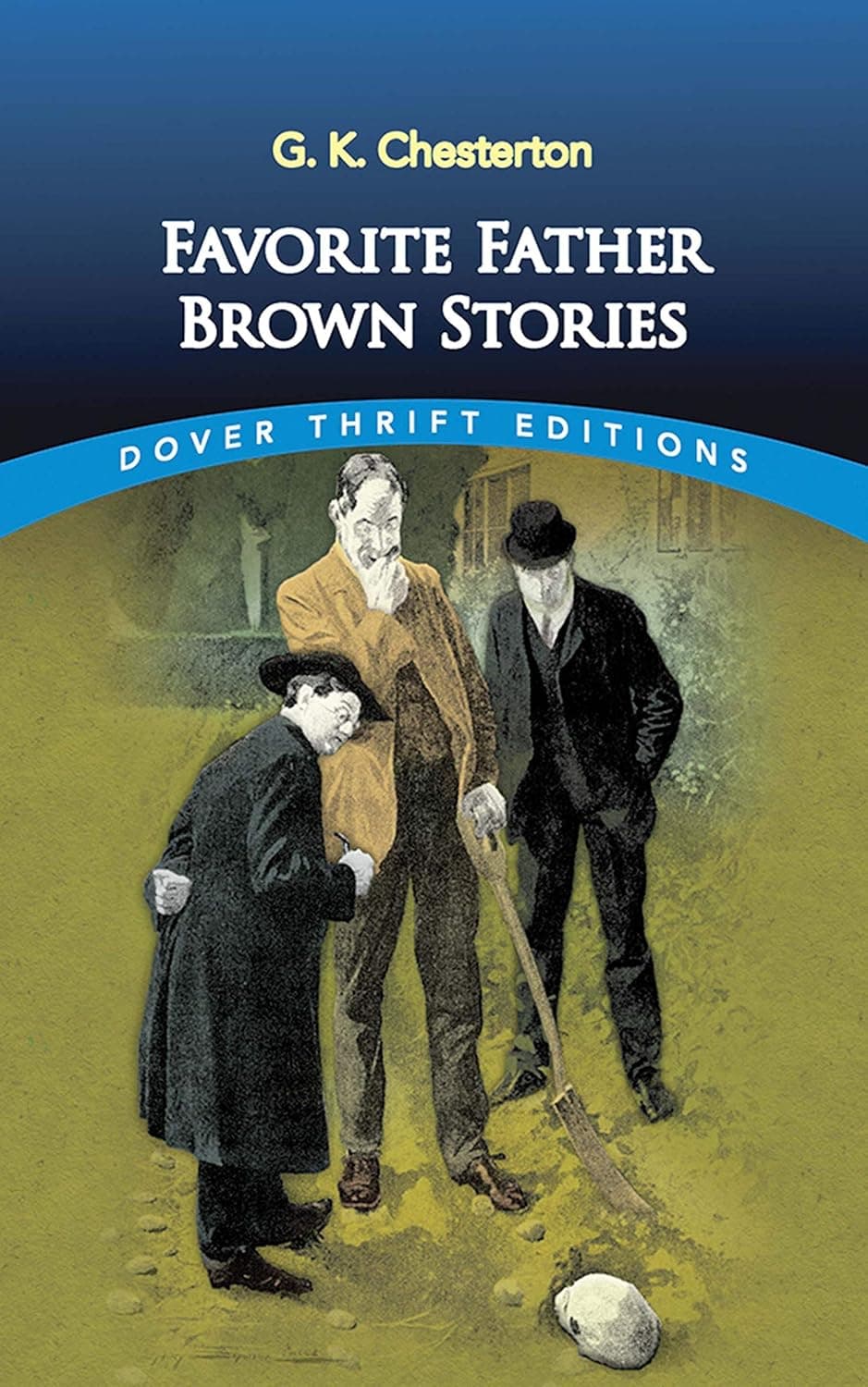
Reason and Divine Logic asks whether rationality reaches its fullest form only when it is shaped by moral and theological truth. In G. K. Chesterton’s stories, rational method becomes most powerful when it begins with a realistic view of human nature—its sins, virtues, habits, and self-deceptions—rather than with material clues alone. Father Brown embodies a logic that starts from the soul outward: a confessor’s empathy equips him to decode the “why” behind the “what.” The theme ultimately argues that faith does not undermine reason but completes it, giving reason a stable moral framework in which facts make coherent sense.
How It Develops
The theme takes shape in “The Blue Cross,” where Father Brown’s method is set against the brilliant, secular ingenuity of Aristide Valentin. Valentin follows the negative space of logic—the trail of the “unreasonable”—but Father Brown perceives the motive logic beneath those anomalies. The story climaxes with a frank claim that theology safeguards reason itself, signaling that Chesterton’s detective will solve crimes by reading consciences as carefully as clues.
“The Sins of Prince Saradine” expands the theme by showing moral logic operating as narrative logic. Rather than treat the mystery as a puzzle of footprints and fingerprints, Father Brown reads the “primitive story” of temptation and revenge: he sees how Prince Paul Saradine trusts predictable vices—pride, jealousy, vindictiveness—to make others his instruments. The case resolves when human character, not physical evidence, provides the decisive inference.
“The Sign of the Broken Sword” deepens the argument by applying divine logic to national myth. Father Brown refuses the simple, martial tale and instead interrogates the psychological contradictions of its heroes, exposing the hidden crime of General Sir Arthur St. Clare. Here, reason allied with moral truth punctures a century of false hero-worship.
Finally, “The Man in the Passage” ties divine logic to humility. In a hall of mirrors, the proud misread what they see—projecting their passions and fears—while Father Brown’s ego-free gaze perceives the plain, rational answer. Humility becomes not weakness but the precondition for clear thinking.
Key Examples
-
The Attack on Reason in “The Blue Cross”: When Father Brown unmasks Flambeau, the thief’s error is not tactical but philosophical—he has tried to dissolve reason itself.
“You attacked reason,” said Father Brown. “It’s bad theology.” (Chapter 1-2 Summary, p. 14)
The rebuke reveals Chesterton’s thesis: reason depends on a moral-metaphysical order, and to deny that order is to sabotage rational inquiry. -
The Logic of Human Nature: Father Brown explains how he led the police by anticipating ordinary behavior, not by consulting arcane science.
A man generally makes a small scene if he finds salt in his coffee; if he doesn’t, he has some reason for keeping quiet. I changed the salt and sugar, and you kept quiet. A man generally objects if his bill is three times too big. If he pays it, he has some motive for passing unnoticed. I altered your bill, and you paid it.
By trusting the regularities of human motive, he treats psychology as a stable evidentiary field—reasoning from the commonplace rather than the sensational. -
The Psychological Riddle in “The Sign of the Broken Sword”: The case begins with a paradox of character, not a clue on the ground.
One of the wisest men in the world acted like an idiot for no reason. One of the best men in the world acted like a fiend for no reason. That’s the long and short of it; and I leave it to you, my boy. (Chapter 5-6 Summary, p. 36)
The solution emerges when Father Brown reorders the facts around moral causality, revealing St. Clare’s concealed betrayal as the only account that satisfies both logic and conscience.
Character Connections
Father Brown personifies divine logic in action. As a confessor, he begins from the interior life: what fear, vanity, or despair would make this sin plausible? His humility lowers the noise of ego so he can hear the signal of motive, and his faith provides a map of temptation and repentance that renders human behavior intelligible.
Aristide Valentin embodies the reach and the limits of secular deduction. He is shrewd enough to follow the trail of the “unreasonable,” yet his method stalls where moral meaning begins. His final deference—“Let us both bow to our master”—acknowledges that reason achieves its highest clarity only when it bows to a truth larger than itself.
Flambeau first stages a glamorous rebellion against reason—an aesthetic anarchism that treats logic as a game to be subverted. After his conversion, he becomes the audience’s proxy: his energetic common sense repeatedly runs aground on puzzles that require Father Brown’s deeper, morally tuned reasoning.
Figures like Prince Paul Saradine and General St. Clare test the theme from the other side. Saradine weaponizes predictable vices to script outcomes, proving how exploitable sin’s logic can be. St. Clare manipulates public myth, counting on sentiment to eclipse truth—until moral reasoning dismantles the legend and restores a rational account of what really happened.
Symbolic Elements
The Cross: The sapphire cross in “The Blue Cross” stands for the rational order safeguarded by faith. By saving the cross, Father Brown asserts that his detective work participates in preserving a cosmic coherence where truth can be known.
Mirrors: The mirror-filled corridor in “The Man in the Passage” dramatizes perception warped by pride. Characters see monsters because they bring their monsters with them; humility, by contrast, reflects reality without distortion.
The Broken Sword: As an emblem of public honor, the sword appears to sanctify sacrifice; once “read” by divine logic, it marks a fracture between outward glory and inward guilt. The symbol itself becomes evidence that truth has been severed and must be made whole.
Contemporary Relevance
Chesterton’s theme challenges modern confidence that data and technique alone can explain human action. In an age of metrics, behavioral prediction, and forensic fascination, these stories insist that empathy, humility, and moral knowledge are not extras but essentials of sound reasoning. Divine logic here does not mean rejecting science; it means refusing reductions of persons to numbers, remembering that motives and conscience are part of the evidence. The result is a more complete rationality—one that can keep pace with both facts and the souls who generate them.
Essential Quote
“You attacked reason,” said Father Brown. “It’s bad theology.”
This line crystallizes the book’s paradox: theology is not the foe of reason but its guardian. By rooting rational inquiry in a moral order, Father Brown can make sense of behavior others misread, proving that logic divorced from conscience is not truly logical at all.