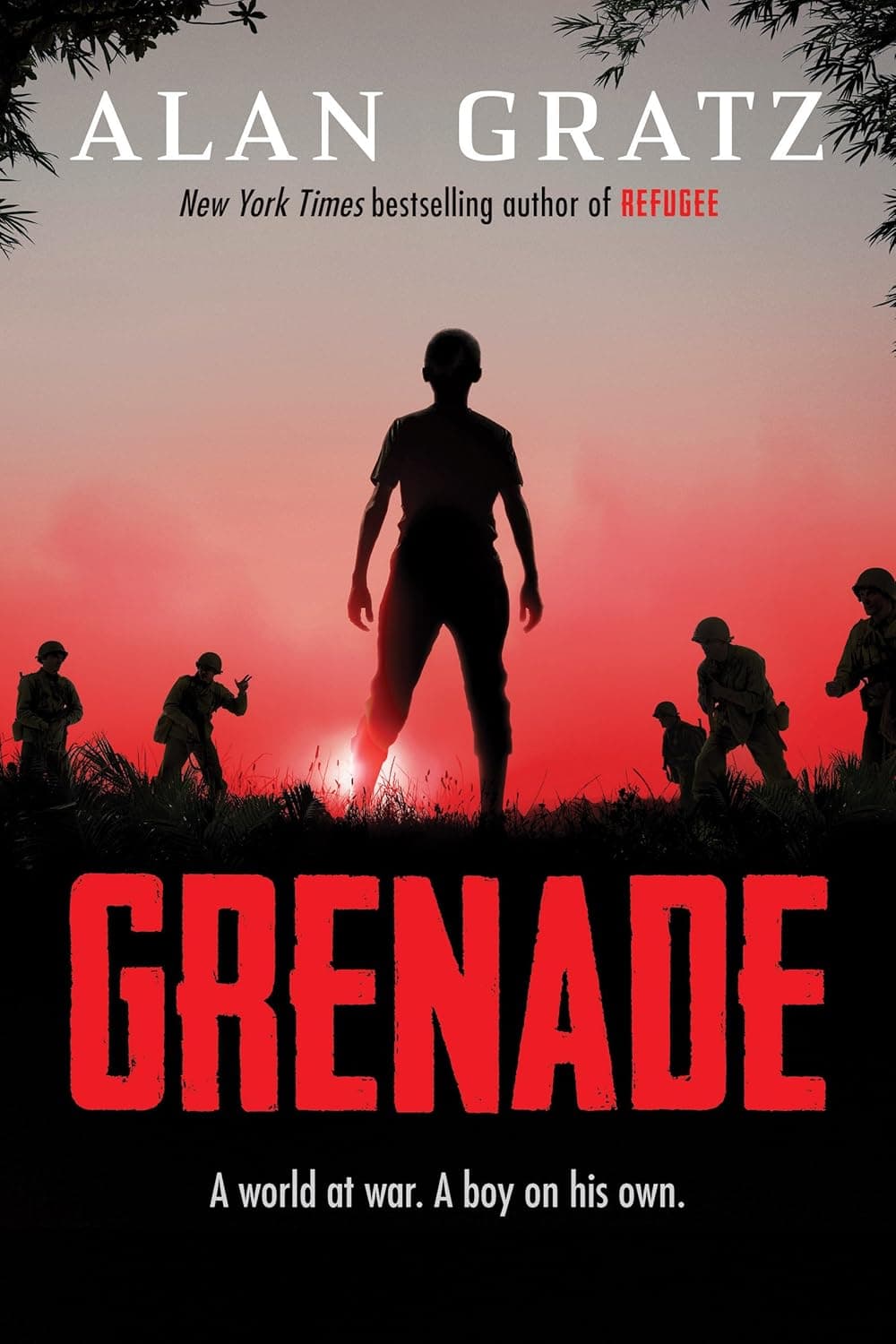
Opening
As the Battle of Okinawa grinds to its bleakest phase, Hideki Kaneshiro fights to stay alive and hold on to what makes him human. Across bombed highways, burnt-out bunkers, and ruined tombs, he risks everything for a single goal: to find his sister and reclaim a sliver of family in a world set on erasing it.
What Happens
Chapter 31: No-Man’s-Land
Southbound toward the front, Hideki falls in with a stream of Okinawan refugees lit by American star shells that wash the road in a "ghostly green light." Corpses line the path; he trains himself to not see them, a shield against The Horrors and Dehumanization of War. A chill stalks him—Rei’s ghost? His father’s?—until he spots something wrong: a “woman” in a kimono wearing army boots. Japanese soldiers, disguised among civilians, march with the refugees.
Terrified that discovery means massacre by Americans—or death for exposing the soldiers—Hideki slips away. He uses burning Shuri Castle as his grim guide, then stumbles into a ravine of American bodies and scavenges rations and photos for Rei’s collection. A sniper shot pins him in the no-man’s-land between lines. Timing the star shells, he sprints for a Japanese bunker and dives inside under fresh tracer fire—only to find it abandoned. The Imperial Army is retreating. Knowing Americans will soon clear the bunker, he bolts south again.
Chapter 32: The Road South
Hideki merges with a vast tide of retreating soldiers and civilians. The island he loves has turned "dull, filthy gray-brown," a wasteland that erases memory and identity, underscoring Identity, Heritage, and Colonialism. He frames invisible photographs with his fingers, overlaying prewar color atop the gray ruin, and promises Rei’s ghost he will find his sister, Kimiko Kaneshiro.
A low-flying American spotter plane screams overhead. Hideki understands instantly: targeting fire is coming. “Incoming! Get down!” he yells, diving into a waterlogged ditch as naval shells rip the road apart. The barrage turns the highway into “hellfire and destruction.” He survives by submerging, surfacing only for quick breaths. When the shelling stops, the column and road are gone. Hardened, he rises and keeps walking, stepping past the wounded.
Chapter 33: Ichariba Choodee
Soaked and exhausted, Hideki shelters in a family tomb and finds the Miyagis—eight starving Okinawans, four of them small children—hiding for two months. They have been taught that Americans are monsters, proof of Propaganda and the Perception of the Enemy. Hideki shares his scavenged rations and gives a nuanced truth: Americans are “killing machines” in combat, but otherwise “they’re like us.” He shows his bandaged head—an American doctor treated him—and tells them to surrender when the fighting ebbs.
They choose to trust him. Though it means backtracking, Hideki leads them toward American lines, the grenade in his pocket weighing like a verdict. After a tense challenge, the Americans accept the surrender. Mother Miyagi hugs him and says, “Ichariba choodee”—now that we’ve met, we’re family. He refuses food and safety, turning away to keep searching for Kimiko.
Chapter 34: The Command Post
In Shikina, Hideki follows soldiers into a command-post cave in hopes of food and finds a stifling field hospital crammed with wounded men and student nurses. Hope spikes—could Kimiko be here?—but no one has heard of her. An American voice at the entrance demands surrender. A corporal snarls, “Never!” A guard bayonets an American; the response is instant and merciless: a flamethrower turns the entrance into a wall of fire.
Gasoline pours into the vents; grenades follow. Hideki yells for the back exit, then yanks a metal cabinet over himself and a nearby nurse as the cave erupts. Heat smashes over them; the grenade in his pocket could cook off. He curls around it, shielding the nurse. When the flames gutter out, the two of them are the only survivors. Surrounded by charred bodies, Hideki feels nothing—and helps the shaken nurse out the back.
Chapter 35: Kimiko
The nurse’s name is Masako, a student conscripted into service. They wait for nightfall, then move toward another command post—abandoned. Through an observation slit, Hideki watches Shuri Castle burn and collapse. “Okinawa was gone with it,” he thinks, as his cultural anchor vanishes. Masako finds canned pineapple; they eat until a Japanese squad arrives, seizes the food, and conscripts them. “This is your island,” the lieutenant says. “You should be the ones fighting for it.”
Dragged to a crowded bunker, Hideki searches for a way out. A girl scolds a child nearby, her “idiot” gentle and sharp at once. The sound strikes him like a bell. He pushes through the crush and turns the nurse by the shoulder. It’s Kimiko.
Character Development
Hideki Kaneshiro evolves from a hunted child into a clear-eyed survivor with a moral compass.
- Hardened resilience: He teaches himself not to “see” the dead, walks past the wounded after the barrage, and endures the charnel cave without breaking.
- Moral clarity: He rejects fanaticism and propaganda, telling the Miyagis the complicated truth about the enemy—violent in combat, human otherwise.
- Agency and strategy: He chooses isolation over risky crowds, scavenges supplies, times his run under star shells, shields another with his body, and brokers a family’s surrender.
- Purpose as lifeline: The quest to find Kimiko fuels every decision, anchoring him against despair even as Shuri Castle—and what it means—falls.
Themes & Symbols
War’s corrosive force strips bodies, places, and identities. The road of corpses, the naval barrage, the flame-swept hospital, and Hideki’s emotional numbing embody The Horrors and Dehumanization of War. Survival demands habits of un-feeling, yet Hideki keeps choosing acts that assert humanity: feeding a starving family, protecting a stranger, seeking his sister.
Propaganda and the Perception of the Enemy fractures judgment and endangers civilians. The Miyagis’ terror of “monster” Americans dissolves when faced with Hideki’s lived complexity, showing how truth can pierce lies even in combat’s fog. Identity, Heritage, and Colonialism sharpen as the island’s heart—Shuri Castle—burns. Okinawans are told it is “their” island to die for, even as imperial forces treat them as expendable.
Symbols:
- Shuri Castle: The Ryukyu Kingdom’s soul. Its collapse marks cultural erasure and the shattering of Hideki’s anchor.
- Family tomb: Haven and prison; a link to ancestors that becomes a slow death until trust and surrender open a future.
- Photographs: Small salvations of individuality; a memorial practice that resists war’s facelessness.
Key Quotes
“Ghostly green light.”
The star shells’ pallor casts the entire landscape as a graveyard, announcing a world where life moves under the illumination of death.
“Incoming! Get down!”
Hideki’s warning saves lives and signals his shift from passive child to someone who reads the battlefield and acts decisively.
“Ichariba choodee.”
Mother Miyagi’s embrace reframes kinship as chosen, not just blood. Amid dehumanization, chosen family resurrects dignity and hope.
“Never!”
The corporal’s refusal reveals the fatal rigidity of fanaticism. Pride and indoctrination trigger a massacre in a place meant to heal.
“Heaven help me… I’ve gotten used to it.”
Hideki recognizes his own numbing. The line indicts war’s demand that survival require emotional self-erosion.
“This is your island… You should be the ones fighting for it.”
The lieutenant’s sentence exposes colonial logic: Okinawans bear the cost while outsiders command and consume.
“Okinawa was gone with it.”
As Shuri Castle collapses, Hideki articulates cultural bereavement—the loss is not only physical but civilizational.
Why This Matters and Section Significance
These chapters compress Hideki’s crucible: no-man’s-land, naval annihilation, flame and smoke in the caves. The sequence forges his survival instincts without extinguishing his humanity, positioning him to navigate violence with agency and moral purpose. The burning of Shuri Castle marks a cultural death that deepens the novel’s stakes beyond survival to the preservation of identity.
The reunion with Kimiko transforms the narrative from solitary endurance to collective survival. Having held onto hope through ruin, Hideki now must protect what he has found. The shift raises urgent questions the story will press forward: What does it mean to live after so much has been burned away, and how can family endure when a homeland has been turned to ash?