Opening
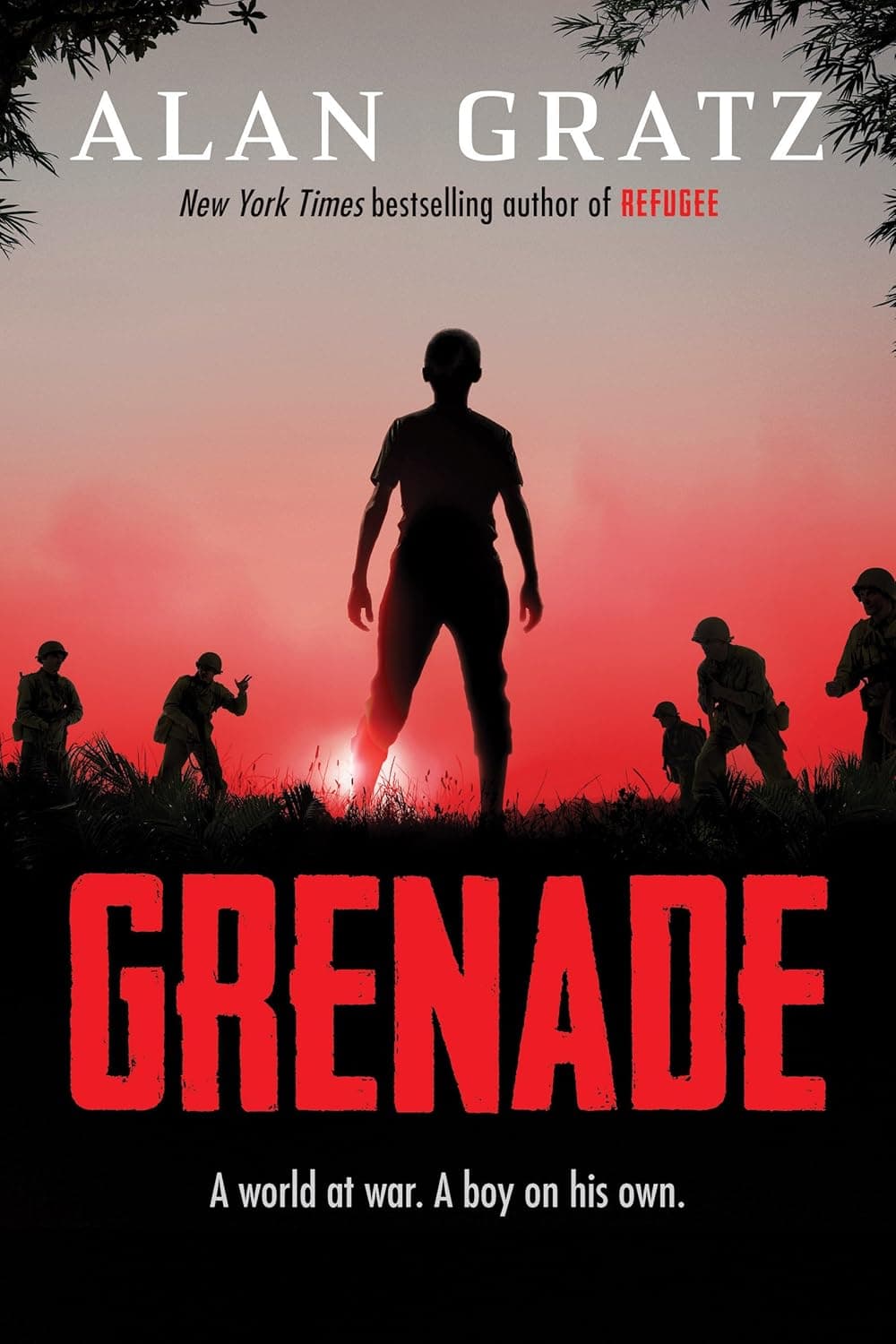
War closes in from two sides as Ray Majors, a young American Marine, and Hideki Kaneshiro, an Okinawan schoolboy soldier, crash into the brutal realities of Okinawa. Training, propaganda, and family stories crumble in the face of sudden violence, spiritual duty, and impossible choices.
Both boys confront the same battle from opposite edges—one behind a rifle, the other behind a grenade—each trying to keep hold of his humanity as the world dehumanizes everything around him.
What Happens
Chapter 6: The Sniper
Pinned on a road by a hidden shooter, Ray listens past his fear. Sergeant Meredith tests the sniper with a helmet on a bayonet; a bullet tears through the decoy. Ray hears the distinct ch-chik of a bolt-action rifle and realizes the shooter must manually chamber each round—there’s a small window to move. Ordered to sprint to a nearby well and lob a grenade, Ray thinks of the farm he left, his Great War veteran father’s warning, and the long scar on his arm that made him want to disappear.
Under a blast of covering BAR fire from the hulking Big John Barboza, Ray sprints, waits for the bolt to cycle, and throws. The blast flushes out the sniper: a terrified boy no older than twelve. Ray freezes. Big John doesn’t. “If he was shooting at us, he’s a Jap,” he says, and fires a pistol shot that ends the boy’s life—a first, shocking glimpse of The Horrors and Dehumanization of War.
Chapter 7: The Emperor’s Mabui
Hideki and the boys of the Blood and Iron Student Corps stalk Americans through the brush, grenades clutched tight. They leap to ambush—only to surround their own school principal, Norio Kojima, who is frantic to save framed portraits of Emperor Hirohito. He insists the pictures carry the Emperor’s spirit, his mabui, and must be protected.
The belief that mabui—soul—can be held in objects reframes Hideki’s fear. He worries his own mabui is cursed by a cowardly ancestor, Shigetomo, and remembers how his sister, Kimiko Kaneshiro, a yuta, once soothed another boy haunted by his ancestor’s spirit. Ancestry, belief, and duty entwine with Identity, Heritage, and Colonialism in Okinawa. As the principal rushes off, the boys catch the smell of roasting meat—the Americans are close.
Chapter 8: The Cliff
Ray’s squad eats the pig they shot earlier and jokingly dubs him “Barbecue.” Ray can’t stomach food or laughter after two deaths in a single day. Sergeant Meredith explains the “callus” soldiers grow over grief; he points out a Marine with the thousand-yard stare—eyes like Ray’s father after the trenches.
Sent to clear a nearby cave, Big John leads Ray and other rookies. Assuming Japanese soldiers are inside, they toss a grenade. Screams follow—and civilians spill out: women, children, the elderly. Panicked by propaganda, they flee toward a seaside cliff. Ray pleads in stilted Japanese, but the group jumps to their deaths rather than risk capture, a devastating consequence of Propaganda and the Perception of the Enemy. Big John mutters it’s better than someone coming out with a grenade; Ray loses his appetite entirely.
Chapter 9: The Attack
Hideki and the student soldiers creep into position as the American camp glows across the dark. Trembling, he battles The Nature of Courage and Fear. Before their leader, Yoshio, can signal, a boy named Takeshi detonates himself in terror. The Americans wake. Machine guns roar.
Hideki watches classmates die in seconds. Gensei jerks “like a broken puppet” as bullets hammer him. Katsumasa shouts “Long live the Emperor!” and hurls his grenade—only for it to ricochet off a tree and explode in his face. The heroic charge promised by Lieutenant Colonel Sano dissolves into chaos and blood. Hideki can’t move. He clings to a tree stump, shaking, finally realizing that survival, not glory, is the only path left.
Chapter 10: First Watch
That night, Ray and Big John dig a two-man foxhole. Ray takes first watch while Big John lists all the things a helmet can do—basin, shovel—before admitting it won’t stop a bullet. They trade origin stories: Ray offers a tidy version of leaving the farm; Big John reveals the Marines were his choice instead of juvenile hall.
A rustle. A voice in accented English. A Japanese soldier charges, yelling “Banzai!” Big John fires the BAR; Ray shoots and shoots again when the soldier lifts his rifle. The man dies at their feet. Ray’s first kill knocks the breath from his body; he sobs. Big John steadies him—“It gets easier.” In the dead man’s wallet, Ray finds a photograph of a wife and child, and he keeps it, a private promise to remember the person he has just erased.
Character Development
Both boys cross a threshold they can never recross. The gap between myth and reality slams shut, and each must decide what kind of person he will be under fire.
- Ray Majors
- Moves from eager recruit to haunted combatant after witnessing an execution, a mass suicide, and making his first kill.
- Struggles with empathy versus detachment; keeps the enemy’s family photo to resist moral numbness.
- Begins to see veterans’ “callus” and the thousand-yard stare as both shield and warning.
- Hideki Kaneshiro
- Loses faith in heroic narratives as classmates die in a chaotic slaughter.
- Freezes in battle, his courage redefined as choosing survival over ritual glory.
- Reorients duty from Emperor and myth to family, mabui, and staying alive.
- Big John Barboza
- Embodies brutal practicality—executes a child soldier without hesitation—yet shows tenderness by guiding Ray through his first kill.
- Reveals a past on the edge of criminality; the Marines channel his force into discipline.
- Serves as both mentor and moral counterweight, modeling the “callus” that war demands.
Themes & Symbols
These chapters build a layered portrait of war that strips away illusions. The horrors and dehumanization of war erupt in a cascade: a child sniper executed, civilians driven to suicide, boys annihilated by machine-gun fire, and a first kill that leaves a Marine sobbing. The callus Sergeant Meredith names is both survival mechanism and moral danger—necessary to function, corrosive to the soul.
Courage and fear no longer look like slogans; they look like seconds-long choices under fire. Hideki’s terror collapses everything he was taught, while Ray’s split-second actions save lives but scar his conscience. Propaganda shapes reality: Okinawan civilians leap to their deaths rather than face imagined monsters, and Ray’s discovery of the soldier’s family photo pierces his own side’s caricatures. Identity, heritage, and colonial tensions surface through mabui, anchoring Hideki’s choices in an ancestral conversation about duty, spirit, and belonging.
- Symbol: The Family Photograph
- A fragile antidote to dehumanization. It turns an “enemy” into a husband and father and gives Ray a ritual of remembrance—a way to carry the life he took without letting war erase it.
Key Quotes
“If he was shooting at us, he’s a Jap.”
- Big John compresses enemy, child, and moral calculus into a single slur. The line exposes the logic of dehumanization that makes killing efficient—and shows why Ray recoils from it.
“Long live the Emperor!”
- Katsumasa’s cry, immediately undercut by his bungled throw and death, shatters the myth of glorious sacrifice. The slogan survives; the boy does not, indicting the stories that sent him forward.
“I know what it feels like to kill a man for the first time... It gets easier.”
- Big John comforts and warns. Coping requires hardening; the cost is becoming the kind of person for whom killing becomes routine.
ch-chik.
- The sound of the bolt-action’s cycle turns into a life-and-death clock. Ray’s hunter’s ear converts fear into tactic, proving that survival in war is often the ability to hear a fraction of a second differently.
Why This Matters and Section Significance
Chapters 6–10 are the crucible that remakes both protagonists. Ray confronts execution at close range, the consequences of propaganda on civilians, and his own first kill—an education in the psychological price of survival. Hideki watches the collapse of heroic myth under machine-gun fire and redefines courage as living for family and mabui rather than dying for glory.
Together, these chapters fix the Battle of Okinawa as a uniquely tragic convergence of military brutality, cultural belief, and civilian catastrophe. They set the trajectory for the rest of the novel: two boys on parallel paths, each fighting not only an enemy across the ridge, but the erosion of his own soul.