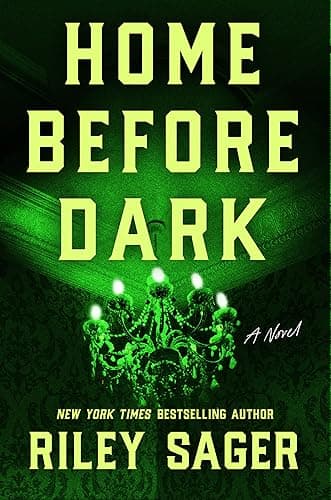
The Enduring Grip of History
Home Before Dark delves into how the past relentlessly shapes the present, exploring the idea that unresolved history—be it personal trauma, family secrets, or public narratives—refuses to stay buried. The novel suggests that the past is not a static collection of memories but an active force that demands acknowledgment and resolution. This theme is central to Maggie's journey as she returns to Baneberry Hall, confronting both the fictional haunting created by her father's book and the very real, dangerous secrets of a decades-old crime.
How It Develops
The theme of the past haunting the present unfolds through the novel's dual narrative structure, where Ewan Holt's account of the past constantly informs and complicates Maggie Holt's investigation in the present. Initially, Maggie's life is defined by the notoriety of her father's book, House of Horrors, which casts a long shadow over her identity and relationships. Her inheritance of Baneberry Hall forces her to confront the source of this haunting, while the town of Bartleby is similarly affected by the book's legacy.
The discovery of Petra Ditmer's skeleton marks a turning point, shifting the haunting from a psychological burden to a tangible criminal investigation. This event reveals that Maggie is not alone in being haunted by past events, as the histories of characters like Dane Hibbets and Marta Carver also come to light. The house's history of tragedy further suggests a pattern of the past repeating itself.
The climax reveals the truth behind Petra's death and the subsequent cover-up by Ewan and Jess Holt. Ewan's letter from the past exposes the secrets that have haunted the family for 25 years. Maggie's decision to write her own book, House of Secrets, signifies her reclaiming control of the narrative, securing her present and future by confronting the past.
Key Examples
-
The Book's Legacy: Maggie's identity is inextricably linked to House of Horrors from the beginning. The receptionist's questions and the town's resentment illustrate how a story from the past dictates her present reality. She is seen not as an individual but as "Ewan Holt's girl," a character in a famous ghost story.
-
The Skeleton in the Ceiling: The discovery of Petra Ditmer's remains is a dramatic manifestation of the past intruding on the present. The past literally falls into the present, transforming a search for truth into a murder investigation. This shatters the barrier between the fictional haunting of the book and the real-world consequences of a hidden crime.
-
Ewan's Annual Visits: Dane reveals that Ewan returned to Baneberry Hall every July 15, the anniversary of their flight. This ritual highlights Ewan's personal haunting by his past actions. Unable to escape the guilt of the cover-up, he was compelled to return to the scene of the crime year after year.
-
Ewan's Confession Letter: The letter Maggie reads in the final chapters is a direct message from the past, a ghost's testimony that reveals the truth. It is the ultimate manifestation of the past reaching into the present to set the record straight.
I’m writing this for you, Maggie, although I hope to God you never see it. If you do, it means your mother and I have failed. For that, we are profoundly sorry. By now, you already know some of the truth about what happened the night we left Baneberry Hall. This is the rest of it.
This quote encapsulates the theme of the past haunting the present, as Ewan's confession from beyond the present seeks to clarify the events that have shaped Maggie's life. It underscores the idea that unresolved secrets and lies will inevitably surface, demanding acknowledgment and resolution.
Character Connections
Maggie is the character most actively grappling with the past. Her journey is an attempt to uncover the truth of her past to free her present from the shadow of her father's book. Ewan, on the other hand, is haunted by the lie he created and the crime he covered up. His book is an attempt to control the narrative, but his guilt, evidenced by his annual visits and final letter, reveals that he never truly escaped it.
Marta is trapped by her past, with the trauma of losing her family and the guilt of accidentally killing Petra dictating her entire life. She lives in a state of arrested development, unable to move on, and her actions in the present are desperate attempts to keep the past buried. The town of Bartleby is also haunted by the reputation House of Horrors gave it, with the residents' hostility toward Maggie stemming from the past's unwelcome intrusion into their lives.
Symbolic Elements
- Baneberry Hall: The house itself is the primary symbol of the theme, serving as a physical container for decades of tragedy, secrets, and unresolved trauma. Its walls literally hold the past, as seen with Petra's skeleton, and its reputation haunts the present inhabitants and the surrounding town.
- House of Horrors: The book is a tangible artifact of the past that actively poisons the present. It represents a false history, a powerful narrative that overshadows the truth and haunts every character connected to it.
- The Secret Passageway: The hidden door behind the ivy and the passage through the armoire symbolize how the past can secretly and invasively enter the present. It is the route through which Marta, a figure from the past, physically haunts Maggie's bedroom.
- The Skeleton: Petra's remains are the ultimate symbol of a buried secret refusing to stay hidden. Its discovery marks the point where the psychological haunting of memory and lies becomes a physical and undeniable reality.
Contemporary Relevance
The theme of the past haunting the present resonates deeply in a contemporary context where the past is more accessible and persistent than ever. The internet and social media function as a collective, unforgiving memory, where past mistakes can resurface to haunt present-day reputations, as Dane experiences with his criminal record. The theme also taps into the modern cultural emphasis on understanding and breaking cycles of generational trauma; the secrets kept by Maggie's parents are a form of trauma that she must uncover to heal. Furthermore, in an era of "fake news" and competing historical narratives, Maggie's quest to find the "real story" amidst her father's sensationalized account mirrors a broader societal struggle to distinguish fact from fiction and understand how the stories we tell about the past shape our present reality.