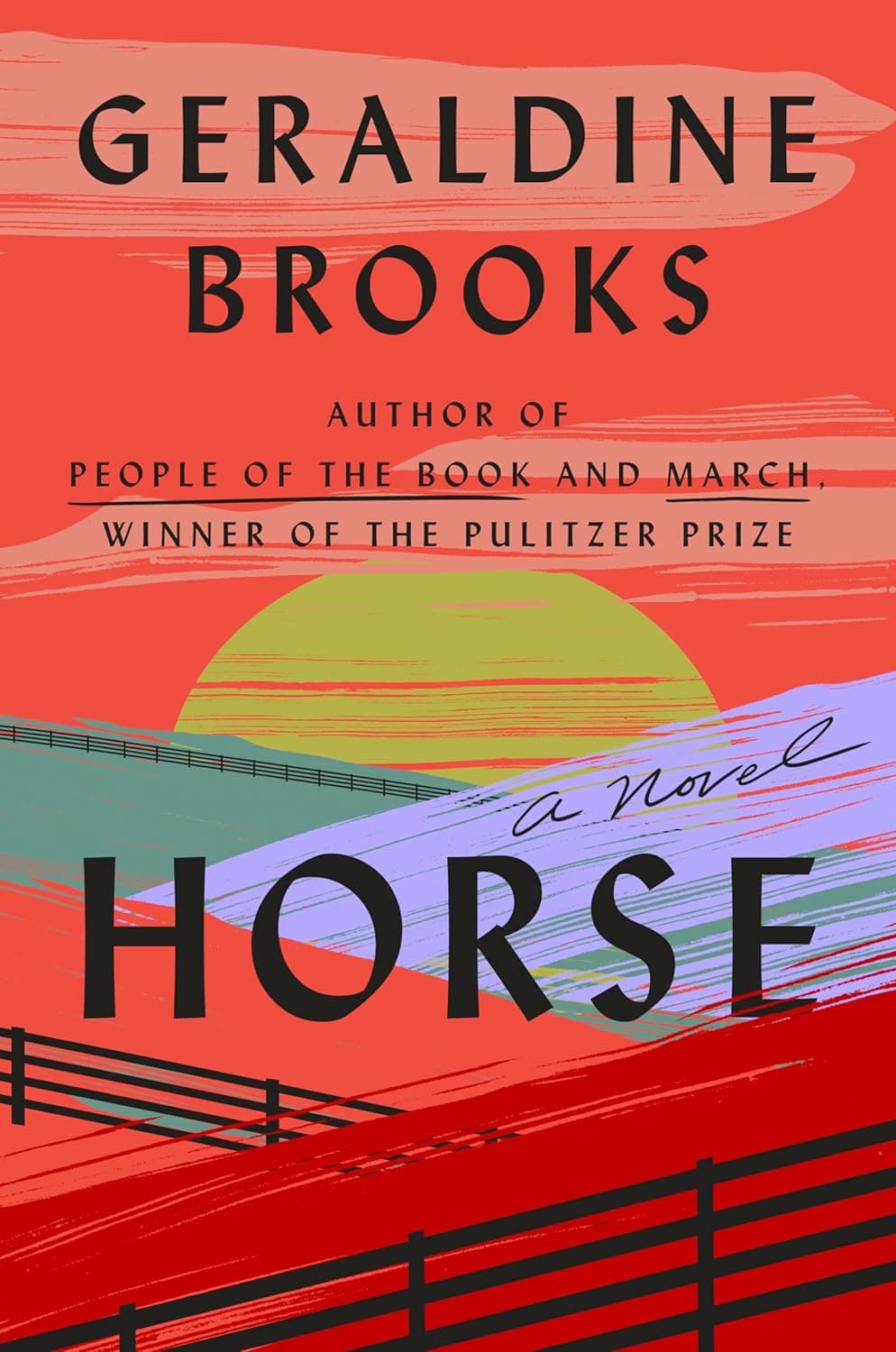
Opening
Across antebellum Kentucky and a modern Washington museum, a champion racehorse threads two timelines together. The chapters track the rise of Darley and the growing stakes for Jarret Lewis, while Thomas J. Scott and Jess reckon with the power—and limits—of art, memory, and conscience. The result is a vivid study of Race, Slavery, and Systemic Racism and Art, History, and Memory that binds past to present.
What Happens
Chapter 11: The Meadows, Lexington, Kentucky, 1852
Scott’s diary frames the day: he marvels at Jarret’s instinct with horses, admires his steadiness, and admits an ugly truth—if he had the means, he might buy Jarret. The thought sickens him, a sign of how slavery warps even well-meaning minds. Remembering a promise, Scott gives Jarret a small oil study of Darley and is struck by the boy’s radiant joy at owning something that’s truly his.
That night at the Warfields’ dinner, Scott waits to meet Cassius “Cash” Clay, Dr. Warfield’s notorious abolitionist son-in-law. Clay’s arrival chills the room; his wife, Mary Jane, and her sister, Anne, snub him. Dr. Warfield boasts he could profit by selling Jarret “south,” earning a tart rebuke from Mrs. Warfield and a cutting remark from Clay about the barbarity of the slave trade—tension that lays bare Race, Slavery, and Systemic Racism.
The evening curdles when Anne needles Clay with insinuations about an affair in Mexico, humiliating him in front of his daughter, Mary Barr Clay. Mary Barr bolts in tears. Clay tries to follow, but his wife stops him; he leaves anyway, and silence descends. Scott notes the fault lines: a family publicly powerful, privately fractured.
Chapter 12: The Meadows, Lexington, Kentucky, 1852
Now the lens tightens on Jarret. He breaks horses by listening—easing fear, building trust—unlike his father, Harry Lewis, who relies on force. Jarret’s method works; he becomes the Meadows’ go-to breaker, and Darley thrives under his hands. At home, Harry has purchased freedom for his new wife, Beth, draining the savings meant for Jarret’s manumission. Their unspoken bargain shifts: Darley’s speed must become Jarret’s path to Freedom and Agency.
That night, Jarret finds Mary Barr riding furiously, shaken from dinner. She vents—and blurts that her father “makes my mother the most complete slave I know.” Jarret, cut by her blindness to his reality, ends the conversation. Then Clay staggers in drunk and furious, pinning Jarret with questions about freedom. Facing a white, angry, intoxicated man, Jarret lies that he doesn’t want it. Clay snaps that he’s a liar, and the moment hangs perilously.
Mary Barr steps between them and insists Jarret belongs. Dismissed, Jarret retreats to his loft with shaking hands. The only ornament is Scott’s painting of Darley; he steadies himself staring at it, then loses himself in the training plan he’s devised. In that focus—and in the horse’s trust—he finds the solace of The Human-Animal Bond.
Chapter 13: Smithsonian Museum of Natural History, Washington, DC, 2019
In the museum’s attic, Jess, an Australian osteologist, and Catherine Morgan, a British equine vet, examine the articulated skeleton of the famed nineteenth-century racer. Dusty correspondence recounts the horse’s ceremonial burial and later acquisition; visitors come in awe—General Custer compares seeing the horse to “being in the sacred presence of royalty.”
A stereoscopic photograph stops Jess: the champion stands relaxed beside a young Black groom, his hand resting lightly on the withers, no lead rope in sight. Jess studies the image, then the skeleton—its withers, hocks, and pasterns are wrong. The living horse carries himself differently.
“I could do a whole lot better,” Jess says, proposing to disarticulate and rebuild the mount correctly. Catherine lights up; she can 3D-scan every bone for research on equine locomotion and injury. With a clear purpose, Jess commits to restoring the champion and honoring his story—an entry point to Art, History, and Memory.
Chapter 14: The Meadows, Lexington, Kentucky, 1853
A year later, Darley debuts in the Phoenix Stakes on a track drowned in mud. A gust triggers a false start; Darley and two others bolt. While the others pull up, Darley runs on for more than two miles before the jockey, John Porters, can stop him. Jarret is crushed—surely the horse has spent himself. Harry only shrugs: it’s a warm-up.
Harry’s right. In the first heat, Darley plows through the sludge and wins by several lengths; he takes the second heat just as handily. The purse totals 750 closer to Jarret’s freedom. Dr. Warfield accepts the silver plate in public, but the trainers’ praise falls on Harry.
Down at the stalls, an elegant New Orleans turfman, Richard Ten Broeck, studies Darley’s bone and muscle with hawk-eyed attention. He peppers Jarret with pointed questions about training routines and the Meadows’ management—courteous on the surface, calculating beneath. His interest feels like a hinge on which Darley’s future may swing.
Chapter 15: Smithsonian Museum of Natural History, Washington, DC, 2019
Leaving work, Jess sees a tall Black man at a bike identical to hers. Panic—and bias—flare; she rushes in to accuse him before he quietly points to her real bike a few racks away. Mortified, she stammers an apology. He rides off with a kind smile and a crisp English accent. Later, she learns his name: Theo. The shame lingers.
Over dinner, Catherine condemns modern racing’s cruelty—two-year-olds run hard, injuries masked with drugs, horses discarded when they fail—contrasting it with nineteenth-century stamina and four-mile heats. No wonder the old champion became a national idol; she recites a sentimental poem written in his honor. They sift the museum file and find a reproduction of an oil painting of the horse; Jess checks the back and discovers the original is also in the Smithsonian. They decide to track it down, another link in the chain of Hidden Histories and Erased Narratives they’re beginning to restore.
Character Development
These chapters crystallize how personal stakes, power, and conscience sharpen around the horse.
- Jarret Lewis: Empathy becomes method—he breaks fear, not bodies; Darley becomes his route to self-purchase. He learns to navigate danger with silence, even when cornered by Clay.
- Thomas J. Scott: A decent man caught in a corrupt system; he recognizes slavery’s rot in himself and responds with small acts that carry outsize meaning, like gifting the painting.
- Cassius “Cash” Clay: Charismatic and combative, he preaches abolition yet terrifies Jarret when drunk—a bundle of conviction, ego, and volatility.
- Jess: Brilliant in bone and artifact, she also confronts her own bias at the bike rack, a jolt that reframes her work with the past.
- Harry Lewis: Calm, strategic, and resolute; his quick read of the “warm-up” proves mastery. His goal never wavers: his son’s freedom.
- Mary Barr Clay: Fierce and naïve; her pain at home curdles into a statement that reveals privilege she doesn’t see.
- Richard Ten Broeck: Polite, exacting, and opportunistic; his attention signals shifting power around Darley.
Themes & Symbols
The novel binds the horse’s body to American history. In Kentucky, the enslaved create value they cannot own; Jarret’s skill powers Darley’s triumphs while white men hold the trophies. In Washington, scientists and curators misassemble that same body, literally distorting the past until Jess resolves to set it right. The modern bike incident mirrors the dinner table’s cruelty: racism persists across centuries, mutating from overt domination to reflexive suspicion and structural erasure.
Agency lives in motion. Jarret’s quiet training grants Darley freedom from fear, and Darley’s speed becomes Jarret’s chance to buy himself. Meanwhile, objects—Scott’s oil study, the stereograph, the skeleton, the lost painting—anchor memory. They let the present touch what power tried to bury and make visible the hands that steadied the horse in life.
- Symbol: Scott’s painting of Darley becomes Jarret’s rare possession and a private sanctuary—a small, beautiful proof that his bond with the horse exists and matters.
Key Quotes
“I could do a whole lot better.” Jess’s declaration catalyzes the restoration project. It’s a professional promise and a moral stance: to honor the horse—and the groom beside him—by correcting history’s careless assembly.
Dr. Warfield boasts he could sell Jarret “south.” The casual cruelty reveals how enslaved people are reduced to lines on a ledger. It hardens the chapter’s social chill and frames Clay’s abolitionism against the family’s profits.
“He makes my mother the most complete slave I know.” Mary Barr’s line exposes her limited understanding of bondage. She confuses emotional power with legal ownership, prompting Jarret’s hurt silence and highlighting privilege’s blind spots.
“You’re a liar.” Clay’s accusation corners Jarret after he denies wanting freedom. The moment shows the deadly bind of enslavement: tell the truth and risk violence, or lie and be condemned anyway.
A visitor likens seeing the horse to “being in the sacred presence of royalty.” The hyperbole captures the animal’s celebrity and explains why artifacts endure. Reverence for the horse contrasts with disregard for the Black labor that made such glory possible.
Harry calls the runaway “a warm-up.” His calm read of catastrophe becomes prophecy. The line distills his horsemanship and steadiness, the ballast to Jarret’s fear and the chaos of the day.
Why This Matters and Section Significance
These chapters set the stakes. In the past, Jarret’s future rides on Darley’s legs and on who controls the horse’s fate—Clay’s volatility and Ten Broeck’s ambition loom over both. In the present, Jess’s choice to rebuild the skeleton and hunt the painting powers the investigative plot while confronting how institutions and individuals misremember the past. Together, the timelines argue that the horse’s story—like America’s—is inseparable from the hands that trained him and the biases that obscured them. Restoring the body becomes a way to restore a history that still shapes the present.