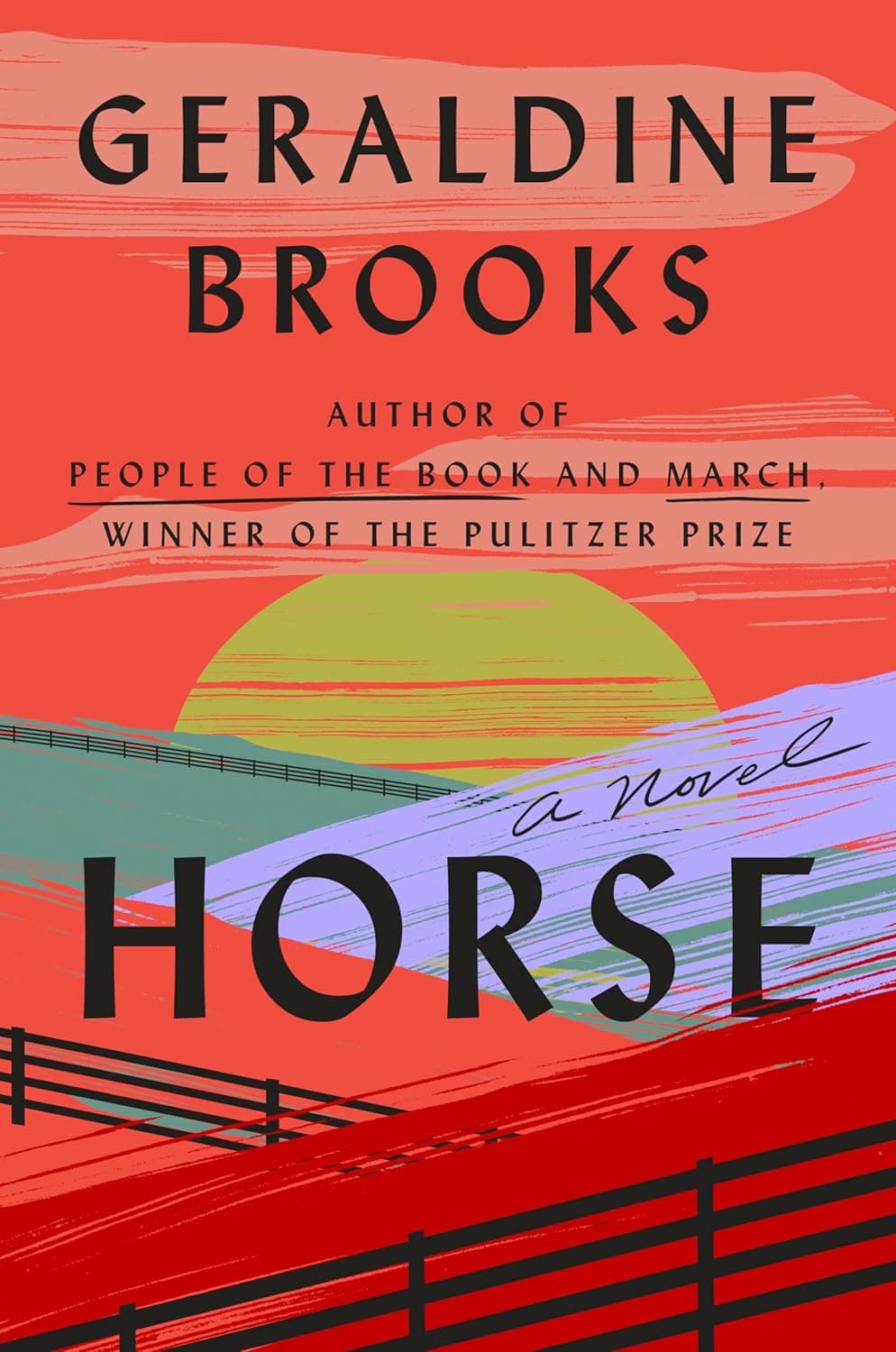
Opening
Two timelines lock into place. In 1850 Kentucky, Jarret Lewis quietly shapes the mind of a foal who will change American racing, while an itinerant artist notices the boy’s gift—and his peril. In the present, Jess and Theo stumble onto artifacts—a mislabeled skeleton and a forgotten painting—that pull hidden histories into view.
What Happens
Chapter 6: Warfield’s Jarret
At The Meadows, Jarret works beside his father, Harry Lewis, when Dr. Warfield arrives with Thomas J. Scott, a roving horse painter steeped in anatomy from abandoned medical studies. They inspect a newborn foal out of Alice Carneal by the late champion Boston. Scott studies the colt’s conformation so precisely that he impresses both Warfield and Harry; when Scott invokes the famed painting of the Darley Arabian, Warfield names the foal Darley on the spot.
Scott later sketches a gray named Glacier and invites Jarret’s thoughts. Jarret risks honesty, calling Glacier “fly”—smart, thoughtful, self-possessed—words that reveal how he reads a horse’s mind as much as its body. Scott says his task is not just likeness but the owner’s feelings reflected in the animal, a mirror of human aspiration. Then he blunders: he suggests the Lewises could simply ride a fast horse to freedom. Jarret flares at the naivete—the danger to fugitives, the complexity of his father’s status—and walks away.
Chastened, Scott apologizes and confides that Warfield plans to give Harry the foal as his wages. He offers to paint Darley in exchange for Jarret’s help. Over days, Jarret steadies Glacier while Scott measures cannon bones and shoulder angles, mixes color into subtle whites, and builds life with layered paint. Jarret learns to see: perspective, muscle and tendon, the way spirit leaks into stance. The work awakens in him a new attention to detail, binding the novel’s threads of Art, History, and Memory and The Human-Animal Bond.
Chapter 7: Jess
On the Cape, Jess retrieves the “Pilgrim Whale,” a 17th-century right whale skull exposed by storms. At Woods Hole, she meets marine mammal biologist Tom Custler. Among shipping crates and salt air, they trade notes on ownership wrangles and the bleak future of right whales—ship strikes, entanglement, human noise pressing them to the margins. Jess packs the immense, fragile skull with reverence.
Mid-drive back to Maryland, Jess fields a call from the Smithsonian Affiliates office: a visiting scholar needs to examine a horse skeleton tomorrow. Exhausted, she promises to find it. After unloading the whale, she digs through ledgers, tracing a paper trail to a forgotten move: the skeleton isn’t at the Support Center—it’s in the museum’s attic on the National Mall.
Chapter 8: Theo
Fresh off an article draft, Theo helps his elderly neighbor with a cart. Her wary recoil delivers the sting of casual racism. He runs off the anger in Rock Creek Park, then remembers the curbside horse painting he rescued weeks earlier. At Smithsonian magazine, he pitches his editor, Lior, an article about authentication; Lior sends him to the Luce Center to study equestrian painting.
There, Theo discovers Edward Troye. One canvas, Richard Singleton with Viley’s Harry, Charles and Lew, stops him cold: a champion horse flanked by three Black attendants rendered with specificity and quiet authority, especially the trainer “Viley’s Harry,” who stares back with steadiness and command. The work complicates Theo’s dissertation claim that white artists of the period never painted Black subjects as individuals. Yet the possessive title collapses the men into property. Theo resolves to find their names and lives, committing himself to the novel’s project of Hidden Histories and Erased Narratives.
Chapter 9: Warfield’s Jarret
Spring settles, and Jarret watches Darley and his irritable dam, joined by Mary Barr Clay, the bold daughter of Warfield’s emancipationist son-in-law. Scott’s whisper proves true: Warfield grants the foal to Harry as his year’s wages. On paper Warfield remains owner—Black men cannot own racehorses—but the gift gives Harry and Jarret real stakes, a tenuous form of Freedom and Agency.
Jarret vows to raise Darley without breaking his spirit. Boston’s violence, shaped by brutal handling, serves as a warning. Jarret gentles Darley to touch, halter, and grooming; after weaning, the colt shows brains and stamina, inventing races in the pasture and outlasting his rivals with clever surges. Jarret and Darley devise a fetch game with a lead rope, their trust scaffolding future speed.
Nights on the porch, Harry drills Jarret on pedigrees—the father’s insistence that memory outwork any ledger. Bloodlines braid in Jarret’s head until he dreams of a vast tree whose fruit are thoroughbreds. He plucks Darley, and the ancestors thunder in chorus, an almost spiritual claim on lineage he himself is denied.
Chapter 10: Jess
After work, Jess bikes to the museum to meet a British researcher, Dr. Catherine Morgan, and locate the horse skeleton. Security eyes Catherine’s instruments; Jess shepherds her up a narrow metal stair into a dusty attic crowded with forgotten wonders. On a mahogany plinth, a beautifully articulated 19th‑century skeleton sits mislabeled and ignored.
Catherine lights up, praising the workmanship and setting up sensors. Jess asks how she knows it’s a racehorse. Catherine points to the stark, typed label—“Horse”—and stares. Then she delivers the bolt: this is not any horse but the greatest racer in American turf history. The anonymous bones finally link to the legend rising in the past.
Character Development
The chapters deepen the trio of protagonists while sharpening the moral and historical stakes around them.
- Jarret Lewis: Sensitive, observant, and tactically cautious, he learns to name what he sees in horses without surrendering safety. His method—kindness, patience, mind first—becomes his edge.
- Harry Lewis: A respected horseman who navigates a narrow path of status and danger. He trains Jarret in bloodlines as a discipline of memory and survival.
- Jess: Competent, hands-on, and persistent, she follows the archival breadcrumb trail that resurrects a lost artifact.
- Theo: Intellectually rigorous yet emotionally open, he lets Troye’s canvas overturn his thesis and commits to recovering erased lives.
- Thomas J. Scott: Technically gifted and perceptive with animals, but blinkered about slavery; his apology reveals a willingness to learn that keeps trust alive.
Themes & Symbols
Across eras, the story tracks race, ownership, and the archives of power. Race, slavery, and systemic racism shape every choice in 1850—from Warfield’s “ownership of record” to Scott’s glib talk of escape—while modern microaggressions remind Theo that the lineage of prejudice persists. Hidden histories surface through objects: a painting that records without truly naming; a skeleton stripped of identity, filed as generic. Art, history, and memory overlap as disciplines and as metaphors—Scott paints essence as much as likeness, Theo reads a canvas as a document, and Jess decodes bones to restore a narrative. At the core lies the human–animal bond: Jarret’s empathy becomes a training philosophy and a form of resistance, crafting a champion without cruelty.
Symbols knit the timelines:
- The mislabeled skeleton embodies erasure—and the possibility of repair when expertise and care meet evidence.
- Troye’s painting testifies to presence while reproducing possession, a beautiful record with a violent title.
- Jarret’s pedigree tree renders lineage as living music, a counter-history of continuity he masters even as his own family line is fractured.
Key Quotes
“Fly.” Jarret’s single word for Glacier—intelligent, thoughtful, quietly independent—announces his philosophy: see the mind first, then the muscle. It resists the era’s mechanistic view of horses and prepares us for how he will shape Darley.
“Humanity seems to leave no room for anything other than itself.” Tom’s lament reframes the whale skull as more than a specimen; it’s evidence of a world reordered around human convenience. The line echoes forward to the museum attic, where a famous animal is reduced to “Horse.”
“Horse.” The label on the plinth crystallizes the book’s argument about erasure. Bureaucracy replaces identity, and the past becomes anonymous—until a researcher and a curator read the clues and restore a name.
“The horse.” Catherine’s stunned recognition pivots the plot. The definite article turns bones into a legend, fusing the timelines and charging Jarret’s quiet labors with historical consequence.
Why This Matters and Section Significance
These chapters lock the novel’s engine into motion. In the past, Jarret and Darley’s bond becomes the emotional heart that will carry a colt from anonymity to renown. In the present, Jess and Theo each grasp a fragment—the skeleton, the painting—that forces institutions and narratives to yield their secrets. The ending reveal creates bracing dramatic irony: we know the foal’s destiny while Jarret only trusts his methods. The result is a story about how greatness is made, how archives misplace it, and how people who care enough make it visible again.