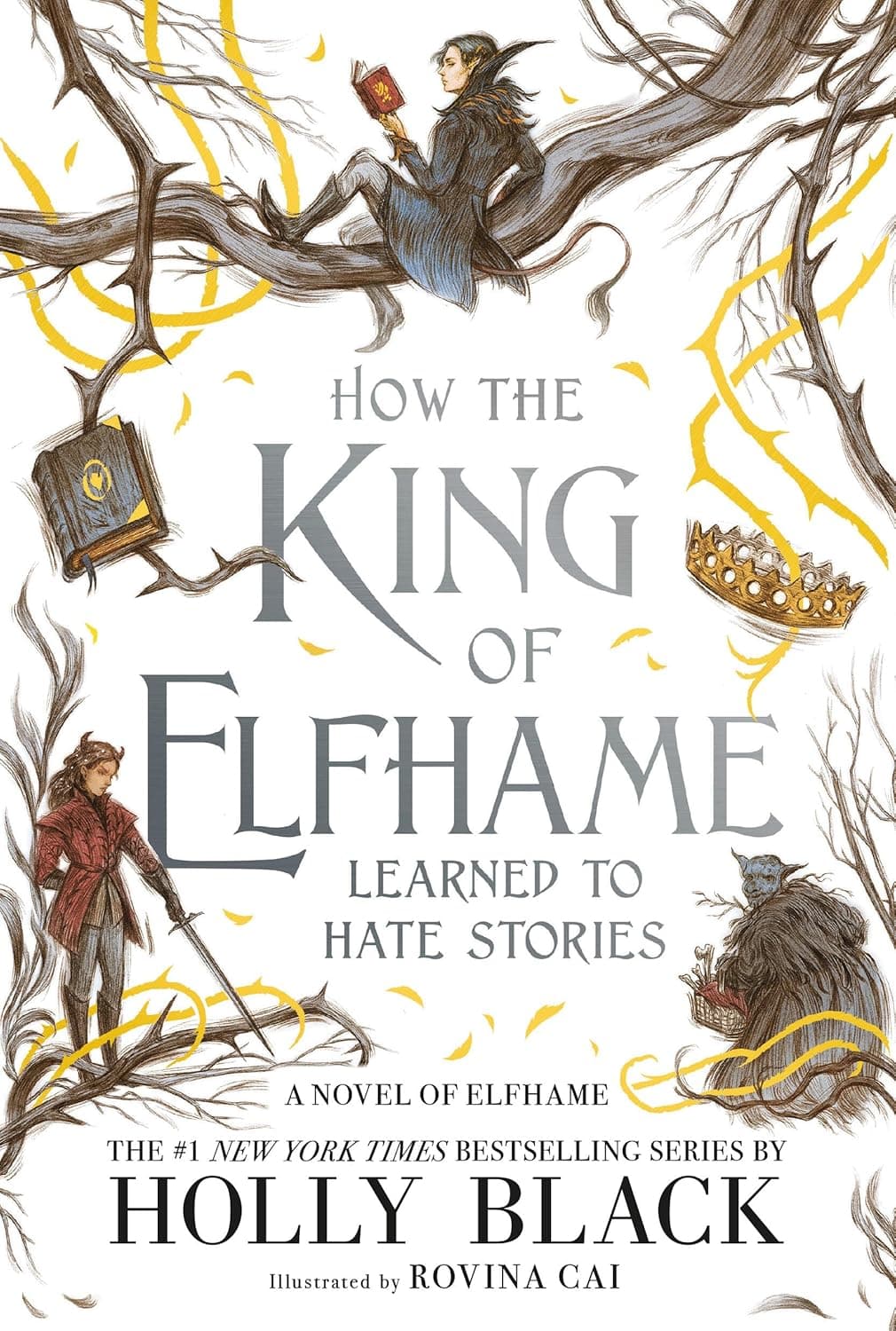
Locke
Quick Facts
- Role: A Gentry courtier and trickster; part of the “malicious little foursome” with Prince Cardan, Nicasia, and Valerian
- First appearance (in this collection): Early court scenes, embedded in Cardan’s circle of revelers
- Signature trait: Fox-red hair; a lover of merriment and stories used as social weapons
- Key relationships: Cardan (friend-turned-betrayer), Nicasia (brief lover and instrument of humiliation), Valerian (partner in cruelty)
- Targets of cruelty: The mortal sisters, including Jude Duarte, and Taryn
Who He Is
Bold, bright, and burning with curiosity, Locke is the court’s seductive storyteller—the boy who cannot lie but can tilt the truth until it serves his pleasure. He treats people the way he treats tales: as raw material to be shaped, recast, and embellished until the outcome delights him. In Cardan’s memories, Locke’s charm isn’t warmth; it’s a stage light. He laughs loudest at others’ pain and refashions ugliness into entertainment. His decisive betrayal—seducing Nicasia and taunting Cardan afterward—reveals the logic of his character: delight first, conscience never.
Personality & Traits
Locke’s personality is an art of misdirection: hedonism disguised as wit, cruelty lacquered with cleverness. He doesn’t change; he curates. The result is a figure who appears spontaneous but consistently chooses whatever will make the sharpest, shiniest story—no matter who bleeds.
- Hedonistic pleasure-seeker: Described as having “an endless appetite for merriment” (p. 83). He pursues entertainment at any cost and delights in chaos, even when it drives Cardan toward self-destruction.
- Manipulative storyteller: “He could no more lie than any of the Folk, but stories were the closest thing to lies the Folk could tell” (p. 113). Locke reframes events to justify his choices, shape group dynamics, and make cruelty feel like wit.
- Treacherous to friends: He seduces Nicasia and then mocks Cardan for minding, boasting it was “easy to make her love me” (p. 114). Betrayal, for Locke, is theater: thrilling because it shocks.
- Cruel spectator: He torments mortals, including Jude Duarte and Taryn, and “couldn’t hide his utter delight” at Cardan’s drunken rampage (p. 121). Others’ suffering is his favorite spectacle.
- Fickle and impulsive: After shattering Cardan and Nicasia, he quickly tires of Nicasia and moves on to a mortal girl (p. 133), using romance as a revolving door and humiliation as performance art.
Character Journey
Locke’s arc is purposefully static: a bright mask that never drops. From the first revels to the final taunts, he remains the same—devoted to the pleasure of a good story and the thrill of causing it. What changes is not Locke, but Cardan’s understanding of him. The discovery of Locke in Cardan’s own bed with Nicasia (p. 112) strips the romance from their escapades, revealing the rot behind the revels. Locke’s refusal to apologize, his narrative spin, and his quick pivot to a mortal lover (p. 133) transform him into the instrument of Cardan’s disillusionment, hardening Cardan’s cynicism and souring him on the very stories Locke adores.
Key Relationships
- Prince Cardan: Locke begins as one of Cardan’s only companions—someone who can turn their “lowliest exploits” into legends that make Cardan feel bigger than his shame. The bedroom betrayal guts that illusion, and Locke’s taunts push Cardan to armor himself in cruelty, a pattern explored in Cruelty as a Defense Mechanism.
- Nicasia: Locke weaponizes desire to humiliate both Nicasia and Cardan. Their brief, heated affair ends not with regret but with Locke’s boredom; his quick switch to a mortal lover confirms that affection, to him, is a prop to swap out once the scene has played.
- Valerian: With Valerian, Locke shares a taste for spectacle and petty torment. Together they amplify Cardan’s worst impulses, providing an audience and chorus that normalize cruelty as the court’s favorite game.
Defining Moments
Locke’s defining scenes showcase his talent for turning intimacy into injury and chaos into applause.
- The betrayal in Cardan’s bed (p. 112)
- What happens: Cardan finds Locke and Nicasia together in his own room, Locke’s “fox-red hair” damp with sweat.
- Why it matters: It detonates Cardan’s trust, collapsing friendship into spectacle and setting off Cardan’s emotional spiral.
- The taunting confrontation (p. 114)
- What happens: Locke refuses contrition, insisting Cardan and Nicasia were together “out of habit” and that it was “easy to make her love me.”
- Why it matters: He recasts wrongdoing as narrative inevitability, proving how stories can excuse harm.
- Delighting in Cardan’s rampage (p. 121)
- What happens: Locke “couldn’t hide his utter delight” as Cardan drinks and destroys.
- Why it matters: He’s not a friend restraining a spiral; he’s a spectator urging the main act onward.
- Moving on to a mortal girl (p. 133)
- What happens: Nicasia reveals that Locke discards her for a mortal, framing it as a calculated humiliation.
- Why it matters: Locke’s fickleness is strategic—each romance a new plot twist, each person a replaceable prop.
Symbolism
Locke personifies the perilous glamour of storytelling—the idea that narration itself can wound. In a world where the Folk cannot lie, he proves that selectivity, emphasis, and performance can approximate falsehood, turning tales into weapons. He is the living caution of The Power and Peril of Stories: stories that enthrall, excuse, and erase. It is through Locke that Cardan learns to hate them—because under Locke’s touch, stories don’t heal or entertain; they disguise betrayal.
Essential Quotes
One of Locke’s finest qualities was his ability to recast all their lowliest exploits as worthy of a ballad, told and retold until Cardan could almost believe that staggeringly better or thrillingly worse version of events. He could no more lie than any of the Folk, but stories were the closest thing to lies the Folk could tell.
— p. 113
This captures Locke’s central power: narrative control. He can’t invent facts, so he edits them—glossing cruelty into legend and, in the process, reshaping how Cardan sees himself.
“Fine,” Locke finally managed, his voice strange. “Fine, you mad, hedge-born coxcomb. But you were only together out of habit; otherwise, it wouldn’t have been so easy to make her love me.”
— p. 114
Locke reframes his betrayal as proof of inevitability and superiority. The insult and the logic work together to inflict maximum humiliation while absolving himself.
“An endless appetite for merriment.”
— p. 83
What sounds charming doubles as diagnosis. Locke’s hunger for delight becomes the pretext for every harm; pleasure is his ethic, and it tramples anyone in the way.
He “couldn’t hide his utter delight” at Cardan’s drunken and destructive rampage.
— p. 121
The phrasing exposes Locke’s role as gleeful spectator. Rather than check Cardan’s worst impulses, he amplifies them, proving his “friendship” is an audience, not a safeguard.