Opening
A taunting letter from the Mercedes Killer jolts retired detective K. William Hodges back to life. What begins as a cruel push toward suicide becomes the catalyst for a private hunt, as Hodges rediscovers his instincts, his discipline, and a purpose potent enough to eclipse despair.
What Happens
Chapter 6: This is the Bastard
Hodges studies the killer’s letter with professional skepticism, testing it against his memory of the case. Two details convince him it’s genuine: the killer wore a hairnet under a clown mask, and he sanitized the stolen Mercedes with bleach—facts never released to the public. Investigators smelled bleach in the car and found no hair in the recovered mask, making these unmistakable insider tells.
Electric with certainty, Hodges shakes off the lethargy that has defined his retirement. He tears an old grocery list off his legal pad and scrawls: “IS IT REAL?” Then, underneath, “HAIRNET. BLEACH.” He answers himself—“THIS IS THE GUY”—then scratches out “GUY” and writes “BASTARD.” The letter reverses the isolating drag of The Psychological Toll of Retirement and reignites his sense of Guilt and Responsibility to finish the case that once broke him.
Chapter 7: Perk
Hodges’ detective mind revs into methodical motion. He performs a forensic linguistic breakdown of the letter, heading a fresh page with observations: “ONE-SENTENCE PARAGRAPHS,” “CAPITALIZED PHRASES,” “FANCY PHRASES,” “UNUSUAL WORDS.” He spots deliberate misdirection—a blizzard of exclamation points and odd capitalizations (like “Lead Boots”) meant as “false fingerprints” to throw off profilers.
Amid the camouflage, two genuine tells emerge. First, a “smudged print”: the consistent use of numerals (“27,” “40”) instead of words—often an ingrained habit. Second, a clear fingerprint: the writer uses “perk” when he means “perp.” Hodges remembers his own childhood blind spot—writing “pitcher” for “picture”—and trusts the slip as an unconscious tic. The writer is smart, possibly well-read and computer-savvy (he spells “Wambaugh” correctly), but not flawless. The analysis sits at the intersection of Technology and Modern Crime and The Banality of Evil: a monstrous killer with ordinary, telltale habits.
Chapter 8: That Nice Negro Boy
Hodges forces himself outside and takes a long neighborhood walk, reconnecting after weeks of isolation. He stops in for coffee cake with Mrs. Melbourne, who fusses over his health and mentions the lawn looks “shaggy”—a quiet measure of how far he’s let things slide. She asks whether “that nice Negro boy,” Jerome Robinson, still works for him.
Privately amused, Hodges imagines how Harvard-bound, razor-sharp Jerome would react to the phrasing. He confirms Jerome still helps with the yard and with computer issues, underscoring how essential the teen is to bridging Hodges’s generational and technological gaps. The scene quietly marks Hodges’ re-entry into a world of routine, relationships, and responsibility.
Chapter 9: You Ole Hossy-Hoss
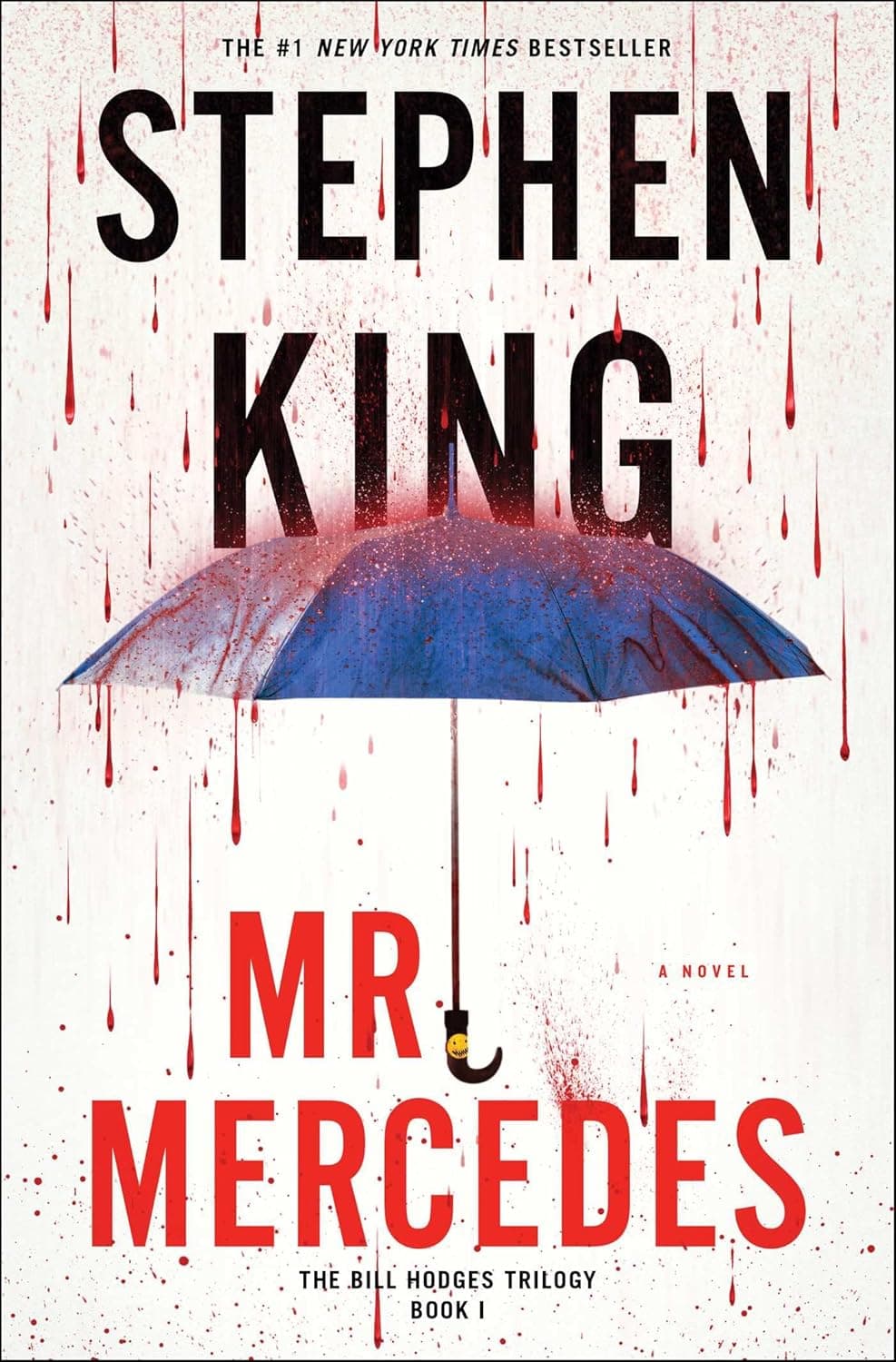
At his desk, Hodges pulls up old coverage of the City Center massacre and finds a suppressed photo: the Mercedes’s steering wheel with a grinning yellow smiley-face sticker slapped over the emblem. The image—cruel, jaunty, unforgettable—hardens his commitment to the hunt.
He calls his old partner, Pete Huntley. Their banter falls into place—needling warmth that speaks to years of trust. Hodges proposes lunch at DeMasio’s and gently maneuvers the plan so it’s just the two of them, keeping Isabelle out of it. Beneath the friendly catch-up lies his true aim: to discreetly extract information about the still‑open case. The ease between them makes Hodges’s deception weightier—and signals he’s stepping beyond official channels.
Chapter 10: The Happy Slapper
Watching the evening news, Hodges no longer drifts; he engages, evaluating suspects and sharpening a working profile: a well-spoken, meticulous white man who blends in. Then he performs a small ritual with enormous weight. He takes his father’s .38—the gun he’d been eyeing for suicide—and locks it in his safe. Its threat dissipates with a click.
Thinking ahead to DeMasio’s, in a rougher part of town, he debates carrying a firearm but decides that showing up armed to meet his ex-partner as a civilian crosses a line. Instead, he selects the “Happy Slapper,” a sock weighted with ball bearings—retirement-gag turned practical insurance—aligning with his new role as a private citizen working in the gray of Vigilantism and Justice Outside the Law. He drifts to sleep satisfied: the killer’s taunt opened a channel, and Hodges intends to use it. The hunter is now the hunted.
Character Development
Hodges reclaims his professional identity piece by piece—first with a question, then with evidence, then with a plan. Around him, allies and anchors reappear, highlighting both what he lost in retirement and what he still has to draw on.
- K. William Hodges: Moves from numb, suicidal drift to energized purpose. His legal-pad ritual, targeted research, and careful manipulation of a lunch meeting show his instincts are intact—and sharpening.
- Pete Huntley: Loyal, plainspoken, and affectionate in his ribbing. Their rapport underscores deep trust, making Hodges’s decision to keep secrets ethically thorny.
- Jerome Robinson: Offstage but pivotal. He represents competence, ambition, and tech fluency—resources Hodges knows he needs as the case becomes increasingly digital.
Themes & Symbols
The chapters pivot the book from stasis to pursuit, challenging the suffocating weight of the Psychological Toll of Retirement by reintroducing responsibility, risk, and community. Purpose becomes Hodges’s lifeline: where retirement bred isolation, the case demands connection—calls, meetings, research, and the humility to seek help.
The cat-and-mouse frame of Good vs. Evil crystallizes. The killer’s glee (the smiley sticker) meets Hodges’s grim resolve (locking the .38 away). Hodges respects the killer’s intelligence without inflating his mystique, using linguistic forensics to strip away the mask—an approach that fuses old-school police craft with contemporary profiling and tech, returning to the terrain of Technology and Modern Crime and the small, telling ordinariness invoked by the Banality of Evil.
Symbols:
- The .38 revolver: Transforms from an instrument of despair into an inert object. By locking it up, Hodges chooses life—and a fight.
- The smiley-face sticker: Cheerful facade pasted over carnage, branding the killer’s taunting sadism.
- The “Happy Slapper”: A compromise weapon, fitting his civilian status and moral gray zone as he works outside formal authority.
Key Quotes
“IS IT REAL?” Hodges’s first written question reframes the letter as evidence rather than a suicide note. The moment marks the return of his investigative mindset and the beginning of his reversal from victim to actor.
“HAIRNET. BLEACH.” Two words, two secrets. This note-runner captures how small, protected facts can authenticate a source—and how Hodges builds certainty from tiny, incontrovertible details.
“THIS IS THE GUY.” (scratched out to “BASTARD.”) The correction signals anger and moral clarity. Naming the killer “BASTARD” strips away neutrality; Hodges commits emotionally as well as professionally to the hunt.
“Perk” for “perp.” The killer’s unconscious misspelling functions like a fingerprint—ordinary, unglamorous, and diagnostic. Hodges reads it as a stable, traceable error that survives the killer’s conscious misdirection.
Why This Matters and Section Significance
These chapters deliver the novel’s major turning point: the killer’s provocation backfires, reviving Hodges’s will and work. The investigation shifts from cold ashes to active pursuit, establishing the book’s central stakes and its moral arena. By stepping outside official channels—locking away the suicide gun, selecting the “Happy Slapper,” and quietly pumping Pete for intel—Hodges claims agency and sets the rules of engagement for the battle ahead. The killer wanted a victim; he got an adversary.