What This Theme Explores
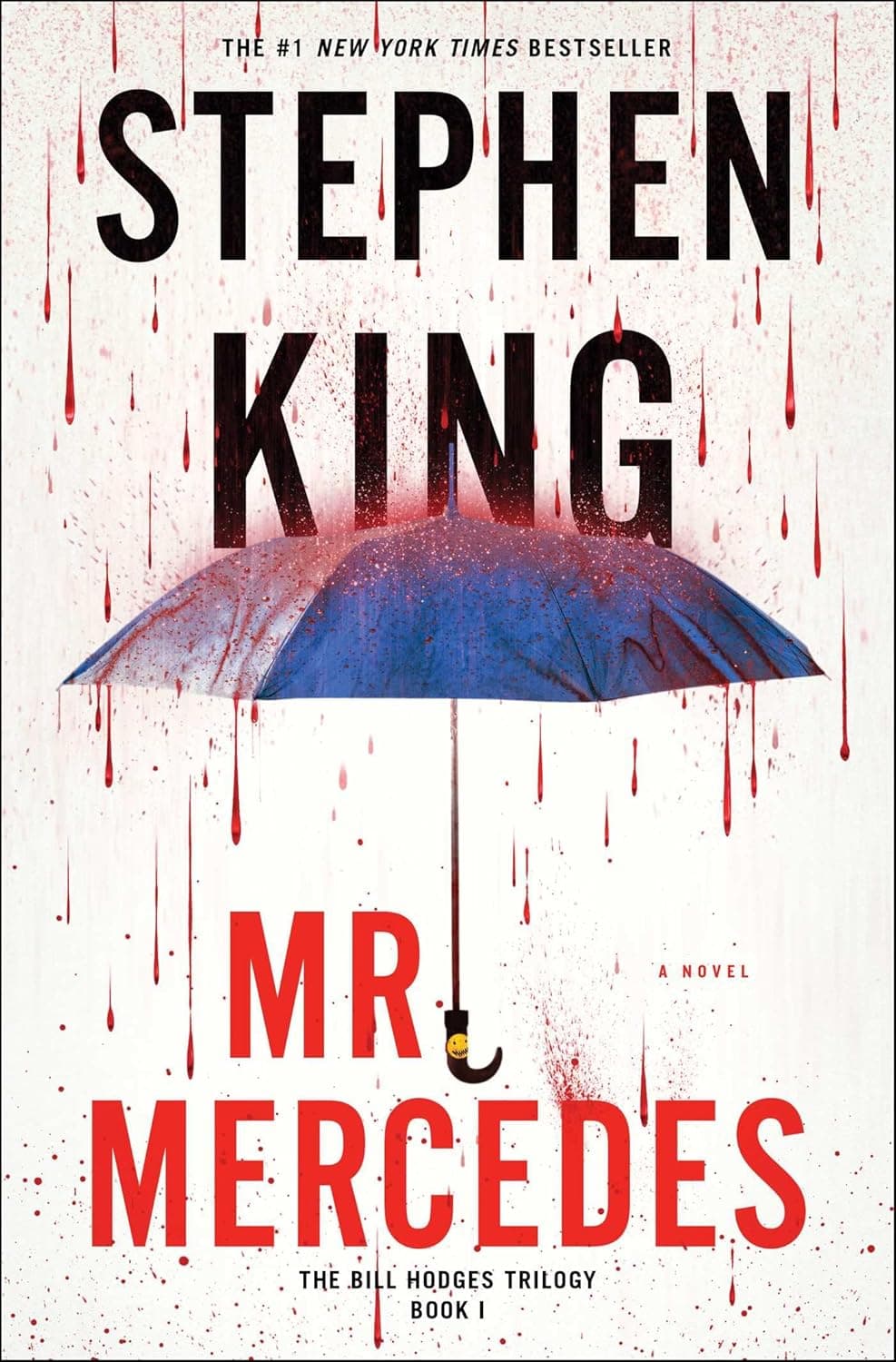
Guilt and Responsibility in Mr. Mercedes probes how people live with blame—deserved or not—and what they do with it. The novel distinguishes between legal culpability and moral accountability, showing how guilt can cripple some while galvanizing others. It asks whether responsibility is something thrust upon us or something we choose, and whether owning our part in tragedy can be redemptive. By pitting fragile consciences against a killer who feels none, King tests the limits of conscience as both burden and compass.
How It Develops
The theme opens in the wake of the City Center Massacre, where Olivia Trelawney is crushed by the idea that her negligence armed a murderer. Her shame isolates her, making her susceptible to manipulation. At the same time, retired detective K. William Hodges is hollowed out by professional failure and suicidal ideation, a spiraling paralysis traced in the Chapter 1-5 Summary. Guilt here is a weight that sinks rather than steadies.
In the middle stretch, Brady Hartsfield turns guilt into a weapon. His letters push Olivia toward suicide and aim to shove Hodges the same way. Instead, the taunts flip a switch in Hodges: the pain of failure becomes a mandate to act. That resolve is given shape when Janelle "Janey" Patterson hires him out of loyalty to her sister, reframing guilt as shared duty. Hodges’s quiet decision to put away his father’s gun in the Chapter 6-10 Summary marks the pivot from self-destruction to accountability.
By the end, responsibility demands sacrifice. Janey’s death in a car bomb meant for Hodges intensifies his guilt, but it no longer immobilizes him. He channels it into a collective effort as he, Jerome Robinson, and Holly Gibney shoulder responsibility to stop Brady, culminating in the tense standoff detailed in the Chapter 141-145 Summary. Brady’s downfall is ironically ethical in shape: though he claims to feel no remorse, he craves recognition—an insistence on being credited with his crimes that exposes and defeats him.
Key Examples
-
Olivia Trelawney’s suicide shows guilt’s lethal edge when exploited. Brady’s letter mimics sympathy while blaming her for the deaths, isolating her inside a narrative of culpability she cannot escape.
Mrs. Trelawney, why oh why oh why did you leave your key in your ignition? If I had not seen that, walking one early morning because I could not sleep, none of this would have happened. If you hadn’t left your key in your ignition, that little baby and her mother would still be alive. I am not blaming you, I’m sure your mind was full of your own problems and anxieties, but I wish things had turned out different and if you had remembered to take your key they would have. The faux absolution (“I am not blaming you”) intensifies blame, turning her conscience into Brady’s murder weapon.
-
Brady’s manifesto on conscience frames the thematic conflict.
Most people are fitted with Lead Boots when they are just little kids and have to wear them all their lives. These Lead Boots are called A CONSCIENCE. I have none, so I can soar high above the heads of the Normal Crowd. By casting conscience as ballast, Brady opposes empathy to power, revealing why he can inflict guilt without feeling it—and why his need for credit is the chink in his armor.
-
Hodges’s revived purpose proves responsibility can reframe guilt.
His last thought before he goes under is of how Mr. Mercedes’s poison-pen letter finished up. Mr. Mercedes wants him to commit suicide. Hodges wonders what he would think if he knew he had given this particular ex–Knight of the Badge and Gun a reason to live, instead. At least for awhile. The same letter designed to end a life becomes a lifeline; Hodges converts blame into duty and despair into direction.
-
After Janey’s death, Hodges’s grief morphs into action.
He thinks, This is my fault. If I’d used my father’s gun two weeks ago, she’d be alive. Unlike his earlier, numbing guilt, this acute self-reproach compels him to risk everything to prevent further harm.
Character Connections
K. William Hodges embodies the theme’s arc: from inert guilt to active responsibility. His initial failure festers into self-loathing, but Brady’s taunt reorients his conscience toward a mission. Janey’s death intensifies his burden, yet he refuses the escape of despair; instead, he reclaims agency by acting, revealing responsibility as a path to meaning, not a sentence.
Olivia Trelawney is the theme’s stark warning. Her anxiety and isolation make her vulnerable to public shaming and Brady’s calculated blame. She illustrates how unprocessed guilt—especially when stoked by cruelty—can swallow a life, and how social narratives of fault can become fatal.
Brady Hartsfield is the anti-conscience around which the others orbit. He treats guilt as a tool and conscience as a handicap, granting him tactical freedom but spiritual emptiness. His compulsion to be acknowledged, however, functions like a twisted sense of responsibility, exposing him when secrecy would have kept him safe.
Janelle “Janey” Patterson channels responsibility as loyalty and love. Her insistence on clearing Olivia’s name transforms family obligation into moral action, jumpstarting the investigation and modeling responsibility as care rather than punishment. Her death redefines the stakes and clarifies what responsible action must protect.
Symbolic Elements
The Gray Mercedes concentrates the novel’s moral weight. To Olivia, it is shame on wheels; to Hodges, a monument to failure; to Brady, a trophy and instrument. As it moves through hands and purposes, it tracks guilt’s transfer and responsibility’s claim.
Hodges’s father’s .38 is the emblem of escape versus engagement. Early on, it tempts Hodges with the clean simplicity of oblivion; setting it aside marks his choice to live with guilt by acting on responsibility rather than fleeing it.
Under Debbie’s Blue Umbrella, the anonymous chat site, is a digital confessional turned torture chamber. Brady weaponizes confession, forcing victims to accept a script of guilt; Hodges later uses the same space to contest that script, showing how responsibility can reclaim even corrupted tools.
Contemporary Relevance
In an era of instant outrage and online shaming, the novel’s portrait of blame’s velocity—and the isolation of those targeted—feels unsettlingly current. Olivia’s collapse mirrors how public narratives can crush private people, while Hodges’s turn toward action echoes contemporary calls to transform guilt into constructive accountability. The story also interrogates system failures: when institutions can’t or won’t deliver justice, individuals face fraught choices about acting anyway. Finally, Brady’s sociopathic hunger for notoriety prefigures the spectacle-seeking logic behind certain real-world atrocities, underscoring the ethical urgency of how we assign—and deny—responsibility.
Essential Quote
His last thought before he goes under is of how Mr. Mercedes’s poison-pen letter finished up. Mr. Mercedes wants him to commit suicide. Hodges wonders what he would think if he knew he had given this particular ex–Knight of the Badge and Gun a reason to live, instead. At least for awhile.
This moment crystallizes the theme’s pivot: a weaponized guilt-letter becomes the spark of responsibility. Hodges’s choice to live is not a denial of guilt but a decision to answer it, transforming blame from ballast into motive power. In that conversion lies the novel’s moral: responsibility is the only way through guilt that does not destroy.