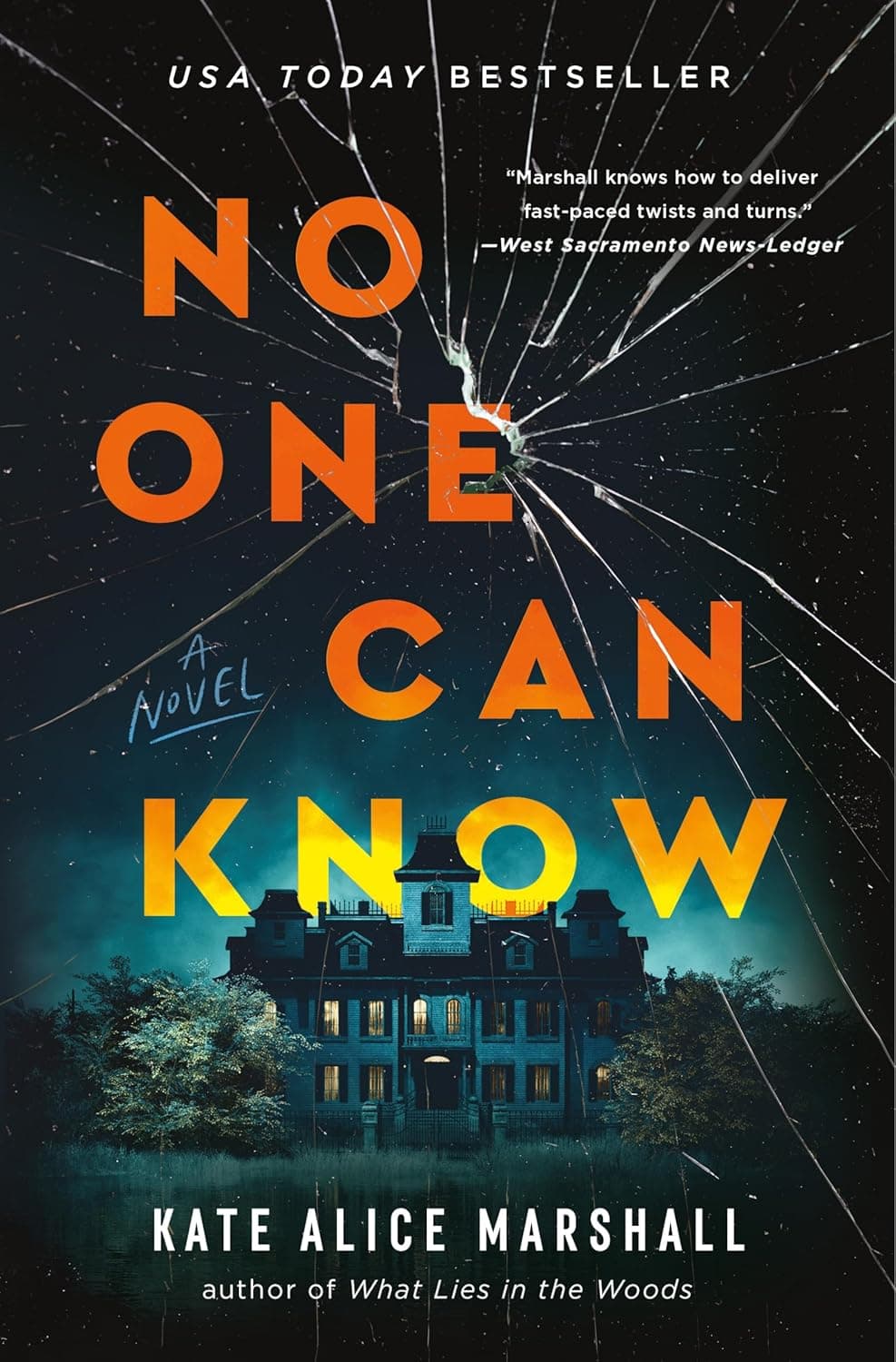
Opening
The novel’s climax cracks the Palmer family open. A riverbank standoff, a hospital’s “official story,” a recovered memory, and a confession finally surface the truth—and then bury it beneath a new lie. The sisters walk free, bound together by a pact that costs them more than prison ever could.
What Happens
Chapter 51: The Riverbank
Dragged from the river’s pull, Emma Palmer staggers onto the mud as Juliette "JJ" Palmer hauls her up—and Rick Hadley steps from the trees with a gun. He demands the flash drive and spills what he thinks will save him: he and Randolph Palmer kill Kenneth Mahoney after Mahoney’s blackmail. He insists he doesn’t kill the Palmers. He admits to an affair with Irene Palmer and says he gives her Logan Ellis’s gun because she claims she fears Randolph. He tries to turn Emma against JJ, pointing to her presence at both crime scenes and offering Emma a deal if she hands over the drive.
Daphne Palmer arrives, pretending to be a passerby drawn by the cars at the river. The distraction is enough for Emma to lunge at Hadley. JJ wrenches the gun away and hurls it into the river, but Hadley overpowers Emma and chokes her. Daphne, calm and precise, lifts a rock and strikes Hadley three times, dropping him.
Sirens rise. Daphne says she tracks Emma’s phone to find them. In the stunned quiet, the sisters realize Hadley never has the flash drive. Daphne leans in and breathes the family mantra into Emma’s ear: “No one can know.”
Chapter 52: The Official Story
Emma wakes in a hospital bed as Hadley fights for his life. Police search Hadley’s garage and uncover the white-gripped revolver used to kill the Palmers and Nathan Gates, plus the missing flash drive. On it: proof of Randolph’s criminal empire and photos of Randolph and another man—identified as Hadley—kidnapping Kenneth Mahoney.
The police assemble a clean, convincing narrative. They say Hadley murders Randolph to protect himself from exposure. When Irene confronts him, he kills her in a struggle, then flees, leaving the gun for JJ to find. Years later, Nathan discovers the drive; Hadley silences him and then goes after the sisters to tie off loose ends. Daphne’s riverbank attack becomes self-defense. The Palmer sisters are cleared. Emma recognizes the truth under it: this story is tidy and useful—and false.
Chapter 53: The Haunting Ends
JJ returns to the family home, the “gravity well” that always pulls them back. After she gives her statement, the river’s terror unlocks what she can’t face for fourteen years. She didn’t find her parents dead. She sees Irene shoot Randolph, then turn the gun on herself, and JJ stands there, unable to move or speak.
The memory reframes everything. JJ believes Irene kills Randolph to protect her daughters after Randolph discovers the evidence she gathers against him. With this truth, JJ’s guilt dissolves. Grief and guilt have been fused for so long that when guilt is gone, the haunting ends. She is ready to step forward, finally separate from her parents’ end.
Chapter 54: No More Secrets
All three sisters gather in the living room. Emma gives them a rule: “Here, with the three of us, we tell the truth. All of it.” JJ goes first and shares the recovered memory of Irene’s suicide. Daphne immediately casts doubt, citing JJ’s history with drugs and unreliable recollections.
Emma refuses the deflection. She validates JJ’s memory and then slices through the police narrative. On the riverbank, Hadley begs them for the drive—proof he never has it. If he never has the drive, he can’t have killed Nathan because of it. The official story collapses. Emma turns to Daphne: “No more secrets. Not between us... Tell me.”
Chapter 55: The Protector
Daphne confesses. She goes to the carriage house to find the gun and the flash drive. Nathan catches her there; she overhears him on the phone with his mistress, planning to leave Emma, take her money, and fight for full custody. Daphne decides he is a threat to Emma and the baby. They struggle over the gun. Daphne is stronger. Nathan dies.
She takes the gun and the drive and chooses to create the answer their family never gets fourteen years ago. She frames Hadley—a guilty man in other ways—using access she gains as a dog walker for his wife under a false name. She plants the gun and the drive in his garage. In her mind, it’s a necessary evil: solve the new murder, resolve the old trauma, and protect her sisters. She calls it protection—finishing the job Emma starts years ago.
Character Development
The sisters finally step into their true roles: one absolved, one awakened, one unmasked. Their bond hardens into a pact that keeps them safe and damns them together.
- Daphne Palmer: Drops the façade of meddling sister to reveal a calculating protector. She kills Nathan, engineers a frame job, and embraces a moral code that prizes family safety over law or truth.
- Emma Palmer: Moves from passive survivor to the family’s truth-seeker. She detects the fatal flaw in the official story and forces Daphne’s confession, redefining what protection means.
- Juliette “JJ” Palmer: Replaces corrosive guilt with clarity. Remembering Irene’s suicide frees her from the haunting that shapes her life.
- Rick Hadley: Exposed as a corrupt accomplice and manipulator but not the Palmers’ killer. He becomes the perfect scapegoat—guilty enough to be believable, convenient enough to carry Daphne’s plan.
Themes & Symbols
These chapters complete the cycle of Secrets and Lies. The sisters accept a polished public fiction to protect a private truth—choosing silence as survival. “No one can know” evolves from childhood mantra into a binding contract that secures their freedom and stains it. The choice for secrecy deepens their complicity, proving that concealment doesn’t end violence; it extends its life.
Sisterhood and Shifting Loyalties pull the sisters past conventional morality. Daphne’s murder of Nathan is an act of love sharpened into violence. Emma’s insistence on truth risks their safety for the first time, and JJ’s reclaimed memory reshapes the family’s moral map. The ending turns on Truth vs. Perception: the police’s “truth” is tidy theater, while the sisters live with the dangerous, private version. Beneath it all lies Family Trauma and Dysfunction: Irene’s murder-suicide births a second-generation pattern—solve pain with secrets, protect love with harm, and call it justice.
Key Quotes
“No one can know.”
This whisper seals a new pact. The mantra that once hides Emma’s lie now binds all three sisters to a darker secrecy—safety through silence, solidarity through complicity.
“Here, with the three of us, we tell the truth. All of it.”
Emma tries to break the family cycle. The pledge is sincere—and immediately tested—showing how fragile truth is when protection threatens to shatter it.
“No more secrets. Not between us... Tell me.”
Emma crosses from protector-by-lie to protector-by-truth. The demand forces Daphne’s confession and shifts the family’s power dynamics.
“It wasn’t like he was innocent. He’d helped kill Kenneth Mahoney, hadn’t he? He’d tried to pin the Palmers’ deaths on Emma... Maybe he didn’t deserve to die. Hardly anyone did, really. But some deserved it more than others.”
Daphne’s moral calculus is chilling. She doesn’t act in panic but in judgment, justifying a frame job and a death by weighing relative guilt—utilitarian logic applied to life and justice.
Why This Matters and Section Significance
These chapters deliver answers and change the questions. JJ’s recovered memory solves the original mystery, while Daphne’s confession rewrites the present. The police’s clean narrative frees the sisters legally but traps them ethically, proving that the line between protection and harm is perilously thin.
The ending cements the novel’s core: trauma is cyclical, and the tools used to survive it—lies, love, loyalty—can become weapons. The Palmers win their freedom at the cost of a new, shared burden. Justice, truth, and family loyalty no longer align, and the sisters choose family—whatever it takes.