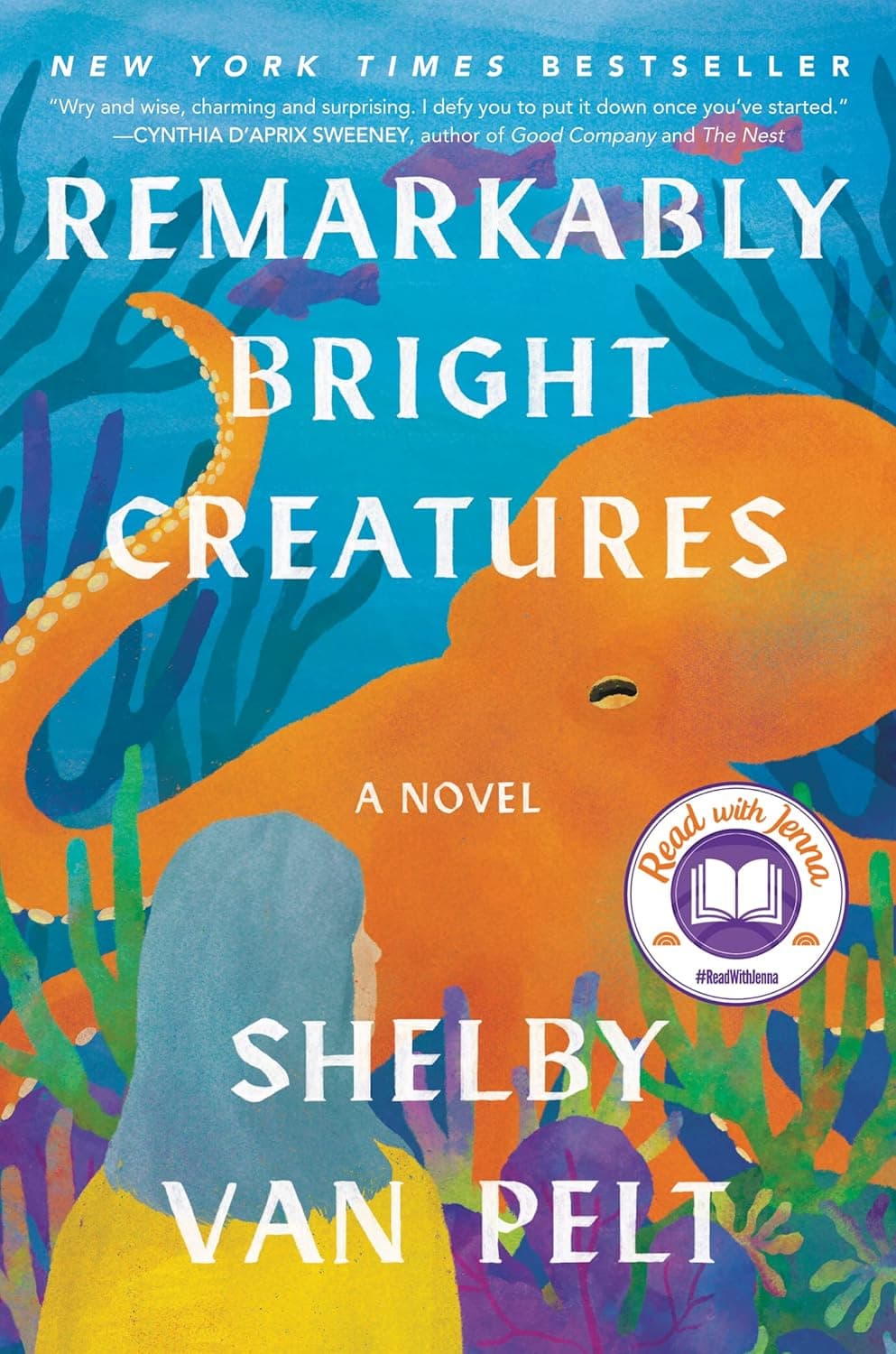
Opening
Trust and truth finally surface as Tova Sullivan, Cameron Cassmore, and Marcellus edge toward revelation. Play turns to purpose, and an ordinary object becomes the linchpin of identity and belonging. These chapters shift the story from quiet coincidences to decisive acts that force long-buried secrets into the light.
What Happens
Chapter 41: An Unexpected Treasure
Tova coaxes Cameron back to Marcellus’s tank. This time, the giant Pacific octopus shows off: he wraps one arm around Cameron’s wrist while another taps his opposite shoulder, the classic misdirection that makes both of them laugh. When Cameron spots something glinting in the sand, Marcellus obliges and delivers a silver earring. Tova calls him a “treasure hunter,” recounting how he once returned her lost key—a playful reminder of Intelligence in Unexpected Places.
Later, while they clean, Tova chides Cameron for botching a trash can liner—“Didn’t your mother teach you to do things right the first time?”—and hits a nerve. Cameron says he “never had a mother,” explaining her addiction and absence since he was nine. The apology that follows softens into ease; he tells Tova about Aunt Jeanne, jokes that she also can’t manage a trash liner, and Tova’s laughter carries down the hall. Their banter and shared vulnerability turn routine shifts into a bond rooted in Loneliness and Connection.
Chapter 42: Day 1,349 of My Captivity
Marcellus narrates his impatience. He sees what the humans can’t: if Tova knew Cameron’s last name and date of birth, she would understand everything. Observing human bodies and patterns for years, he calculates that Cameron must have been conceived near the night of Erik Sullivan’s death—numbers and instincts converging into certainty.
But time presses on him. He senses Tova’s “hole in her heart,” and with his own three hearts failing, he refuses to let the story end unresolved. Facing his Aging and Mortality, he decides that observation is no longer enough. He will act.
Chapter 43: Some Trees
Tova climbs into her attic and sorts the relics of a lifetime, the physical strain mirroring her emotional inventory of Grief and Loss. She imagines her family as a dying trunk with no new branches and can’t shake the ghost of Erik’s unnamed girlfriend from thirty years ago. Drained, she heads to the Shop-Way, hoping for a friendly word with Ethan Mack.
In the aisle, Sandy—Adam Wright’s girlfriend—apologizes for Adam’s behavior and offers a name: Daphne. She says Daphne attended their high school. Ethan overhears and stills. Shaken, Tova hurries home, pulls Erik’s yearbook, and flips to the index. One entry. Daphne A. Cassmore. The discovery fuses past to present and accelerates the novel’s engine of Secrets and Uncovering Truth.
Chapter 44: An Impossible Jam
Cameron works the evening shift alone; Tova is absent. He catches Marcellus mid-escape and ties the tank lid with twine, then takes a call from his friend Elizabeth, who’s on bed rest before her baby’s birth. He tells her about Sowell Bay, the steadiness he’s found, and the glow of a new romance with Avery—threads of a life beginning to cohere.
Then Terry appears, insisting Cameron finally complete his long-overdue hiring forms and provide another copy of his driver’s license. The aquarium copier balks with a maddening “Drawer C” paper-jam error—on a copier with no Drawer C. Frustrated, Cameron leaves his actual license on Terry’s desk with the paperwork, intending to grab it the next night. The small decision unknowingly leaves the clearest proof of his identity within Marcellus’s reach.
Chapter 45: Day 1,352 of My Captivity
Twine is nothing. After closing, Marcellus slips free and glides across cold floors, ignoring the siren scent of geoduck clams as he beelines to Terry’s office. He spots Cameron’s driver’s license—name and birthdate—the two facts Tova needs. This is the key.
The return trip nearly breaks him. Weak and chilled, he imagines dying on the tile, but he keeps moving. In the lobby, he tucks the plastic card beneath the sea lion statue’s tail, a spot only Tova cleans with meticulous care. Spent but triumphant, he ensures the truth of Found and Biological Family will finally surface.
Character Development
These chapters convert quiet rapport into life-changing connection while elevating Marcellus from observer to architect.
- Cameron Cassmore: Drops his defensive sarcasm and reveals childhood abandonment, allowing real intimacy with Tova. He begins to act responsibly at work, contends with paperwork, and confides in friends—clear steps toward stability and self-knowledge.
- Tova Sullivan: Turns from simply enduring grief to actively pursuing answers. The attic purge sparks movement, and Daphne’s name ignites her purpose, shifting her from resignation to resolve.
- Marcellus: Moves from mischievous collector to moral agent. His empathy, biological insight, and willingness to risk his life transform him into the story’s decisive force.
Themes & Symbols
Truth doesn’t arrive by accident; it’s assembled. Secrets surface piece by piece—an earring, a name, an ID—until the pattern becomes undeniable. The chapters show how found bonds can prepare characters to receive biological truths: the deepening friendship steadies Tova and Cameron so the revelation can heal rather than shatter.
Grief and mortality press in from both sides. Tova confronts the stored weight of her past; Marcellus feels his body failing and chooses purpose over comfort. Intelligence and empathy blur species lines, as the octopus understands what the humans cannot yet say, while loneliness loosens its grip through acts of care and attention.
Symbols:
- The Attic: A physical archive of memory and sorrow—sorting it mirrors Tova’s decision to curate which parts of her past she’ll carry forward.
- The Driver’s License: A compact proof of identity—name and date—turning subjective suspicion into objective truth.
- Marcellus’s “Collection”: Trinkets recast as tools; what once amused becomes evidence, culminating in a sacrificial act of guidance.
Key Quotes
“Didn’t your mother teach you to do things right the first time?”
Tova’s offhand reprimand exposes a hidden wound. The line triggers Cameron’s confession and pivots their relationship from workplace banter to genuine intimacy.
“I never had a mother.”
Cameron’s blunt reply collapses his defensive facade. Naming the loss invites Tova’s empathy and begins to rewrite his story from abandonment to connection.
“Drawer C.”
The copier’s impossible error reads like fate disguised as bureaucracy. This mundane obstacle creates the exact conditions for Marcellus to intercept the crucial clue.
A “hole in her heart.”
Marcellus’s phrase captures Tova’s enduring grief with startling tenderness. His outsider’s empathy motivates the risk he takes to heal what loss has hollowed out.
Why This Matters and Section Significance
These chapters form the narrative’s fulcrum. Tova uncovers Daphne’s name; Cameron inadvertently leaves his identity exposed; Marcellus closes the circuit by placing the proof where Tova will find it. Chance yields to choice, and observation becomes action. By aligning found family with biological revelation, the novel readies its characters—and the reader—for a reckoning that promises not just answers, but belonging.