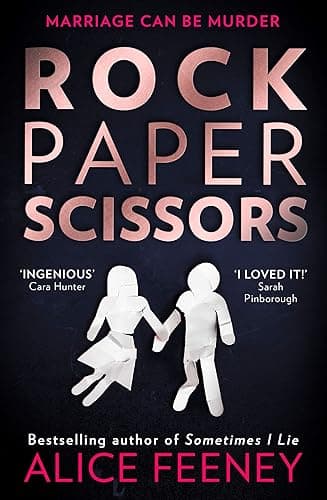
Trapped in a remote chapel, Amelia and Adam Wright's marriage spirals into a terrifying game of suspicion and survival. As secrets are revealed and tensions escalate, a series of unsettling discoveries and near-death experiences force them to confront the darkness within themselves and their relationship. The line between victim and aggressor blurs, leaving the reader questioning who is truly in danger.
Chapter 13: Amelia
Amelia's panic surges as a sudden power outage plunges her into the crypt's pitch-black depths. Her asthma flares, and she struggles to breathe, feeling suffocated by the oppressive darkness. Whispers echo her name, amplifying her terror. Above, Adam opens the trapdoor, but the darkness remains absolute. She manages to gasp that she can't breathe and her inhaler is in her handbag.
While awaiting Adam's return, Amelia's fear intensifies. She remembers matches in her pocket and strikes one, but it quickly extinguishes. A second match offers no relief. On her third attempt, the flickering flame reveals horrifying scratch marks covering the wall, as if someone desperately tried to claw their way out. As the final match burns her fingers and drops, plunging her back into darkness, she hears the whispers again, right behind her, accompanied by a distinct scratching sound. The combination of claustrophobia, darkness, and terrifying sounds pushes her to the brink of fainting.
Chapter 14: Adam
Adam frantically searches the dark chapel for Amelia’s handbag, his mind racing. He reflects on his life-taught preparedness for the worst. After a tense search, he locates the bag, finds the inhaler, and rushes back to the crypt where Bob the dog scratches at the trapdoor. Hearing Amelia’s panicked, shallow breaths, he decides to descend the stairs himself, despite the risk of falling in the dark.
Guided by the sound of Amelia’s distress, he carefully makes his way down. He finds her against the far wall and gives her the inhaler. Just as she takes two puffs, the power flickers back on, bathing the crypt in a ghostly fluorescent light. Adam surmises there must be a generator. Amelia clings to him, and he holds her, feeling an "oddly protective" sensation. In a chilling moment of introspection, he notes that what he should feel is guilt, but he doesn't. This admission casts a dark shadow over his seemingly caring actions, hinting at a hidden layer to his motivations.
Chapter 15: Amelia
As Adam leads her out of the crypt, Amelia reflects on their failing marriage. She recalls their counselor and Adam’s cynical definition of marriage:
“Marriage is either a winning lottery ticket or a straitjacket.”
They ascend a circular staircase lined with framed black-and-white portraits, a photographic family tree of the chapel's previous inhabitants. Amelia notices that three of the frames are empty, leaving discolored rectangles on the wall. Upstairs, they find four doors; one has a "DANGER KEEP OUT" sign and a dog bed with a note for Bob. The other three are locked, but the last one opens into their bedroom.
Amelia is shocked to find the bedroom is a near-perfect replica of their own room in London, down to the Farrow & Ball "Mole's Breath" paint on the walls and the same bedding. Adam tries to rationalize the bizarre coincidence, suggesting the owner might have copied a design from the same brochure Amelia used. However, Amelia finds it deeply unsettling and "unauthentic," as if they are on a film set of their own lives. The room is also suspiciously spotless, unlike the rest of the dusty chapel. After discovering there's no hot water, Adam tries to initiate intimacy. Feeling insecure, Amelia retreats to the bathroom to change into a new nightdress. When she emerges, ready to try and reconnect with her husband, she finds the bedroom empty. Adam is gone.
Chapter 16: Adam
Bored while waiting for Amelia, Adam is drawn to the door marked "DANGER KEEP OUT." His curiosity piqued, he finds it unlocked and discovers a narrow staircase leading up to the bell tower. He grabs a candle and ascends, pushing through cobwebs. At the top, he opens a door and is met with a gust of wind that blows out his candle. The view from the bell tower is spectacular, showing the moonlit, snow-covered landscape. It is here that Adam reveals a crucial secret: he pulls out his phone, the one Amelia thinks he left in London. He knows she hid it and lied to him, confirming his suspicions that she has been acting strangely for months.
Adam’s thoughts turn dark as he reflects on his marriage and his wife. He recalls Amelia recently having him sign a life insurance policy, making him believe she is plotting to kill him. He dismisses her accusations that he's having a mid-life crisis and laments his career as a screenwriter, feeling that his creative work is constantly changed and diluted by others. He thinks of his mother, who died shortly after encouraging him to live his own life. His resentment towards Amelia is palpable; he believes she is manipulative and "shady." In a final, stunning confession, he admits that he cheated on his wife but justifies it by revealing that "Saint Amelia" also slept with someone she shouldn't have.
Chapter 17: Amelia
Amelia finds Adam missing and, guided by Bob's gaze toward the "DANGER" door, follows him up the dark, cobweb-filled staircase to the bell tower. The view is as magical as he described. Adam puts his arm around her to keep her warm and points out the constellation Cassiopeia, telling her the Greek myth of a vain queen whose arrogance led to her downfall. Amelia senses a sharp, accusatory edge in his tone, connecting the myth to their own situation.
The moment is filled with a mixture of beauty and tension. Amelia reflects on their broken wedding vows and the promises that have lost their value over time. As she shivers from the cold, Adam calls her "my love," a term of endearment he only uses when he's drunk. Realizing he has drunk most of the wine, she suggests they go back inside. As she turns, she accidentally bumps into the large bell. It sways slightly, and the movement unleashes a bizarre clicking sound, followed by a terrifying screeching.
Chapter 18: Amelia
A colony of bats, disturbed from their roost inside the bell, swarms out and flies directly at them. In the chaos, Adam staggers backward, flailing his arms and stumbling dangerously close to the low, crumbling wall that serves as the only barrier. The scene unfolds in slow motion as he falls hard against the wall. A section of the ancient brickwork gives way and crashes to the ground far below with a loud bang.
Just as Adam is about to fall over the edge, Amelia snaps out of her fear-induced paralysis. She lunges forward, grabs his arm, and yanks him back to safety. She has just saved his life. But instead of relief or gratitude, Adam looks at her with an expression she has never seen before—one that fills her with absolute fear.
Character Development
Both Amelia and Adam undergo significant shifts, revealing hidden depths and unsettling truths.
- Amelia Wright: She displays both vulnerability and resilience. Her asthma attack highlights her physical fragility, while her determination to save Adam reveals her inner strength. The discovery of the replica bedroom deepens her unease, suggesting a growing awareness of the sinister forces at play.
- Adam Wright: He transforms from a seemingly oblivious husband into a paranoid and resentful figure. His internal monologue exposes his suspicions about Amelia, his infidelity, and his deep-seated insecurities. His final expression of terror suggests a complete breakdown of trust and a potential misinterpretation of Amelia's motives.
Themes & Symbols
Several key themes and symbols emerge, enriching the narrative's complexity.
- Secrets and Deception: This theme takes center stage as Adam's secret phone, Amelia's lies, the life insurance policy, and the revelation of mutual infidelity expose the deep-seated dishonesty within their marriage.
- Marriage and Betrayal: The chapters explore the disintegration of trust and commitment through Adam's cynical view of marriage, Amelia's reflections on broken vows, and the ultimate betrayal of infidelity.
- The Inescapable Past: The chapel's history, symbolized by the portraits with missing frames, and Adam's memories of his mother contribute to the sense that the past is influencing the present.
The replica bedroom symbolizes the superficiality and artificiality of their relationship, while the bell tower represents both danger and revelation. Adam's retelling of the myth of Cassiopeia serves as a pointed accusation, highlighting his resentment towards Amelia.
Key Quotes
“Marriage is either a winning lottery ticket or a straitjacket.”
This quote encapsulates Adam's cynical view of marriage, suggesting that it is either a source of fortune or a form of imprisonment. It foreshadows the couple's deteriorating relationship and the sense of entrapment they both experience.
Significance
These chapters mark a pivotal shift in the narrative, transforming it from a psychological drama into a high-stakes thriller. Adam's perspective reframes the story, casting doubt on his initial portrayal and raising questions about his true motives. The revelation of mutual infidelity shatters any clear-cut dynamic, while the near-fatal fall from the bell tower escalates the conflict to a dangerous level. The ending leaves the reader questioning who the true victim is and what will happen next.
Analysis
Alice Feeney masterfully employs dual perspectives to create suspense and dramatic irony. By revealing Adam's suspicions and knowledge of Amelia's lies, she ensures that the reader interprets the bell tower incident through a lens of paranoia. The setting itself becomes a character, actively contributing to the couple's unease and danger. The symbolism employed elevates the personal conflict to a mythic level, suggesting that pride and deception will inevitably lead to a downfall.