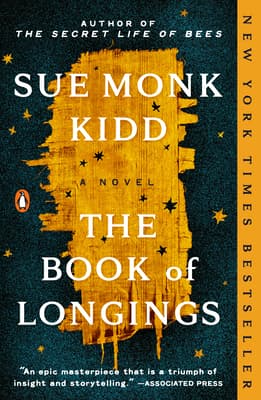
The Search for Self and Personal Longing
The Book of Longings explores the profound human need for self-discovery and the yearning to fulfill one's potential, particularly within the confines of societal expectations. This theme centers on Ana, whose "longing"—a term her aunt Yaltha uses to describe the sacred impulse within a woman—propels her to seek knowledge, express her thoughts, and define herself beyond the roles of daughter, wife, and mother in first-century Galilee. The novel posits that this desire for self-realization is not mere ambition but a divine imperative, a "largeness inside" that must be blessed and expressed. Ana's journey is a testament to the power of the individual spirit to transcend limitations and leave a lasting legacy.
How It Develops
Ana's quest for self-realization evolves through distinct stages, each marked by changing circumstances and deepening self-awareness. Initially, in Sepphoris, her longing is a secret rebellion, fueled by a thirst for knowledge and freedom of expression. She writes in private, concealing her scrolls in a cedar chest, her efforts validated by Yaltha's arrival, who reframes her longings as a divine gift. This culminates in the creation of the incantation bowl, a physical manifestation of her prayer to be heard. The threat of betrothal to Nathaniel looms large, symbolizing the potential annihilation of her burgeoning self.
Marriage to Jesus in Nazareth offers a partnership where her "largeness" is acknowledged and loved, yet the demands of peasant life stifle her active pursuit of writing. Her longing becomes a dormant ache beneath the surface of domestic duties. The death of her daughter, Susanna, and her subsequent confinement briefly reignite her creative spark, allowing her to channel grief into words, but the resources and freedom to continue remain elusive.
The flight to Egypt marks the culmination of Ana's search. Alexandria, the city of her dreams, and the community of the Therapeutae provide an environment where her intellectual and spiritual longings are not only tolerated but celebrated as central to life. Here, she finds the resources, community, and freedom to fully embrace her identity as a scholar and writer, independent of her relationships with men, ultimately becoming a leader and fulfilling her youthful prayer to be a voice.
Key Examples
Several key moments and symbols encapsulate Ana's lifelong quest for self-realization.
- The Incantation Bowl Prayer: This prayer is the most direct articulation of Ana's core longing, defining her entire search for self. After Yaltha encourages her to write what is in her "holy of holies," Ana inscribes:
Lord our God, hear my prayer, the prayer of my hea. Bless the largeness inside me, no maer how I fear it. Bless my rd pens and my inks. Bless the ords I write. May they be beautiful in your sight. May they be visible to eyes not yet born. When I am dust, sing these ords oer my bones: she was a oice.
This prayer encapsulates her desire for her words to transcend her own life, leaving a lasting impact on future generations.
- The Vision of "Ana Who Shines": As a young girl, after a difficult translation exercise, Ana has a vision of her own face inside a red disk of light. This mystical experience becomes a touchstone for her, a promise that her identity will not be extinguished. She recalls it during her confinement before her betrothal to Nathaniel, interpreting it as a sign that "the light in me would not be extinguished. The largeness in me would not shrink away."
- Declaring Her Identity to Jesus: When Ana and Jesus meet at the cave, she moves beyond the societal labels of her parentage and status to claim her true self. Her declaration, "I’m a scribe," is a pivotal moment of self-actualization, where she presents her core identity to the man who will become her partner.
- Choosing Her Calling Over Motherhood: After years of marriage and the tragic loss of her daughter, Ana makes a conscious decision to prevent future pregnancies, explaining to Jesus that her desire to write is not a hobby but a sacred calling equal to his own:
“I, too, have my own knowing inside . . . that I’m not meant for motherhood, but for something else.”
- The Final Declaration: The novel's closing lines bring Ana's search full circle. Having lived a full life where she realized her ambitions, she claims her identity with finality, echoing the prayer from her youth:
I gaze into the far distance and sing, “I am Ana. I was the wife of Jesus of Nazareth. I am a voice.”
This declaration affirms her journey and solidifies her legacy as a woman who found and used her voice.
Character Connections
The theme of self-discovery is intricately woven into the lives of several characters, each embodying different facets of this universal quest.
- Ana: As the protagonist, Ana is the living embodiment of the search for self and personal longing. Her narrative arc is defined by her struggle to nurture the "largeness" within her against the constraints of her time.
- Yaltha: Yaltha serves as a catalyst for Ana's journey. Having pursued her own education in Alexandria, she provides Ana with the language and spiritual framework to understand her longings as sacred. Yaltha's own quest to find her lost daughter, Chaya, serves as a parallel narrative of female longing and the search for a lost part of oneself.
- Jesus: Jesus is the supportive partner in Ana's search. He is one of the few men who sees and values her inner world, giving her the name "Little Thunder" in recognition of the power rumbling inside her. While he encourages her longing, his own divine calling ultimately leads to their separation, which paradoxically creates the space for Ana to fully realize her own purpose.
- Hadar (Ana's Mother): Hadar represents the societal opposition to Ana's search. She views Ana's intellectual ambitions as unnatural and shameful, constantly trying to force her into a traditional female role. Her own secret longings are for status and revenge, a stark contrast to Ana's creative and spiritual quest.
- Tabitha: Tabitha represents an alternative form of female expression through song and dance. Though initially presented as a foil to the "serious" Ana, she too is a woman with a voice, one that is brutally silenced. Her journey to reclaim her ability to communicate through music mirrors Ana's own struggle to be heard.
Symbolism
Objects and places in the novel serve as powerful symbols for Ana's inner journey.
- The Incantation Bowl: This is the most significant symbol of Ana's personal longing. It is a physical vessel for her spiritual and creative ambitions, a tangible representation of her "holy of holies." The act of writing her prayer inside it transforms her abstract desires into a concrete, sacred intention.
- Writing Implements (Scrolls, Papyri, Inks): These are the tools of Ana's self-realization. For her, the act of writing is the act of giving birth to herself. When her writing chest is burned, it symbolizes an attempt to destroy her identity. When she is able to write again among the Therapeutae, it signals the rebirth of her true self.
- The Cedar Chest: In Sepphoris, this chest is the secret, hidden world of Ana's soul. It contains her forbidden writings and represents the private, clandestine nature of her quest in a society that would condemn it.
- Alexandria and the Therapeutae: These locations function as a symbolic "promised land" for Ana's spirit. They represent a world where female intellect is valued, where study is a form of prayer, and where a woman can pursue her longings without shame. It is the physical place where Ana's inner search finds its external home.
Contemporary Relevance
The theme of the search for self and personal longing resonates deeply in the 21st century, connecting with ongoing conversations about feminism, equality, and the importance of women's voices. Ana's struggle to transcend societal expectations mirrors the modern woman's journey to break through glass ceilings, challenge patriarchal structures, and define success on her own terms. Her prayer to "bless the largeness inside me" serves as an anthem for anyone who has been made to feel that their ambitions are too grand or their desires inappropriate. The novel's focus on telling the stories of forgotten women aligns with the contemporary movement to uncover and celebrate marginalized histories. In an era where women continue to fight to be seen, heard, and valued for their minds and spirits, Ana's ancient search for self feels both timeless and urgently relevant.