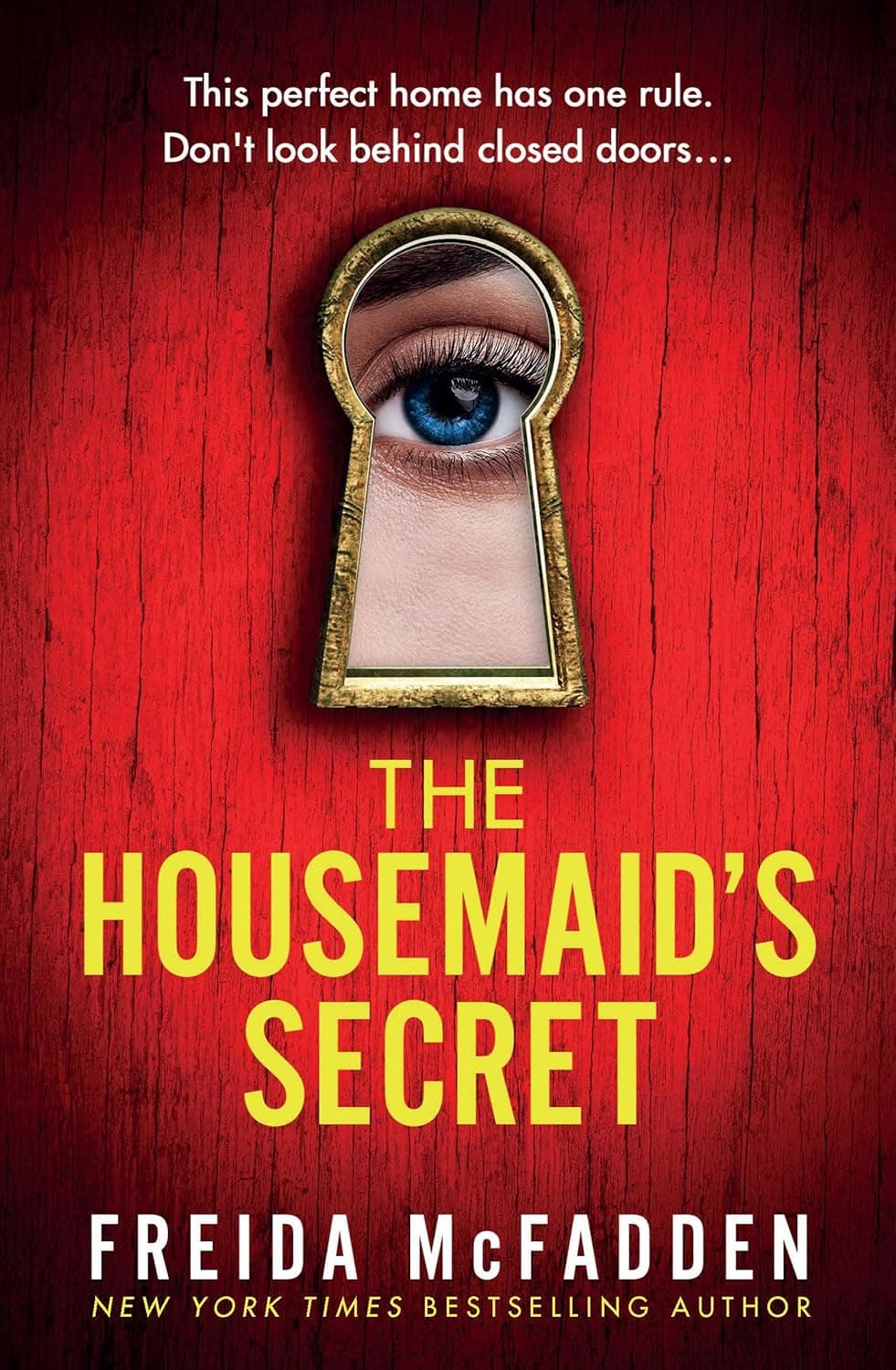
Opening
Four months before the murder, the novel pivots: Wendy Garrick engineers a ruthless con to secure her husband’s fortune and a patsy to blame. Her plot ensnares Millie Calloway, fractures her lover’s resolve, and ends with Douglas Garrick dead—just as Millie begins to fight back.
What Happens
Chapter 56: Step 6: Figure Out How to Turn Your Husband into a Man Who Deserves to Die
Wendy, terrified that Douglas may sell their penthouse and cut her off, confides in her lover, Russell Simonds. When Russell suggests they can be together without Douglas’s money, Wendy recoils. Her fear of poverty and contempt for Russell’s modest life harden into a fantasy: Douglas has a heart attack; she is free and rich.
She reframes Douglas’s financial control as “abuse,” which triggers a memory of a friend’s story about a housekeeper, Millie, who helps women escape violent husbands. A scheme crystallizes. Douglas is reclusive and virtually invisible online; Wendy can hire Millie, have Russell impersonate her abusive spouse, and stage a convincing nightmare. If Millie witnesses enough “abuse,” she will intervene—and later, Wendy can make sure Millie takes the blame for Douglas’s murder, anchoring the book’s core of Deception and Manipulation.
Chapter 57: A few weeks earlier
Wendy perfects the performance. She learns to paint bruises with makeup until they look sickeningly real, embodying Appearance vs. Reality. Russell, practicing as the stand-in “Douglas,” praises her craft, but Wendy decides their illusion still lacks the sick authenticity she needs to hook Millie.
She demands a real injury. Russell balks—“I’ve never hit a woman”—and tries to refuse. Wendy dismantles him with calculated cruelty, sneering that he’s a “pathetic” furniture salesman and a “loser.” Provoked and ashamed, he strikes her, splitting her lip and bloodying her nose. As blood spatters the bathroom floor, Wendy studies the scene and murmurs with satisfaction, “Oh my God, it’s perfect.” The con becomes reality, and Russell becomes complicit.
Chapter 58: Step 7: Kill the Bastard
The murder night unfolds with brutal efficiency—until it doesn’t. Millie has fled, believing she shot and killed Russell in self-defense, thinking he was Douglas. Moments later, the real Douglas arrives to meet Wendy under the pretense of signing divorce papers. The plan calls for Russell to kill Douglas in the living room; instead, Russell panics in the kitchen, hyperventilating and pleading that they run away together without the money.
Wendy, furious and unflinching, pulls on rubber gloves, takes the gun, and faces Douglas herself. He speaks softly, confessing he still loves her and wants a fresh start, even offering to give away most of his wealth to a charity foundation. To Wendy, the thought of voluntary poverty is unforgivable. She fires into his chest, killing him. When a stunned Russell emerges, she calmly orders him out; she will pin everything on Millie, just as planned.
Chapter 59: Millie
The next day, the narrative returns to Millie. Watching news coverage of tech CEO Douglas Garrick’s death, she stares at his photograph—and realizes the man on screen is not the man she shot. The revelation unravels her sense of reality. Police theories about an affair make even less sense now.
Alone after her boyfriend, Brock Cunningham, dumps her over her criminal record, Millie reaches for the one person who might help. She remembers she has an alibi for one of the supposed hotel meetings with “Douglas,” and the witness is Enzo Accardi. Swallowing her pride, she calls him and admits she is in “big trouble.”
Chapter 60: Millie
Enzo arrives in minutes and believes her at once. He offers critical context: the Garricks’ real home is a Long Island mansion, not the penthouse—explaining how Wendy could host an impostor there without Douglas knowing. Millie confesses she shot the impostor to stop him from strangling Wendy. Enzo, calm and meticulous, asks if the man is actually dead. The blood might be staged; Wendy, a proven liar, pronounced him pulseless.
The trap snaps into focus. Millie sees the setup for what it is and wants to confront Wendy, but Enzo cautions her to be strategic. He urges her to recall specifics. Millie remembers seeing the impostor enter a particular apartment building with another woman. With a tangible lead at last, the pair plan to track him down—shifting Millie from framed victim to determined investigator.
Key Events
- The plan’s origin: Wendy crafts a long con to frame Millie for Douglas’s murder and void the prenup to seize his fortune.
- Manufactured abuse: Wendy manipulates Russell into hitting her, creating a real injury to fool Millie.
- The murder: When Russell refuses to pull the trigger, Wendy kills Douglas herself after he proposes giving most of his wealth to charity.
- The impostor: Millie realizes the man she shot is not Douglas.
- The alliance: Abandoned by Brock, Millie turns to Enzo; he believes her and commits to help.
- A new lead: Millie recalls the impostor’s apartment building, launching their investigation.
Character Development
Power shifts as masks drop: Wendy embraces predation, Russell crumbles at the brink of murder, Douglas dies clinging to love and idealism, and Millie reclaims agency with Enzo’s steadiness at her side.
- Wendy Garrick: Fully revealed as a calculating antagonist whose terror of poverty justifies any cruelty. She manipulates lovers, weapons, and narratives with chilling control.
- Russell Simonds: Weak-willed and pliable, he crosses ethical lines under pressure but refuses to kill, exposing a fragile conscience Wendy exploits and despises.
- Douglas Garrick: A tragic innocent whose final act—offering philanthropy and reconciliation—triggers his death, showing how completely he misreads Wendy.
- Millie Calloway: Shifts from targeted pawn to tenacious sleuth, channeling confusion into action to clear her name.
- Enzo Accardi: Emerges as Millie’s anchor—loyal, incisive, and strategic—transforming panic into a plan.
Themes & Symbols
Deception and manipulation drive every beat. Wendy scripts roles for everyone around her: Russell as the monster, Millie as the rescuer-turned-fall-guy, Douglas as the oblivious mark. The impersonation, staged injuries, and choreographed scenes create a reality Wendy controls—until Millie and Enzo start unspooling it.
Appearance vs. reality frames the story’s turning point. Painted bruises become real wounds, a fake husband stands in for the real one, and a murder scene is composed like theater. The gap between what looks true and what is true widens until Millie recognizes the staging and begins to reconstruct events. Beneath the spectacle, the sections also interrogate justice and revenge: Wendy justifies killing as payback for perceived financial betrayal, while Millie and Enzo pursue actual accountability.
Key Quotes
“Oh my God, it’s perfect.”
Wendy’s reaction to her real injury captures the moment the performance fuses with reality. Blood becomes a prop, and suffering becomes a tool—proof of her willingness to inflict harm to sell a lie.
“I’ve never hit a woman.”
Russell’s refusal reveals his moral boundary. Wendy weaponizes his shame to push him past it, showing how she turns conscience into leverage.
“We can just run away together.”
At the brink of murder, Russell’s plea exposes his fear and his desire to escape the scheme without profit. The line crystallizes the gulf between his wavering ethics and Wendy’s ruthless ambition.
“I still love you.”
Douglas’s confession, paired with his plan to donate most of his wealth, seals his fate. His sincerity collides with Wendy’s greed, making his death feel both inevitable and devastating.
Why This Matters and Section Significance
This sequence reorients the novel. By revealing Wendy’s viewpoint, the book resolves early mysteries and recasts the story as a high-stakes investigation: Millie is not a victim trapped in a toxic household but a framed woman racing to dismantle a conspiracy.
The murders’ mechanics, the impostor’s existence, and Enzo’s steady partnership set the final act in motion. The conflict shifts from survival to pursuit of truth, as Millie and Enzo move to expose Wendy’s con, locate the impostor, and reclaim the narrative before the law—and Wendy—close in.