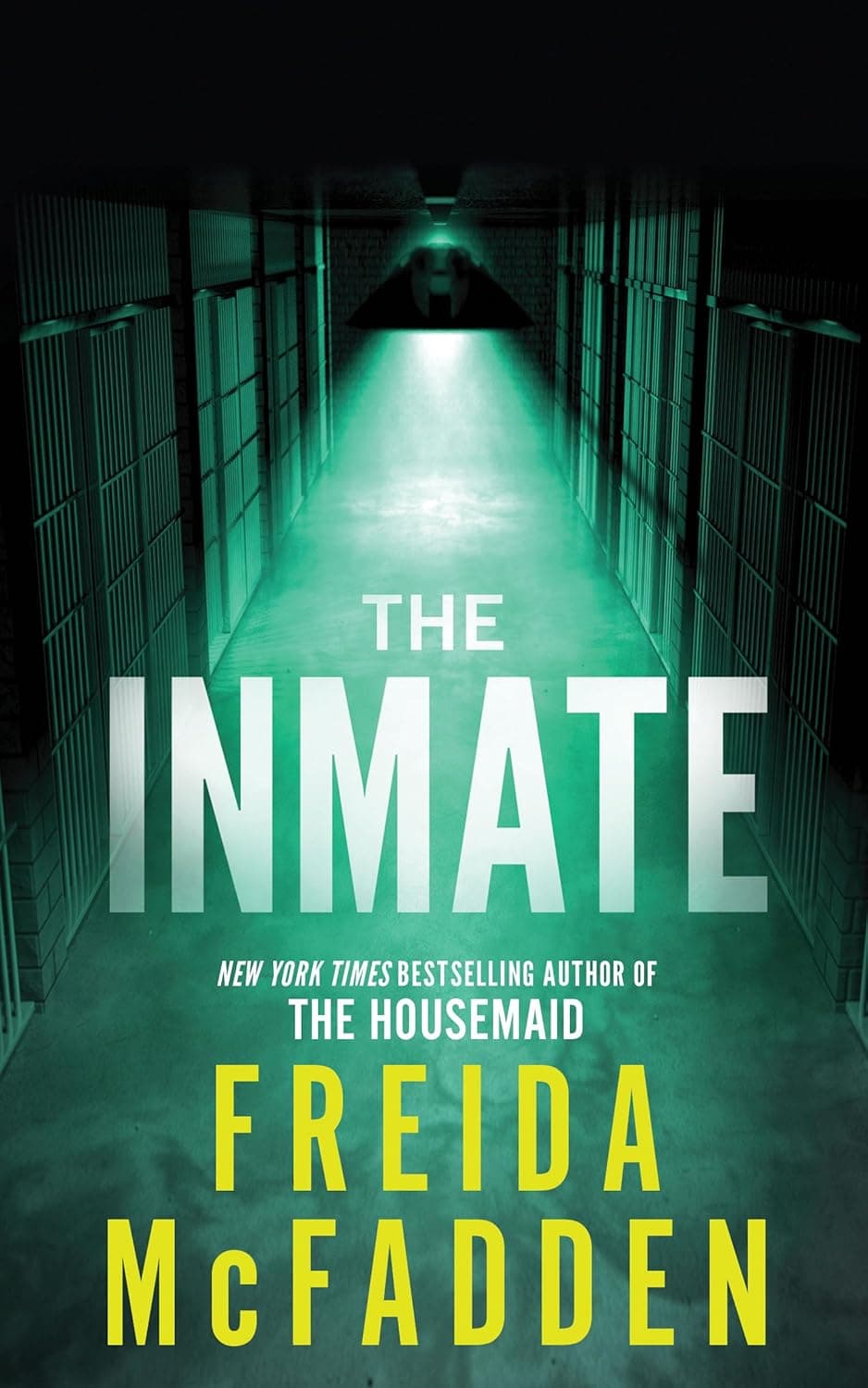
A comprehensive collection of significant quotes from Freida McFadden's The Inmate, complete with detailed analysis.
Most Important Quotes
These quotes are essential to understanding the novel's core conflict, central mystery, and shocking conclusion.
The Trapped Protagonist
"As the prison doors slam shut behind me, I question every decision I’ve ever made in my life."
Speaker: Brooke Sullivan | Location: Chapter 1 | Context: These are the opening lines of the novel, spoken as Brooke enters Raker Penitentiary for her first day of work.
Analysis: The clanging doors function as both sound imagery and metaphor, sealing Brooke inside a literal institution and a figurative prison of consequence. The sentence telescopes her entire past into a single moment of reckoning, foreshadowing a narrative where every prior choice reverberates into the present. As an opening hook, it cultivates claustrophobia and moral unease, inviting questions about guilt, agency, and fate. The line frames the central motif of entrapment and inaugurates the theme The Past Haunting the Present, positioning Brooke’s journey as an attempt to escape a history that keeps locking her in.
The Core Conflict
"The real reason I was reluctant to take this job isn’t that I’m scared a prisoner will murder me with my own shoe. It’s because of one of the inmates in this prison. Someone I knew a long time ago, who I am not eager to see ever again... And I’m the one who put him here."
Speaker: Brooke Sullivan | Location: Chapter 1 | Context: After her orientation, Brooke reflects on why she was so hesitant to accept the job at Raker Penitentiary.
Analysis: With macabre humor (“murder me with my own shoe”) giving way to confession, the passage shifts from levity to dread, revealing a personal entanglement with the carceral setting. The withheld name of Shane Nelson creates suspense through strategic omission and ellipsis, while “I’m the one who put him here” loads Brooke with moral weight. Her role collapses victim, witness, and employee into a single conflicted identity, priming the novel’s ethical ambiguities. The moment tees up the themes of Vengeance and Justice and The Unreliability of Memory and Perception, transforming the prison into a crucible for an intimate reckoning.
The Seed of Doubt
"I wasn’t the one who tried to kill you, Brooke. I swear to you. I swear on my life."
Speaker: Shane Nelson | Location: Chapter 10 | Context: During their first interaction in the prison clinic, after Brooke has stitched his forehead, Shane makes a desperate plea of innocence.
Analysis: The urgent repetition (“I swear”) enacts his desperation, puncturing Brooke’s long-held certainty and destabilizing the story’s initial alignment. By directly addressing Brooke, Shane weaponizes intimacy, forcing her to re-examine an identity-defining memory. The line inaugurates the central mystery and recasts him from convicted monster to possible scapegoat, complicating reader allegiance. It presses on the fault line of Deception and Betrayal, setting the tense triangle of Brooke, Shane, and Tim Reese into motion.
The Final, Devastating Twist
"I picked it up with my gloved hands and I swung it—the way Tim showed me when we practiced in the fall. And I swung it again. And again. And again... I had to do what I did. After all, I would do anything for my mom."
Speaker: Josh Sullivan | Location: Epilogue | Context: In the final moments of the book, Josh reveals in an internal monologue that he was the one who killed Shane Nelson.
Analysis: The rhythmic anaphora (“And again. And again.”) converts a child’s memory of practice swings into a chilling litany of violence, yoking innocence to brutality. The juxtaposition of a fall baseball lesson with murder exposes how ordinary rituals can be twisted into instruments of harm. His final justification refracts the theme of Maternal Instinct and Protection through tragic irony, mirroring Pamela’s warped devotion and implicating Brooke’s choices. As a last-page shock, it reinterprets the entire narrative retrospectively, revealing the true locus of danger within the family itself.
Thematic Quotes
Deception and Betrayal
The Ultimate Deception
"The only way Josh, Shane, and I can be a family is if you’re out of the picture."
Speaker: Pamela Nelson (Margie) | Location: Chapter 52 | Context: During the final confrontation at the farmhouse, Pamela reveals her true identity and motives to Brooke while holding her at gunpoint.
Analysis: Spoken with chilling composure, this sentence reduces “family” to a zero-sum equation where love is proven by elimination. Pamela’s possessive grammar and euphemistic threat (“out of the picture”) reveal her sociopathic calculus, recoding intimacy as ownership. The line culminates a long con of false identities and staged evidence, including the framing of Tim Reese, and exposes deception as the novel’s governing logic. It clarifies how yearning for connection, unmoored from morality, becomes a rationale for murder.
A Calculated Lie
"I saw this one at the town flea market last month, so I—"
Speaker: Tim Reese | Location: Chapter 34 | Context: Tim tries to explain why he bought Brooke a replica of the snowflake necklace that was used in the attempt on her life.
Analysis: This half-finished sentence is a miniature alibi—casual, specific, and unverifiable—which later collapses under the revelation that Pamela Nelson (Margie) orchestrated the purchase. The mundane veneer of a flea market masks the necklace’s sinister provenance, turning a romantic gesture into evidence of manipulation. Its incompleteness on the page mirrors the holes in Tim’s story and invites reader suspicion. The moment epitomizes the theme of deception by showing how the smallest lie can anchor a much larger scheme.
The Unreliability of Memory and Perception
The Blind Witness
"But there’s one thing I can’t do. I can’t see his face. I never saw the face of the man who tried to kill me."
Speaker: Brooke Sullivan | Location: Chapter 10 | Context: After her first encounter with Shane in the prison, Brooke reflects on the night of the attack and the crucial gap in her memory.
Analysis: Brooke’s confession places absence at the center of the case: a conviction built on everything but sight. By foregrounding what she didn’t perceive, the narrative invites epistemic uncertainty and exposes how trauma distorts sensory processing. The stark repetition of “I can’t” and “never saw” reads like a sworn statement and a self-indictment at once. It becomes the hinge on which the plot turns, opening space for doubt, manipulation, and revision.
A Fractured Reality
"I’m just saying, it was so dark in the living room. I couldn’t see a thing. I never even saw his face."
Speaker: Brooke Sullivan | Location: Chapter 36 | Context: During an argument with Tim, Brooke voices her growing doubts about Shane's guilt, questioning her own testimony from eleven years ago.
Analysis: What began as an inner suspicion becomes spoken dissent, and the repetition of her earlier admission hardens into a counter-narrative. The sensory emphasis on darkness literalizes her uncertainty and metaphorically casts doubt over her relationships. By challenging her own testimony aloud, Brooke destabilizes the legal and emotional structures that have organized her life. The scene amplifies tension, signaling a point of no return where memory becomes contestable truth.
The Past Haunting the Present
The Symbol of Trauma
"I drop the necklace like it’s made of acid. I think I’m going to be sick. It’s the same kind of snowflake necklace that I used to wear years ago. The same kind of snowflake necklace that Shane tried to strangle me with a decade earlier."
Speaker: Brooke Sullivan | Location: Chapter 34 | Context: Brooke reacts with horror when Tim gives her a snowflake necklace for her birthday, identical to the one used in the attack on her.
Analysis: The snowflake shifts from keepsake to contaminant, and the simile “made of acid” renders trauma as a physical burn. This object biography—gift, weapon, trigger—compresses Brooke’s past and present into a single, nauseating touch. By invoking Tim Reese as the gift-giver and alluding to Shane, the moment knots romance and violence, intimacy and fear. The necklace becomes a portable haunt, proof that the past can be reactivated by a single object.
Character-Defining Quotes
Brooke Sullivan
"I didn’t want this job. I wanted any other job but this one. But I applied to every single job within a sixty-minute commute... and this prison was the only place that called me back for an interview."
Speaker: Brooke Sullivan | Location: Chapter 1 | Context: Brooke reflects on the desperation that led her to take a job at the prison where her ex-boyfriend is an inmate.
Analysis: Economic necessity pushes Brooke toward the very site of her trauma, revealing resilience forged under constraint. The cadence of “every single job” to “the only place” narrows possibility to inevitability, underscoring her sense of entrapment. As a portrait of reluctant courage, it also hints at unseen forces—later tied to Pamela Nelson—nudging her into danger. This resignation-tinged pragmatism sets her arc in motion and defines her as a mother willing to endure anything for Josh.
Shane Nelson
"Well, Brooke, I’m spending my life in prison for something I didn’t do, so how the hell do you think I am? I’m not great."
Speaker: Shane Nelson | Location: Chapter 8 | Context: Shane's sarcastic and bitter response to Brooke's polite inquiry about his well-being during their first encounter in the prison clinic.
Analysis: Sarcasm becomes self-defense as Shane rejects small talk with a blunt inventory of loss and injustice. His voice—acerbic, wounded, unvarnished—cuts through institutional politeness and reasserts his lived reality against Brooke’s narrative. The line crystallizes his motive: to be believed, and to make her look again at what she thinks she knows. It frames him not as a trope of the dangerous ex, but as a man formed—and misshaped—by years of wrongful confinement.
Tim Reese
"Come on. You know I’ve been in love with you since I was four years old."
Speaker: Tim Reese | Location: Chapter 27 | Context: After kissing Brooke in the kitchen, Tim confesses the true depth and longevity of his feelings for her.
Analysis: Cloaked in childhood nostalgia, Tim’s hyperbolic claim weaponizes the “boy next door” myth to disarm suspicion. The sweetness of lifelong devotion doubles as a smokescreen, masking control and entitlement beneath romance. In retrospect, the line reads as foreshadowing—a love so totalizing it justifies manipulation and violence. Its apparent purity makes his ultimate betrayal more devastating, embodying the novel’s central inversion of appearances.
Pamela Nelson (Margie)
"I have one son, and I have watched him rot in prison for the last ten years. And I have one grandson that I didn’t even know existed until a year ago."
Speaker: Pamela Nelson (Margie) | Location: Chapter 52 | Context: Pamela reveals her true identity to Brooke, explaining the maternal rage and sense of loss that has fueled her quest for vengeance.
Analysis: Pamela’s ledger of grief—one son, one grandson—translates love into a mission, and grievance into permission. Her diction (“rot”) compresses time and suffering, inviting sympathy even as it foreshadows her ruthlessness. The confession reframes her kindly persona as strategic camouflage, driven by a ferocious, distorted maternal ethic. It articulates the engine behind her crimes: the conviction that family sanctifies any means.
Josh Sullivan
"I had to do it. Tim said he was dangerous and that he was going to hurt my mom. And I could hear when he was talking on his phone that he wasn’t being nice to her. Tim was right."
Speaker: Josh Sullivan | Location: Epilogue | Context: In his internal monologue, Josh justifies his murder of Shane Nelson as a necessary act to protect his mother.
Analysis: Filtered through a child’s moral logic, these lines show how fear and loyalty can be molded into lethal certainty. Josh’s reliance on adult authority and overheard fragments dramatizes how narratives shape action, especially in impressionable minds. The refrain “Tim was right” reveals the success of grooming through suggestion rather than command. He emerges as the novel’s most tragic figure—neither villain nor victim alone, but a product of adult deception.
Memorable Lines
A Private Language
"Brooke, I lope you."
Speaker: Shane Nelson | Location: Chapter 4 | Context: Shane says this to Brooke in his car before she goes home, referencing an inside joke from a typo in a text message.
Analysis: This affectionate malapropism becomes a lovers’ idiolect—more intimate than “love” because it belongs only to them. Its recurrence across the timeline sutures the past to the present, a tender echo that amplifies later tragedy. As a motif, it counters the novel’s violence with the memory of warmth and play, deepening the sense of loss. When it reappears, the word functions like a ghost, reminding readers of a possible future that was stolen.
Opening and Closing Lines
Framing the Narrative
Opening: "As the prison doors slam shut behind me, I question every decision I’ve ever made in my life."
Closing: "After all, I would do anything for my mom."
Speaker: Brooke Sullivan (Opening) and Josh Sullivan (Closing) | Location: Chapter 1 and Epilogue
Analysis: Together these bookends enact a grim symmetry: the story begins with adult self-reproach and ends with a child’s unwavering rationalization. Brooke’s line poses a question about culpability; Josh’s answers it with action, revealing that the gravest consequences spring not only from old choices but from desperate choices in the present. Thematically, both lines orbit maternal protection, one through fear, the other through fatal devotion. The pairing delivers devastating irony, suggesting that in trying to lock the past away, the characters forged a new, more perilous cage.