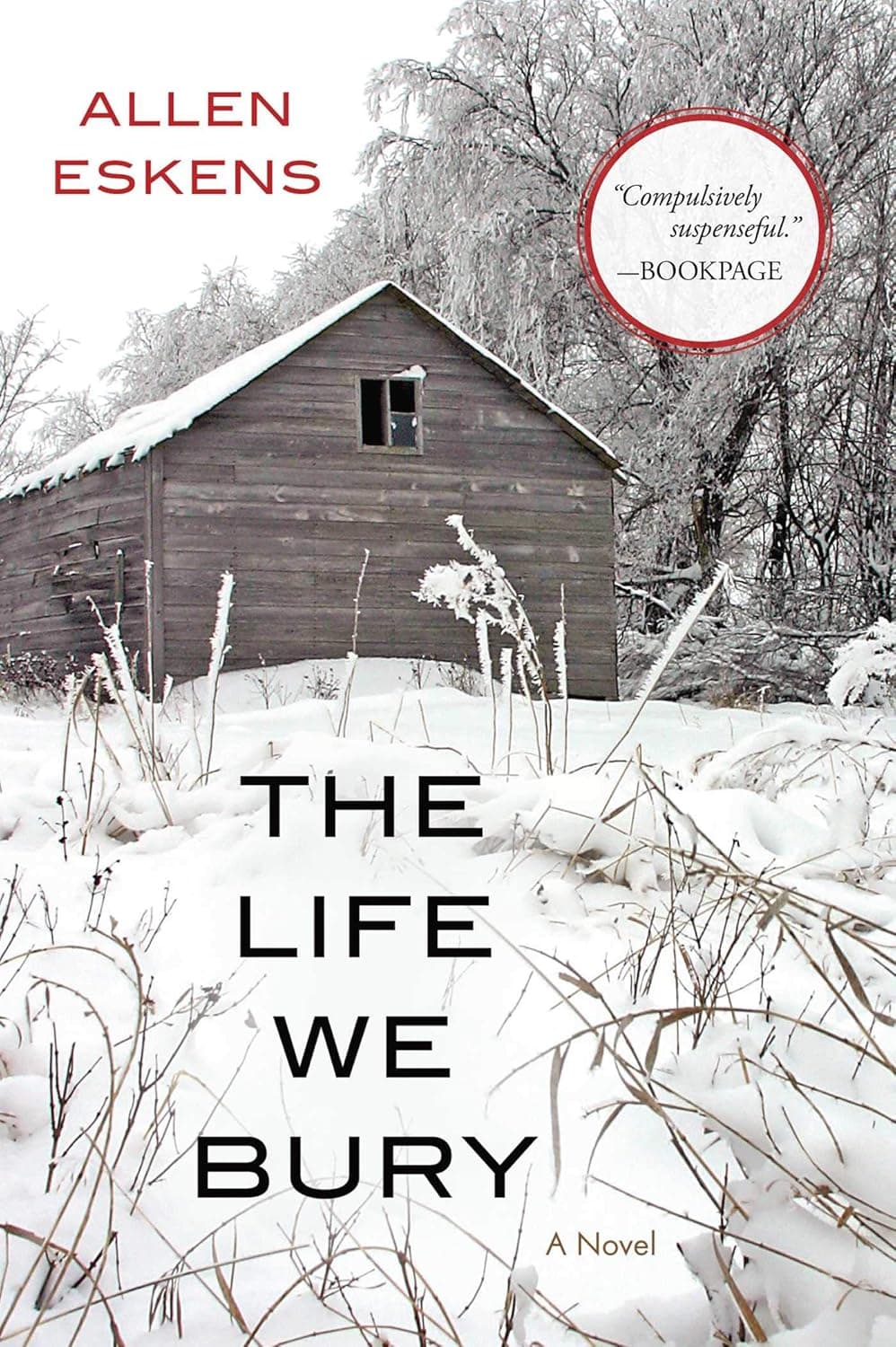
Opening
A single case splits in two: the state’s portrait of a depraved killer collides with a brother-in-arms’ memory of a selfless hero. As evidence and testimony sharpen, Joe Talbert struggles to decide which story to believe—until a crisis at home drags him from the past into an urgent present.
What Happens
Chapter 11: The Prosecutor’s Story
Drawn by the challenge—and by his neighbor—Joe brings six volumes of transcripts to Lila Nash. In her apartment, she pivots from shy to commanding, performing the prosecutor’s opening statement and telling Joe to imagine he’s on the jury. Her delivery reframes everything: the case against Carl Iverson becomes vivid, cold, and damning.
The statement paints Carl as a neighborhood predator who stalks fourteen-year-old Crystal Marie Hagen, blackmailing her after catching her with her boyfriend, Andrew Fisher. Terrified of her devout stepfather, Douglas Lockwood, Crystal is cornered. On the day she dies, the state says, Carl rapes and strangles her with an electrical cord, drags her to his shed, and sets the body on fire. The clincher: a broken acrylic fingernail found on Carl’s steps, later matched to Crystal.
When Lila finishes, she’s trembling with disgust. She calls Carl a “sick bastard” who should have rotted in prison and urges Joe to tell the full, ugly truth. Joe, rattled by both her conviction and his attraction, promises to write honestly—though what “truth” means now feels brutally clear.
Chapter 12: A Tumultuous October
October blurs into exhaustion. Joe works double shifts at Molly’s as bartender and bouncer to repay the $3,000 he spent on his mother’s bail, squeezes in midterms, and steals scraps of time for the biography. A pre-sentencing report in Carl’s file gives him a compressed life story: a decorated Vietnam veteran with two Purple Hearts and a Silver Star. Joe weaves that material and early interview notes into his first chapter, just under the deadline.
On Halloween, posted at the bar’s door, he breaks up a fight—Superman versus Raggedy Andy over a scantily clad Raggedy Ann. The farce hardens his cynicism about the holiday and underscores his default role as reluctant enforcer, a role that shadows both his family life and his investigation.
Chapter 13: The Runt of the Litter
On November 1, Joe returns to the care center. Carl looks fragile, bundled against the cold. Joe clicks on a digital recorder, hoping to catch the “dark tangent” that made a monster. Instead, Carl describes a normal, Leave-It-to-Beaver childhood. The answers don’t come until Joe asks about the thick scar on Carl’s neck.
It’s from prison, not war. Carl describes the hierarchy inside—sex offenders as the “runts of the litter,” targeted by their own race. An Aryan Brother slashed his throat. Carl never asked for protective custody; at that point, “living didn’t matter all that much to me.” He spends most of thirty years in segregation. When Joe asks about Carl’s “brother,” Virgil Gray, pain rips through Carl’s body and ends the interview. A nurse later reveals Carl refused pain meds all day to stay clear for Joe, a stubborn dignity at odds with the label of child murderer.
Chapter 14: The Hero
Joe meets Virgil in a downtown courtyard. Suspicious and blunt, Virgil accuses Joe of using Carl for a class paper and insists Carl is innocent. He wanted to testify, but the defense blocked him; praising Carl’s character would have let the prosecution parade Carl’s drinking and unemployment—another mark against the system’s fairness and the theme of Justice and the Flaws of the Legal System.
Then Virgil tells the story he burns to tell. May 1968: an ambush, a retreat order, and Virgil left bleeding in the open. Carl runs into the gunfire, covers Virgil with his own body, returns fire while wounded, and keeps him alive until air support arrives—lying across him even as napalm falls. Virgil loses a leg, but lives because Carl would not leave him.
Joe is moved but cautious: heroism in Vietnam doesn’t prove innocence at home. Virgil’s temper flares: a man who risks his life for a friend doesn’t murder a child. When Joe mentions that Carl admits he has both “killed” and “murdered,” Virgil recoils and hints at “another story” from the war, a secret he swore never to tell—one only Carl can share—that would prove Carl’s innocence.
Chapter 15: The Corpse and the Call
Reeling from contradictions, Joe picks up more of Carl’s file. Lila spots the box and offers to help. Back in Joe’s apartment, they sort records until he opens the autopsy folder: first, Crystal’s beaming freshman photo, then the charred body. The shift feels like a punch.
The images remake the case in Joe’s mind. Burned skin, twisted limbs, and the medical examiner matching the broken acrylic nail to Crystal’s hand—evidence that looks irrefutable. Carl the hero disappears; Carl the monster fills the frame, a brutal lesson in Truth, Lies, and Perception.
A phone call cuts through: Terry Bremer, the family’s landlord in Austin. Joe’s brother, Jeremy Talbert, set off smoke alarms trying to cook pizza in a toaster. Their mother has been gone for more than a day; eviction looms. Joe drives to Austin, finds Jeremy shaken, and notices a fresh welt across his back. Gently, he learns that his mother’s boyfriend, Larry, hit Jeremy with a remote. Joe’s fury goes cold. The old case fades behind a new, immediate one: protecting his brother.
Character Development
These chapters stretch every character between opposing truths and loyalties, forcing them to choose who to be when stories collide with evidence.
- Joe: Pulled between the prosecutor’s certainty and Virgil’s devotion, Joe doubts, questions, and works. The autopsy photos jolt him toward belief in Carl’s guilt, but Jeremy’s crisis reasserts his core identity: the protector. His sense of duty deepens around Family Dysfunction and Responsibility.
- Carl: A paradox intensifies. He is at once the condemned sex killer, the war hero who covers a friend with his body, and the inmate who accepts violence without complaint. His choice to forgo pain meds to speak clearly hints at a moral code that complicates the verdict against him.
- Lila: She shifts from neighbor to active partner. Her mock-trial poise and moral clarity amplify the state’s narrative, positioning her as a principled counterweight to Virgil’s loyalty.
- Virgil: Fierce, grateful, and unbending, he becomes the story’s living rebuttal to Carl’s conviction. He also embodies the Burdens of the Past: his present is defined by a debt from 1968 that he refuses to leave unpaid.
Themes & Symbols
Truth, Lies, and Perception: Two competing narratives fight for dominance—the prosecutor’s meticulously staged opening and Virgil’s visceral, eyewitness memory. The autopsy photos seem to offer objective truth, yet their emotional power reveals how images can overwhelm judgment. Joe learns that what feels true can be shaped as much by rhetoric and visuals as by facts.
Justice and the Flaws of the Legal System: Virgil’s excluded testimony shows how rules of evidence and strategy can suppress context that juries need. The “character” trap—block praise or invite damaging counterevidence—illustrates a system where procedure may eclipse truth.
Family Dysfunction and Responsibility: Joe’s return to Austin reframes the investigation. Violence is not only historical or institutional; it’s domestic and immediate. Protecting Jeremy is the moral mirror to seeking justice for Crystal, binding Joe’s private duty to his public quest.
Symbol: The Autopsy Photos: More than exhibits, the photos function as a moral sledgehammer. They compress horror into images that command belief, anchoring the idea of Carl’s guilt even as alternative narratives try to pry it loose.
Key Quotes
“Living didn’t matter all that much to me.” Carl’s refusal to seek protection in prison suggests a profound, preexisting despair. Whether rooted in guilt, trauma, or both, it complicates the easy label of predator and hints that the source of his shame may lie elsewhere.
“Runts of the litter.” Carl’s description of sex offenders in prison exposes a brutal hierarchy that punishes certain crimes beyond the sentence, shaping his decades of isolation and suffering and underscoring how punishment continues inside the system.
“A man who would lay down his life for a friend doesn’t murder a child.” Virgil’s code is absolute, equating battlefield sacrifice with moral innocence. The line crystallizes the conflict between character testimony and forensic evidence, forcing readers—like Joe—to question which kind of proof persuades.
“Sick bastard… should have rotted away.” Lila’s reaction channels the jury’s likely response to the opening statement. Her moral clarity shows how powerful narrative framing can be—and how quickly it can harden into certainty.
“I have both killed and murdered.” This admission, filtered through Joe’s conversation with Virgil, hints at a buried wartime act that may distinguish lawful killing from moral murder. It points toward the “other story” that could reorder the entire case.
Why This Matters and Section Significance
Chapters 11–15 pivot the novel from assignment to reckoning. The state’s story and Virgil’s story lock into a duel that defines the stakes: is Carl the monster in the photos or the hero in the jungle? The arrival of Jeremy’s crisis binds Joe’s search for truth to his deepest obligation, linking public justice to private protection. From here on, every answer about Carl reverberates in Joe’s own life, making the investigation not just about a buried past but about whom Joe chooses to save now.