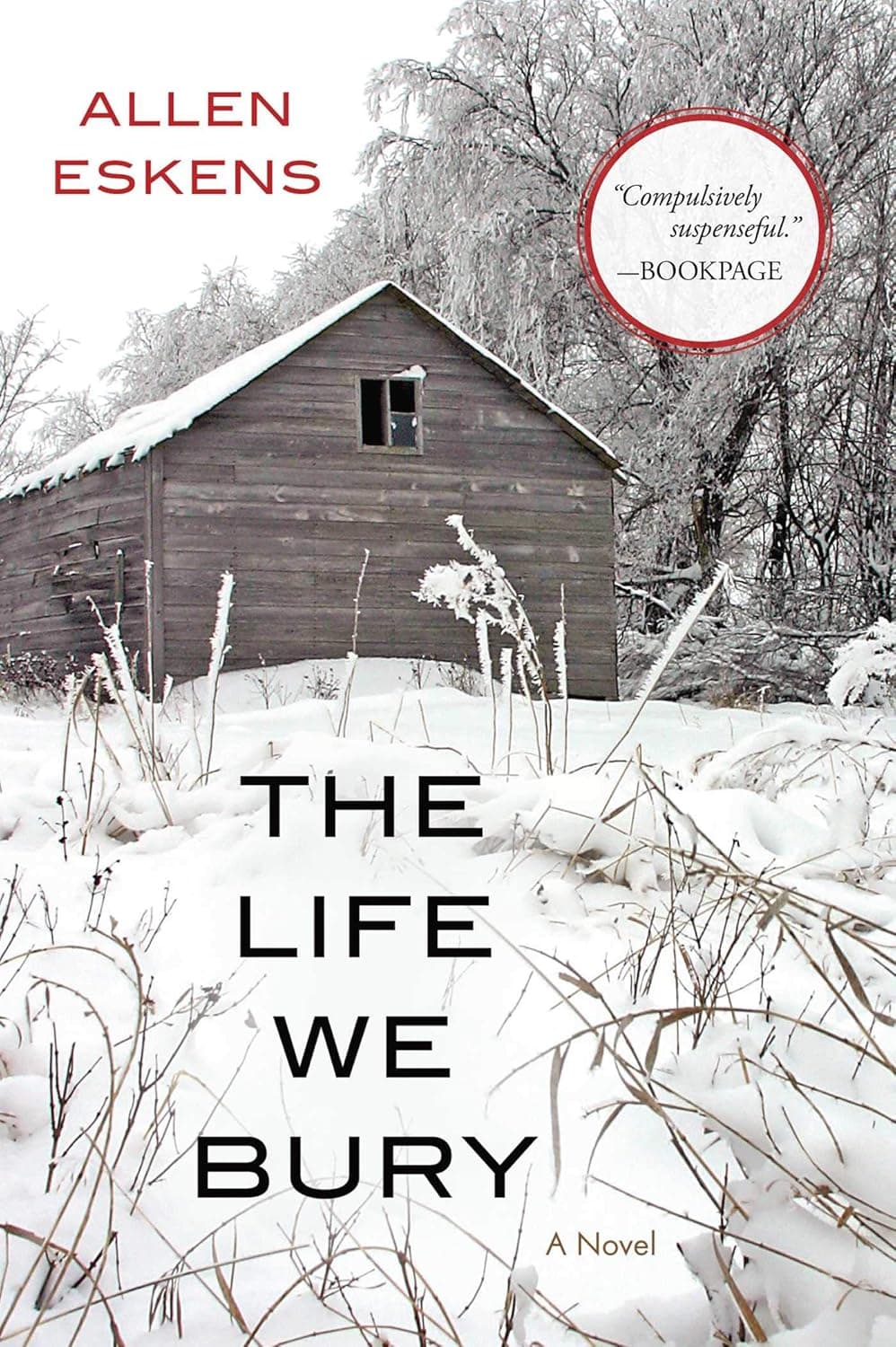
Opening
As Joe Talbert races to clear the name of dying veteran Carl Iverson, the truth he uncovers explodes into violence. A legal breakthrough points to Douglas Lockwood, but time and weather close in, forcing Joe into a reckless confrontation that becomes a brutal fight for survival. These chapters fuse confession, guilt, and action into a whiteout of fate and choice around the murder of Crystal Hagen.
What Happens
Chapter 31: The Life I Buried
Joe visits Carl at the nursing home and finds him ravaged by illness—bedbound, on oxygen, fading. Joe explains that “DJ” in Crystal’s diary is Douglas Lockwood, the true killer. Carl reacts with calm resignation, urging Joe not to risk himself for a correction Carl no longer needs: his peace comes from knowing he didn’t kill Crystal, whether the world believes it or not.
Carl then opens the buried core of his past. The gun he bought the night of Crystal’s murder is for suicide; whiskey knocks him out before he can use it, and his arrest—ironically—saves his life. He confesses the deeper wound: after Virgil leaves Vietnam, Carl stops a repeat of the “Oxbow” atrocity by stabbing Sergeant Gibbs to prevent a rape. The killing haunts him. He accepts his wrongful conviction as cosmic balance for Gibbs’s death—the “life we bury.” In prison, he embraces a twist on Pascal: if this is the only life, live it as heaven, not a waiting room. Pain wracks him as the scene closes, and the theme of Guilt and Atonement anchors the moment.
Chapter 32: The Fingernail
Joe brings the decoded diary, photos, and notes to Professor Boady Sanden, who immediately believes Carl is innocent. Detective Rupert confirms the original semen sample can’t yield DNA because fire destroyed it—another dead end.
Joe remembers the acrylic fingernail used at trial to place Crystal on Carl’s porch. Sanden spots the leverage: if Crystal fought her attacker, the nail could hold the killer’s skin cells—and DNA. They move to test it, but the lab timeline is four months or more. Carl doesn’t have that time. Sanden quips that the only shortcut is a confession, and the remark lodges in Joe’s mind. Driven by the Burdens of the Past—especially his guilt over his grandfather—Joe decides to force the issue himself.
Chapter 33: The Confrontation
With a blizzard coming, Joe finds Lockwood’s address, tucks a digital recorder in his pocket, and drives to a decaying farmhouse. Lockwood is drunk, filthy, and defensive. Joe introduces himself as a writer researching Crystal’s murder and Carl’s parole, then drops the mask and accuses him outright, presenting the decoded diary that names “DJ.”
Lockwood reels, ransacking scripture to excuse or frame his guilt, while Joe bluffs that police already have his DNA from the fingernail. Lockwood murmurs a verse about doing what he hates and seems to tilt toward confession. Joe leans in to capture it—and Lockwood explodes, smashing a whiskey bottle across Joe’s head.
Chapter 34: The Trunk
Joe wakes in the trunk of his own car, rolling fast through the cold night. Water sprays through rusted wells; his bare feet burn with cold; his ankles are chained to cinder blocks. Lockwood thinks he’s dead and is heading for a dumping spot.
Joe shifts from panic to problem-solving. He yanks off the taillight covers, uses the bulbs’ heat to thaw his fingers, and digs out his small toolkit. A screwdriver pries the hook on the chain; a crescent wrench removes the three nuts holding the trunk latch, killing the lock. He can’t jump at speed, so he makes shoes from duct tape and a greasy towel, wraps the wrench to muffle noise, cracks the trunk, and rams the tool into the tailpipe. The engine chokes and dies. As the car coasts to the shoulder, Joe slips free and bolts into the trees.
Chapter 35: The Blizzard
Lockwood fires into the dark as Joe crashes through brush and tumbles into a gully. Unable to spot him, Lockwood returns to the car to hunt with headlights. Hypothermia fogs Joe’s mind; heat blooms where there is none. Staggering onto a cart path, he glimpses a hunting shack’s pale reflection.
He can’t turn the frozen knob, so he smashes the window with his head and drags himself inside. A wood stove, stacked wood, and two matches promise salvation. The first match breaks; the second flares, and he coaxes fire to life. As feeling returns in waves of agony, he pulls on waders while his clothes dry and arms himself with a fillet knife and a poker. The blizzard arrives in full force, sealing the world in white. Joe realizes the whiteout is a shield—Lockwood won’t find him.
Character Development
Joe’s investigation turns into a crucible. He overreaches, gets punished, and survives by wit and grit, moving from student journalist to protagonist in a life-or-death trial that exposes what he’s truly made of.
- Joe Talbert: Impulsive bravery leads him into Lockwood’s lair; quick thinking and mechanical savvy get him out of the trunk; the storm strips him to essentials—will, ingenuity, and a refusal to quit.
- Carl Iverson: His confession reframes his calm as earned acceptance. He is not only wronged; he is atoning. The Vietnam story clarifies his quiet moral gravity and why he can let his reputation go.
- Douglas Lockwood: Not a mastermind but a cowardly predator—a drunk hiding behind scripture, turning feral when cornered. His violence reveals fear, not strength.
Themes & Symbols
Carl’s confession crystallizes Guilt and Atonement. He embraces wrongful punishment as moral recompense for Gibbs’s death, choosing meaning over vindication. Joe mirrors that arc: his reckless decision to chase a confession tries to repay an old failure. The past drives the present, making the Burdens of the Past an engine, not just a backdrop.
The section also probes Truth, Lies, and Perception. Legal truth convicts Carl; moral truth condemns Gibbs and Lockwood. Joe’s bluff about DNA blurs ethics in the pursuit of justice, showing how lies can pry open buried realities even as they risk new harm.
- The Blizzard: A double image—Carl’s last wish for beauty and Joe’s lethal threat turned salvation. Nature erases tracks and resets the board, indifferent yet protective.
- The Hunting Shack: A primal refuge where modern layers fall away. Fire, shelter, and tools become the language of survival and rebirth.
Key Quotes
“I’ve always known I didn’t kill her. And now you know. That’s enough for me.”
- Carl stakes his peace on inner truth rather than public exoneration. The line captures his shift from needing vindication to accepting atonement, and it frees Joe to act without the burden of Carl’s expectation.
“I do the very thing I hate.”
- Lockwood’s murmured verse exposes a split self: piety as mask, compulsion beneath. The line frames his crime as a war within, but in context it reads as evasion—scripture bent to fog accountability.
Why This Matters and Section Significance
These chapters are the book’s hinge, flipping from investigation to survival. Carl’s confession unlocks the title’s meaning and anchors the story’s moral core: truth and justice don’t always travel together, and atonement can outlast reputation. The fingernail offers a path to legal exoneration, but time forecloses it, pushing Joe into action that nearly kills him.
Joe’s confrontation and escape test his resolve under maximum pressure. The blizzard literalizes the novel’s moral weather—obliterating false trails, revealing what endures. What began as a college assignment becomes an ordeal that proves Joe’s courage and brings the hidden story of Carl’s life to light, setting up the reckoning to come.