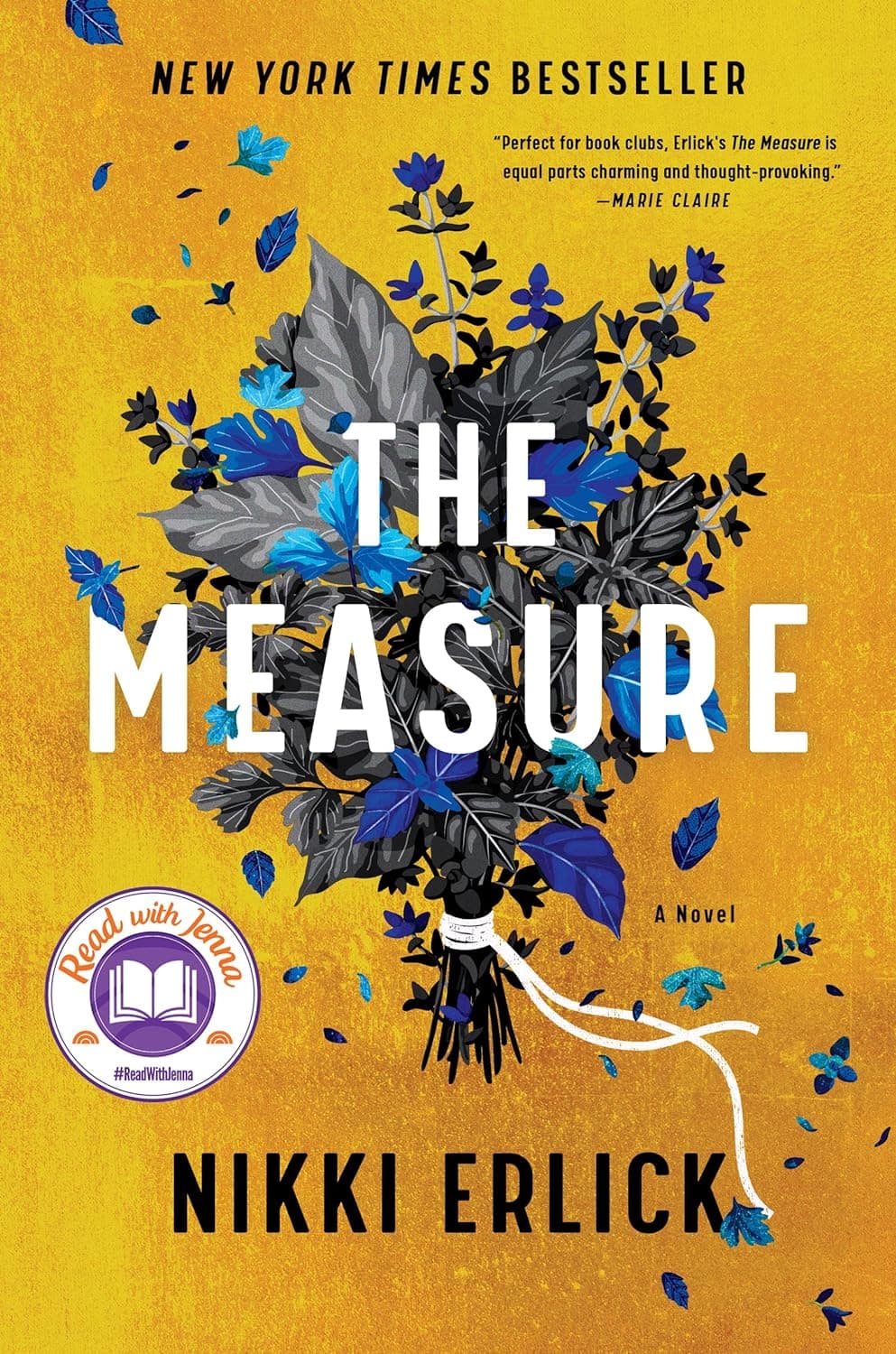
What This Theme Explores
Power, Politics, and Social Control in The Measure asks how a mysterious, seemingly neutral fact—one’s lifespan—becomes a lever for managing society. The novel probes who gets to define “order” after the boxes appear, how fear becomes policy, and why personal data is irresistible to people in power. It also examines how new hierarchies are built quickly and quietly—first through language and media, then through law—until resistance reframes the narrative. At its core, the book questions whether institutions can protect the public without turning human difference into a pretext for control.
How It Develops
At first, governments and media struggle simply to contain panic and keep markets from collapsing, consolidating authority by controlling information flow and messaging, as seen in the Chapter 1-5 Summary. This stabilization phase seems neutral, but it places the state and its spokespeople at the center of meaning-making about the strings, priming the public to accept official interpretations as truth.
Soon, that interpretive power becomes a political weapon. Public figures such as Anthony Rollins recast string length as a credential, using their own longevity as a proxy for steadiness and reliability while sowing doubts about opponents. The debate stage becomes an arena where fate is reframed as fitness, transforming private information into a performative test of worth.
Fear then hardens into law. After high-profile violence by a few short-stringers, leaders justify sweeping action through the STAR Initiative, a policy announced in the Chapter 21-25 Summary that formalizes exclusion from military and government service. The rhetoric shifts from “public safety” to sanctioned segregation, revealing how swiftly crisis management becomes social engineering.
Finally, the pattern widens globally—North Korea seizes boxes; China mandates reporting—making clear that the strings are a universal pretext for surveillance and stratification. Resistance coalesces in response: Maura channels private grief into public organizing through the Johnson Foundation; the “Strung Together” demonstrations stage solidarity as spectacle; and Jack Hunter disrupts his uncle’s rally, showing that dissent within the machine can puncture its narrative from the inside.
Key Examples
-
Initial Government Response: In the early days, the emphasis is on message control and political accountability within the press. The editor-in-chief at Nina’s magazine insists, “But the people deserve to know what their leaders are doing about this, and that’s something we can actually tell them.” This reframes information as a stabilizing instrument, positioning institutions as gatekeepers of reality.
-
Political Opportunism: Anthony Rollins is the first to turn private fate into a public litmus test during a primary debate, framing his long string as proof of steadiness and demanding disclosure from rivals, as described in the Chapter 31-35 Summary. By redefining transparency as virtue and nondisclosure as guilt, he invents a new political currency—lifespan as legitimacy.
-
Institutionalizing Discrimination: The Capitol bombing becomes the accelerant for codified control.
The president announced his most sweeping executive order to date: the Security and Transparency in Appointing and Recruiting Initiative, or the “STAR” Initiative for short. A similar bill would likely be introduced in Congress soon, but the attack on the Capitol had made it clear, the president argued, that immediate action was warranted. Framed as urgent protection, STAR operationalizes fear into policy, turning bias into bureaucratic procedure (introduced in the Chapter 21-25 Summary).
-
Media Manipulation and Fear-Mongering: After two shootings by short-stringers, TV chyrons amplify panic—“SHOULD WE FEAR MORE ATTACKS BY SHORT-STRINGERS?”—teaching audiences to conflate statistical outliers with systemic threat. Politicians then harvest this panic, arguing that surveillance and exclusion are simply prudence.
-
Individual Acts of Rebellion: Jack Hunter seizes the microphone at his uncle’s rally, hijacking the spectacle that props up string-based prejudice. By subverting the event’s message live, he exposes how power relies on unchallenged performance—and how dissent can rewrite the script in real time.
Character Connections
Anthony Rollins embodies political opportunism in its purest form. He treats the strings as divine endorsement and a handy filter for purging rivals, transforming moral panic into a career ladder. His rhetoric recasts exclusion as common sense, converting private timelines into public hierarchies that keep him at the top.
Wes Johnson stands as the ethical countercurrent, arguing that string-based exclusion is a civil rights violation rather than a safety measure. His speech at the first debate (detailed in the Chapter 36-40 Summary) reframes the conversation around autonomy and equality, challenging the notion that security requires sacrificing the rights of the few.
Maura turns wounded intimacy into political action. Her refusal to accept the narrative that short-stringers are liabilities propels her to the Johnson Foundation, where she converts personal loss into organizing power. She shows how private grief can be leveraged to build public coalitions against state-sanctioned bias.
Jack Hunter personifies insider resistance. Groomed as a prop for a powerful machine, he chooses whistle over loyalty, revealing the human costs behind polished slogans. His public defection cracks the illusion that control is total; power depends on complicity, and individuals can withdraw it.
Symbolic Elements
The Strings: First symbols of fate, they become ID badges of worth and risk—portable metrics that invite sorting, policing, and self-policing. Their muteness makes them ideal for projection: they say nothing, so authorities can make them mean anything.
The STAR Initiative: Bureaucracy as symbol—policy that launders prejudice into procedure. STAR is the moment a narrative of “safety” ossifies into a system that restricts who may serve, lead, or belong.
The Media: Chyrons, viral clips, and forums like String Theory symbolize the infrastructure of contemporary control. They convert isolated incidents into moral panics, creating the emotional weather that makes drastic policy palatable.
The Solidarity Pin: Two intertwined strings—one long, one short—condense protest into an emblem of shared fate. The pin counters the state’s sorting with a counter-story: difference exists, but it doesn’t justify dominance.
Contemporary Relevance
The novel mirrors how modern societies transform data points into destinies—credit scores, health records, biometric IDs—then rationalize control as risk management. It maps the playbook of populist politics: identify a vulnerable group, amplify fear via media, legislate exclusion, and call it transparency or protection. Debates around STAR echo real-world struggles over privacy, civil liberties, and the ethics of using personal information to allocate opportunity. The Measure asks whether we will accept fear as governance—or insist that security without dignity is just another name for control.
Essential Quote
The president announced his most sweeping executive order to date: the Security and Transparency in Appointing and Recruiting Initiative, or the “STAR” Initiative for short. A similar bill would likely be introduced in Congress soon, but the attack on the Capitol had made it clear, the president argued, that immediate action was warranted.
This moment crystallizes the theme: fear converts swiftly into policy, and “transparency” becomes a euphemism for surveillance and exclusion. By invoking urgency, leaders bypass deliberation and normalize discrimination as responsible governance, revealing how political language sanitizes social control.